



























Home > How do finance teams centralise supplier payments across Asia?
How do finance teams centralise supplier payments across Asia?
Last update:


Centralising supplier payments in Asia is uniquely challenging due to a fragmented landscape of “sovereign” payment rails (like India’s UPI or Malaysia’s DuitNow), strict capital controls and diverse tax-reporting mandates (like China’s “Golden Tax” system).
To manage this, modern finance teams often move away from local, siloed bank portals toward a unified payment architecture. Here is how they’re doing it in 2026:
1. Multi-currency virtual accounts
To avoid the high costs of cross-border transfers and the complexity of opening physical entities in every country, teams use multi-currency accounts with local bank details in each country.
For example, you can:
- Open local accounts at a distance: A company can hold a “local” account in Singapore, Hong Kong, or Australia without a physical branch
- Hold and pay in local currency: When paying a supplier in Indonesia, the finance team funds their IDR virtual account and makes a “domestic” payment, which is faster and cheaper than an international SWIFT transfer
Read more: How to choose a multi-currency business account (+ 6 options)
2. Strategic use of payment orchestration
Finance teams are increasingly using Payment Orchestration Layers (POLs) to manage the “last mile” of Asian payments.
- Wallet Integration: In markets like Thailand or China, suppliers may prefer payments via digital wallets (Alipay, GrabPay)
- Dynamic Routing: A POL automatically chooses the cheapest and fastest “rail” (e.g., choosing Project Nexus for a cross-border ASEAN payment instead of a traditional correspondent bank) based on the transaction value and urgency
3. Regional shared service centres (SSC)
Many firms centralise their Accounts Payable (AP) staff into a single regional hub, typically in low-cost, high-skill hubs like Manila, Kuala Lumpur or Bangalore.
- Standardisation: The SSC enforces a single process for invoice intake, three-way matching, and payment scheduling across all Asian subsidiaries
- E-Invoicing compliance: The SSC manages the complex “Continuous Transaction Control” (CTC) requirements now mandatory in countries like Vietnam, the Philippines, and Malaysia, ensuring tax-compliant digital invoices are processed before payment is released
4. Managing regulatory and FX risk
Centralisation requires navigating Asia’s “closed” or “restricted” currencies (e.g., CNY, INR, IDR).
- Onshore vs. offshore: Finance teams often use In-House Bank (IHB) models to net intercompany payments, reducing the volume of actual FX trades needed
- Automated Hedging: Modern platforms now offer “programmatic FX,” where the system automatically executes a hedge the moment a multi-currency invoice is approved in the ERP, protecting the margin against volatility
Read more: Foreign exchange risk management: How to make international business more affordable
Top 3 solutions for managing supplier payments across Asia
1. WorldFirst
Best for: Paying Asian suppliers at scale with strong China + Southeast Asia coverage
WorldFirst is a cross-border payments and treasury platform designed specifically for global businesses paying suppliers overseas.
It’s particularly strong in Asia because of its roots in trade finance and its connection to Ant International, a global digital payments and fintech provider based in Singapore.
1. Built for importers and Asian trade corridors
WorldFirst is widely used by businesses paying manufacturers and vendors across key sourcing hubs like:
- China
- Vietnam
- Thailand
- Malaysia
- Philippines
- Singapore
It has been expanding deeper into Southeast Asia to support SME cross-border trade flows.
2. Multi-currency World Account (hold + pay like a local)
At WorldFirst, our core product is the World Account, which lets businesses hold, send, and receive multiple major currencies without converting immediately.
This helps companies reduce FX exposure when paying suppliers on different timelines.
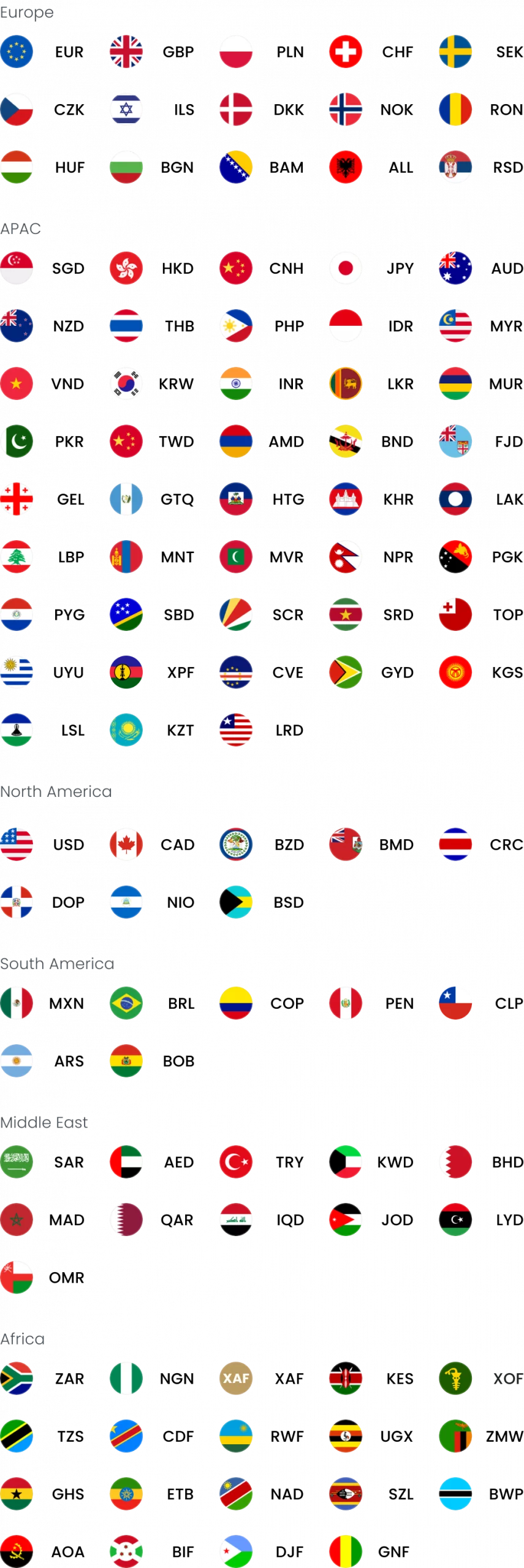
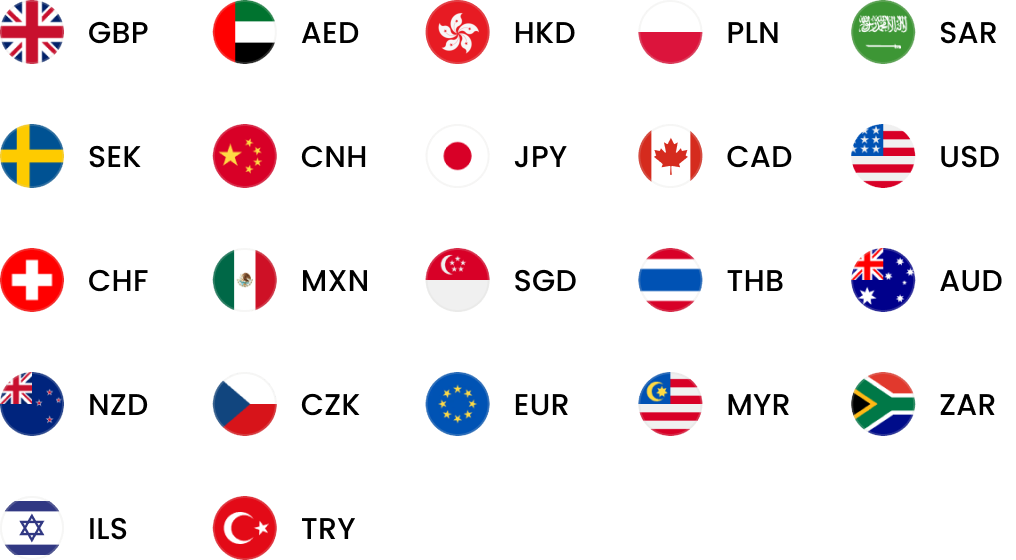
3. Pay suppliers across 200+ markets and 100+ currencies
For companies managing multiple supplier relationships across Asia, WorldFirst supports payments in:
- 100+ currencies
- 200+ markets
This is especially useful when supplier networks span China, Southeast Asia and global logistics partners.
4. Faster settlement and instant transfers between WorldFirst users
With WorldFirst, you get real-time cross-border payment functionality, meaning:
- Payments to other World Account users (for example, in China) can happen within seconds
- 90% of transactions settle the same business day or next day
This matters when suppliers require fast confirmation before releasing goods.
5. One-stop platform for treasury and currency management
Beyond payments, WorldFirst is an all-in-one treasury tool for SMEs handling international operations, including:
- Currency conversion
- Collections
- Supplier payouts
- Cash flow management
All this is done through a unified account interface rather than multiple banks.
2. Airwallex
Best for: Modern businesses needing fast, low-cost multi-country payouts
Airwallex is one of the leading fintech platforms for companies managing suppliers across multiple Asian countries.
Key advantages:
- Local transfer routes across Asia (instead of expensive SWIFT fees)
- Multi-currency wallets + competitive FX rates
- Integrations with ERP/accounting tools
- Great for businesses with suppliers in several Asian markets at once
Airwallex publishes guidance specifically around paying overseas suppliers efficiently.
3. Payoneer
Best for: Marketplace sellers, exporters, and businesses making mass supplier payouts
Payoneer is widely used for international supplier payments and is known for its ability to manage global payouts at scale.
Why companies choose it:
- Local receiving accounts in multiple currencies
- Mass payout functionality across Asia
- Strong coverage for SME import/export businesses
- Works well when paying many suppliers or contractors
It’s often recommended for businesses handling supplier networks across emerging Asian markets.
Quick comparison (Best use case)
| Platform | Best For | Strength in Asia |
|---|---|---|
| WorldFirst | Trade + manufacturing suppliers | Excellent (China + SEA) |
| Airwallex | Fast multi-market operations | Excellent (regional rails) |
| Payoneer | Mass payouts + marketplace workflows | Very strong coverage |
FAQs about centralising supplier payments to Asia
1. Why is centralising supplier payments across Asia so complex?
Asia has fragmented domestic payment systems, strict currency controls, and differing tax and e-invoicing rules. Finance teams often need a unified approach to manage local compliance while avoiding slow, costly cross-border transfers.
2. How do multi-currency accounts help streamline Asian supplier payments?
Multi-currency accounts provide local bank details in key markets, letting businesses hold and pay in local currencies. This reduces reliance on SWIFT transfers, cuts fees, and speeds up supplier settlement – similar to solutions offered through platforms like WorldFirst.
3. What is payment orchestration and why does it matter in Asia?
Payment orchestration tools route transactions through the fastest and cheapest rail, whether domestic transfers, wallet payments, or cross-border networks. This helps finance teams handle diverse supplier preferences across Asia more efficiently.
4. How do companies stay compliant with Asia’s evolving e-invoicing requirements?
Many firms use shared service centres or digital platforms to enforce standard invoice workflows and meet mandatory Continuous Transaction Control (CTC) rules in countries like Vietnam and Malaysia before supplier payments are released.
5. What platforms can support supplier payments across multiple Asian markets?
Businesses often use treasury and cross-border payment platforms that combine multi-currency accounts, local payout rails, and FX management. Providers like WorldFirst help companies pay suppliers across Asia at scale with faster settlement and strong regional coverage.
Shawn Ma leads business development at WorldFirst UK, with a deep expertise in fintech, risk management and cross-border commerce.

Shawn Ma
Author
Continue reading


Subscribe
The Weekly Dispatch
Get the latest news and event invites. Signup for our weekly update from the worlds of fashion, design, and tech.