





























Home > What’s the best way to track multi-currency business spending in one place?
What’s the best way to track multi-currency business spending in one place?
Last update:


The best way to track multi-currency business spending in one place is to use a multi-currency business account, such as the World Account by WorldFirst, Wise Business, Revolut Business and Airwallex.
In this article, we share what to look for in a business account for multi-currency spending, as well as some best practices.
What to look for in a multi-currency business account
A good multi-currency business account should do more than just hold different currencies. It should help you simplify operations, reduce foreign exchange costs, and gain real clarity over your global cash flow. Here are the features that matter most:
1. Support for all currencies your business needs
Your account should support the currencies you use today and the ones you may expand into tomorrow.
Many leading accounts support a wide range of major global currencies (USD, EUR, GBP, CAD, AUD and more), allowing you to hold funds in their original currency until you’re ready to convert. This helps you avoid forced conversions and unnecessary FX costs.
2. Transparent FX rates and low fees
One of the biggest advantages of multi-currency accounts is the ability to reduce exchange costs. But not all providers are equally transparent. Look for clear, competitive pricing with no hidden mark-ups, mid-market or near-mid-market FX rates, and minimal conversion fees. Predictable FX pricing means you can forecast costs more accurately and protect margins.
3. Ability to hold, receive and pay in multiple currencies, without forced conversion
The best multi-currency accounts allow you to receive payments in foreign currencies, hold them for as long as you like, and pay overseas suppliers directly in their local currency. This eliminates double conversions, preserves value, and gives you more control over when and how you convert funds.
4. Real-time dashboards, reporting and accounting integrations
To truly track spending across currencies, you need a unified view of your balances and transactions.
Look for:
- Real-time dashboards
- Up-to-date transaction history
- Bulk or batch payment capabilities
- Integrations with accounting tools like Xero or NetSuite
These features help automate reconciliation, reduce manual admin, and improve financial visibility.
5. Flexibility and scalability
Growing businesses benefit from multi-user access with role-based permissions, expense controls, and corporate cards. For companies exposed to FX risk, forward contracts or tools to lock in rates also help stabilise cash flow and protect margins.
6. Global-ready banking features
Local account details (IBANs or regional equivalents) make it easier to receive payments internationally as if you were a local business. Support for major global payment rails – SEPA, SWIFT and more – ensures faster, more reliable transfers worldwide.
Multi-currency accounts compared
| Provider | Key strengths | Best for / Ideal use case | Limitations / What to check |
|---|---|---|---|
| WorldFirst | 20+ local receiving accounts, multi-currency holding, FX tools (forward contracts, locked rates), virtual cards, marketplace & payments integrations, bulk payments | SMEs, e-commerce sellers, import/export businesses, global service providers needing unified currency management | Less suited if you need physical cards; may be over-powered for very small, simple operations |
| Wise Business | 40+ currencies, transparent mid-market FX rates, local receiving details, batch payments, business debit cards, accounting integrations (Xero/QuickBooks) | Freelancers, small businesses, digital agencies — anyone needing inexpensive global transfers and simple invoicing | Fewer advanced FX hedging tools; lacks deep marketplace or vendor-payment integrations |
| Revolut Business | Multi-currency balances (25–30+ currencies), “borderless” accounts, physical & virtual cards, expense controls, team spending management | Startups, SMEs, and teams needing multi-user access and tight expense tracking | FX fees and subscription costs vary by plan; currency coverage narrower vs some competitors |
| Airwallex | Multi-currency wallets (45+ currencies), local bank details globally, competitive FX & transfer rates, batch payments and vendor disbursements | Global-first SMEs, high-volume payers, companies handling supplier/vendor payments internationally | Platform can be complex; may offer more than needed for small or less frequent users |
Why WorldFirst is a great choice for tracking multi-currency spending
WorldFirst has built its offering specifically for SMEs, e-commerce sellers, importers, exporters and global service providers. Instead of juggling multiple overseas accounts, businesses can manage all currencies in one place, with transparent pricing and no monthly fees.
Key features of the World Account:
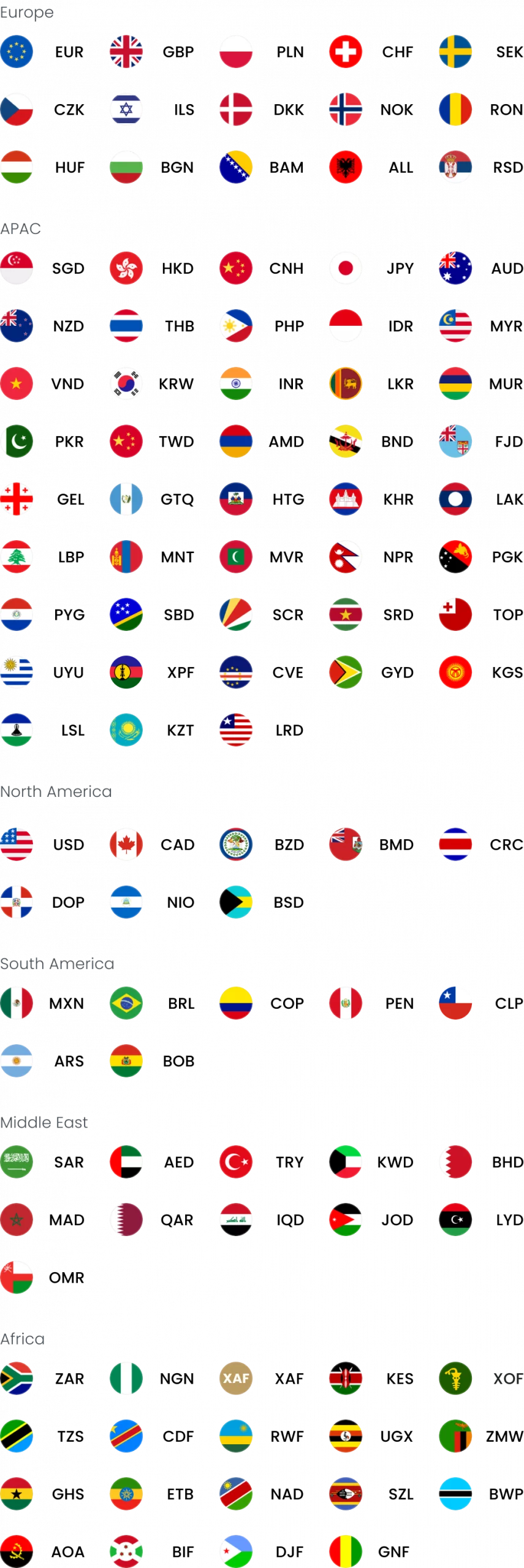
- Local receiving accounts in 20+ currencies. Receive payments for free in currencies like USD, EUR, GBP, AUD, CNH, SGD, and JPY with no setup or maintenance fees.
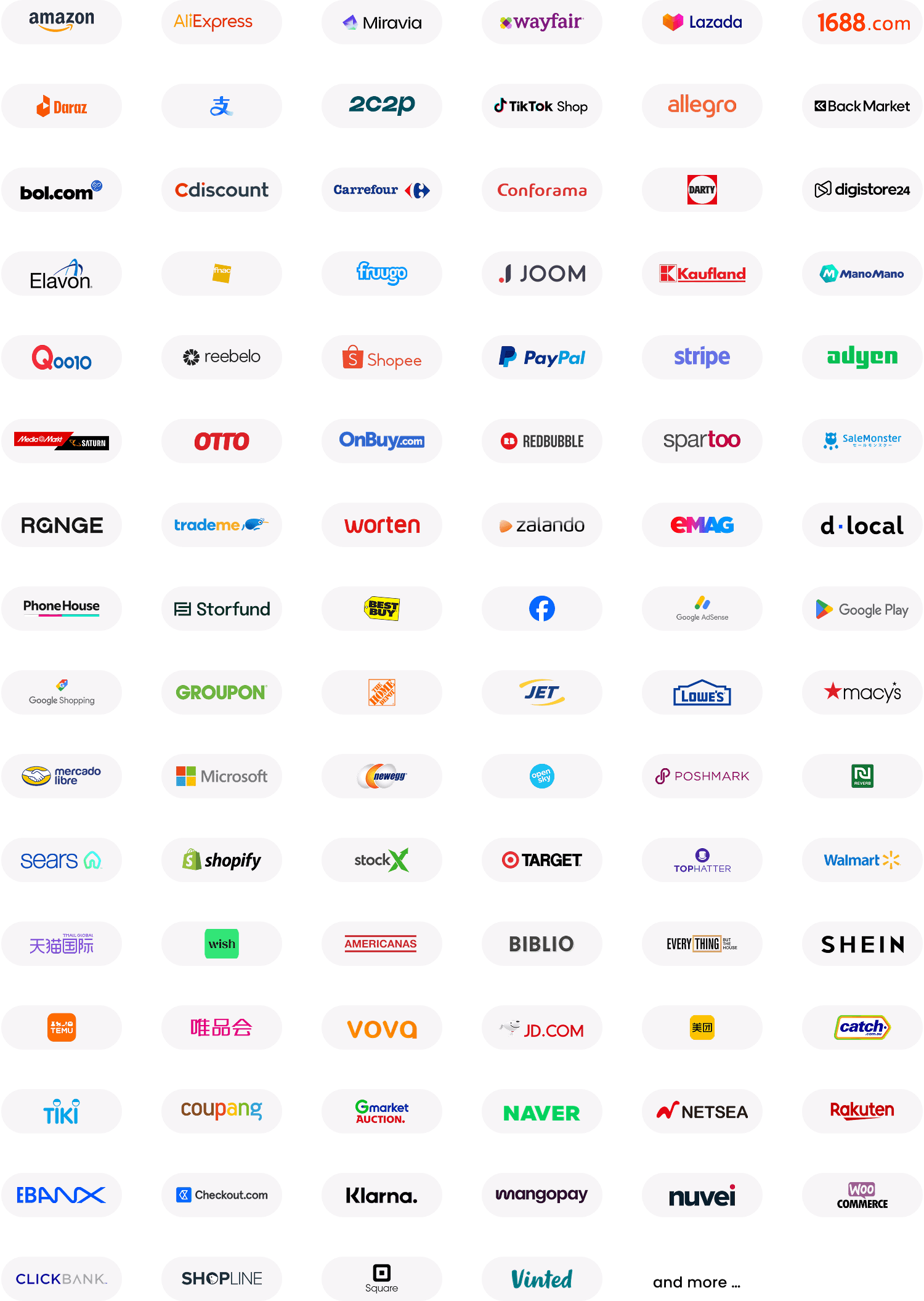
- Marketplace and payments integrations. Collect revenue from 130+ global marketplaces – including Amazon, AliExpress and Etsy – plus platforms like Stripe and PayPal.
- FX and risk management tools. FX mark-ups are capped at 0.5% on major currencies. Lock in rates up to 24 months ahead with forward contracts or set target rates with firm orders.
- Bulk payments and global transfers. Pay up to 200 recipients at once, send money to 200+ countries in 100+ currencies, and access same-day transfers for 80% of payments.
- Multi-currency card (World Card). Pay in 15 major currencies with 0% FX fees, earn cashback, and issue up to 20 virtual cards with adjustable spending limits.
- Accounting integrations. Seamlessly connect to Xero or NetSuite to sync transactions, manage inventory, reconcile payments and simplify tax preparation.
- Easy online setup. Generate new receiving accounts instantly from your dashboard — no bank visits, no paperwork delays.

Other multi-currency account alternatives
1. Wise Business
Wise Business is one of the best-known alternatives for companies that need transparent, low-cost international transfers and a straightforward way to hold and manage multiple currencies.
Key features:
- Hold 40+ currencies and convert at the mid-market exchange rate
- Local receiving details in major currencies including USD, EUR, GBP, AUD and NZD
- Batch payments for paying multiple suppliers at once
- Expense cards for team members, with spend controls
- Integrations with Xero and QuickBooks for seamless reconciliation
Considerations:
Wise is excellent for transparency and simplicity, but lacks some advanced FX tools (like forward contracts) and deeper marketplace integrations that fast-growing e-commerce businesses may need.
2. Revolut Business
Revolut Business is designed for businesses with distributed teams, offering a blend of multi-currency banking, expense management and corporate card capabilities.
Key features:
- Hold and exchange 25–30+ currencies
- “Borderless” account details for key regions
- Physical and virtual employee cards with granular spending controls
- Automated expense capture (receipt scanning, categorisation)
- Integrations with Slack, Xero, QuickBooks and other workflow tools
Considerations:
Revolut charges subscription fees for higher-tier accounts, and FX fees can vary depending on your plan and transaction volume. Receiving account coverage is also narrower than some competitors.
3. Airwallex
Airwallex is a global payments and financial operations platform geared towards e-commerce sellers, SaaS companies, and businesses scaling internationally.
Key features:
- Multi-currency wallets supporting 45+ currencies
- Local bank details in regions including the US, UK, EU, Australia, China and more
- Competitive FX rates and low transfer fees
- Batch payments for supplier networks
- Spend management tools and virtual cards
Considerations:
Airwallex is powerful but may be more complex than necessary for smaller businesses with straightforward needs. Some features vary by region.
Final thoughts
Tracking multi-currency business spending doesn’t have to be complex. With the right multi-currency account, you can centralise global balances, reduce FX costs, and gain real-time visibility over where your money is going. The key is choosing a solution that matches your scale, transaction volume, and international footprint.
For growing businesses with cross-border revenue and expenses, WorldFirst stands out by combining multi-currency holding, transparent FX pricing, global payments, and accounting integrations in one platform. By managing everything in a single dashboard, businesses can spend less time on admin and more time focusing on international growth.
FAQs
1. How does a multi-currency account help track global spending?
It centralises all currency balances and transactions, simplifying reconciliation and reducing FX costs. Providers like WorldFirst offer real-time dashboards for easier visibility.
2. Do multi-currency accounts reduce conversion fees?
Yes. They let you hold funds in foreign currencies until needed, avoiding forced conversions. WorldFirst caps FX mark-ups on major currencies for predictable costs.
3. Can I pay international suppliers directly from a multi-currency account?
Absolutely. You can pay suppliers in their local currency, often without extra fees. WorldFirst supports payments to 200+ countries in 100+ currencies.
4. Are virtual multi-currency cards secure?
Yes. Virtual cards include features like spend limits, instant freezing and 3D Secure. WorldFirst’s World Card provides additional fraud protection for global transactions.
5. Do multi-currency accounts integrate with accounting software?
Most do. Integrations help automate reconciliation and streamline reporting. WorldFirst connects with tools like Xero and NetSuite for smoother bookkeeping.
Sources
https://www.revolut.com/business/multi-currency-account
Continue reading


Subscribe
The Weekly Dispatch
Get the latest news and event invites. Signup for our weekly update from the worlds of fashion, design, and tech.