





























Home > blog > Global Business Tips > 12 tips to improve the supplier payments process in 2026 [definitive guide]
12 tips to improve the supplier payments process in 2026 [definitive guide]
Last update:


Supplier payments remain a weak point for many UK businesses.
Late settlement is widespread: 90% of UK companies have experienced late payments, with average delays of around 32 days. For SMEs in particular, these delays restrict cash flow and increase reliance on short-term financing.
Cross-border payments add further pressure. International money transfers can take several days to reach suppliers and typically cost far more than domestic payments. FX margins are often built into bank rates, making the actual cost of paying overseas suppliers difficult to see and harder to control.
Modern payment infrastructure offers a more efficient approach. Multi-currency accounts, local payment rails, corporate cards and automated workflows allow businesses to pay suppliers faster, reduce FX costs and maintain control over outgoing payments.
This guide outlines 12 practical steps to improve your supplier payments process in 2026, focused on speed, cost and operational reliability for UK businesses trading internationally.
Key takeaways:
- Supplier payment reliability directly affects supply chains: Late and unpredictable payments still disrupt UK businesses, limiting cash flow and weakening supplier relationships
- Cross-border payments create cost and timing risks without proper setup: International supplier payments often take longer to settle and incur hidden FX costs through intermediaries. Without local rails and FX control, routine overseas payments introduce avoidable margin and planning risk
- Process gaps cause more problems than funding gaps: Administrative errors, unclear terms and invoice disputes drive a large share of late payments. Standardised workflows, clear documentation and automation remove friction before payments reach execution
- Modern payment tools give businesses control over speed, cost and risk: Multi-currency accounts, local bank details, FX hedging, batching and automated reconciliation allow UK businesses to pay suppliers faster, reduce FX exposure and manage payments at scale with fewer manual touchpoints
- World Account from WorldFirst brings these capabilities together in one platform: For UK businesses that pay suppliers internationally, the World Account centralises supplier payments, supports 100+ payout currencies, enables holding and paying in 20+ currencies, offers transparent FX pricing and integrates with accounting systems
Open a World Account to centralise supplier payments, hold and pay in multiple currencies and keep FX costs predictable.
Why improving your supplier payments process matters in 2026
Supplier payments influence how reliably goods move through your supply chain and how confidently suppliers commit time, stock and capacity.
Supplier expectations are tightening as supply chains stay under pressure
Suppliers now pay close attention to how and when they get paid. UK government and industry research shows that over half of businesses experience supplier disruption linked to late payments and supplier cash flow pressure, particularly in manufacturing and goods supply chains.
When payments arrive late, suppliers slow production, delay the release of goods or prioritise customers with a stronger payment record. Delays can push back production slots, disrupt shipping schedules and increase costs across the supply chain.
International business payments add friction, not just distance
Paying suppliers overseas introduces delays that domestic payments avoid. For time-sensitive supply chains, delays alone can create uncertainty.
Intermediary banks still process many cross-border payments, adding fees and FX margins that only become clear after settlement. Exchange rate movements during that window can change the final cost of a supplier invoice.
Without faster settlement and more precise FX control, routine supplier payments become a source of avoidable risk rather than a stable part of operations.
12 practical tips to improve your supplier payments process in 2026
The steps below focus on how UK businesses can simplify foreign supplier payments, reduce cost and friction and pay overseas partners more reliably.
1. Standardise and digitise your payment workflow
Fragmented invoicing formats, email-based approvals and manual data entry create hidden blockages that compound over time. When responsibility is unclear and processes differ by supplier, finance teams spend more effort correcting issues than executing payments.
UK government data shows that around 36% of late supplier payments are caused by administrative errors, highlighting how often delays are procedural rather than financial.
A standardised, digital workflow removes dependency on individuals and replaces judgment calls with defined steps. Invoices move predictably from receipt to approval to payment, reducing exceptions and making settlement timing easier to manage at scale.
How to strengthen the workflow:
- Move suppliers to e-invoicing to prevent lost or duplicated invoices
- Replace email approvals with automated approval chains
- Integrate payments directly with accounting software such as Xero or QuickBooks
- Apply one consistent workflow across all suppliers, limiting exceptions
Consistency reinforces this structure. Most UK businesses already meet agreed payment terms and many pay early. Automation helps sustain that reliability without last-minute processing or manual intervention.
2. Negotiate and clearly define payment terms upfront
Payment issues frequently originate from misaligned expectations rather than an unwillingness to pay. Suppliers prioritise cash flow certainty, while buyers manage working capital. When terms are vague, unrealistic or poorly documented, disputes arise later and payments stall.
Effective payment processes begin with terms that reflect the commercial reality of the relationship. A high-volume manufacturer may accept longer settlements in exchange for predictable demand, while a smaller supplier may value faster payment over headline pricing.
How to structure terms more effectively:
- Tailor payment terms based on supplier size, risk and strategic importance
- Evaluate early-payment discounts as part of cash-flow planning
- Avoid applying identical terms across suppliers with very different profiles
Once agreed, clarity is essential. Around 31% of late payments come from invoice disputes, often due to missing or inconsistent information.
Alternative options include:
- Record terms clearly in contracts and supplier master data
- Ensure every invoice states currency, due date and discount conditions
- Keep procurement and finance aligned on the same definitions
3. Use multi-currency accounts and local bank details
International supplier payments become expensive and unpredictable when every transaction triggers a conversion or international wire. Paying suppliers in their local currency removes a major source of friction and improves settlement reliability.
Holding foreign currency balances also changes the decision point. Rather than converting automatically at payment, you decide when to execute FX and retain pricing control.
How to reduce currency and routing friction:
- Hold balances in currencies you pay regularly
- Pay suppliers in their local currency rather than converting from GBP each time
- Avoid repeated conversions on recurring payments
Local bank details matter just as much. When suppliers receive funds as domestic transfers, settlement is faster and fees are lower.
How to make supplier payments settle faster and more predictably:
- Use local receiving accounts for major supplier markets
- Reduce reliance on SWIFT and correspondent banking routes
- Improve predictability for suppliers waiting on funds
4. Lock in FX rates instead of absorbing volatility
Foreign exchange risk often hides inside timing. When invoices wait for approval or payments sit in transit, exchange rates can move enough to materially change costs, particularly on high-value or recurring supplier payments.
Hedging tools allow businesses to fix costs in advance and plan margins with confidence.
How to manage FX more deliberately:
- Use forward contracts for known future payments
- Set target or firm orders to control execution rates
- Align FX planning with procurement cycles, not invoice dates
Even for spot conversions, visibility improves outcomes, so it’s necessary to:
- Monitor live FX rates rather than opaque bank pricing
- Time larger conversions deliberately instead of automatically
5. Use corporate payment cards where transfers add friction
Bank transfers are not always the most efficient way to pay suppliers. For recurring, lower-value or digital expenses, cards often reduce steps rather than add them.
Multi-currency business cards draw directly from held currency balances, allowing payments without FX fees and covering many costs that fall outside traditional supplier invoicing.
Where cards often work best:
- Software subscriptions and SaaS tools
- Digital advertising and online services
- Travel, logistics and utilities
Cards also simplify internal control:
- The payment platform captures transactions automatically
- Spending limits replace manual approvals
- Reconciliation is faster and cleaner
6. Use faster, local payment rails instead of defaulting to SWIFT
Many international payments still rely on correspondent banking networks designed decades ago. These routes introduce delays, intermediary fees and uncertainty around settlement timing.
Local payment rails offer a faster alternative. Where available, they allow international payments to behave more like domestic ones.
How to speed up settlement:
- Use SEPA for euro payments
- Use domestic ACH-style rails in supported markets
- Reserve SWIFT for complex or exceptional payments
Tracking also matters, therefore:
- Use payment tracking tools where available
- Monitor status to catch delays early
- Keep suppliers informed if compliance checks slow down settlement
7. Treat payment data as a risk factor, not an afterthought
Incorrect or outdated payment details remain a common cause of failed or delayed cross-border payments. Each failure adds cost, delay and supplier frustration.
How to reduce failure risk:
- Reconfirm bank details periodically
- Treat changes to supplier details as high-risk events
- Use dual approval for high-value payments
- Flag unusual updates automatically
Preventing errors before sending funds costs far less than correcting them later.
8. Batch and schedule payments to reduce cost and workload
Processing payments invoice by invoice increases transaction fees and manual effort. Batching payments by currency or region simplifies execution and improves FX efficiency.
It also reduces the chance of missed invoices during busy periods.
How to batch more effectively:
- Group payments by currency or country
- Set regular payment runs instead of ad hoc transfers
- Use bulk upload or batch approval tools
For example, settling all euro invoices in one SEPA payment reduces both fees and admin.
9. Use financing tools to stabilise supplier relationships
Late payment is not always avoidable, but supplier disruption often is. Financing tools can bridge gaps without damaging trust or continuity.
Used selectively, they support suppliers while preserving flexibility.
Options to consider:
- Supply chain finance for strategic suppliers
- Invoice financing for seasonal or project-based demand
- Government-backed export finance where eligible
These tools work best as targeted support, not permanent substitutes for process improvement.
10. Treat payment reliability as part of supplier performance
Suppliers assess customers not only on price but also on their reliability in paying. Payment behaviour influences prioritisation, lead times and willingness to negotiate.
Clear communication reduces friction even when issues arise.
How to strengthen relationships:
- Communicate payment schedules clearly
- Confirm when payments are sent
- Resolve issues early
Consistent on-time payment builds leverage without renegotiation.
11. Automate reconciliation to improve visibility and control
Manual reconciliation slows reporting and hides inefficiencies. Integrated systems keep financial data current and usable.
Automation improves accuracy and shortens reporting cycles.
What to automate and track:
- Invoice-to-payment matching
- Ledger updates and FX reconciliation
- KPIs such as DPO, late payment rate and failure rate
12. Choose payment partners that match how your business actually trades
Payment infrastructure should reflect how your business operates, not force workarounds. Many traditional providers design their systems around single-currency, domestic models that struggle with global supplier networks.
The right payment partner reduces operational complexity by consolidating accounts, FX, cards and reporting into a single environment.
How to evaluate partners:
- Assess FX transparency, not just headline rates
- Review settlement speed and routing options
- Ensure support for multi-currency accounts and cards
- Check integration with accounting and ERP systems
How the World Account improves the supplier payments process for UK businesses
Paying suppliers across borders introduces complexity that traditional business accounts cannot handle effectively. Multiple currencies, long settlement times, unclear FX pricing and fragmented approval processes create friction, slow operations and put pressure on cash flow.
The World Account from WorldFirst addresses these challenges directly. Instead of treating international supplier payments as exceptions, it gives UK businesses infrastructure that supports regular, high-volume cross-border payments as a standard part of operations.
Faster payments across global supply hubs
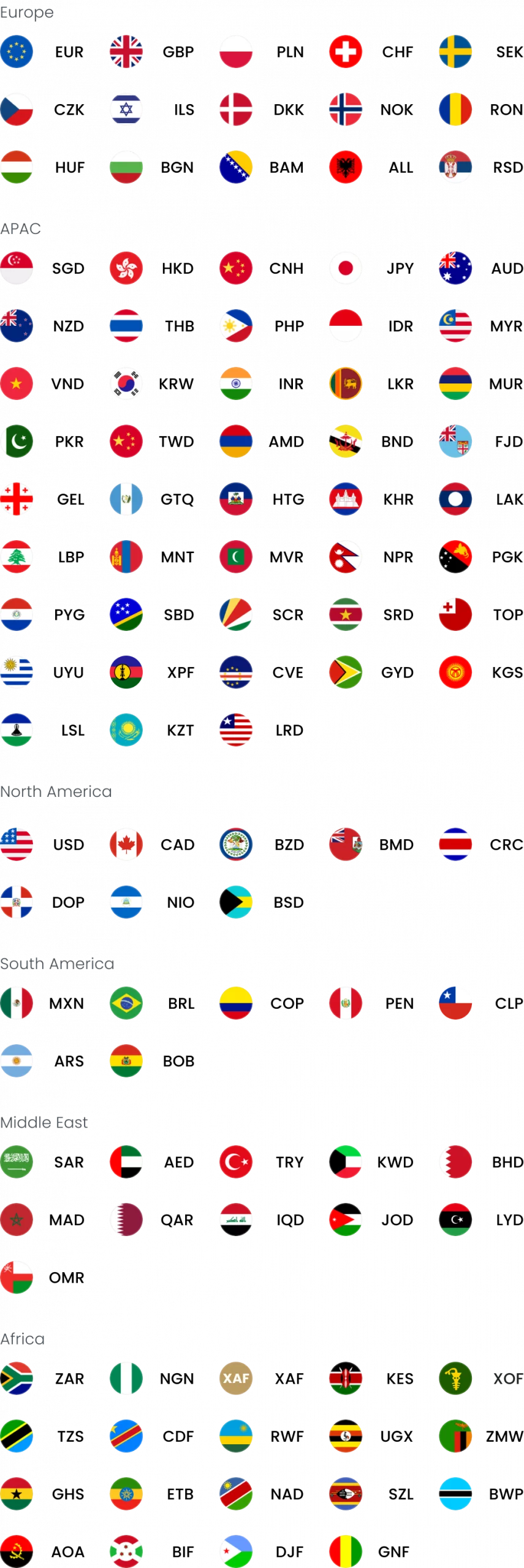
The World Account supports supplier payments in 100+ currencies, using local payment rails where available instead of defaulting to international wires. This shortens settlement times and improves predictability for suppliers in major manufacturing and sourcing regions, including Europe, North America and Asia.
For suppliers, this means:
- Faster access to funds
- Fewer intermediary deductions
- Clearer expectations around when payments arrive
Hold and manage more than twenty currencies in one account
The World Account allows UK businesses to hold and manage 20+ currencies in one place. This separates FX decisions from payment execution, allowing teams to convert funds strategically rather than automatically.
Holding balances enables businesses to:
- Avoid repeated or unnecessary conversions
- Pay suppliers directly in their preferred currency
- Align outgoing payments with incoming revenue by currency
This approach supports smoother supplier relationships and more predictable cost management, particularly for businesses with recurring overseas payments.
Clear, real-time visibility across balances and transactions
The World Account provides a single dashboard showing balances, transactions and payment activity across all supported currencies.
This visibility supports:
- More accurate cash-flow forecasting
- Faster payment approvals
- Cleaner month-end reconciliation
Competitive FX rates that support margin control
WorldFirst offers competitive FX rates with transparent pricing, allowing businesses to understand conversion costs before executing payments.
For businesses operating at scale, even minor improvements in FX pricing can materially affect profitability over time.
User permissions and structured approval workflows
The World Account includes customisable user permissions, enabling businesses to assign roles that align with internal controls. Teams can separate responsibilities for viewing balances, approving payments and executing transfers without adding complexity.
This structure helps businesses:
- Maintain clear internal controls
- Reduce reliance on manual oversight
- Scale payment operations securely
Integrations that simplify reconciliation and reporting
The World Account supports NetSuite integration, allowing payment data to flow directly into accounting and ERP systems.
For finance teams, this means less time fixing discrepancies and more time managing cash flow strategically.
By combining multi-currency holding, local payment rails, FX transparency, permissions and accounting integration into a single platform, the World Account simplifies supplier payments without adding operational layers.
Improve your supplier payments process with infrastructure built for international trade.
Open a World Account today to pay suppliers faster, manage currencies in one place and keep control over FX costs as your business grows.
Sources:
- https://www.gov.uk/government/publications/payment-practices-and-performance
- https://www.fsb.org.uk/resources-page/time-is-money.html
- https://www.gov.uk/government/collections/payment-practices-reporting
- https://www.worldfirst.com/uk/
- https://wise.com/gb/blog/international-business-payments-hidden-costs
- https://www.currencycloud.com/
- https://www.fxcintel.com/
- https://www.swift.com/our-solutions/swift-gpi
- https://www.mckinsey.com/industries/financial-services/our-insights
- https://www.gov.uk/government/organisations/uk-export-finance
- https://www.british-business-bank.co.uk/
- https://www.oecd.org/trade/
Jennifer Dodd leads marketing for WorldFirst UK, and has over 20 years' experience in financial services and publishing.

Jennifer Dodd
Author
Continue reading


Subscribe
The Weekly Dispatch
Get the latest news and event invites. Signup for our weekly update from the worlds of fashion, design, and tech.
You might also like
Choose a product or service to find out more

E-commerce guides


Doing business with China

Exploring new markets

Business Tips

International transactions
E-commerce expansion guides
Doing business with China