
























Home > blog > International Transactions > 9 best Wallex Singapore alternatives: fees and features
9 best Wallex Singapore alternatives: fees and features
Last update:


Many smaller businesses from Singapore choose Wallex for one clear reason: it makes cross-border payments manageable. The interface is straightforward, onboarding is efficient, and the platform is generally suitable for basic international transfers.
The pressure starts when payment volumes rise. FX spreads become harder to track, payout options feel limited, and finance teams start working around the platform rather than through it.
That is usually the moment businesses pause and ask a practical question: Is Wallex still the right tool for how we move money now?
This article compares nine alternatives to Wallex Singapore, focusing on fees, currency handling, settlement speed, and how each platform supports real Singapore business workflows, from paying overseas suppliers to managing multi-currency balances at scale.
What is Wallex?
Wallex is a Singapore-based platform that provides foreign exchange and international payment services for businesses trading across borders.
In Singapore, Wallex is regulated under the Payment Services Act and operates with oversight from the Monetary Authority of Singapore.
Businesses most often use Wallex to handle overseas transfers, manage currency conversion, and hold funds in multiple currencies for supplier payments, international invoices, and ongoing cross-border expenses.
How Wallex performs on review platforms and where limitations appear
Reviews of Wallex on public platforms show opinions are mixed, with some users citing friction and unexpected issues as they scale their use of the platform.
On Trustpilot, Wallex shows a surprisingly low TrustScore, with a high share of negative ratings and few positive reviews. Many reviewers are disappointed with their overall experience.
On Feefo, feedback is more balanced. The number of reviews is smaller, but the tone is generally more positive.
A closer look at user feedback and third-party commentary points to several recurring areas where limitations can appear:
- Issue resolution in complex cases: Some users report frustration when problems arise, especially with complex transfers or fund availability. Lower-rated feedback often mentions slower responses and longer resolution times
- Usability as activity increases: As transaction volumes grow, tracking payment history or reconciling multiple transfers can feel less straightforward, adding friction to day-to-day finance workflows
Confidence during exceptions: While routine transfers are generally smooth, confidence tends to drop in less common scenarios, such as manual reviews or compliance checks, where processes may feel less predictable
Key factors to consider when choosing a Wallex alternative
When choosing a Wallex alternative, businesses should focus on the aspects below:
- Currency handling without forced conversion: Supporting a currency is only useful if you can hold it, reuse it across payments, and move funds without repeated conversion. Platforms that require frequent FX between steps often introduce cost and friction as transaction volumes grow
- FX pricing you can understand and predict: FX cost isn’t just the advertised fee. Platforms apply spreads differently depending on the currency pair, transaction size, and settlement timing. Strong alternatives make pricing transparent before execution and consistent enough to support forecasting
- Settlement speed and access to funds: Faster payments matter only if funds are usable quickly. Clear cut-off times, reliable settlement windows, and same-day or near-real-time access to cleared balances reduce cash flow pressure and avoid delays in paying suppliers or fulfilling orders
- Alignment with existing finance operations: As payment activity increases, manual exports and uploads become a risk. Direct integration with finance and commerce platforms helps maintain reconciliation, reporting, and controls
Support during non-standard scenarios: Routine transfers rarely test a platform. Issues around compliance checks, payment holds, or failed transfers are where limitations tend to appear. Consistent response times and clear escalation paths matter more than general availability
9 best Wallex Singapore alternatives
The table below compares 10 Wallex Singapore alternatives based on their performance in international payment workflows:
| Provider | Currencies | Local accounts | FX markup / fees | Transfer speed | Integrations |
| WorldFirst World Account | 100+ | 20+ (USD, EUR, GBP, AUD, SGD, JPY, etc.) | Up to 0.6% on major currency pairs | Same-day or next-day for major currencies | Amazon, Shopee, Shopify, 1688.com, Xero, NetSuite |
| Revolut Business | 25+ | Yes (selected currencies) | Plan-based FX with limits; markup beyond allowance | Same-day for supported corridors | Accounting tools, business API |
| Airwallex | 20+ | 20+ local account details | Markup varies by volume and corridor | Same-day or near-real-time for major routes | NetSuite, accounting and finance tools |
| Wise Business | 40+ | Yes (local details for major currencies) | Mid-market rate + transparent fee | Same-day to 2 business days | API, e-commerce and finance tools |
| Payoneer | Multiple ( marketplace-led) | Yes (selected currencies) | FX margin varies by corridor | 1–3 business days | Marketplaces and platform partners |
| OFX | 30+ | Yes (selected currencies) | Margin varies; lower for high-value transfers | Same-day or next-day for major routes | Limited (transfer-focused) |
| PayPal Business | 100+ supported for acceptance | No | FX spread applied at conversion | Instant acceptance; settlement varies | Shopify, WooCommerce, checkout tools |
| CurrencyFair | 20+ | No | FX margin + flat transfer fee | 1–3 business days | None |
| Skrill | 40+ | No | FX margin varies by method | Instant within Skrill; external varies | API, mass payout tools |
1. WorldFirst
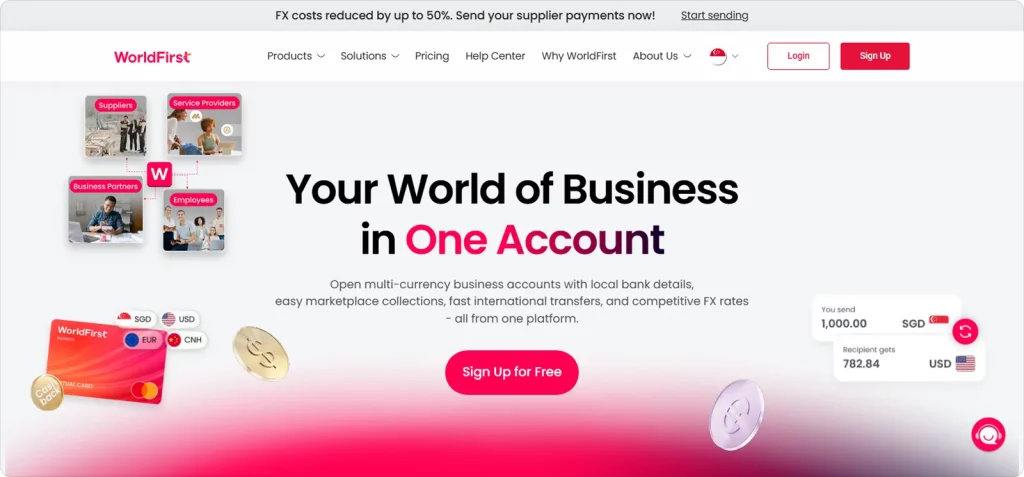
WorldFirst provides a multi-currency business account for Singapore companies that trade internationally. While WorldFirst is not a bank, it operates as a payments and FX platform built to support cross-border trade.
Through the World Account, businesses can receive, hold, convert, and pay in multiple currencies from a single account, without opening local bank accounts in each market.
This structure suits importers, exporters, manufacturers, wholesalers, and e-commerce businesses operating across Asia, the US, and Europe.
Key features:
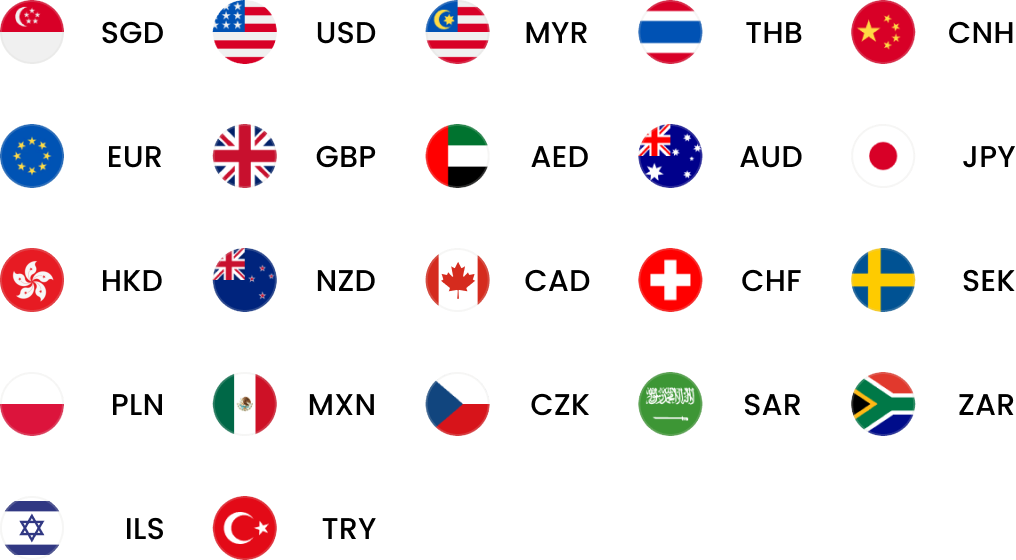
- Multi-currency account for international operations: Businesses can hold and manage funds in 20+ major currencies and make payments in 100+ currencies, reducing unnecessary FX conversion and improving control over timing
- Overseas supplier payments: Singapore businesses can pay suppliers directly in key sourcing markets such as China and the US, avoiding delays and deductions often introduced by correspondent banking chains
- FX execution designed for active trading: WorldFirst focuses on FX execution that supports operating margins, which becomes increasingly important as transaction volumes and currency exposure grow
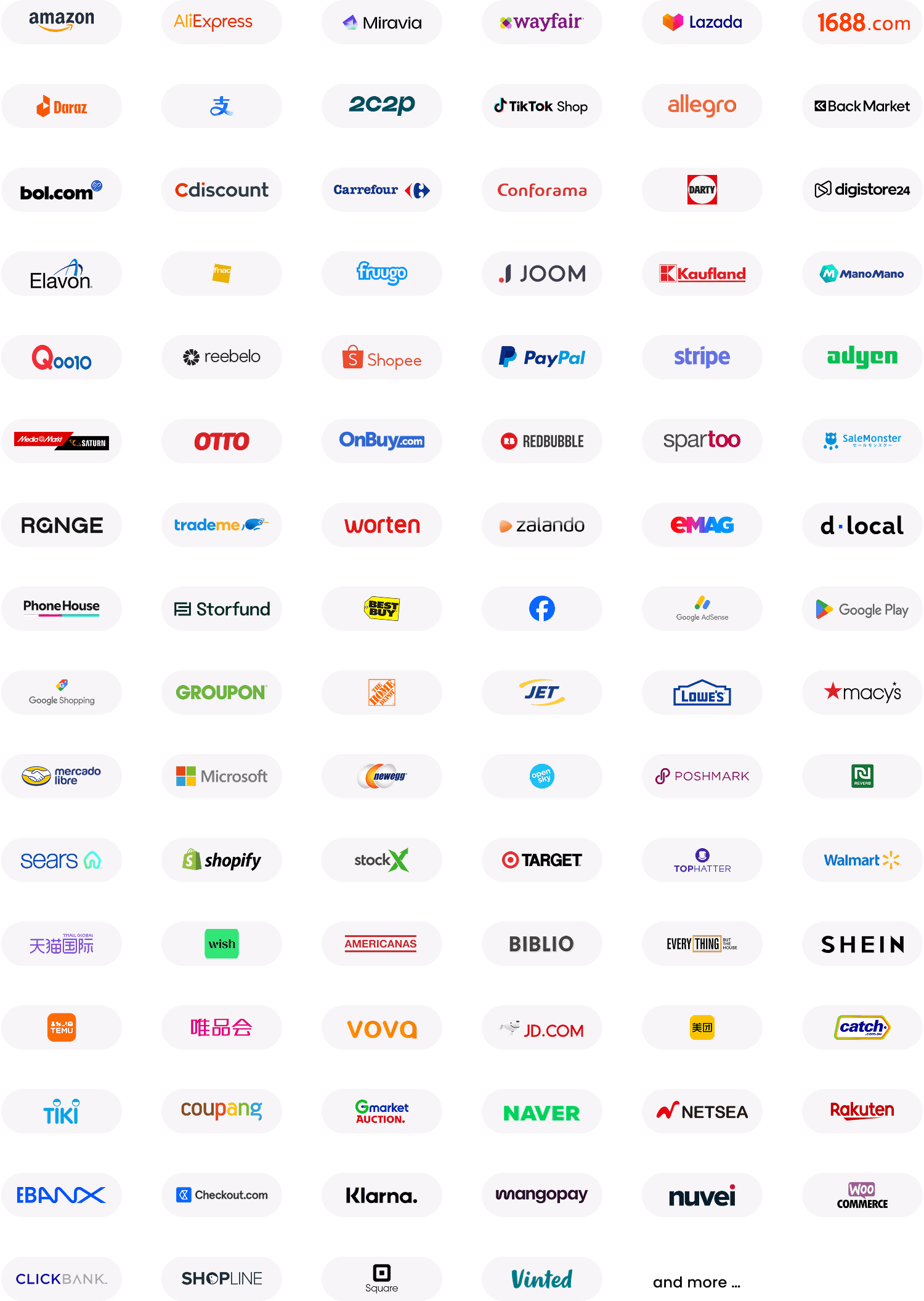
- Marketplace and platform payouts: The World Account supports collections from major international marketplaces and payment platforms, helping sellers manage multi-region revenue through a single operating account
- Finance system integration: Integrating with accounting and ERP systems, such as NetSuite, helps simplify reconciliation as payment activity increases
Why WorldFirst is a strong Wallex alternative in Singapore:
Wallex often fits simpler, transfer-led use cases. WorldFirst is designed for ongoing cross-border activity rather than one-off transactions, giving businesses more control over timing and cash flow across markets.
For Singapore companies managing international payments day-to-day, it provides a more consistent way to run cross-border operations.
Power your global growth with one account
Get local currency accounts, fast payments and competitive FX – all in one place.
2. Revolut
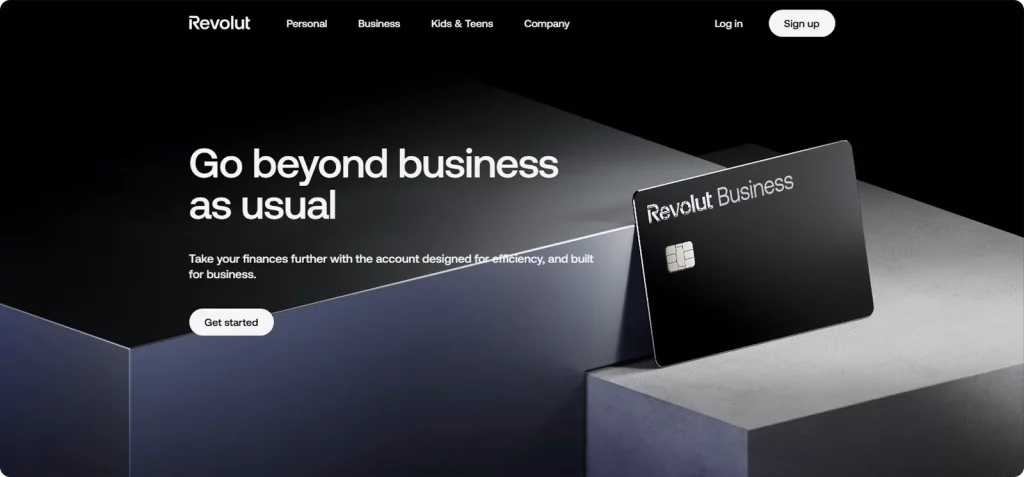
Revolut leans heavily into workflow convenience, with tools built around team access and company spend, not just international transfers.
A big part of the appeal is how quickly teams can move from account access to execution: issuing expense cards, setting internal controls, and connecting the account to other tools.
It also stands out for businesses that want to automate parts of finance operations through integrations and API-driven actions.
Key features:
- Multi-currency business account: Businesses can hold, send, and receive across supported currencies from one account
- Business API: Supports automation for payments and other account operations through API endpoints
- App integrations: Connects with external tools (including accounting and operational apps) to reduce manual workflows
- Singapore business account onboarding: Revolut provides an account path specifically for Singapore-registered businesses
Why Revolut is a strong Wallex alternative in Singapore:
Revolut may be a better fit for teams that want stronger day-to-day operating features around account access, integrations, and automation, rather than using the platform mainly for FX and transfers.
3. Airwallex
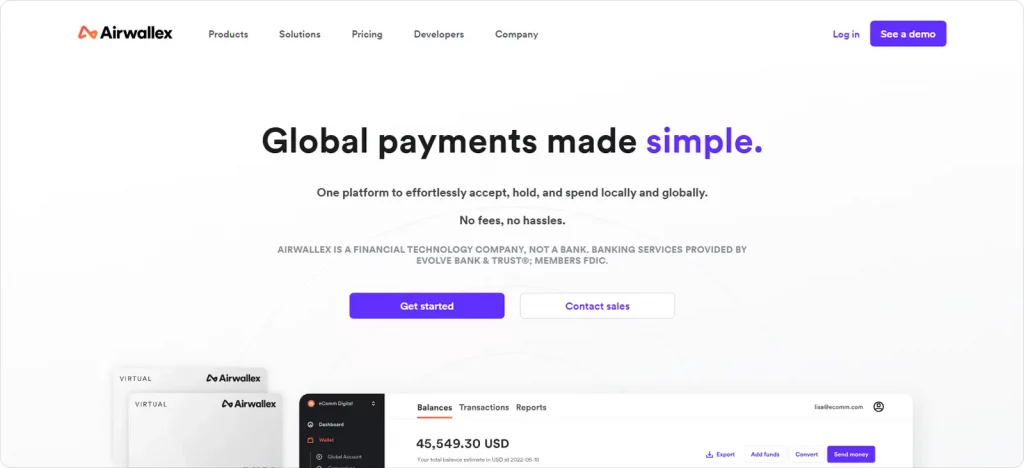
Despite the similar name, Airwallex is a different product from Wallex. Instead of focusing on sending money abroad as a standalone task, Airwallex offers a single platform that combines business accounts, FX and transfers, spend management, and payment acceptance.
Airwallex provides local account details for collections, a wallet-style model for holding funds, and tooling designed for businesses that manage cross-border revenue and expenses simultaneously, rather than sequentially.
Key features:
- Global Accounts + wallet: Provides global account capabilities, with incoming funds visible in the Airwallex wallet and managed there
- FX & transfers: Supports currency conversion and domestic and international transfers via its platform tooling
- Corporate cards and spend controls: Issues multi-currency cards and supports expense-related controls and workflows
- Business integrations: References integrations with finance systems such as NetSuite as part of its operating workflow
Why Airwallex is a strong Wallex alternative in Singapore:
Airwallex often competes as a broader operational platform when a business wants payments and FX to sit inside the same system as spend controls, card issuance, and finance integrations.
To understand where Airwallex performs well and where it has limitations, see our in-depth Airwallex review for Singapore businesses.
4. Wise
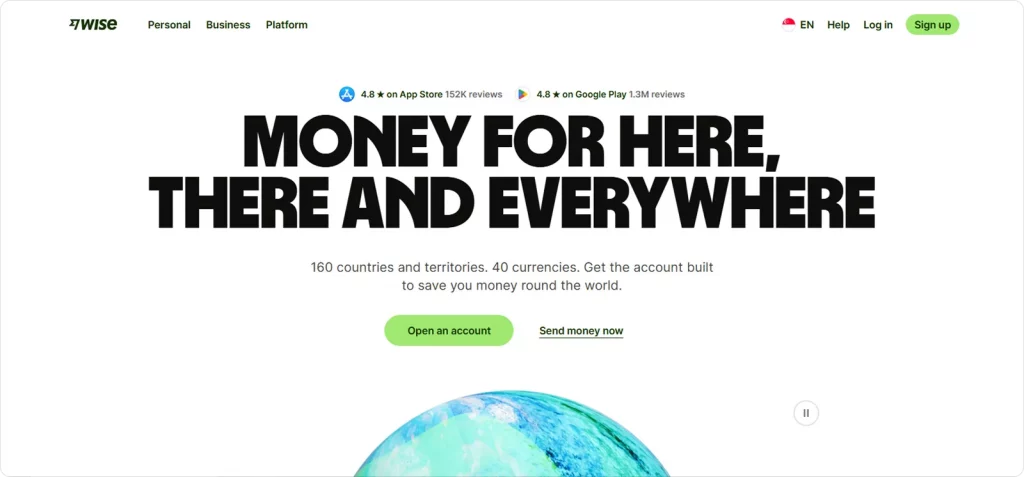
Wise is a good choice for repeatable, cost-visible cross-border payments, especially when the primary need is moving money cleanly between currencies without additional layers. It’s often treated as a utility: pay invoices, pay contractors, and keep conversion costs easy to understand.
Features like local account details for getting paid and batch payments for paying many recipients make it practical for finance teams that handle recurring international pay runs.
Key features:
- Batch payments: Supports batch payment workflows, including paying up to 1,000 transfers via upload
- Open API: Provides an open API for automating payments and connecting business tools
- E-commerce workflows: Wise describes use cases for receiving payouts and paying suppliers internationally
- Funds safeguarding and segregation: Wise safeguards customer funds by holding them separately from its own operating funds, in line with local regulatory requirements
Why Wise is a strong Wallex alternative in Singapore:
Wise tends to prevail when the core requirement is straightforward: predictable currency conversion costs and efficient recurring international payments. Businesses often choose it when they want fewer pricing surprises and a clean workflow for repeat payments.
If Wise is on your shortlist, our detailed Wise review breaks down how it performs for Singapore businesses managing regular international payments.
5. Payoneer
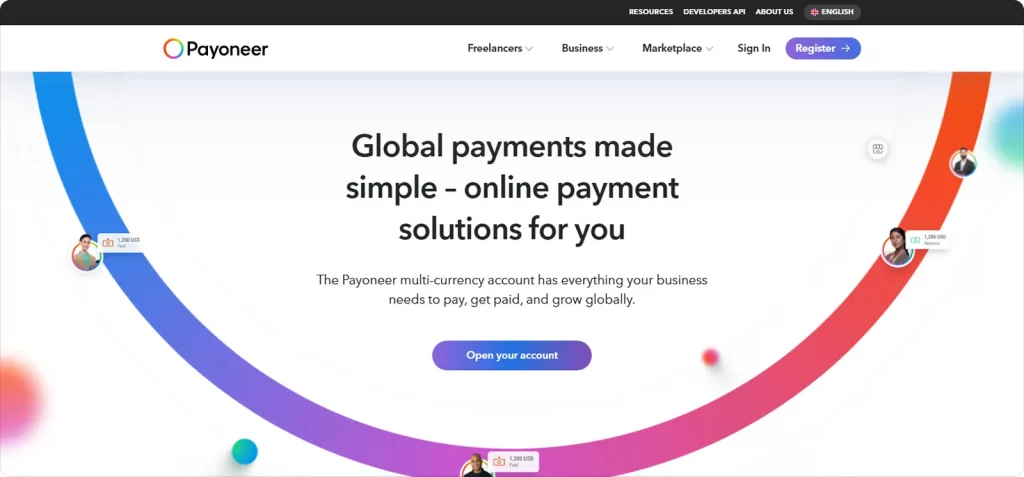
Payoneer is typically the choice when the business problem starts with getting paid internationally, especially from marketplaces and cross-border platforms, and then moving those funds through supplier and contractor payouts.
It’s strongly tied to e-commerce and platform-led revenue flows rather than classic treasury-style payments.
Key features:
- Get paid by clients and marketplaces: Payoneer sets up an account to receive payments from international clients and supported marketplaces
- Pay suppliers and business expenses: Payoneer enables payments to overseas suppliers and certain business expenses through the platform
- Mass payouts: Provides mass payout functionality designed for businesses that make high-volume payments to multiple recipients
- Local receiving accounts in multiple currencies: Payoneer offers local receiving accounts in selected currencies, enabling businesses to accept payments as domestic transfers in those markets rather than international wire transfers
Why Payoneer is a strong Wallex alternative in Singapore:
Payoneer is often the more practical option when the real need is marketplace-linked collection and payout workflows, rather than just FX conversion.
6. OFX
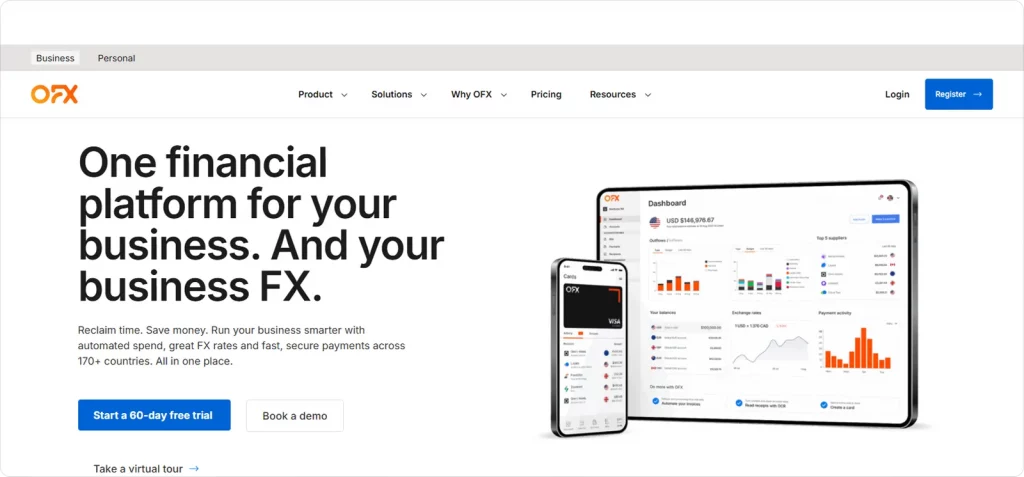
Businesses often use OFX when they care about execution quality on international payments, especially for planned transfers where rate timing and currency exposure matter more than building an operating account for daily workflows.
It’s one of the options businesses look at when they want mechanisms like forward contracts or target-rate tools alongside transfers, rather than a broader payments-and-spend platform.
Key features:
- Multi-currency global business accounts: OFX lets businesses receive, hold, convert, and pay in 30+ currencies from a single Global Business Account, simplifying international cash flow management
- Local details in major currencies: Some currency accounts provide local bank details (e.g., USD, GBP, EUR, CAD), letting clients receive funds “like a local” before conversion or payment
- Automated currency conversions and FX tools: Businesses can schedule payments, automate conversions, and use FX risk management tools such as forward contracts and limit orders to reduce exposure
- Corporate spend and payment automation: OFX supports direct bill and invoice payments from multi-currency accounts and offers corporate card support and payables automation to streamline recurring workflows
Why OFX is a strong Wallex alternative in Singapore:
OFX can be a better fit for teams that do not need multi-tool functionality and want a clear, provider-led transfer service.
7. PayPal Business
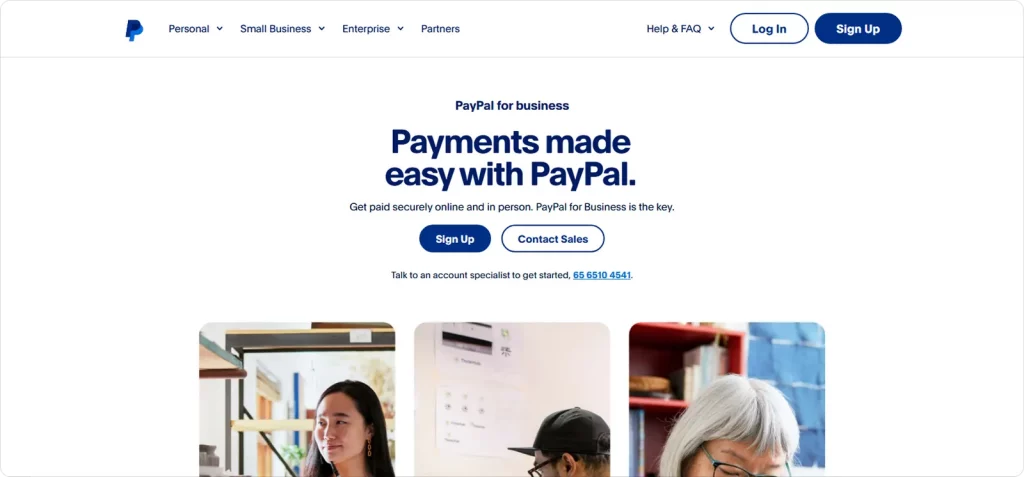
PayPal Business primarily functions as an acceptance layer, focusing on enabling payments across borders through checkout, invoicing, and online payment flows, rather than serving as a core system for multi-currency financial operations.
Businesses typically treat PayPal as a revenue collection rail first, and only then consider how to transfer funds out and settle balances.
Key features:
- Global customer reach: PayPal enables businesses to sell to customers in over 200 countries and accept payments in supported currencies
- Business invoicing: The platform includes tools that enable businesses to bill international customers across multiple markets and currencies
- Multi-currency payment handling: PayPal supports accepting and managing payments in multiple currencies, with guidance for merchants on how currency conversion works
- E-commerce-first integrations: PayPal plugs directly into online selling workflows and checkout experiences rather than operating as a standalone FX or treasury tool
Why PayPal Business is a strong Wallex alternative in Singapore:
PayPal becomes relevant when the business problem starts at checkout, invoicing, or customer payment acceptance, not at FX conversion. For sellers who prioritise customer-facing payment convenience, it may be a better fit than Wallex.
8. CurrencyFair
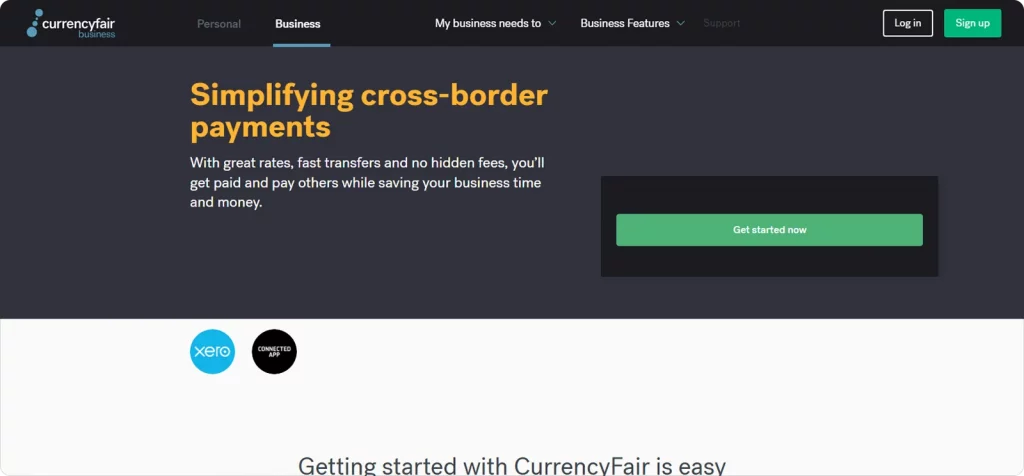
CurrencyFair is exchange-led. Businesses usually consider it when they want a more deliberate “exchange then transfer” model, rather than an always-on payments platform with many operating features.
Key features:
- Exchange-first payment flow: CurrencyFair frames its service around converting currency before payment, rather than managing ongoing multi-currency balances
- Peer-to-peer FX matching: Uses a peer-to-peer exchange model that matches buyers and sellers of currencies
- Supported corridors: Support for sending and receiving payments across more than 150 countries and 20+ currencies, covering the most common international trade routes
- Business pricing model: Describes a flat transfer-out fee combined with an FX margin, presented on its business pages as lower than typical bank pricing
Why CurrencyFair is a strong Wallex alternative in Singapore:
Compared with many Wallex-style alternatives, CurrencyFair is less about managing complex finance workflows and more about controlling currency conversion outcomes for international supplier or invoice payments.
9. Skrill

Skrill is closer to a merchant payment and gateway setup than a trade account platform. Its central proposition is helping businesses accept online payments across a broad range of payment options, with a multi-currency merchant account powering that acceptance.
It’s commonly associated with digital commerce, gaming and online services where fast internal transfers and wallet functionality are useful.
Key features:
- Multi-currency merchant account: Skrill allows businesses to hold and manage funds across 40+ currencies within a single merchant account
- Broad payment method coverage: The platform supports card payments alongside 100+ local payment options, depending on the market
- Batch payouts: Skrill enables businesses to send payments to multiple recipients in a single payout run
- Developer support for mass payments: Skrill offers file-based and API-based workflows to automate high-volume payouts
Why Skrill is a strong Wallex alternative in Singapore:
Skrill makes more sense when businesses tie the requirement to merchant payment acceptance or structured payouts rather than treasury-style FX management. It can be a workable alternative in specific commerce and payout scenarios, but it’s typically not chosen as a primary cross-border operating account.
Why the World Account is the strongest Wallex alternative for Singapore businesses
While many of the platforms reviewed above can replace Wallex in specific scenarios, one option stands apart when international payments become part of everyday operations rather than occasional transfers.
The World Account from WorldFirst operates as a purpose-built payments and FX setup rather than a traditional banking product. Instead of treating FX, holding funds, and payouts as separate steps, it supports how money moves through a business from collection to settlement.
The World Account allows you to:
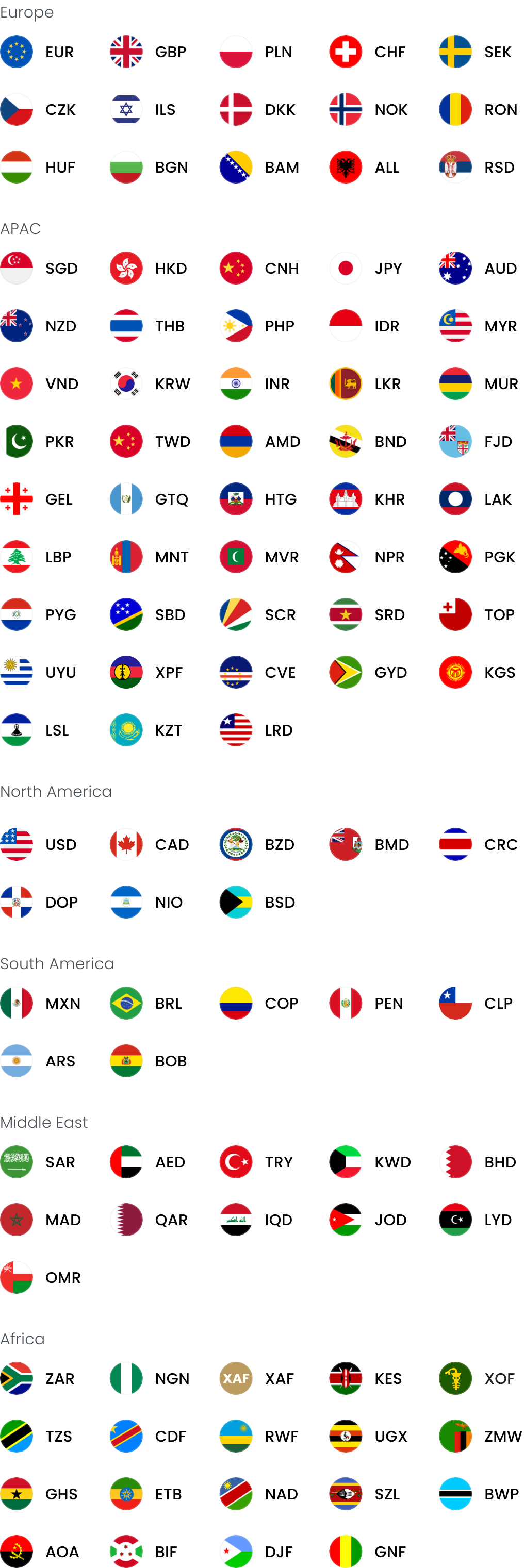
- Receive payments in 20+ currencies using local banking details, making it easier for overseas customers, marketplaces, and partners to pay you
- Hold and manage multiple currencies in a single account, reducing the need to convert between incoming and outgoing payments
- Send payments to 200+ countries and regions, supporting suppliers, partners, and operational payouts worldwide
- Manage FX exposure more strategically, including the use of tools such as forward contracts
These capabilities address the practical gaps that appear as payment volumes increase. Wallex is well-suited to straightforward FX and transfers. The World Account connects receiving, holding, conversion and payout into a single workflow built for ongoing cross-border activity.
For Singapore-based exporters, e-commerce businesses and service teams handling international payments day to day, that difference shapes how finance teams work.
Still comparing Wallex alternatives? Open a World Account to manage cross-border payments from Singapore, bringing multi-currency collection, holding and overseas payouts into one connected workflow.
- https://www.mas.gov.sg/regulation/acts/payment-services-act
- https://www.trustpilot.com/review/wallex.com
- https://www.feefo.com
- https://www.worldfirst.com/sg/world-account/
- https://www.worldfirst.com/sg/solutions/ecommerce/
- https://www.revolut.com/business/
- https://www.airwallex.com/sg/business-account/
- https://wise.com/sg/business/
- https://www.payoneer.com/business/
- https://www.ofx.com/en-sg/business/
- https://www.paypal.com/sg/business/
- https://www.currencyfair.com/business/
- https://www.skrill.com/en/business/

Joan Poon leads marketing across Southeast Asia at WorldFirst, driving growth and brand leadership in key markets including Singapore, Malaysia and the Philippines.

Joan Poon
Author
Head of Marketing SEA, WorldFirst Singapore
Continue reading


Subscribe
The Weekly Dispatch
Get the latest news and event invites. Signup for our weekly update from the worlds of fashion, design, and tech.
Open a World Account for free

Get local currency accounts, fast payments and competitive FX – all in one place.
You might also like
Choose a product or service to find out more

Customer Stories


Latest Happenings

e-Commerce & Online Sellers
Doing business with China

International Transactions

Foreign Currency Exchange
Doing business with China
The simpler way to pay and get paid
Save money, time, and have peace of mind when expanding your global business.