


















Products
About WorldFirst
Resources
More brands of Ant International
This country is supported by WorldFirst affiliates, Zyla
We provide coverage in South Asia and Middle East: servicing 210+ countries and territories.
WorldFirst Home > blog > International Transactions > Revolut vs Airwallex for business: which is better for Singapore SMEs?
If you’re comparing multi-currency platforms because you’ve outgrown a single domestic bank account, two names most likely keep coming up: Revolut Business and Airwallex.
Both promise cheaper FX than your bank and more efficient multi-currency accounts, but they price and build for very different operators.
The friction is real, and it’s measurable. Roughly 36% of Singapore SMEs report problems with cross-border payments, from delays to failed transfers. If your current provider can’t keep pace with your growth, a side-by-side comparison is the right next step before you commit to a switch.
This guide breaks down Revolut Business vs Airwallex and shows you where Singapore SMEs might still be underserved by both.
Open a World Account to see the full cost of your transfer before you confirm a transaction.
Checked against official provider pricing pages, 2026.
| Feature | Revolut Business | Airwallex |
| Founded | London, 2015 | Melbourne, 2015 |
| MAS licence | Major Payment Institution | Major Payment Institution (PS20200541) |
| Free plan | Basic, S$0/month | Explore, free |
| Entry paid plan | Grow, from S$15/month | Grow, S$79/month |
| FX model | Interbank within monthly allowance, then 0.6% (over allowance) or 1% (outside market hours) | Flat 0.4% (major currencies) or 0.6% (others) above interbank, all plans |
| Currencies held | 30+/35+ | 20+ |
| Free int’l transfers (entry paid plan) | 5/month (Grow) | Free local rails to 120+ countries |
| SWIFT transfer fee | S$8 beyond allowance | S$20 to S$35 |
Both providers are non-bank fintechs holding Major Payment Institution licences from the Monetary Authority of Singapore, but their corporate histories and safeguarding setups are different.
Airwallex was founded in Melbourne, Australia in 2015 by Jack Zhang, Max Li, Lucy Liu and two co-founders. It operates as an Australian-founded multinational with dual global headquarters in Singapore and San Francisco.
Revolut was founded in London in July 2015 by Nikolay Storonsky and Vlad Yatsenko, and launched in Singapore in 2019 as a consumer app, before Revolut Business became available to Singapore-incorporated companies.
Neither platform is a bank. If you’re used to DBS, OCBC, or UOB, the practical difference is that Revolut and Airwallex don’t offer lending or overdrafts. Your balances also aren’t protected by the Singapore Deposit Insurance Scheme the way an SGD savings account would be.
Read more:
Airwallex lets you hold and collect in 20+ currencies with local account details in over 70 countries.
Revolut Business allows you to hold, receive, and send payments in 25+ currencies. You can also transfer money to 150+ countries.
However, for a Singapore SME, the practical question isn’t the headline currency count but whether the currencies you actually deal with have proper local receiving details rather than being held in a generic multi-currency wallet.
Airwallex charges a flat 0.4% above the interbank rate on major currencies (SGD, USD, EUR, GBP, AUD, HKD, CNY and similar) and 0.6% on everything else, regardless of plan tier. Every conversion costs the same margin whether you’re on the free Explore plan or paying for Accelerate.
Revolut works differently:
For a small importer converting SGD to CNH for supplier payments, the practical implication is straightforward. If your monthly FX volume comfortably sits under your Revolut allowance and you can time conversions within market hours, Revolut can match or beat Airwallex’s flat margin.
If your volume is less predictable, Airwallex’s flat 0.4% to 0.6% is a safer choice, because there’s no allowance to track or breach.
Read more:
Airwallex runs three tiers:
The monthly fee is charged per legal entity.
Revolut Business has four plans:
On price alone, Revolut’s entry-level paid tier looks cheaper. But Revolut’s Basic (free) plan includes zero free international transfers and only five free local transfers a month, so an SME making even occasional supplier payments will likely need to upgrade or pay S$8 per transfer beyond the allowance.
Airwallex’s free Explore plan, by contrast, includes free local-rail transfers to over 120 countries, which changes the real cost comparison if you’re not ready to commit to a paid tier yet.
Airwallex reports that roughly 92% of transfers arrive same day, using free local rails to 120+ countries and SWIFT for the rest at S$20 to S$35 per transfer.
Revolut’s free transfers are capped by plan (0 for Basic, 5 for Grow, 25 for Scale, 50 for Enterprise), with S$8 per transfer beyond that and additional SWIFT OUR fees possible on top.
If you’re an established importer making recurring China or regional supplier payments, transfer predictability tends to matter more than the headline fee. Airwallex’s free-to-120-countries local rail structure is easier to forecast month to month than Revolut’s allowance-based model, where your fifth transfer is free but your sixth might not be, depending on your plan.
Transfers between accounts on the same platform are instant and free on both Revolut and Airwallex, which can be useful if you’re paying another business that uses the same provider.
Airwallex’s free Explore plan includes 10 free company cards with zero international transaction fees, rising to 50 on Grow and unlimited on Accelerate.
Revolut gives each team member up to 3 physical and 50 virtual cards, with spending available in 150+ currencies, though ATM withdrawals only work outside Singapore and incur a 2% fee.
Both let you spend directly from held balances to avoid extra conversion, and both integrate with Xero, QuickBooks and NetSuite for reconciliation. If card count and free-tier generosity matter more to your team’s expense management than currency breadth, Airwallex’s card allowance is the stronger starting point.
Choose Airwallex if:
Choose Revolut if:
Read more:
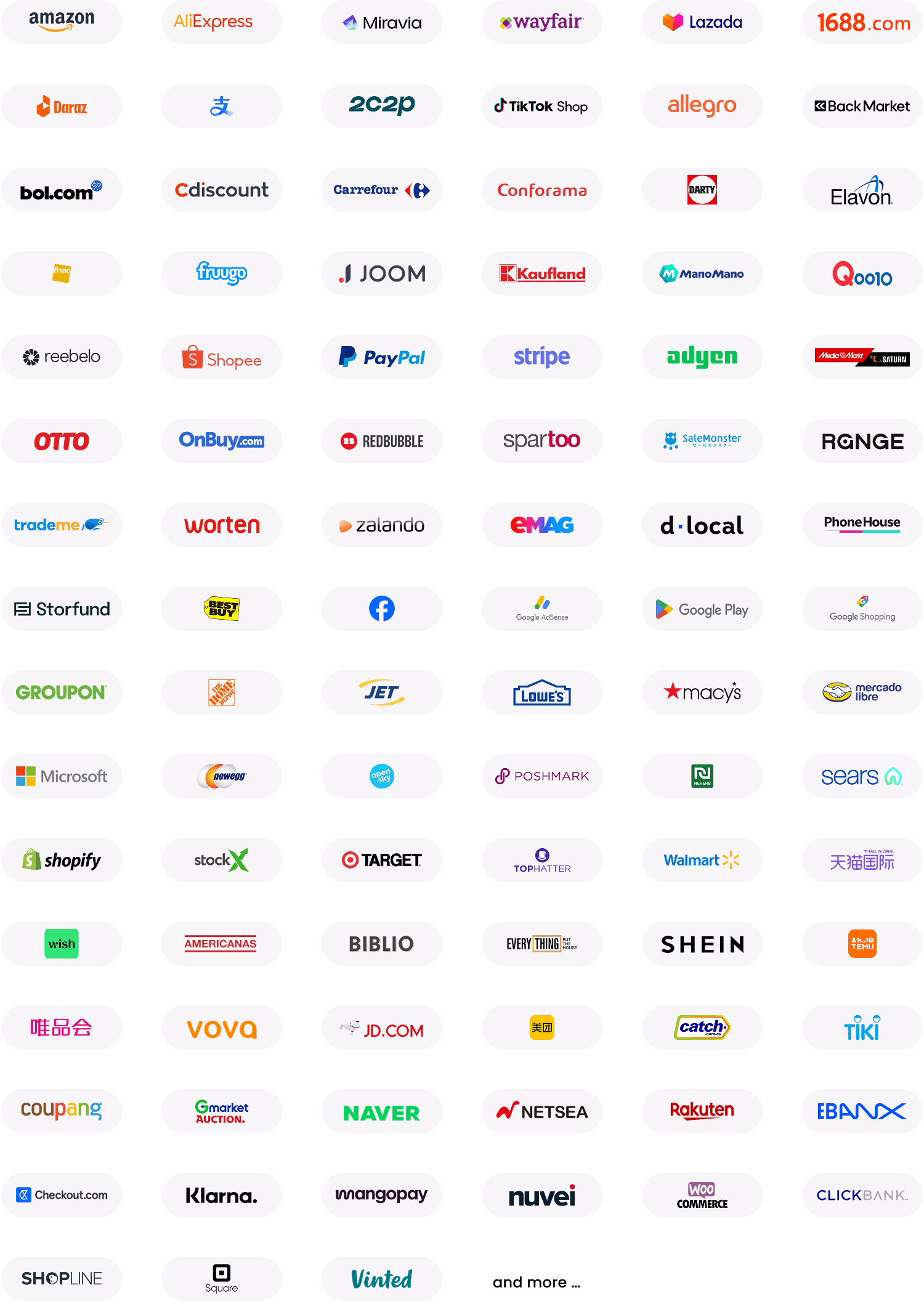
Where both platforms fall short is marketplace collections. Neither Revolut nor Airwallex is built to plug directly into Amazon, Shopee, Lazada, TikTok Shop or AliExpress payout structures the way a marketplace-focused multi-currency account can.
If you’re a seller drawing income from several regional and global marketplaces, that’s the gap worth checking before you commit to either platform.
Take a Tanjong Pagar trading SME sourcing electronics accessories from Shenzhen and selling on Shopee and Lazada. Every month, it pays a CNH deposit to its supplier, collects SGD and MYR payouts from two marketplaces, and needs to reconcile all of it without juggling three separate dashboards.
Under a typical bank-and-marketplace-payout setup, that SME absorbs a wider FX spread on the SGD-to-CNH conversion, waits for marketplace payouts to land in a domestic account before converting, and manually matches each payout against orders.
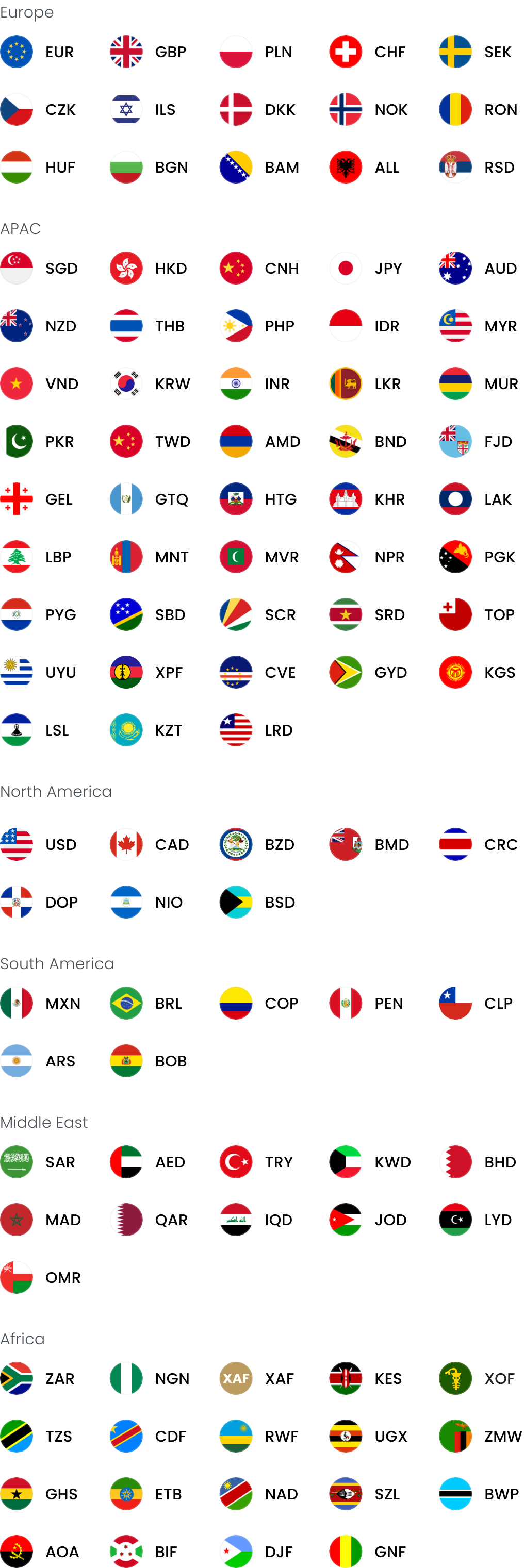
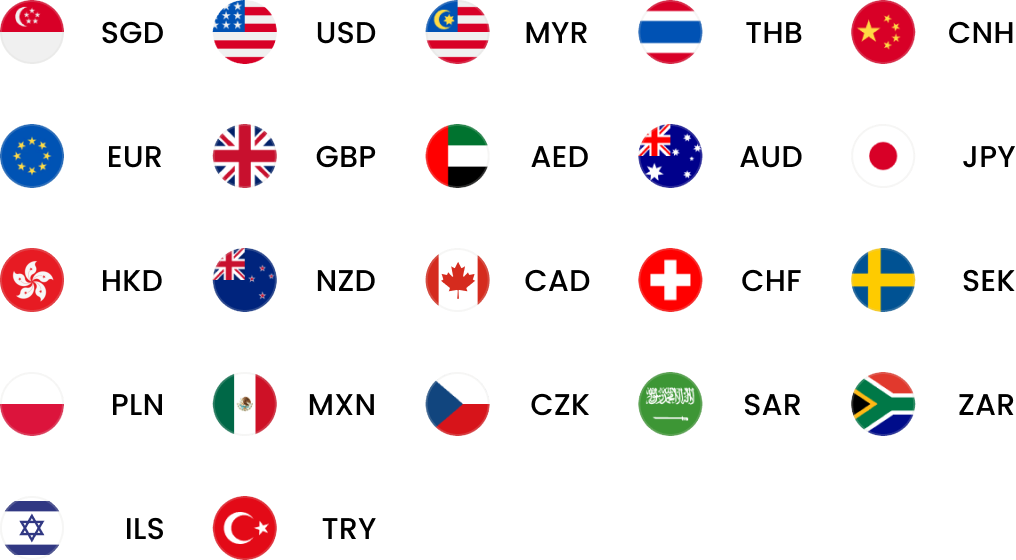
The World Account from WorldFirst is built around exactly that pattern. It’s free to open with no minimum balance, offers local receiving accounts in 20-plus currencies including SGD, USD, CNH and MYR, and collects directly from 130-plus marketplaces and payment gateways.
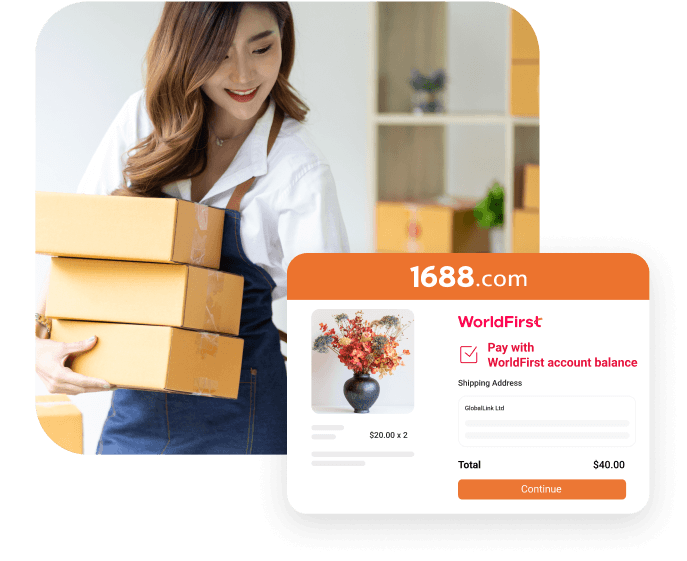
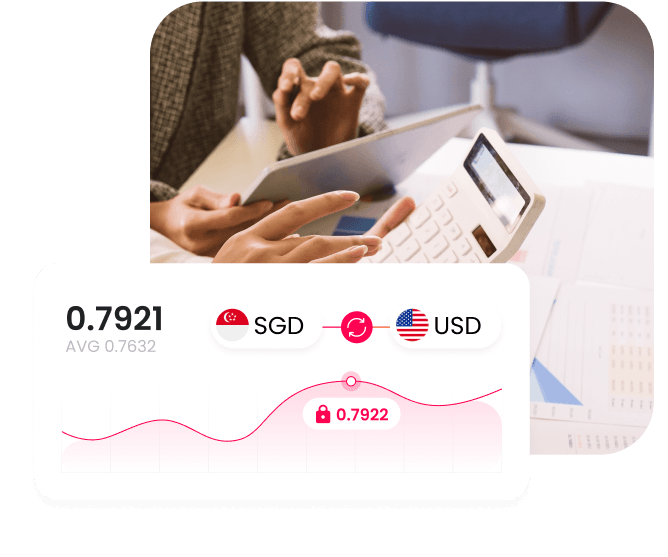
For supplier payments, it supports direct 1688 payments and an FX margin of up to 0.6% on major currencies, plus forward contracts to lock a rate ahead of a scheduled deposit or balance payment.
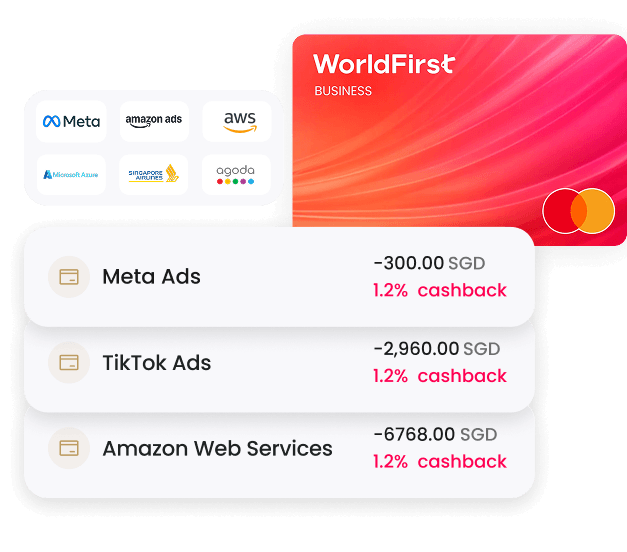
The World Card lets you spend from held balances across 15 major currencies with up to 1.2% cashback, avoiding a second FX conversion on business spend.
WorldFirst isn’t a bank. WorldFirst entities in Singapore hold MAS licences for services including account issuance, domestic and cross-border money transfers, and e-money issuance, and safeguarded client funds aren’t covered by the Singapore Deposit Insurance Scheme, the same limitation that applies to Revolut and Airwallex.
Open a World Account to see whether marketplace collections and direct China supplier payments close the gap that Revolut and Airwallex leave open.
No. Airwallex was founded in Melbourne, Australia, in 2015 by Jack Zhang and co-founders. The misconception persists because Zhang was born in China and investors include Tencent and Sequoia Capital China, but the company isn’t Chinese-owned.
It depends on your business needs. Both hold MAS Major Payment Institution licences and are safe, regulated non-bank options for Singapore businesses. However, they suit different transfer patterns.
Wise consistently applies the mid-market exchange rate with transparent, low fees on every transfer, which suits businesses making frequent, smaller cross-border payments where predictability matters most.
Revolut bundles more features, including higher-tier FX allowances, multi-currency cards, and treasury tools like Flexible Cash Funds, which suits businesses with larger, more concentrated transfer volumes who want an all-in-one platform.

Sources:
© WorldFirst 2026, All rights reserved.

How to redeem:
How to redeem:
How to redeem:
How to redeem: