


















Products
About WorldFirst
Resources
More brands of Ant International
This country is supported by WorldFirst affiliates, Zyla
We provide coverage in South Asia and Middle East: servicing 210+ countries and territories.
WorldFirst Home > blog > International Transactions > Shopify Singapore guide (2026): setup, payments and growth tips
Singapore’s e-commerce market continues to grow, helped by strong digital infrastructure and consistent government support.
Gross merchandise volume reached US$8.2 billion in 2022 and experts expect it to grow to around US$11 billion by the end of 2025, with cross-border orders accounting for a significant share of that expansion.
As more local brands sell overseas, Shopify has become a popular platform for expanding beyond Singapore. Regional market data shows that around 33% of online stores across Asia-Pacific use Shopify, highlighting its popularity among merchants focused on cross-border e-commerce rather than just domestic sales.
Selling internationally on Shopify brings financial trade-offs. How sellers set up payments, FX and payouts determines how much revenue turns into usable cash.
This guide is for Singapore e-commerce sellers and growing brands using Shopify Singapore or considering it. It explains how Shopify works locally, which setup choices matter early and how to manage international growth without unnecessary costs or payment issues.
Open a World Account and integrate it with your Shopify store to handle cross-border sales in the currencies your customers prefer.

Shopify is an e-commerce platform that helps businesses build and manage their online stores. It offers tools for creating a professional store, managing inventory, processing payments and handling shipping.
With its user-friendly interface, Shopify allows businesses to focus on growth without needing deep technical expertise.
Singapore offers a perfect environment for cross-border e-commerce. The country’s advanced logistics, efficient regulations and access to both Asian and Western markets make it an ideal hub for international trade.
Shopify complements this by offering an easy-to-use platform that empowers businesses to sell globally.
Many Singapore businesses use Shopify to:
Shopify works exceptionally well for direct-to-consumer brands, exporters selling niche products and businesses already receiving orders from the US, Europe or Australia.
Setting up a Shopify store for a Singapore-based business involves more than just designing a homepage and adding products.
Early decisions about how your store will take payments, handle currencies and align with your markets will determine how money flows into your bank as your business grows.
Store and currency decisions that matter
Your choices around store currency, target markets and payment configurations influence everything that comes next. For example, enabling Shopify Payments in Singapore lets you accept a wide range of payment methods, including major credit and debit cards, Apple Pay, Google Pay and more.
Shopify Payments also supports multiple currencies when international sales tools are activated, letting customers see prices and pay in their own currency. If you skip careful currency setup upfront, you could end up with orders in USD, EUR or AUD that automatically convert to your base currency at checkout with added fees and unpredictable FX results.
Here are the key setup choices that belong early in your build:
Connecting your Shopify store to a WorldFirst World Account lets you receive payouts in the same currencies your customers pay in, rather than converting everything to SGD by default. The setup is done directly in your Shopify admin and takes only a few steps.
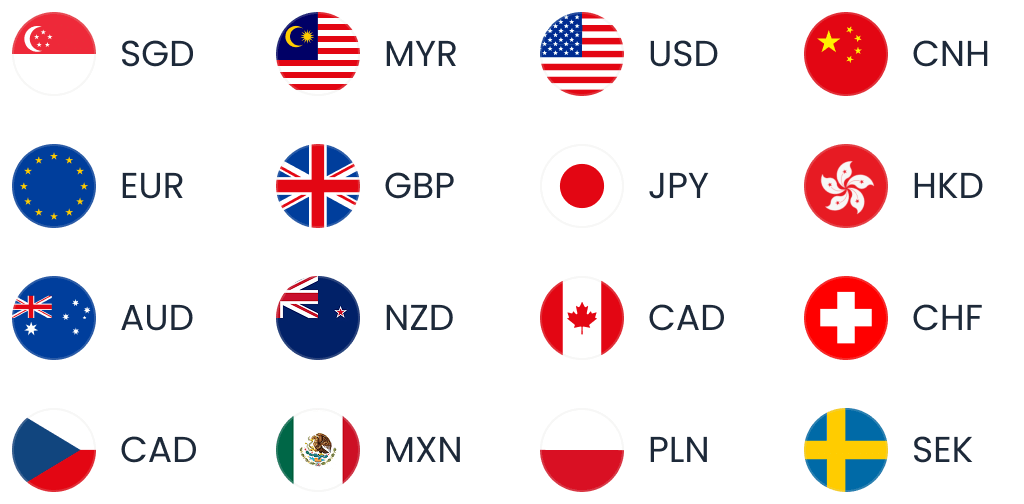
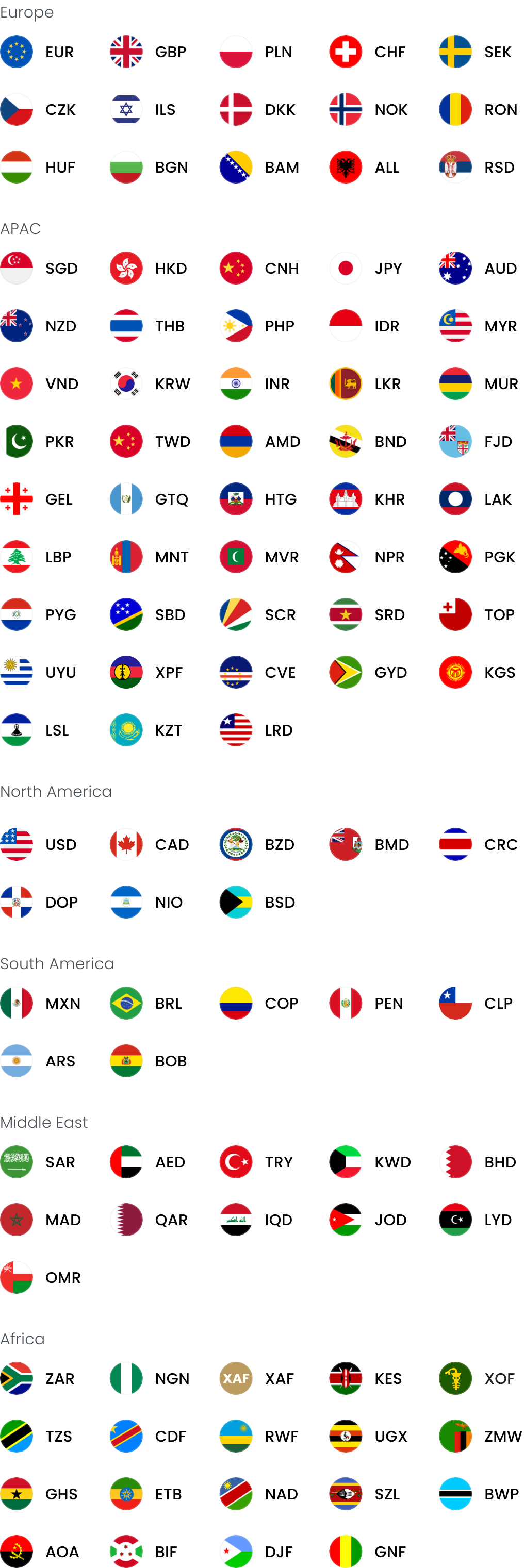
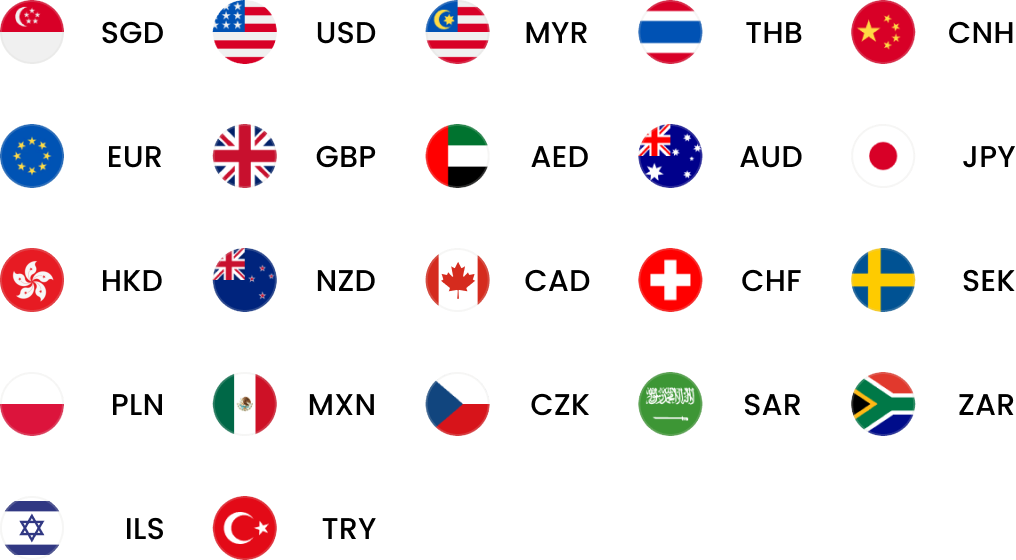
Shopify lets you assign a payout bank account for each settlement currency. WorldFirst provides local receiving details for 20+ currencies, which you can use as your payout destination.
Once connected:
Funds arrive in matching currency balances, giving you control over when and how conversion happens.
Once this is complete, Shopify sends payouts directly to your World Account in the original transaction currency.

Connect your Shopify store to a WorldFirst World Account and keep overseas sales in their original currencies until you decide to convert.
Before launching internationally from Singapore, it helps to answer some practical questions about how money will move through your store and into your business:
By thinking through these elements before launch, you build a payments foundation that matches how you plan to sell and get paid as your business grows internationally.
When you set up a Shopify store in Singapore, the way you accept and receive money affects your business on a fundamental level. Shopify Payments is the platform’s built‑in payment processing option.
For many Singapore merchants, it offers a clean starting point for taking card payments and accelerated wallet methods like Apple Pay or Google Pay. Shopify Payments lets you accept major credit and debit cards and offers accelerated checkout to improve conversion rates.
Shopify Payments is available to merchants operating in Singapore, but you must meet specific criteria to use it. Your business must be eligible under Shopify’s terms and you need a Singapore bank account in SGD set up to receive payouts.
That means payouts from Shopify Payments will land in Singapore dollars unless you choose otherwise on eligible plans.
Because payouts go into a domestic currency bank account, the money you collect from international customers may get converted before it reaches you.
Selling internationally on Shopify Payments looks like this in practice:
Despite Shopify’s capabilities, Singapore sellers often face several challenges:
Platform limitations: Shopify only allows one primary currency account per store (unless you’re on Shopify Plus, which offers more flexibility but at a higher cost). If you need to accept USD, for example, you’ll need an additional non-SGD receiving account (in HK or elsewhere) and Shopify will apply a multi-currency payout fee
Growing a Shopify store from Singapore means thinking locally and globally. Success requires practical choices that strengthen customer experience, expand reach and keep financial operations under control.
Your store should speak to customers no matter where they come from. That starts with localized experience:

Consumers tend to convert better when they see familiar currency and clear costs up front. Shopify’s international sales tools let you display local pricing and translate storefront content for different markets, which can significantly increase conversions abroad.

Consider how widely your audience stretches. Data from Shopify suggests that about 30% of store visitors often come from outside the home market and letting them shop in familiar terms removes a barrier at a crucial moment.
Shopify Markets is a built‑in tool for managing cross‑border sales from a single store.
It lets you tailor pricing rules, currencies and domains by region and show taxes and duties at checkout so customers are not surprised at delivery. Offering prices and payment options that feel local to your buyers helps reduce abandonment and build trust.
Set up Markets to manage:
Combining these elements makes your store feel native in each market without duplicating your site infrastructure.
Traffic alone does not drive sustainable growth. Once visitors arrive, your store must convert them into customers. This means eliminating friction at every step:
It also helps to test and refine based on real visitor behavior. Small improvements to page speed and clarity can generate significant gains in conversion, because every extra word or delay adds cognitive load that can cost a sale.
Growth does not happen in isolation from the marketplaces and platforms where your customers spend time. Consider strategic use of:
These tactics work hand in hand: marketing drives awareness, but a local feel and smooth checkout turn interest into revenue.
Consumers expect both convenience and trust at checkout. In addition to local-currency pricing, offering local payment methods, such as region‑preferred e‑wallets or bank options, can make a measurable difference in conversion rates.
Shopify Payments with multi‑currency support and regional payment methods lets customers complete transactions without bouncing to unfamiliar payment gateways.
On fulfillment, clear shipping options and delivery windows tailored to each country strengthen confidence. Pre‑paying duties and taxes at checkout, where supported, reduces unexpected costs upon delivery and improves completion rates.
Store data is one of your best guides to growth. Track:
Treat these metrics as signals, not just dashboards. Act on them by shifting marketing spend, rethinking product bundles or refining your supply chain approach.
Running a Shopify store from Singapore often means selling globally from day one. Customers pay in different currencies, suppliers sit in other countries and marketplaces follow their own payout rules.
Traditional bank accounts don’t support this reality. WorldFirst designed the World Account specifically for it.
WorldFirst provides a multi-currency business account for companies making international business payments. It is not a bank account. Used with Shopify, it gives sellers direct control over how they receive, hold, convert and use funds after a sale, not just at checkout.
With the World Account, Shopify Singapore sellers can:
For Shopify sellers, the result is a more efficient and controlled financial setup. Payments arrive in the right currency, conversions happen on your terms and supplier payments move without unnecessary delay.
WorldFirst acts as the financial layer that connects your Shopify store to the global markets you sell into, without the complexity of traditional banking workflows.
Ready to take control of your Shopify payments?
Open a World Account and connect it to your Shopify store to receive, hold and manage international sales in the currencies your customers pay in, on your terms.
Sources:
Shawn Shen is the Country Manager for Singapore and the Philippines, with over 15 years of experience in commercial leadership across payments, SaaS and fintech.
Shawn Shen
Author
Country Manager, Singapore & Philippines WorldFirst Singapore
© WorldFirst 2026, All rights reserved.
How to redeem:
How to redeem:
How to redeem:
How to redeem: