


















Freelancer

Coming Soon

Developer

Coming Soon

Europe

Asia

Oceania

Africa

We provide coverage in South Asia and Middle East: servicing 210+ countries and territories.

Sourcing from Alibaba to Africa

Clare Shi

Author

CEO of WorldFirst
While 1688.com has long been the go-to platform for domestic businesses sourcing from Chinese suppliers, international buyers struggled to purchase from it because’s

Key takeaways

If you’re doing research on how to source wholesale from 1688.com, you may have a few questions such as:

If you’re doing research on how to source wholesale from 1688.com, you may have a few questions such as:

If you’re doing research on how to source wholesale from 1688.com, you may have a few questions such as:

Contents

Alibaba is a B2B marketplace that makes it easy for global businesses to source products. It connects local entrepreneurs directly with verified manufacturers in China and several other countries. 

But sourcing internationally also brings challenges: How do you vet the suppliers online and make bulk payments without even meeting them? How do you even pay suppliers while ensuring your profit margins stay intact? 

In this guide, we’ll walk you through how to source safely and efficiently from Alibaba to Africa, and how WorldFirst helps simplify cross-border payments with its World Account and World Card.

What is Alibaba?

Alibaba is one of the world’s largest B2B e-commerce platforms, connecting global buyers with millions of manufacturers, wholesalers, and suppliers. Founded in 1999, it has become the go-to sourcing hub for businesses that want to buy products in bulk at competitive rates.

Buyers on Alibaba can:

  • Browse over 200 million products across categories like fashion, electronics, beauty, and home goods
  • Connect directly with pre-vetted suppliers through the platform’s chat feature
  • Request product samples to verify quality before placing large orders
  • Make secure, protected payments using Alibaba’s Trade Assurance system

Unlike retail platforms such as Amazon or AliExpress, Alibaba focuses purely on wholesale trade. The platform itself doesn’t sell products; it simply connects buyers and suppliers, allowing you to negotiate pricing, MOQs (minimum order quantities), shipping terms, and customization.

Why African businesses source from Alibaba

For African retailers, e-commerce sellers, and importers, Alibaba offers an unmatched opportunity to source quality products directly from global manufacturers. Here’s why the platform is so valuable:

  • Low product costs: Buying directly from factories helps eliminate intermediaries, reducing costs per unit and increasing profit margins.
  • Wide variety: Whether you’re looking for fashion accessories, electronics, or packaging materials, Alibaba’s suppliers cater to every niche.

  • Private label and customization: Many suppliers offer custom logos, packaging, and product designs, which can be ideal for building your own brand.
  • Scalable sourcing: As your sales grow, you can scale orders seamlessly without managing a local factory or production team.

Secure payments: Every transaction on Alibaba is encrypted with SSL protection and covered under the platform’s standard refund policy—so you can shop confidently.

How to source from Alibaba to Africa (Step-by-step)

Step 1: Create an account

You can browse products without signing up, but to contact suppliers, request quotes, and track orders, you’ll need to create a free Alibaba account. Use your registered business name and email to appear credible when reaching out to suppliers.

Step 2: Search for products

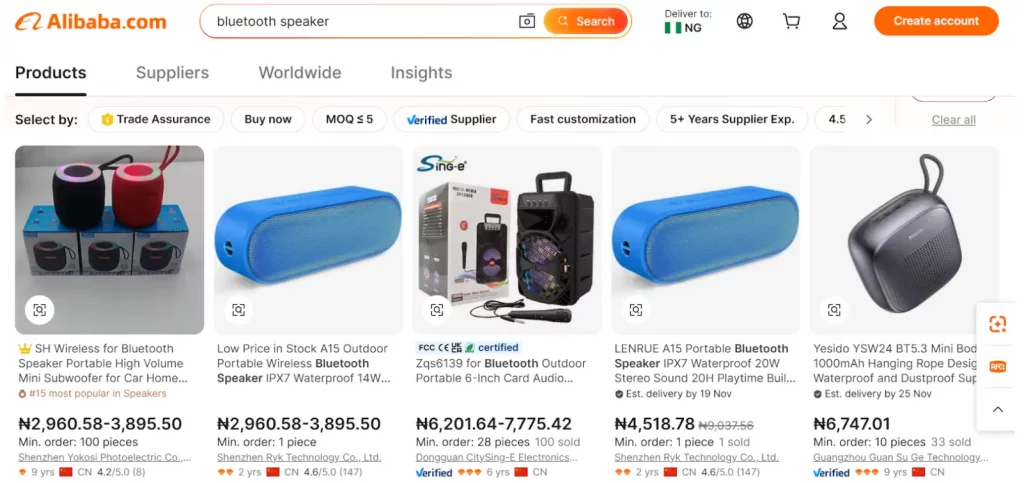
Use Alibaba’s search bar to explore categories or enter specific keywords. For example, if you sell electronics, you can search for ‘Bluetooth speakers’ or ‘wireless earbuds.

You can also:

  • Upload a product image to search by photo
  • Use filters to narrow results by supplier type (Verified, Gold Supplier), MOQ, price range, or country
  • Check supplier profiles for detailed product specs, reviews, and customization options

Once you find a product, check the sample availability. Most suppliers offer samples at a fixed price, allowing you to test quality before placing bulk orders.

Step 3: Vet and shortlist reliable suppliers

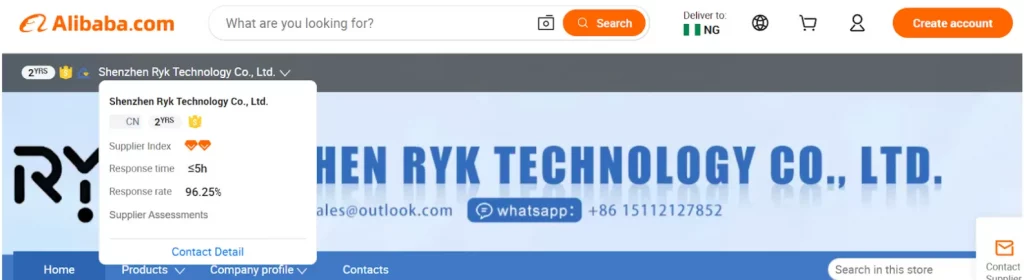
While Alibaba itself is a legitimate platform, you should always take steps to ensure the suppliers are reliable. Look for these key tags:

  • Gold Supplier: Paid, verified members with a solid trading history.
  • Verified Supplier: Production facilities and documentation checked by third-party auditors.

Trade Assurance Supplier: Payments are held in escrow by Alibaba until you confirm receipt of goods.

Additional tips:

  • Check the number of years in business and the supplier’s response rate.
  • Review past transactions, ratings, and buyer feedback.
  • Ask for business licenses or certifications if your product category requires compliance.

Step 4: Contact and negotiate

Once you’ve shortlisted suppliers, initiate contact through Alibaba’s “Chat Now” or “Send Inquiry” buttons. In your message, clearly outline:

  • Product details (size, color, materials)
  • MOQ and sample requirements
  • Customization options (logo, packaging, etc.)
  • Delivery timeline and shipping terms (CIF, FOB, DDP)

Be professional and specific. Suppliers receive hundreds of inquiries daily, and clarity helps you stand out as a serious buyer.

Also, remember: prices on listings are often negotiable. Compare multiple suppliers before committing, and don’t hesitate to ask for discounts on higher-volume orders.

Step 5: Make secure payments

Once you’ve finalized the product and shipping terms, you can make the payment directly through Alibaba using Trade Assurance. It protects both parties and ensures your money isn’t released until you’ve confirmed delivery.

Supported payment methods include:

  • Bank transfer (T/T)
  • Credit/debit cards
  • PayPal
  • Apple Pay / Google Pay
  • ClearPay / AfterPay

Simplify your payments with WorldFirst

While Alibaba offers payment protection, African importers often face challenges with cross-border payments, such as delayed transfers, high FX rates, or card limitations.

That’s where WorldFirst steps in.

The World Card by WorldFirst lets you make instant payments in foreign currencies directly from your World Account. It is a Mastercard-powered debit card that supports transactions in 150+ currencies. When you make payments in 15 supported currencies like USD, GBP, and CNH, there are no foreign transaction fees.

You can:

  • Pay Alibaba suppliers instantly without waiting for SWIFT transfers
  • Control business expenses with transparent exchange rates
  • Enjoy faster processing compared to traditional banking methods
  • Issue up to 20 cards for your team member to make reconciliation easier

Get cashback on every eligible business spend

Step 6: Track shipment and manage quality

After your payment is confirmed, the supplier will ship your order and share tracking details. Always check:

  • Estimated delivery date and shipping carrier.
  • Packaging photos or inspection reports before dispatch.
  • Sample verification if you’re placing repeat orders or scaling up production.

For large orders, you may also consider hiring a third-party inspection agency in China to ensure the goods meet quality standards before shipment.

Import products from Alibaba to Africa seamlessly

Sourcing from Alibaba can open a world of opportunities for African entrepreneurs. The key is to vet suppliers carefully, negotiate smartly, and ensure every transaction is secure.

With WorldFirst’s World Account and World Card, you can manage international payments with ease, speed, and full transparency, giving your business the global edge it deserves.

Continue reading

Subscribe

The Weekly Dispatch

Get the latest news and event invites. Signup for our weekly update from the worlds of fashion, design, and tech.


You might also like

Choose a product or service to find out more

Get Paid by Clients

Pay 1688 Suppliers

Spot Contracts

For Importers & Exporters

The simpler way to pay and get paid

Save money, time, and have peace of mind when expanding your global business.