



























Home > blog > Marketplaces & Platforms > How to sell on Amazon US from Africa
How to sell on Amazon US from Africa
Last update:


wangsiqi

Clare Shi
Author
Key takeaways
If you’re doing research on how to source wholesale from 1688.com, you may have a few questions such as:
If you’re doing research on how to source wholesale from 1688.com, you may have a few questions such as:
If you’re doing research on how to source wholesale from 1688.com, you may have a few questions such as:
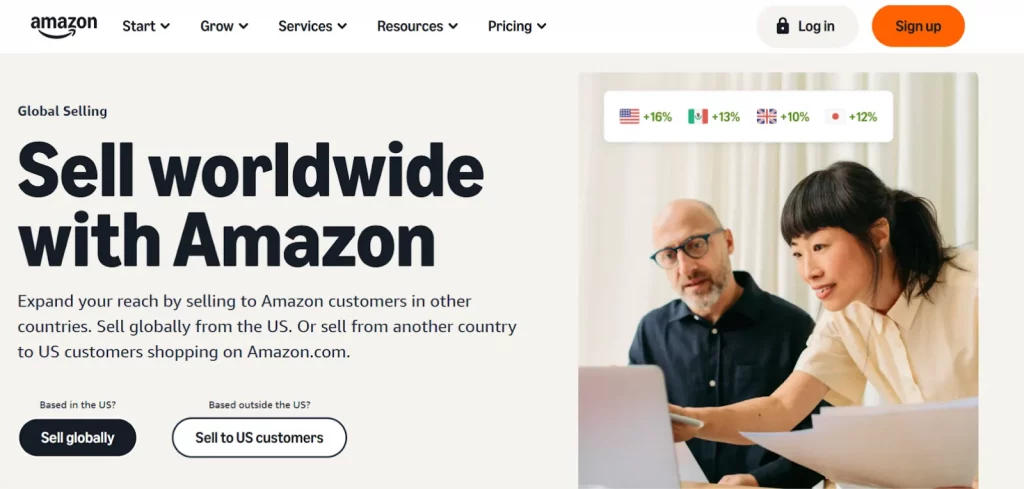
Selling on Amazon US can be a great way for African entrepreneurs to reach a global audience, but setting up an Amazon US seller account isn’t as straightforward.
You’ll need to navigate account verification, cross-border shipping, and, most importantly, you’ll have to decide how you want to receive your Amazon payouts in USD without breaking down your profit margins.
In this blog, we’ll break down how to sell on Amazon US from Africa, the steps to get started, and how to collect your Amazon payments in USD and other major currencies through WorldFirst–where receiving funds into your World Account is completely free and exchange rates stay competitive.
Why sell on Amazon US from Africa?
In 2024, Amazon was ranked the most trusted brand in the US–and for good reason. The platform ships to customers in over 100 countries, processes billions of orders every year, and offers small businesses unprecedented access to a global audience.
More than 60% of all sales on Amazon now come from independent sellers, most of them small and medium-sized businesses just like yours. In 2024 alone, independent US sellers averaged $290,000 in annual sales, while over 55,000 sellers surpassed $1 million in revenue.
For African entrepreneurs, this represents a massive growth opportunity. You can sell your products directly to US customers without needing to set up a physical store, warehouse, or even a US office.
But, breaking into Amazon’s largest marketplace isn’t always easy, especially for sellers based in Africa. Between verifying your account, managing cross-border shipping, and receiving international payments, there are unique hurdles to overcome.
But the rewards far outweigh the effort, and with the right tools, selling on Amazon US from Africa is absolutely possible.
Common challenges African sellers face
Here are some of the main roadblocks African sellers encounter when trying to sell on Amazon US:
- Receiving payments: Amazon requires a USD-based account for payouts, which many African sellers may not have. (While Amazon does have a Currency Converter service that allows sellers to provide bank accounts from their home country, this service may not available in some African countries.)
- Currency conversion losses: You may lose a portion of your earnings to high FX and transfer fees.
- Shipping logistics: Managing shipments to Amazon’s US fulfilment centres requires reliable international partners.
- Verification issues: Amazon’s seller verification can be complex if your business is registered in Africa.
Tax compliance: You must provide the correct tax forms to remain compliant as a non-US seller.
Can you sell on Amazon US as an African?
Yes, African residents can sell on Amazon US by creating a global seller account through Amazon Seller Central.
You’ll need to:
- Provide valid business or individual identification documents
- Comply with US tax regulations
- Have a USD receiving account for Amazon payouts
Now, payments are where most African sellers get stuck. Traditional banks often require a US address and lengthy paperwork to open a USD account. That’s why many choose global payment solutions like WorldFirst, which lets you open a multi-currency account online and receive Amazon payments in USD, GBP, or EUR, without needing a local address in different countries.
Types of selling on Amazon US
There are four main business models African sellers can use to sell on Amazon US:
Private label
In this model, you create your own branded products by sourcing directly from manufacturers and OEMs. You have full control over your product design, packaging, and marketing strategy, which helps build a long-term brand presence.
Private labels offer higher profit margins but demand greater upfront investment in product development, quality checks, and marketing. Successful sellers often reinvest profits to expand their product lines and strengthen brand recognition.
Wholesale
Wholesale sellers purchase established branded products in bulk at discounted rates and resell them on Amazon at a markup. This model reduces risk since you’re selling proven products with existing demand, but margins tend to be thinner compared to private labels.
It’s ideal for sellers who can negotiate strong supplier relationships and manage inventory efficiently. Reliable supply chains and consistent restocking are key to maintaining your Buy Box performance and revenue stability.
Retail arbitrage
Retail arbitrage involves buying discounted products from local or online stores and reselling them on Amazon for a profit. It requires sharp market insight to identify products with significant price differences between marketplaces. Startup costs are low, making it a good entry point for new sellers testing Amazon’s system. However, scalability can be limited since sourcing depends on consistent local availability and pricing fluctuations.
Dropshipping
Dropshipping allows you to list and sell products on Amazon without physically storing or shipping them. When a customer orders, your supplier ships the product directly to the buyer, saving you time and inventory costs. The model offers flexibility and minimal overhead but depends heavily on supplier reliability and shipping speed. It works best with trusted partners who can meet Amazon’s strict delivery and customer satisfaction standards.
Steps to sell on Amazon US from Africa
1. Register your Amazon US seller account
Go to Seller Central and select “Sign up.” You’ll need to provide:
- Email address and phone number for verification
- Credit card for subscription billing
- Local USD currency account (for Amazon deposits)
- Tax information
- Identification documents such as a passport or a driver’s licence
Bank statement or business registration (issued within the last 90 days).
2. Research and list your products
Choosing the right products is one of the most important steps to succeed on Amazon US. You’ll want to focus on products that have steady demand, good margins, and reasonable logistics costs. Tools like Helium10, JungleScout, or AMZScout can help you identify what’s trending, analyse competitors, and calculate estimated profits before you invest in inventory.
Key factors to consider:
- High search volume and steady demand: Pick products that customers in the US are actively searching for all year round. Look for consistent keyword trends and at least a few top sellers in the category.
- Low competition in your niche: Avoid markets dominated by big brands or oversaturated with identical listings. Instead, find micro-niches with moderate competition where you can differentiate your product or brand.
- Affordable shipping and manageable size/weight: Small and lightweight products are easier and cheaper to ship from Africa or China to Amazon’s US fulfilment centres. This keeps your logistics costs predictable and your margins healthy.
- Good profit margin after Amazon fees and logistics: Always calculate your final profit after deducting Amazon referral fees, FBA fees, shipping, packaging, and any advertising costs.
Once you’ve shortlisted your products, create your listings on Amazon Seller Central. Take the time to optimise each one, as that can directly impact your listings’ visibility and conversions.
- Write keyword-rich titles: Include relevant keywords naturally while keeping the title direct and easy to read.
- Add clear, high-quality images: Use bright, professional images that show the product from multiple angles and in real-life use.
- Create detailed product descriptions: Focus on benefits over features — explain how the product solves a problem or improves the buyer’s life.
Include UPC codes or identifiers: These are required for listing most products and help Amazon catalogue your listings correctly.
3. Choose your fulfilment method
You can either handle fulfilment yourself or use Amazon’s fulfilment network:
Fulfilment by Amazon (FBA)
Amazon stores, packs, and ships your products for you. You only handle product sourcing and inventory management. So your responsibility is to get the products from your suppliers to the Amazon FBA warehouses in the US. From there, Amazon handles the rest, including customer support and returns.
- Best for sellers who want to focus on sales and marketing
- You pay storage and fulfilment fees per unit
- While convenient, it can quickly decrease your margins
Fulfilment by Merchant (FBM)
You handle storage, packaging, and shipping directly by partnering with international and local shipping companies.
- Offers more control but requires reliable logistics
- Works well if you have local partners or use a freight forwarder
- While cost-effective, this requires a lot more effort and monitoring
Your fulfilment strategy determines how your products reach US customers and affects both cost and delivery speed.
For sellers sourcing from China, Amazon SEND or Amazon Global Logistics can simplify this process by handling international shipping and customs clearance to send your goods directly to FBA warehouses.
Keeping shipping costs low at this stage is critical, as high logistics expenses can decrease profit margins and make it harder to compete with local US sellers. Alternatively, with Fulfilment by Merchant (FBM), you manage storage, packaging, and delivery yourself, which gives more control but requires dependable shipping partners and efficient coordination.
4. Understand Amazon US fees
Amazon charges several types of fees, including:
- Subscription fees: USD $39.99/month for Professional sellers
- Referral fees: 6-45% of product price (varies by category)
- FBA fees: For storage, packing, and delivery
- Closing fees: Fixed fees for media products like books or DVDs.
All these charges are billed in USD, meaning your expenses will fluctuate with exchange rate movements and may reduce your profit margins when converting from African currencies. You’ll also need an international payment card to pay for these costs, which can incur additional foreign transaction fees from African banks.
That means you need to pay Amazon seller fees in USD and also collect your Amazon payouts in USD–potentially incurring fees for both types of transactions.
Streamline payments with WorldFirst
Getting paid is often the hardest part for African Amazon sellers. Amazon only deposits payouts into local currency accounts in supported countries. That means to accept payments as an African seller, you’ll first have to set up a USD account. That’s where WorldFirst makes things easy.
With a World Account, you can open virtual receiving accounts in 15+ currencies, including USD, GBP, EUR, AUD, and more. These work just like local bank accounts in those regions, meaning you can link them directly to your Amazon Seller Central account and start receiving payments in USD without needing a US bank account.
You can then hold those earnings in USD (or any other supported currency), convert them to domestic currency when exchange rates are favourable, or use them to pay suppliers and partners abroad– all at competitive exchange rates.
And if you’re worried about paying Amazon fees or international subscriptions, the World Card makes it seamless. Linked directly to your World Account, the card allows you to use the USD funds you’ve already earned to cover expenses like Amazon subscription fees, advertising costs, or SaaS tools.
Here’s how WorldFirst helps you simplify your global transactions:
- Open local receiving accounts in 15+ currencies, including USD, GBP, EUR, AUD, and CNH
- Collect payments from Amazon and 130+ other global marketplaces, all in one place
Hold and manage funds across multiple currencies–no forced conversions - Pay suppliers, freelancers, and partners directly from your dashboard at transparent FX rates
- Use your World Card to pay global business expenses directly in USD, keeping your profit margins intact
Start selling globally, without limits
With the right setup, African businesses can compete on Amazon US just like any global brand.
By combining Amazon’s reach with WorldFirst’s multi-currency solutions, you can grow faster, sell smarter, and get paid seamlessly across borders.
Continue reading


Subscribe
The Weekly Dispatch
Get the latest news and event invites. Signup for our weekly update from the worlds of fashion, design, and tech.