






















Industry Solutions
Resources
We provide coverage in South Asia and Middle East: servicing 210+ countries and territories.
WorldFirst Home > blog > Marketplaces & Platforms > Shopify Dropshipping: How to Start and Run a Store in Africa [2026]
A practical guide to launching a Shopify dropshipping business and handling the supplier payments behind it.
Shopify dropshipping lets you sell products online without holding stock, passing orders to a supplier who ships directly to your customer. This guide is for aspiring sellers in Africa who want to start a store, understand the real costs, and, most importantly, learn how to pay overseas suppliers once orders start coming in. It answers the common beginner questions and the operational ones most guides skip.
Key Takeaways
Yes, Shopify dropshipping can work for beginners, because you do not need to buy stock upfront or manage a warehouse. You set up a store, list products from a supplier, and only pay for goods after a customer orders. The harder part is not the platform. It is choosing products people want and sorting out how you will pay suppliers abroad.
Shopify handles the storefront, checkout, and hosting for you. That lowers the technical barrier. What separates sellers who keep trading from those who stop is usually research, patience, and cash flow, not coding skill.
Shopify dropshipping is a retail model where you sell products through a Shopify store without holding inventory. When a customer buys, you forward the order and payment to your supplier, who ships the item directly to the buyer. You never touch the physical stock, which keeps upfront costs low.
The basic flow looks like this. A customer orders from your store and pays your retail price. You then buy the same item from your supplier at a lower cost and give them the customer’s shipping details. The supplier packs and ships it. Your profit is the gap between the two prices, minus fees.
Because the supplier is often in another country, frequently China, part of running the business is moving money across borders. That is where many new sellers hit friction, and where planning ahead pays off.
Starting is a sequence of clear steps rather than one big leap. Work through them in order and you avoid most beginner mistakes.
Getting the payment step right early saves you scrambling later, when a stuck supplier payment can freeze your whole operation.
Shopify is a solid option for dropshipping because it is purpose-built for online selling, with hosting, checkout, and app integrations in one place. It is not free, though, so you need to weigh the monthly cost against your expected sales.
Here is a balanced view.
Benefits:
Limitations:
Subscription cost: Shopify runs paid monthly plans, and it periodically offers promotional trial pricing for new users.¹ Always check the current pricing and trial terms on Shopify’s own site before signing up, as these change.
Shopify gives you the storefront. It does not solve product research or international payments for you, so treat it as one tool in a larger business.
Many dropshippers stop trading within their first year, usually for reasons that have nothing to do with the platform. The most common causes are poor product choice, unrealistic expectations, weak marketing, and payment or supplier problems. Understanding these upfront helps you avoid them.
No guide can promise you will make money. What you can control is how carefully you research, market, and manage the operational side, including how you pay suppliers.
Shopify dropshippers pay suppliers by sending money to the supplier’s business account, often across borders and in a different currency. If your supplier is in China, you usually pay in USD or CNY, which means converting from your local currency first. This step is where costs and delays often hide.
Common challenges include:
A cleaner approach is to use a dedicated business payment method built for international suppliers, so you can convert once, pay directly, and keep a clear record.
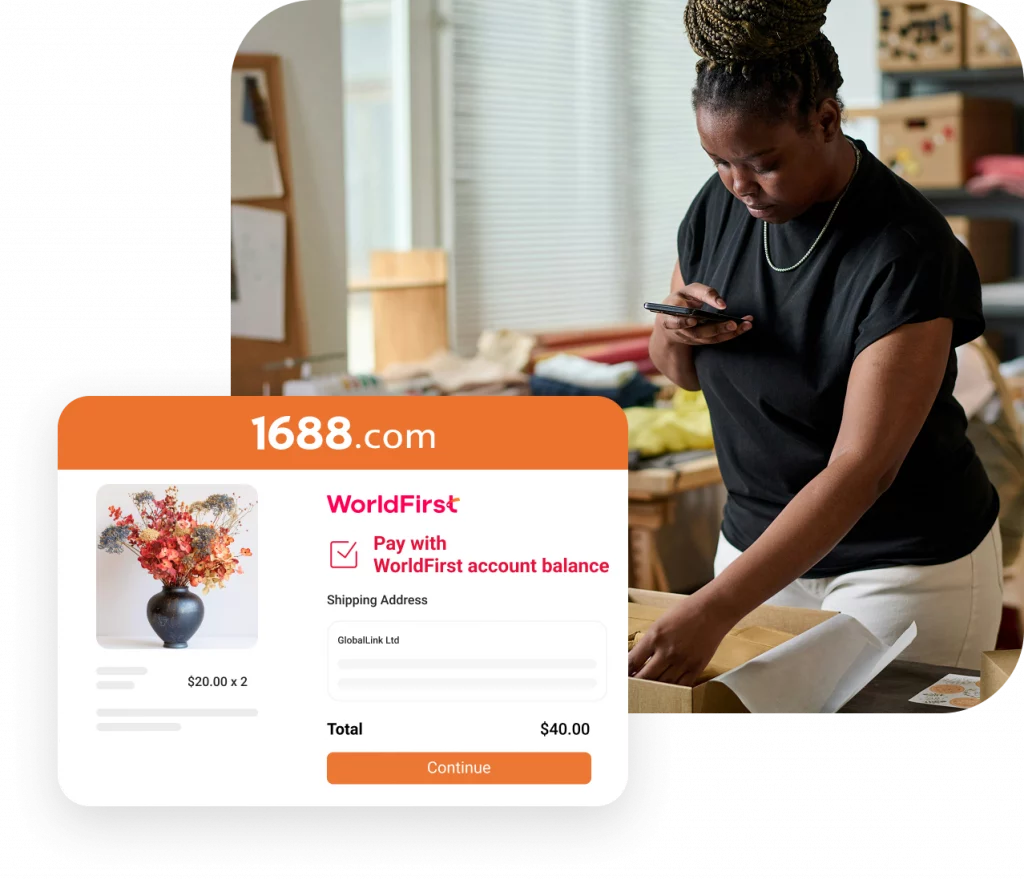
Dropshippers can pay Chinese suppliers more easily by using a multi-currency business account designed for cross-border trade, rather than routing every payment through an agent. This lets you hold foreign currency, convert at a clear rate, and pay suppliers on platforms like 1688 more directly.
WorldFirst, a payments provider backed by Ant Group, offers tools aimed at exactly this. You can pay Chinese suppliers in CNY where available for your country, and make payments directly on 1688 in USD through Balance Pay. You can also convert currencies within your account so you control when and how you exchange money.
A few points to keep in mind. CNY supplier payment is available in some African markets, currently Nigeria and Kenya, so check availability for your country. WorldFirst is a payments provider, not a bank, and it holds no local licence in Africa, so treat it as a cross-border payment tool rather than a local bank. When you sign up, expect standard business verification, including identity and business documents, which is normal for regulated cross-border payments.
Setting up a dedicated payment method before you scale means your supplier payments do not become the bottleneck that stalls your growth.
Opening a multi-currency business account lets you convert currency and pay overseas suppliers with clearer records. Backed by Ant Group, WorldFirst asks for standard business and identity details at sign-up, which is normal for cross-border payment providers.
Sellers sourcing from China have several ways to pay, and each carries different trade-offs. The table below compares common options factually. Availability and fees vary, so confirm details on each provider’s own site.
| Payment option | Best suited for | Currency support | Notes |
| WorldFirst | Paying China suppliers and holding currency | Convert plus CNY/USD supplier payment where available² | CNY supplier payment limited to some African markets; verify eligibility |
| Payoneer | Cross-border collection and payments | Multiple major currencies³ | Widely used for marketplace payouts; check supplier-payment coverage |
| XTransfer | B2B cross-border trade payments | Multiple currencies⁴ | Focused on trade payments; verify country coverage |
| Bank SWIFT transfer | One-off international payments | Most currencies | Can be slow and, on small orders, fees take a notable share of value |
| Crypto/stablecoin rails | Sellers comfortable with digital assets⁵ | USD-pegged stablecoins and others | Price volatility and regulatory rules vary by country; higher risk |
Note: Features and availability may vary by region and are subject to change. Always verify current offerings directly with each provider before making a decision.
Because features and country coverage change often, treat this as a starting point and confirm current supplier-payment support with each provider directly before you commit.⁶
Before scaling a Shopify dropshipping store, sellers should check that their operations and finances can handle more volume. Growth exposes weak spots, especially in payments and supplier reliability. Work through this checklist.
Scaling multiplies both your profit and your problems. Fixing the payment and supplier side first makes growth far smoother.
Yes, you can do dropshipping on Shopify. The platform supports it directly and through sourcing apps that connect your store to suppliers. You list products, and when a customer orders, your supplier ships to them. You handle store setup, marketing, customer service, and paying your suppliers, often across borders.
Starting a Shopify dropshipping store means paying a monthly Shopify subscription plus costs for apps, marketing, and any samples you order. You do not buy bulk stock upfront, which keeps initial costs lower than traditional retail. Check Shopify’s current plan pricing on its own site, as it runs promotional trial offers from time to time.
You pay Chinese suppliers by sending money to their business account, usually in USD or CNY, which means converting from your local currency first. Options include bank SWIFT transfers, cross-border payment providers, and, where available, direct payment on platforms like 1688. A multi-currency business account can make this cheaper and more direct than using an agent.
It is possible to make money from Shopify dropshipping, but it is not guaranteed. Profit depends on product choice, margins, marketing, and cost control, including your payment and conversion fees. Treat it as a real business that needs testing and patience, not a shortcut to quick income.
If a supplier payment fails or is delayed, your order cannot ship, which frustrates customers and can harm your store’s reputation. To reduce this risk, use reliable, traceable payment methods, keep buffer cash flow, and confirm supplier bank details carefully before sending money.
Shopify dropshipping is an accessible way to start selling online, but the store is only half the business. The operational side, especially sourcing products and paying overseas suppliers, decides whether you can grow. Get your product research right, keep your expectations realistic, and set up a reliable way to pay suppliers before you scale. Handling international payments well removes one of the biggest hidden obstacles between a test store and a working business.
Sources
This article is intended for informational purposes only and does not constitute legal advice or professional advice. This article should not be regarded as constituting an offer or a solicitation to buy or sell any regulated or financial products or services. WorldFirst makes no representations or warranties regarding the accuracy, completeness, or applicability of the content, and readers are encouraged to consult with legal professionals or other professionals for advice tailored to their specific situation. WorldFirst does not guarantee the accuracy and completeness of this article and expressly disclaims any and all liability to any person in respect of the consequences of anything done or omitted to be done wholly or partly in reliance on this article.
Linna is a Senior Content Strategy Manager specializing in fintech, cross-border payments, and global ecommerce. With extensive experience in international B2B growth content, and global market expansion, she leads content initiatives that help businesses navigate cross-border trade, international payments, and digital commerce at scale.
Choose a product or service to find out more
Save money, time, and have peace of mind when expanding your global business.

© 2026, Ant International or its affiliates