





























Home > blog > Global Business Tips > How to do a bank transfer: A step-by-step guide (+ better business alternatives)
How to do a bank transfer: A step-by-step guide (+ better business alternatives)
Last update:


Bank transfers are often described as one of the easiest ways to move money. In the UK, that’s largely true. Online and mobile banking make it quick to send payments domestically, whether you’re paying staff or service providers.
For businesses, however, transfers become more complex once they involve:
- Overseas recipients that operate under different banking systems and regulations
- Multiple currencies with conversion fees and fluctuating exchange rates
- Strict payment deadlines where delays could damage supplier relationships or trigger penalties
- Frequent international transfers where individual wire fees add up significantly
What’s typically a simple process for domestic payments can become a significant operational burden once your business grows beyond borders.
This guide will explain how to do a bank transfer step by step, including what information you’ll need and how domestic and international transfers differ.
We’ll also show how WorldFirst’s multi-currency business account can make global payments more efficient and cost-effective as your business scales internationally.
Read on to learn:
- How to do a bank transfer: six essential steps
- When traditional bank transfers become inefficient for international businesses
- How WorldFirst makes international bank transfers easier
Want to simplify international payments? Open a World Account for free and start managing 20+ currencies from one platform.
How to do a bank transfer: 6 essential steps
Whether you’re making domestic or international payments, here are six steps to transfer money through a traditional bank:
1. Identify the type of bank transfer you’re making
Different transfer types involve different details, timelines and fees.
UK domestic transfers move within the UK banking system. The three main types of domestic bank transfers are:
- Bacs transactions are automatic direct debits and credits that can take up to three days to go through. Bacs is most often used for recurring payments, such as household bills or salary deposits
- CHAPS is designed for same-day, high-value transfers. Think big-ticket purchases, like property or an acquisition
- Faster Payments is the system for near-immediate electronic transfers between UK bank accounts. It’s mostly used for quick payments involving smaller amounts of money
International bank transfers move money between different banking systems and countries:
- SWIFT wire transfers are the most common method and involve moving money through the SWIFT network and between intermediary banks to reach the recipient
- SEPA transfers are used to send cross-border EUR payments between 41 European countries in the SEPA region
There are also alternatives to traditional international wires. Some providers, including WorldFirst, use local payment networks rather than SWIFT to move money internationally faster and with fewer fees.
2. Gather the correct information before you start
For UK domestic bank transfers, you’ll usually need:
- The amount you want to pay
- Account holder’s name
- Sort code and account number
- Payment date
- Payment reference. This could be your business name, an invoice number or a short description to help the recipient reconcile the payment.
For international bank transfers, you’ll typically need:
- The amount you’re sending (in your currency or the recipient’s local currency)
- Account holder’s full and exact name
- Bank code (SWIFT code or BIC code) of the bank you’re sending money to
- IBAN or account number (depending on the country)
- Recipient’s address
- Recipient bank’s address
- Reason for payment
- Payment reference
Pro tip: Double-check all details before proceeding. International payment corrections can take weeks to resolve and may involve additional fees from multiple banks.
3. Initiate the bank transfer
Most traditional banks offer several ways to start your transfer:
- Online banking through your bank’s website: Usually the most convenient option, with clear forms and immediate confirmations
- Mobile banking app: Good for smaller transfers, though some banks limit international transfer amounts through mobile
- In-person at a branch: Sometimes required for large amounts or first-time international transfers to certain countries
4. Review fees, exchange rates and confirmations before sending
Before you send the payment, review the costs involved. This step is where businesses often get surprised by hidden costs, especially for international transfers.
UK domestic transfers are usually free or involve minimal fees.
International transfers can include several cost layers:
- Transfer fees charged by your bank
- Exchange rate markups applied during currency conversion (often 1–3% above mid-market rates)
- Intermediary bank fees deducted by banks along the route
- Receiving bank charges that may be passed to you or deducted from the payment
These costs aren’t always shown clearly upfront, making it difficult to predict exactly how much your recipient will actually receive.
5. Authorise and send the bank transfer
Once you’re ready to go forward with the bank transfer, confirm all details on the final review screen. Complete any required security checks, such as SMS codes or authentication app confirmations. Some banks also require additional authorisation for first-time international recipients or unusually large amounts.
Once you authorise the payment, it’s released into the banking system and cannot easily be reversed. You’ll typically receive a confirmation number or transaction reference. Save this for your records and share it with your recipient for tracking purposes.
6. Track and reconcile the payment
How long it takes for the payment to go through depends on the transfer type.
For domestic transfers:
- Bacs payments can take up to three working days
- CHAPS payments usually arrive the same working day if sent before the cut-off time
- Faster Payments typically arrive the same day or within hours
International transfers can take anywhere from one to five business days – sometimes more – depending on the destination, currency and intermediaries. If you’re sending money on weekends, public holidays or across multiple time zones, delays are more likely.
Use your banking platform to monitor payment status. Match the payment reference against your invoices or supplier records to ensure proper reconciliation and avoid duplicate payments.
When traditional bank transfers become inefficient for international businesses
While bank transfers work well for occasional domestic payments, they can become a significant operational burden for businesses working internationally. Here are the main challenges:
- Managing multiple currencies through a traditional bank account that holds only one currency leads to frequent, costly FX conversions every time you make or receive international payments. Each conversion involves fees and exposure to exchange rate fluctuations
- Individual international wire transfers become expensive and time-consuming when you’re paying multiple suppliers regularly. With high transfer fees plus FX markups, costs can add up quickly for businesses making dozens of international payments each month
- Unpredictable fees and timing make it difficult to forecast true payment costs and manage cash flow effectively. When you can’t predict exactly when payments will arrive or how much will be deducted in fees, supplier relationships and financial planning suffer
How WorldFirst makes international bank transfers easier
WorldFirst is designed specifically for businesses operating across borders, offering a more efficient way to make and receive international payments. Since 2004, nearly 1.5 million businesses have sent $500B around the world with WorldFirst and our partner brands.
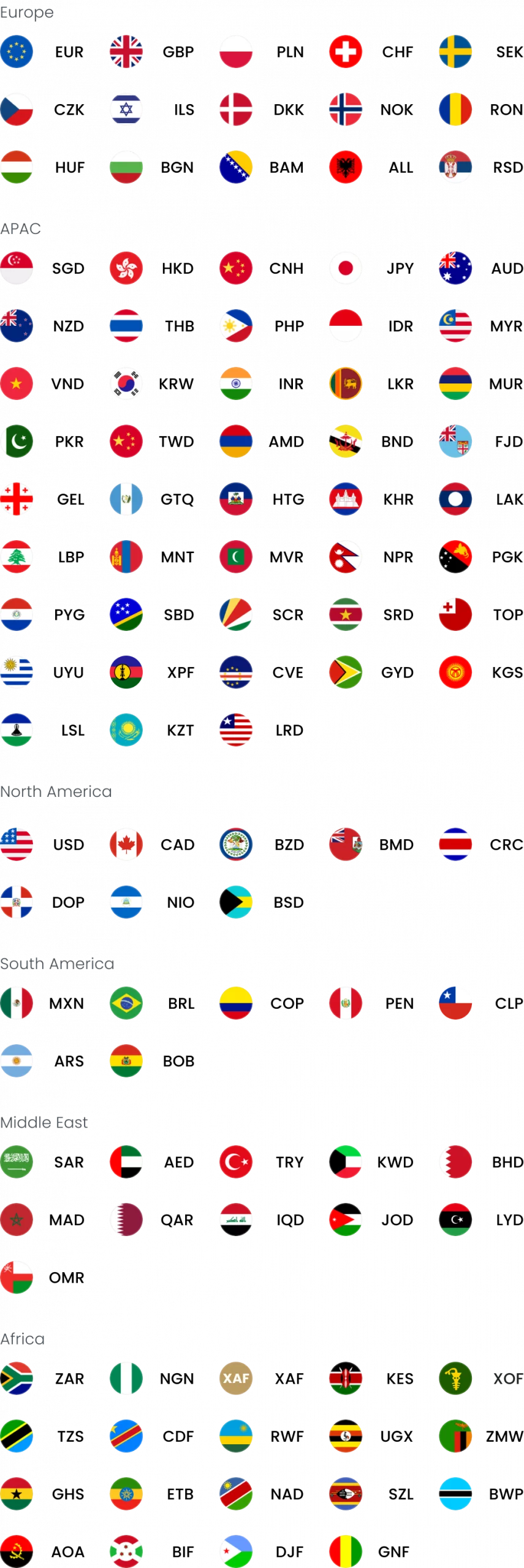
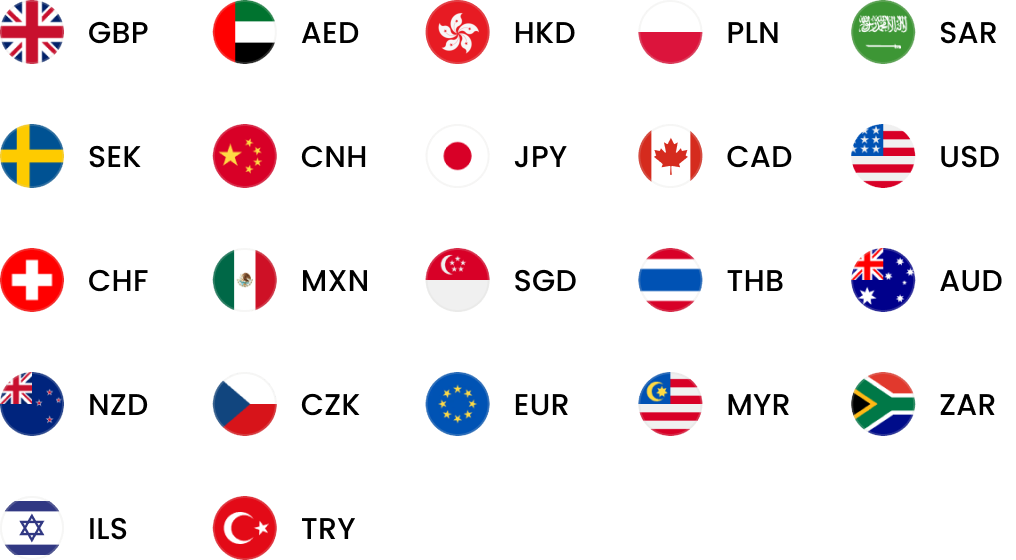
At the centre of this is our World Account, a multi-currency business account that enables you to hold and manage balances in 20+ currencies and send money in over 100 currencies to more than 200 countries and territories.
Unlike traditional banks with monthly fees, setup costs or minimum balance requirements, WorldFirst has no recurring fees for holding your account. This means you only pay when you actually use our services, not just for having access to them.
Here’s how WorldFirst transforms international payments for growing businesses:
Get money to recipients quickly with same-day transfers
Traditional international bank transfers often take several business days. This is because they rely on SWIFT networks and correspondent banking relationships, where your payment passes through multiple intermediaries before reaching its destination.
With a World Account, you can make payments in 100+ currencies to 200+ countries and territories using your existing currency balances. Up to 80% of our transfers arrive on the same day because we prioritise local payment rails rather than slower international networks.
Local routing means your payments avoid many of the intermediary banks used in traditional international transfers. In other words, not only do they arrive faster, but also with fewer deductions along the way. This helps you meet supplier payment terms and maintain strong relationships with international partners.
Read more: How to make same-day international money transfers as a cross-border business
Manage 20+ currencies in one place with the World Account
Rather than opening separate bank accounts in different countries – which often requires local business entities and physical presence – the World Account lets you hold and manage 20+ currencies from a single platform.
This eliminates the need to convert funds back and forth every time you make or receive a payment in a different currency. Instead, you can keep balances in the currencies you use most, which makes it easier to plan payments and manage cash flow.
For example, if you regularly pay suppliers in China and receive marketplace income from Amazon US, you can hold CNH and USD balances separately, paying suppliers directly from your CNH balance and collecting Amazon payouts in USD without forced conversions.
More control over when and how you convert between currencies means less exposure to exchange rate fluctuations and lower overall payment costs.
Read more: Business foreign currency accounts: 4 options compared
Reduce currency risk when sending money abroad with our FX tools
Exchange rates can significantly affect how much your recipients actually receive, making it difficult to budget accurately for international payments.
WorldFirst helps businesses control costs and timing with competitive exchange rates based on the mid-market rate for major currencies and conversion fees capped at 0.50%. This transparency makes it easier to predict payment costs compared to traditional banks with hidden markups.
Plus, we offer FX tools that let you manage currency exposure and plan payments strategically:
- Forward contracts let you secure a fixed exchange rate for up to 24 months, making it easier to budget for future supplier payments and potentially helping you avoid losses if the market moves against you
- Firm orders have you specify the exchange rate you want, then WorldFirst automatically executes the transfer once the market hits that target. This is ideal for businesses that can be flexible with payment timing to wait for optimal currency conditions
- Spot contracts let you convert currency immediately at live market rates for urgent payments, ensuring suppliers receive the exact currency they expect without unnecessary delays
Read more: Foreign exchange risk management: How to make international business more affordable
Save time sending money with automated and batch payments
For businesses making regular international payments, WorldFirst offers automation features that traditional banks typically don’t provide.
For instance, our batch payments let you send up to 200 payments at once, significantly reducing administrative effort and manual entry errors. This is particularly valuable for businesses paying multiple suppliers or processing international payroll.
Automated payment scheduling helps ensure suppliers are paid on time without manual intervention. This improves supplier relationships, potentially opening the door to early payment discounts and other favourable terms.
Team permissions and approval workflows let you define payment rules and authorisation levels, so team members can process payments efficiently while maintaining proper financial controls.
Read more: How to pick the best online business bank account (12 options)
A better way to do a bank transfer as a global business
Bank transfers are simple in theory, but become increasingly complex in practice for global businesses. While traditional banking may work fine for occasional international payments, it becomes inefficient and expensive as your business scales.
With a World Account, you can manage 20+ currencies in one place, avoid repeated FX conversions and benefit from faster settlement with up to 90% same-day transfers. Our platform is designed specifically for international businesses, offering the tools and transparency you need to manage global payments efficiently.
Opening a World Account is entirely online and takes a few minutes. You can start receiving payments immediately and begin making international transfers as soon as your account is approved.
Don’t let slow, costly transfers hold your business back. Register for your World Account for free today.
Continue reading


Subscribe
The Weekly Dispatch
Get the latest news and event invites. Signup for our weekly update from the worlds of fashion, design, and tech.