How UK SMEs Can Stop Hidden Costs from Sinking Global Profits
Share article
Copied
Contents
Global sourcing has opened the world to UK small and medium-sized businesses. Cheaper production, new suppliers, and broader markets all look like an easy win — until the hidden costs surface.
What seems like a good factory price can disguise a long trail of fees, tariffs, and exchange-rate losses. In 2023, UK SMEs lost around £2.8 billion through hidden charges and poor foreign-exchange margins — a 27 per cent rise since 2018. For many, those losses were the difference between healthy margins and a year in the red.
This guide follows a product’s path from the factory floor to your customer’s doorstep. It identifies where profits leak away and how modern financial tools can stop the flow.
1. Understanding the True Cost of a Sourced Product
The quoted unit price is just the start. The landed cost — the full expense of getting a product from supplier to shelf — tells the real story. Miss one link in this chain and the profit margin begins to shrink.
1.1 Before Production: Vetting and Quality Control
Supplier selection. On platforms such as Alibaba, verified suppliers and Trade Assurance badges help screen out bad actors. Request samples from multiple factories before committing to bulk orders.
Quality control. Beware “quality fade”, where materials quietly deteriorate over time. Commission an independent inspection before shipment to confirm standards.
Compliance. Major platforms and retailers now demand audits covering labour, safety, and ethics. Non-compliance risks rejection or suspension, wiping out any early cost savings.
1.2 From Factory to Warehouse: Logistics and Import Fees
Freight and insurance. Whether by air or sea, transport costs can fluctuate sharply with fuel prices and route congestion. Insure against loss and damage — but shop around.
Tariffs and duties. Every import must carry a Harmonised Tariff Schedule (HTS) code. Misclassification can be costly: a leather handbag listed under the wrong code might mean paying 9 per cent duty instead of 3 per cent — a £3,000 error on a £50,000 shipment.
VAT and handling. VAT on imports can catch out first-time importers. Factor it into landed-cost models early.
Fulfilment. Amazon FBA or similar services add labelling, storage and prep fees. Shipments missing a barcode can be rejected outright — another delay, another cost.
1.3 The Cost of Waiting: Inventory and Working Capital
Longer lead times tie up cash in goods still on the water. Global sourcing often means higher inventory levels and slower cash cycles. Each extra week in transit drains liquidity — a quiet but relentless drag on profitability.
2. The Payments Trap: When Your Bank Becomes the Leak
More than 70 per cent of UK SMEs still rely on high-street banks for international payments. The reason? Familiarity. The cost? Substantial.
Traditional bank transfers may appear convenient but often hide two layers of loss: routing fees and exchange-rate margins.
2.1 The Detour Called Correspondent Banking
When a UK bank sends money to, say, a factory in Shenzhen, the funds rarely travel directly. They pass through several “correspondent” banks — each taking a cut. It’s the financial equivalent of a multi-stop flight: slower, costlier, and less predictable. Payments can take days and arrive short of the intended amount.
2.2 The Hidden Margin in Foreign Exchange
The small transfer fee you see is rarely the main expense. Banks make their profit on the exchange rate itself, adding a hidden margin above the mid-market rate.
Across thousands of transactions, that small difference becomes a major leak — the biggest contributor to the £2.8 billion lost by SMEs in 2023. Larger corporations get preferential rates; smaller firms rarely do.
Power your global growth with one account
Get local currency accounts, fast payments and competitive FX – all in one place.
Fintech platforms have rebuilt international payments from the ground up. Their goal: to give smaller firms the transparency and control once reserved for multinationals.
3.1 Control with Multi-Currency Accounts
A multi-currency account, such as the World Account from WorldFirst, lets you hold and pay in multiple currencies without opening foreign bank accounts.
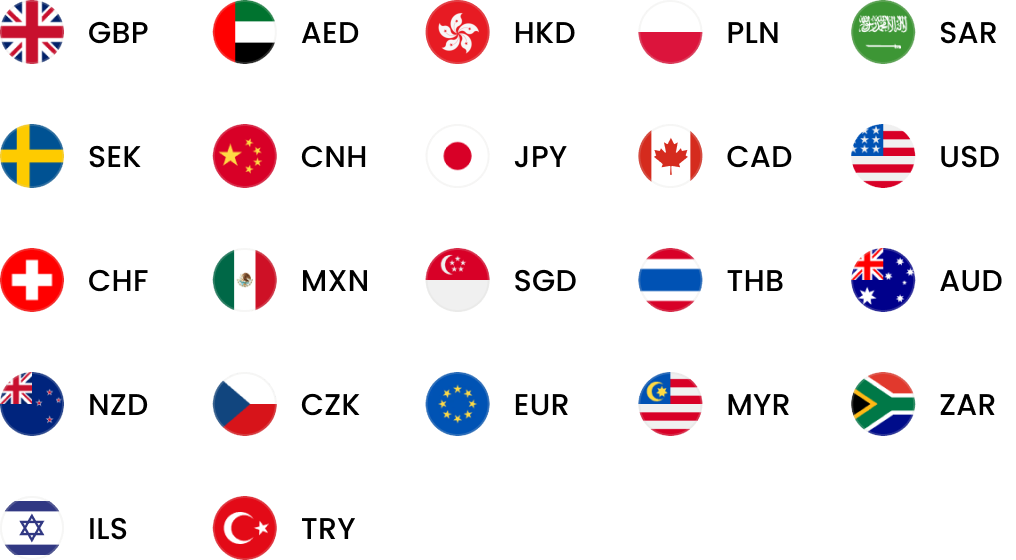
You can collect payments in USD, EUR, or other major currencies, then pay suppliers directly from those balances — avoiding repeated, forced conversions and unnecessary FX costs. For importers and marketplace sellers, this control over timing and currency can protect margins and cash flow.
3.2 Managing Currency Risk with Forward Contracts
Exchange rates move faster than shipments. A forward contract fixes today’s rate for a future payment — removing the uncertainty.
Suppose you owe a supplier US $100,000 in three months. At £1 = $1.25, that’s £80,000. If sterling weakens to $1.20, the same invoice would cost £83,333. Locking the rate today keeps your cost predictable. Despite this simplicity, only around one in five UK businesses hedge their FX risk. The rest gamble on the market — often without realising it.
3.3 Streamlining Operations with a Fintech Partner
A specialist payments partner can simplify the operational side too:
Transparent rates. Fintech providers publish live rates and small margins, ensuring more of your money reaches suppliers.
Software integration. Syncing with accounting platforms like Xero cuts manual entry and reduces errors.
Instant transfers. Payments between users of the same platform can arrive in seconds, as fast as a domestic transfer.
Added protection. For new trading relationships, escrow-style services hold funds securely until both parties confirm receipt — improving trust without slowing trade.
Choosing the right payments partner isn’t just about cost. It’s about resilience — ensuring your business can trade confidently even when markets shift.
4. From Hidden Costs to Healthy Margins
True profitability in global trade doesn’t come from chasing the lowest unit price. It comes from controlling the whole chain — from vetting and freight to FX and payment execution.
Every pound saved on misclassified tariffs or hidden exchange fees goes straight to your bottom line.
The era of opaque, multi-day transfers is fading. Transparent, technology-driven platforms are giving SMEs the same visibility and efficiency once limited to corporates.
It’s time to look beyond the factory gate — and take control of the costs that matter most.
Jennifer Dodd leads marketing for WorldFirst UK, and has over 20 years' experience in financial services and publishing.