





























Home > blog > Global Business Tips > Starting a business in the UK: Key steps to get started
Starting a business in the UK: Key steps to get started
Last update:


Starting a business in the UK is straightforward. In fact, it’s one of the easiest places in the world to start your own business.
That said, if you’re looking to operate globally, there’ll be some challenges – especially around payments. Different currencies, unpredictable exchange rates and high transfer fees can all eat into profit margins before you even have a chance to grow.
That’s where WorldFirst can help. Our World Account is a multi-currency business account for companies with global ambitions. Instead of relying on a single-currency account – or juggling multiple bank accounts across countries – you can collect, hold, pay and manage funds in multiple currencies from one platform.
In this guide, we’ll cover:
- 4 steps to starting a business in the United Kingdom
- Why international transactions can be difficult with traditional bank accounts
- How WorldFirst’s multi-currency account makes global business easier
Ready to start a business without borders? Open a World Account for free.
4 steps to starting a business in the United Kingdom
Here’s a practical, step-by-step overview of making your business idea official in the UK:
1. Choose a business structure
One of the first decisions you’ll make is how to structure your business. The right type of business depends on your risk tolerance, growth plans and how you want to be taxed:
- Sole trader status is the simplest route. You only need to register with HMRC, and there are fewer reporting requirements. There’s no legal separation between you and your business, meaning you’re personally responsible for any debts. Profits are taxed as personal income.
- Limited companies are a popular choice for growing businesses. They offer limited liability protection and are often seen as more credible by clients, suppliers and investors. That said, they come with additional responsibilities, including registering with Companies House and filing annual accounts. Profits are subject to corporation tax.
- Partnerships suit businesses with two or more owners, where profits and responsibilities are shared. Partners are usually personally liable for business debts unless additional structures are put in place.
- Limited liability partnerships (LLPs) combine the flexibility of a partnership with limited liability protection, making them a common option for professional services and joint ventures.
2. Register your business
Once you’ve chosen a structure, the next step is getting your business registered.
If you’re setting up a limited company, limited partnership or limited liability partnership (LLP), you’ll need to register with Companies House. This creates your business as a legal entity and puts key details on the public register.
All UK businesses – regardless of structure – must also register with HM Revenue & Customs (HMRC) for tax purposes. This ensures you’re set up correctly for income tax, corporation tax and National Insurance where applicable.
If you’re new to the process, it’s worth reading our dedicated guide on how to register a business in England, which walks through each step in more detail.
There are also a few optional registrations to consider at this stage:
- Trade mark registration, to protect your business name, logo or branding
- VAT registration, which is mandatory once your taxable turnover exceeds £90,000 (Voluntary registration can be useful if you want to reclaim VAT on startup costs and business expenses)
- Employer registration is required if you plan to hire staff and run payroll
Taking care of registrations early helps you stay compliant and sets your business up for smoother growth as you scale.
3. Understand your legal and tax requirements
Once you’ve registered your business, dive into the ongoing compliance requirements for your chosen structure.
For instance, all UK businesses must keep accurate financial and company records. In most cases, records need to be retained for at least five years, or six years for limited companies, in case HMRC requests an inspection.
Depending on what you do, you may also need specific licenses or permits to operate legally. These can range from basic trading licences to more specialised approvals for regulated sectors such as finance, healthcare or food services. You can check which licences apply to your business using the UK government’s licence finder.
If you trade internationally, you’ll want to understand how VAT applies to imports and exports. Different VAT schemes can affect how you calculate, report and pay what you owe to HMRC.
Planning to hire staff? You’ll need to set up PAYE, register as an employer and understand your National Insurance responsibilities before making your first hire.
For up-to-date guidance and official resources, visit Business.gov.uk.
4. Establish your business banking and financial setup
Set up a dedicated business bank account to keep your personal finances and business finances separate. This will also help you maintain clean accounting records and present a more professional image to clients, partners and suppliers.
You also need to consider whether you’re prepared to make and receive international payments. Even if you’re starting with a UK-only focus, you’ll likely find yourself:
- Sourcing products, materials or inventory from overseas suppliers
- Paying freelancers, contractors or service providers in other countries
- Receiving payments from international customers or global marketplaces
Managing all of this through a traditional bank account can quickly become frustrating. Single-currency accounts, slow international transfers and high FX fees make it harder to track costs and protect your margins, especially as payment volumes grow.
That’s why it’s worth thinking beyond basic banking from day one. Choosing a setup that can handle multiple currencies and international payments will make your finances easier to manage as your business grows.
Read more: How to pick the best online business bank account (12 options)
Why international transactions can be difficult with traditional bank accounts
Traditional bank accounts are often designed for domestic use. Whether you’re based outside the UK or running a UK business with international activity, this can create friction as soon as cross-border payments come into play:
- Opening an account can be slow or restrictive: Traditional banks may require a UK address, in-person visits and extensive paperwork – all of which can delay getting your business up and running, especially if you’re based elsewhere. UK-based entrepreneurs likely won’t face the same barriers, but may still find international features limited.
- Single-currency accounts limit flexibility: Basic bank accounts typically only hold one currency. If you receive payments in another currency, they’re automatically converted, sometimes at unfavourable rates.
- International payments are slow and expensive: When paying overseas suppliers, banks typically charge a percentage FX fee plus a flat transfer fee. Payments can take up to five days or more, leaving little control over timing or exchange rates.
- Unpredictable costs and margins: Exchange rate fluctuations and opaque fees make it harder to forecast expenses. A UK importer paying a Chinese supplier might see the cost of the same order vary month by month, purely because of FX movements.
The result? Less predictable cash flow, more complex accounting and reduced competitiveness, especially for businesses buying, selling or scaling internationally.
How WorldFirst’s multi-currency account makes global business easier
As a business in the UK, you may find yourself working with overseas customers, marketplaces, suppliers or freelancers. But traditional UK business accounts weren’t designed for this modern reality.
Without proper multi-currency support, you may find yourself dealing with:
- Multiple banking relationships as you create separate accounts in different countries to hold USD, EUR and other currencies
- Lack of control over when and at what exchange rate you receive or make foreign currency payments
- High fees for slow international transfers through legacy payment rails that can take up to five business days or more
WorldFirst removes these headaches.
Our World Account is a multi-currency business account that lets you hold, receive and send money in multiple currencies from a single platform – without having to open bank accounts around the world.
Here’s what you can do with it:
Hold and manage multiple currencies with one World Account
To get paid “like a local” abroad, you’re often expected to open local bank accounts in those foreign countries. In most cases, that means setting up a local entity, providing a physical address, completing in-person checks and meeting minimum balance or credit requirements.
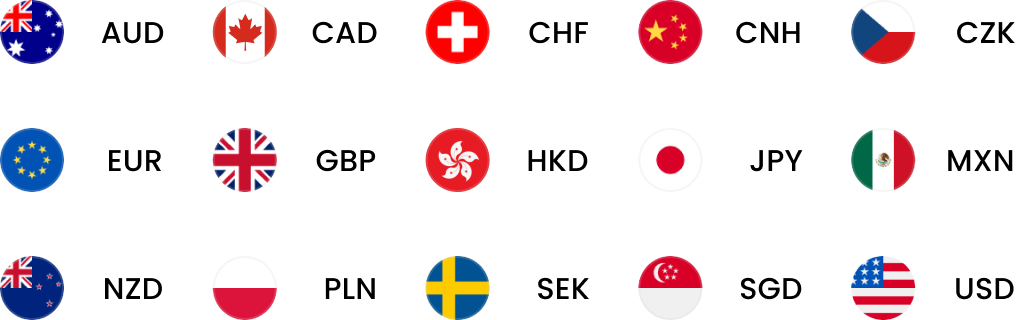
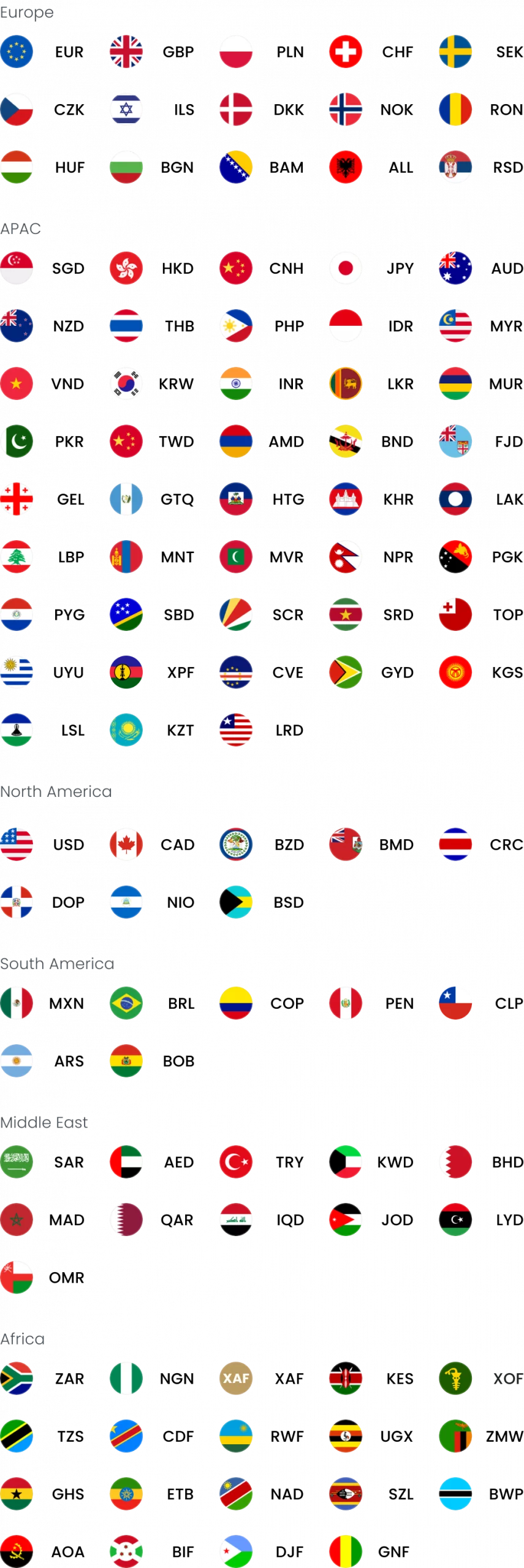
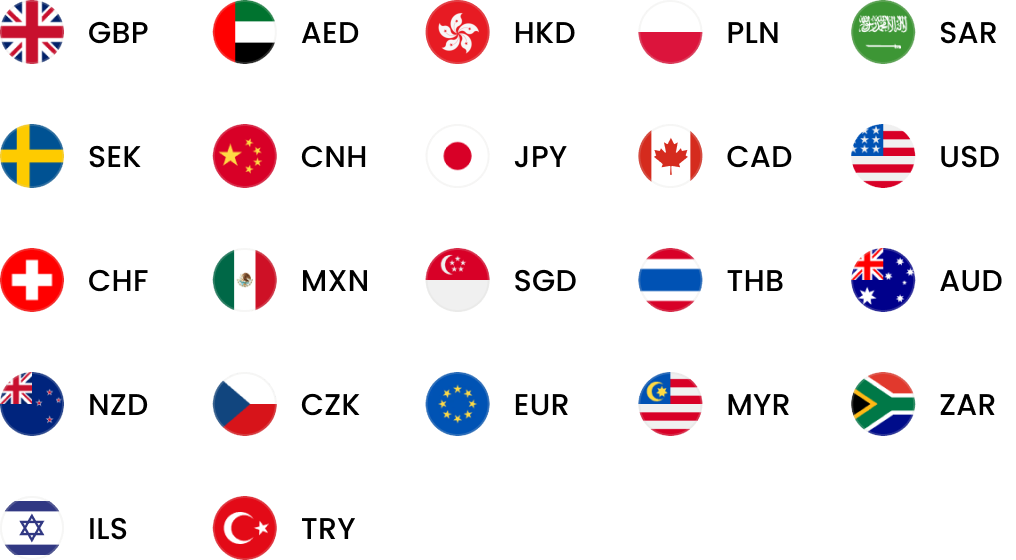
But with WorldFirst, you can hold and manage 20+ currencies for free – including USD, GBP, EUR, CNH, AUD, JPY, SGD, HKD, CAD and more – all from one World Account. You receive local account details, such as US routing numbers or EU IBANs, so international customers and marketplaces can pay you like a local business.
No need for overseas company formation or local banking relationships. Your business stays UK-registered and can start trading globally from day one with less admin, fewer delays and greater flexibility.
Read more: How to choose a multi-currency business account (+ 6 options)
Protect profits with competitive FX rates and advanced tools
With traditional bank accounts, foreign currency payments are usually converted automatically, whether the exchange rate works in your favour or not. You have little control over timing or the rate, which can mean losing money when overseas revenue is converted into GBP or overpaying when you send money in another currency. Those small losses can add up quickly.
With WorldFirst, you’re not forced into instant conversion. Because you can hold multiple currencies, you decide when to convert and at what rate.
Our FX pricing is clear and competitive. Conversions are based on the mid-market rate, with fees capped at 0.5% for major currencies. That transparency makes it easier to plan and protect your margins as you grow.
You also get access to advanced FX tools that help you manage risk and plan ahead:
- Forward contracts let you lock in exchange rates for future conversions
- Firm orders have you set a target rate and will convert your funds automatically when the market reaches it
- Spot contracts let you convert instantly at live market rates
By controlling when you convert currency, you can reduce surprise costs, protect early profits and gain clearer visibility over your cash flow.
Read more: Foreign exchange risk management: How to make international business more affordable
Pay overseas partners in their own currency
Sourcing products or working with overseas partners is now standard for many UK businesses. But paying in foreign currencies through traditional banks is often slow, expensive and unpredictable. Transfers can take days to arrive, FX rates are rarely competitive and suppliers may increase prices to protect themselves against currency risk.
With a World Account, you can pay overseas partners in their own currency – whether you’re paying from one of your 20+ foreign currency balances or sending a payment in a currency you don’t hold. WorldFirst supports payments in 100+ currencies to 200+ countries and territories, using fast local payment networks wherever possible. In fact, around 90% of payments arrive the same day, helping suppliers get paid quickly and in full.
This approach benefits both sides. Suppliers get paid faster, in full and in their own currency, without worrying about fees or FX fluctuations. Over time, that can open the door to early payment discounts, better pricing or more flexible terms – all of which help you protect your margins on every invoice.
Read more: Multi-currency payments: How to manage business transactions across borders?
How to get started with a World Account
Starting a business in the United Kingdom is an exciting step, especially given the UK’s strong access to global markets. For many new businesses, trading internationally is part of the plan from day one, which is why setting up the right financial infrastructure early matters.
A World Account takes the stress out of cross-border payments. It gives you more control over currencies, clear pricing and the flexibility to pay and get paid internationally, all while helping you keep more of what you earn.
Getting started is quick and straightforward. Signing up is free, and the application can be completed online in a few steps. Register for your World Account today.
Continue reading


Subscribe
The Weekly Dispatch
Get the latest news and event invites. Signup for our weekly update from the worlds of fashion, design, and tech.