Business
Multi-currency accounts, competitive FX, and global transfers — Everything you need to pay and get paid internationally
Products
Enterprise
Built for faster payments, smarter liquidity, and robust compliance-all powered by our next-gen API toolkit and Al-native architecture.
Products
Resources
About us
Named a Top Global Fintech Company by CNBC & Statista, we’ve supported 1.5M+ businesses since 2004.
About WorldFirst
Europe
Asia
Oceania
Africa

We provide coverage in South Asia and Middle East: servicing 210+ countries and territories.

HSBC international payments: fees, FX rates and costs for UK businesses

Contents

If you’re running international payments HSBC through Business Internet Banking every month to pay a supplier in Shenzhen or settle a marketplace invoice in euros, you’ve probably already noticed the fee lands twice: once as a flat charge, once buried inside the exchange rate you’re given.

That second cost is harder to see, which is exactly the problem.

Nearly 40% of B2B and B2P payment services remain non-transparent on cost and speed, according to the Financial Stability Board’s 2025 progress report on cross-border payments, and high-street banks are a large part of that opacity.

For an SME sending £10,000 or £50,000 a month overseas, a few percentage points of hidden FX margin adds up to a material drag on margin, not a rounding error.

This article breaks down exactly what HSBC charges for business international payments, how its exchange rate works, where the costs stack up on a real invoice, and how a specialist alternative like WorldFirst compares if you’re actively weighing a switch.

Key takeaways:

  • HSBC’s outgoing transfer fees range from £17 to £40:H Business Internet Banking payments cost £17, phone or branch payments cost £20 to £30, and postal instructions cost £40, before any FX margin is applied
  • HSBC doesn’t publish its FX margin: the bank applies its own ‘HSBC exchange rate,’ which bundles in costs, charges and a commercial return, rather than the mid-markeHt rate you’d see on Google
  • Intermediary bank charges can appear without warning: HSBC’s own price list states it cannot tell you in advance what correspondent banks will deduct from a SWIFT payment
  • International account maintenance adds £96 to £180 a year: on top of monthly account fees, HSBC’s International Business Account carries a separate annual charge depending on your banking tier
  • WorldFirst charges £4 per international payment with FX margins capped at 0.30% to 0.50%: a materially lower and fully disclosed cost structure for regular cross-border senders

Open a World Account to compare transparent FX pricing against your current HSBC costs before your next supplier payment.

How HSBC international payments work for UK businesses

HSBC routes business international payments through several channels, and which one you use changes both the fee and the speed. Most SMEs use either the Kinetic app, Business Internet Banking, or HSBCnet, with branch and phone banking sitting as higher-cost fallback options.

international payments hsbc

Kinetic, HSBC’s app-based SME current account, added international payments in June 2024 with a daily sending limit of £25,000, coverage of over 200 countries and territories, and an in-app indicative rate tool, according to HSBC’s own announcement. Europe is the most popular destination for Kinetic customers’ international payments, narrowly ahead of the USA, per the same release.

For larger or more frequent senders, Business Internet Banking and HSBCnet offer additional functionality, including Global Wallet, which lets you hold and pay in multiple currencies, and Pay Local, a cross-border FX Priority Payment that remits the full amount with no intermediary bank charges.

Pay Local covers 15 beneficiary location and currency pairs, including AUD, EUR, USD, JPY, CNH, CNY, HKD and SGD, but it’s only available on accounts enabled with ‘Get Rate’ and accessed via HSBCnet, according to HSBC’s international payments page.

That’s a meaningful restriction: if your business only uses Kinetic or standard Business Internet Banking, Pay Local likely isn’t available to you.

Euro payments within the EEA typically route via SEPA, which remains available to the UK as a third-country participant post-Brexit, while payments outside that zone or in other currencies go via SWIFT.

Worth noting: HSBC stopped processing international cheques entirely from 13 December 2025, according to its payments page, so postal instructions now cover other payment types only.

HSBC international payment fees explained

HSBC charges separately for the transfer method you use, the currency you’re sending, and whether you hold an International Business Account at all.

Payment type Fee
Outgoing, via Business Internet Banking £17.00
Outgoing, via telephone or branch (HSBC Group bank) £20.00
Outgoing, via telephone or branch (other bank or foreign currency, UK) £30.00
Outgoing, via post £40.00
SEPA Credit Transfer (outgoing) £0.24
SEPA Credit Transfer (incoming) £0.20
Incoming, other currency, under £100 Free
Incoming, other currency, £100 or more £6.00
Global Wallet: Receive like a local £5.00
Global Wallet: Pay like a local £5.00
Global Wallet: Pay SWIFT (international) £17.00

Correct as of the price list effective 15 December 2025; a new version takes effect 14 December 2026, so check the current schedule before relying on these figures.

On top of these transaction fees, an International Business Account carries its own annual maintenance charge, billed in monthly instalments:

  • £96 a year for Small Business Banking customers
  • £120 for Business Banking customers
  • £180 for Corporate Banking customers, per the same price list

The line that catches most business owners out sits in the small print: HSBC states plainly that intermediary and correspondent bank charges may apply on top of its own fees, and that ‘we won’t be able to tell you in advance about charges that other banks apply for processing your payment.’

For a SWIFT payment routed through two or three correspondent banks, that’s an unquantified cost added after the fact.

HSBC exchange rates: what you actually pay

HSBC applies its own proprietary exchange rate to business international payments rather than the mid-market rate you’d see quoted on a currency converter.

According to HSBC’s FX rates explained page, updated 11 September 2025, the ‘HSBC exchange rate’ includes the bank’s costs, charges and ‘our commercial return on the risk we assume.’

The mid-market rate is provided for information only and, by HSBC’s own admission, is ‘not currently available across all HSBC platforms and in all markets.’

In practice, that means most SMEs paying suppliers or receiving customer payments through HSBC cannot see the size of the margin embedded in their rate before they confirm the transaction.

Third-party comparison site Monito estimated in December 2022 that HSBC’s exchange rate was roughly 3.5% worse than the mid-market rate on a £1,000 GBP-to-EUR transfer, concluding HSBC is ‘often an expensive choice for international money transfers,’ according to Monito’s HSBC review.

That figure is now several years old and shouldn’t be treated as a current guarantee, but it illustrates the kind of margin that can sit inside an undisclosed rate.

Specialist providers work differently. WorldFirst, for example, shows the exact FX margin, up to 0.50% for existing customers and 0.30% for new customers on a promotional basis, before you confirm a conversion, according to WorldFirst’s pricing page.

You know the cost before you commit, rather than reverse-engineering it after the funds land.

Where HSBC international payments get expensive for SMEs

The real cost of an HSBC international payment is the transfer fee plus the FX margin plus any intermediary deductions, and all three stack on a single invoice.

Take a straightforward example: an SME paying a £10,000 invoice to a US or Asian supplier via HSBC Business Internet Banking. You’d pay the £17 outgoing transfer fee upfront. Then the FX margin embedded in HSBC’s own exchange rate applies to the full £10,000, a cost that isn’t disclosed as a percentage anywhere in HSBC’s published pricing.

Finally, if the payment routes through one or more correspondent banks via SWIFT, those banks can deduct additional charges that HSBC itself says it cannot quote in advance.

On top of all that, if you hold an International Business Account to manage the payment, you’re also absorbing a share of that £96 to £180 annual maintenance fee.

Compare that to the same £10,000 payment through WorldFirst: a flat £4 international payment fee (or free if the cross-currency payment exceeds £5,000), an FX margin capped at 0.30% to 0.50% and disclosed before you send, and no intermediary charges because WorldFirst settles directly through its own network rather than a correspondent banking chain, per WorldFirst’s pricing page.

For a business sending several supplier payments a month, that difference compounds quickly.

HSBC vs WorldFirst: side-by-side comparison

Here’s how the two providers stack up on the factors that matter most to an SME choosing between a high-street bank and a specialist cross-border payments provider:

Factor HSBC (Business) WorldFirst (World Account)
Account fee £0 or £10/month depending on tier Free, no ongoing account fees
International account maintenance £96–£180/year (International Business Account) Not applicable
FX margin transparency Not publicly disclosed; own exchange rate Disclosed: up to 0.50% (0.30% for new customers)
Outgoing transfer fee £17.00 online; £20–£30 phone/branch; £40 post £4.00 (free above £5,000 cross-currency)
Incoming payment fee £6.00 (≥£100); free under £100; 20p SEPA Free
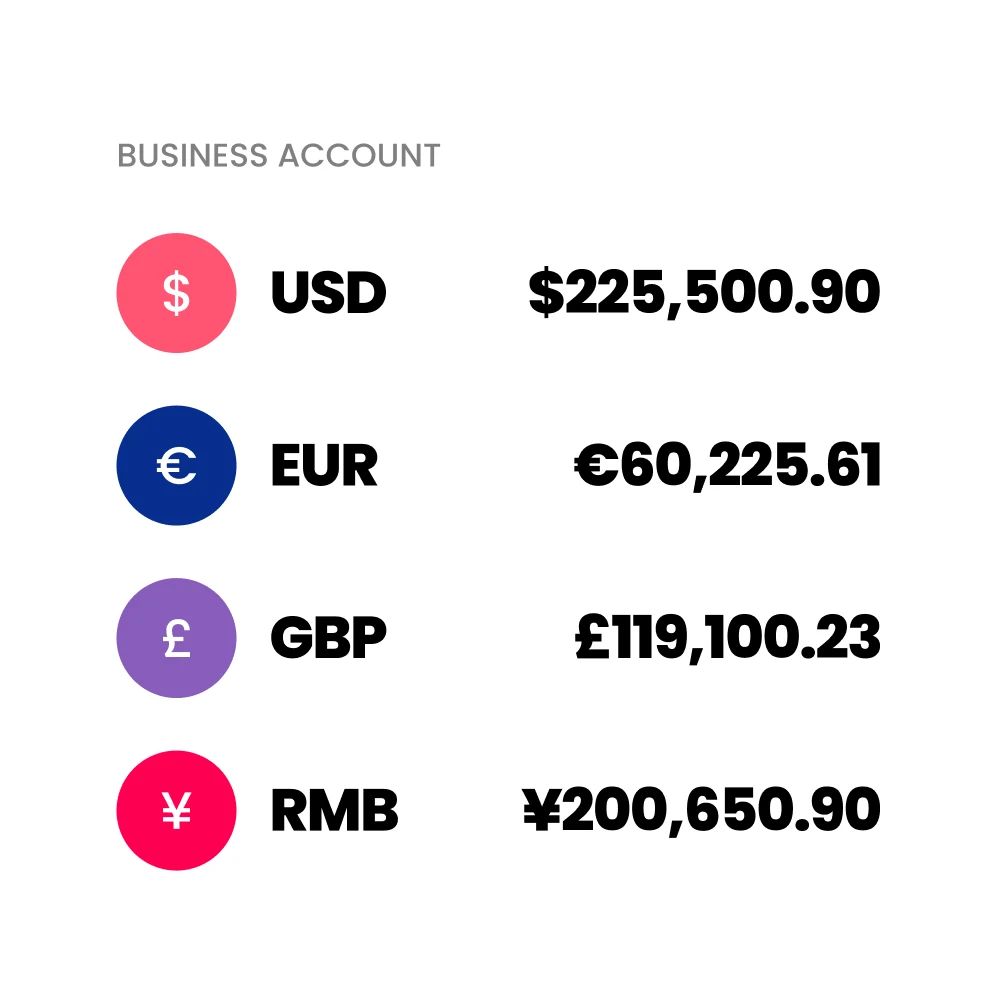
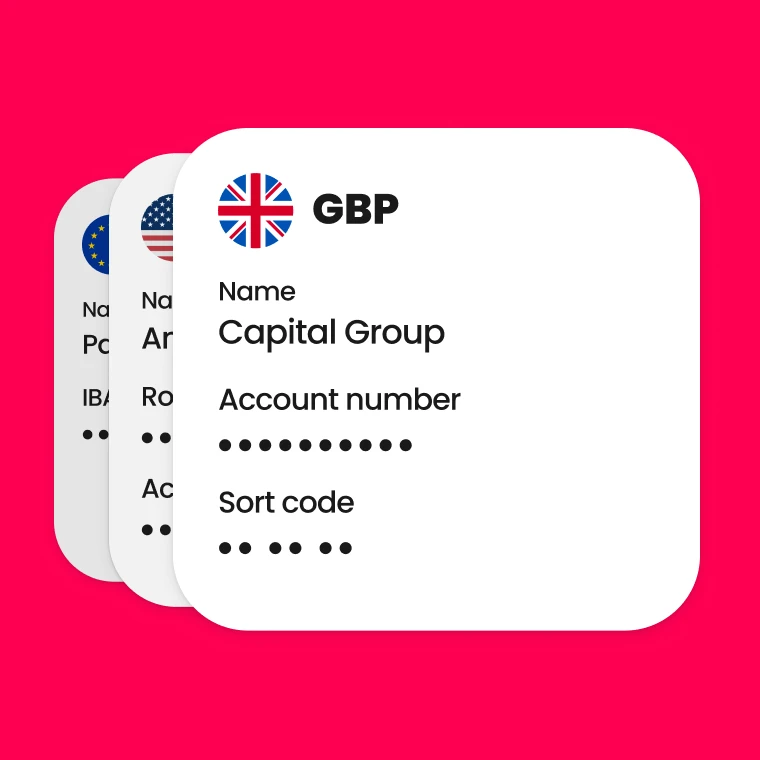
Currencies held Multi-currency via International Current Account, Global Wallet 20+ currencies in one account
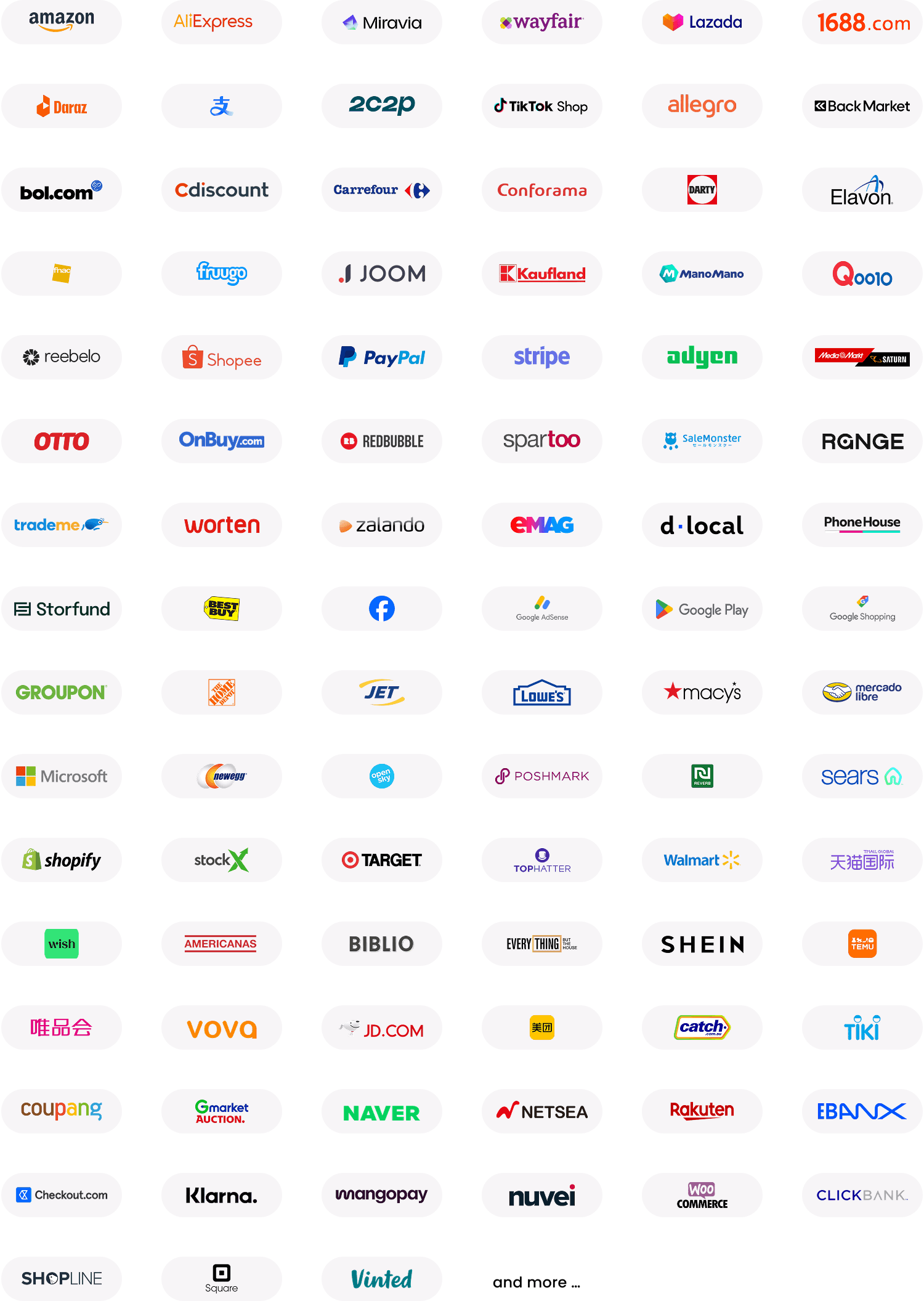
Marketplace integrations None specified 130+ (Amazon, Shopify, PayPal, Shopee and more)
Forward contracts Available via trade finance desk Lock in rates up to 24 months ahead
Payment speed Next working day (EEA euro/sterling) to 4 working days Same-day or next-day in major corridors
Regulatory status UK licensed bank FCA-authorised Electronic Money Institution (ref 900508)

Figures correct as of the HSBC Business Price List effective 15 December 2025 and WorldFirst’s published pricing page.

When HSBC might still be the right choice

HSBC remains a strong fit for SMEs whose international activity goes beyond straightforward transfers into structured trade finance.

If your business relies on letters of credit, import or export collections, or multi-currency term deposits above $50,000, HSBC’s International Fixed Term Deposit and broader trade finance infrastructure offer capabilities that a payments-focused EMI simply doesn’t provide.

A dedicated Relationship Manager, available to Business Banking customers paying £10 a month, can also be genuinely useful for SMEs juggling lending, cash management and international payments under one roof.

HSBC’s Pay Local feature is worth using if your corridors match its 15 supported currency pairs and you’re set up on HSBCnet with Get Rate enabled, since it removes intermediary deductions entirely for those routes. And for businesses that value a physical branch network alongside digital banking, HSBC’s high-street presence is a genuine point of difference that no fintech competitor replicates.

If your business needs borrowing, payroll or full domestic cash management alongside international payments, a bank relationship still has a role. WorldFirst doesn’t offer these services: it’s a regulated payments provider, not a bank, and doesn’t extend credit facilities or manage day-to-day cash beyond the payments and FX it’s built for.

When switching to a specialist makes sense

If your international activity is mostly supplier payments, marketplace collections, or multi-currency invoicing, rather than trade finance, the calculus shifts toward a specialist provider.

WorldFirst is built specifically around this workflow:

  • Free account opening with no minimum balance
  • Connections to 130+ marketplaces and payment gateways including Amazon, Shopify and Shopee
  • Forward contracts to lock in rates up to 24 months ahead
  • Same-day or next-day settlement in major currency corridors

Payments between World Accounts settle instantly and free of charge, which matters if you’re paying multiple suppliers who also hold World Accounts, and WorldFirst states its FX pricing can save businesses up to £270 per £10,000 sent overseas compared with typical bank rates, per the same source.

Funds are safeguarded with tier-1 partner banks including JP Morgan, Barclays and Citibank, though it’s worth being clear-eyed here: safeguarding isn’t the same as FSCS deposit protection, and WorldFirst doesn’t claim bank-equivalent protection.

For an SME already comparing providers, the practical question isn’t whether to abandon HSBC entirely, but whether keeping HSBC for domestic banking while routing international payments through a specialist reduces your total cost without disrupting the relationship you rely on for everything else.

How to switch from HSBC to WorldFirst

Moving your international payment flow doesn’t require closing your HSBC account. Most SMEs run both in parallel, keeping HSBC for domestic banking, lending or trade finance while routing cross-border payments through WorldFirst.

  1. Open a free World Account, typically completed in minutes online with no paperwork or minimum balance requirement.
  2. Connect your marketplace payouts if you sell on Amazon, Shopify, Shopee or similar platforms, so collections land directly in your World Account.
  3. Set up your supplier payees, adding the banking details for each recipient you currently pay via HSBC.
  4. Convert and send, checking the disclosed FX margin before confirming each transaction, with same-day or next-day settlement available in major corridors.

World First UK Limited is FCA-authorised as an Electronic Money Institution under the Electronic Money Regulations 2011, and client funds are held in segregated safeguarded accounts rather than lent out, distinct from a bank’s deposit model.

The bottom line

For an SME sending regular supplier payments or collecting marketplace revenue overseas, the deciding factor usually isn’t whether HSBC is a capable bank, but whether an undisclosed FX margin and £17-plus transfer fees still make sense once you can see a fully transparent alternative side by side.

If your needs run to trade finance and relationship banking, HSBC earns its place. If they don’t, the maths increasingly favours running international payments through a specialist while keeping your bank for everything else.

WorldFirst isn’t a bank, and World Account isn’t a bank account. World First UK Limited is authorised by the Financial Conduct Authority as an Electronic Money Institution under the Electronic Money Regulations 2011, firm reference number 900508.

Open a World Account and compare your next supplier payment cost before deciding where it should run.

FAQs

1. How much does HSBC charge for international business payments?

HSBC Business international payment fees depend on the payment method. Payments made through Business Internet Banking currently cost £17, while telephone, branch and postal instructions can cost more. SEPA payments have separate lower fees, and additional FX or intermediary bank charges may also apply.

2. Does HSBC charge an FX margin on international payments?

Yes. HSBC uses its own exchange rate for business international payments rather than the mid-market rate. HSBC states that this rate includes its costs, charges and commercial return, but it does not publish a single standard FX margin percentage that applies to every transaction.
3. Can HSBC Business hold multiple currencies?

Yes, HSBC offers foreign-currency and multi-currency functionality through products such as its International Business Account and Global Wallet. Availability, fees and functionality depend on the account and banking platform you use.

4. Does HSBC charge to receive international payments?

It can. HSBC’s business pricing currently includes charges for certain incoming international payments, while SEPA receipts and smaller incoming payments can have different fees. Businesses should check the current HSBC Business Price List for the exact receiving charge that applies to their payment.

5. How long do HSBC international business payments take?

Timing depends on the destination, currency and payment route. Some EEA payments can arrive by the next working day, while other international payments may take several working days. HSBC also offers alternative payment routes for certain supported currencies and destinations.

6. Is WorldFirst cheaper than HSBC for international payments?

It depends on the payment amount, currency pair and HSBC account you use. WorldFirst publishes standard international payment fees and FX pricing, while HSBC uses its own exchange rate and may also charge transaction and intermediary fees. Comparing the total cost of the same real payment is the best way to assess which provider is cheaper for your business.

7. Do I need to close my HSBC account to use WorldFirst?

No. A business can keep its HSBC account for domestic banking, lending or trade finance while using a WorldFirst World Account separately for supported international payments, marketplace collections and multi-currency balances.

Sources:

  1. https://www.fsb.org/2025/10/g20-roadmap-for-cross-border-payments-consolidated-progress-report-for-2025/
  2. https://www.about.hsbc.co.uk/news-and-media/hsbc-uk-adds-international-payments-tool-to-its-kinetic-business-banking-app
  3. https://www.business.hsbc.uk/en-gb/solutions/making-international-payments
  4. https://www.business.hsbc.uk/en-gb/products-and-solutions/payments
  5. https://www.business.hsbc.uk/-/media/media/uk/pdfs/regulations/business-price-list.pdf
  6. https://www.business.hsbc.com/en-gb/fx-rates-explained
  7. https://www.monito.com/en/review/hsbc

Continue reading

Pay your suppliers around the world. Collect payments for free in 20+ currencies. Convert when it suits you. All in one place.
international payments hsbc

The simpler way to pay and get paid

Save money, time, and have peace of mind when expanding your global business.

扫描二维码下载WorldFirst app
打开手机扫一扫

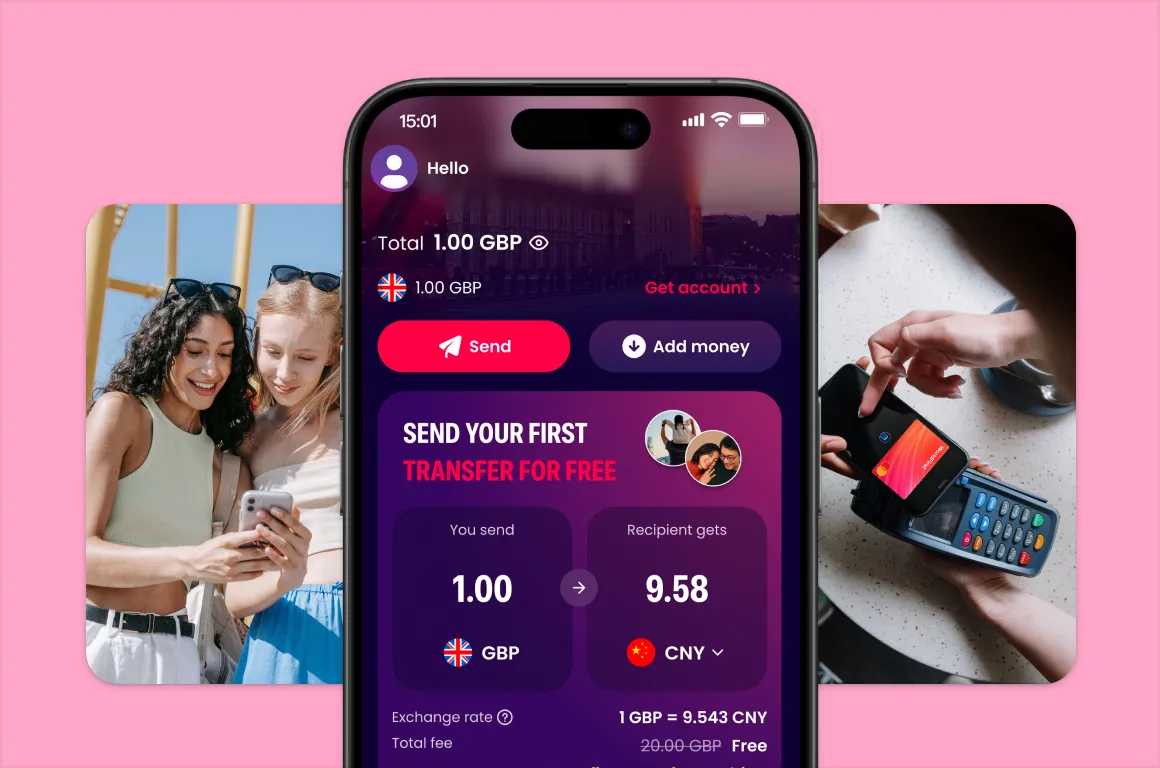
It looks like you're sending money to family or friends — that's a personal transfer, which is best handled through our app.

Sending money to family or friends? Download our app for the best experience.

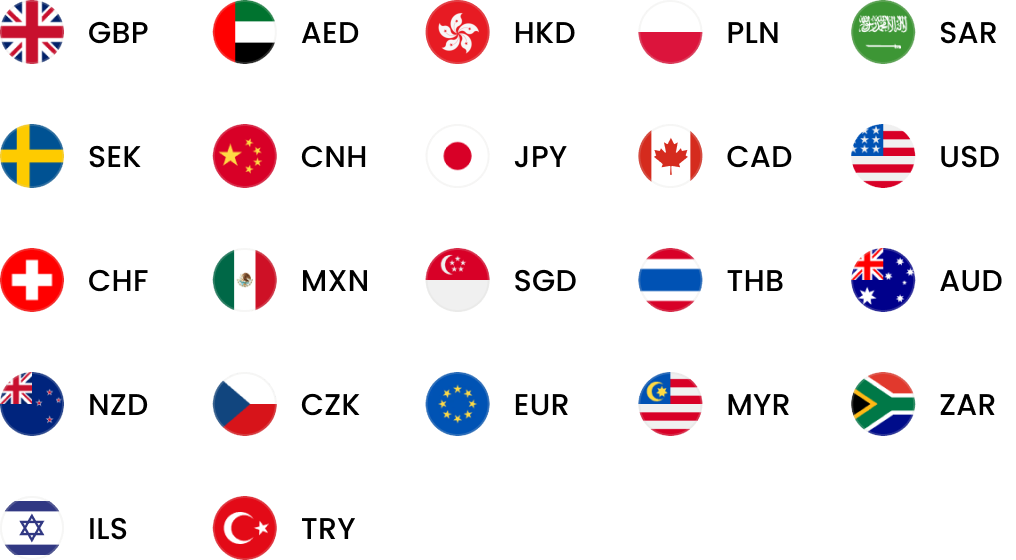
Pay in 15 currencies with World Card, no FX fees

Enjoy zero FX fees when paying in the following 15 currencies with World Card.

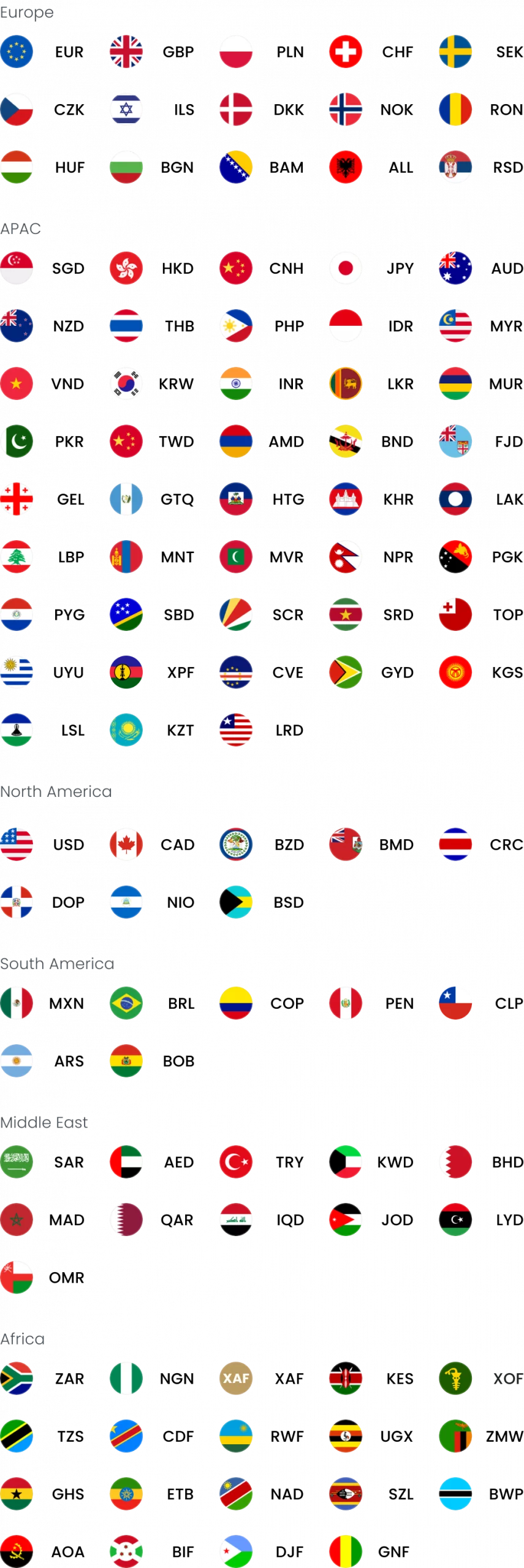
Send money in 100+ currencies

You can send money in your WorldFirst account to any of the currencies we support.

Get Paid by 130+ marketplaces

Seamlessly get paid by 130+ marketplaces and pay your suppliers anywhere.

Collect money in 20+ currencies

You can collect money in 20+ currencies. It only takes a few minutes to open an account in the currency you need.