Business
Multi-currency accounts, competitive FX, and global transfers — Everything you need to pay and get paid internationally
Products
Enterprise
Built for faster payments, smarter liquidity, and robust compliance-all powered by our next-gen API toolkit and Al-native architecture.
Products
Resources
About us
Named a Top Global Fintech Company by CNBC & Statista, we’ve supported 1.5M+ businesses since 2004.
About WorldFirst
Europe
Asia
Oceania
Africa

We provide coverage in South Asia and Middle East: servicing 210+ countries and territories.

How to choose an FX risk management provider in the UK

Contents

You’ve agreed a price with your supplier in Shenzhen on a Tuesday. By the time your balance payment is due six weeks later, sterling has slipped and your landed cost has quietly gone up, eating into a margin you’d already priced tight. If that scenario feels familiar, you’re not managing a payment problem. You’re managing a currency risk problem, and the two need different solutions.

Nearly 8 in 10 UK SMEs pay suppliers overseas, and in 2023 UK SMEs lost an estimated £2.8 billion to hidden FX costs, up from £2.2 billion in 2018. More than 70% still rely on high-street banks for international payments, and only around 18% of UK businesses use any form of hedging tool at all.

This article compares the main types of foreign exchange risk management companies available to UK importers, explains the hedging tools they offer, and sets out a practical checklist for choosing one that actually protects your margins rather than just moving your money.

Key takeaways:

  • FX risk starts before the payment date: exchange-rate movements between agreeing a supplier price and settling the invoice can directly affect your margin
  • Transaction risk matters most for importers: economic and translation risk also exist, but recurring supplier payments usually create the most immediate exposure
  • Provider costs and tools vary widely: banks, specialist brokers and fintech platforms differ in FX margins, hedging options and account flexibility
  • Forward contracts can add cost certainty: locking in a rate for a known future payment can protect your budget from unfavourable currency movements
  • Fund protection differs by provider type: FCA regulation and safeguarding at an electronic money institution are different from FSCS protection at an eligible bank
  • WorldFirst combines payments with FX risk tools: UK importers can use forward contracts, rate alerts and multi-currency balances alongside their international supplier payments

Open a World Account to see forward contracts, rate alerts and multi-currency payments in one place before your next supplier payment is due.

What is a foreign exchange risk management company?

A foreign exchange risk management company combines international payments with tools that protect you from currency movements between the moment you agree a price and the moment you settle it. That’s the distinction that matters when you’re comparing providers.

A standard high-street bank will process your international payment, but it rarely offers competitive rates or genuine hedging tools beyond a basic forward contract available only to larger relationship customers.

A spot-only fintech app will give you a decent rate on today’s transfer, but if it doesn’t offer forward contracts, rate alerts or multi-currency holding, it isn’t managing your risk, it’s just executing a trade. The providers worth comparing here sit between those two extremes: FCA-regulated firms that let you convert, hold and forward-book currency as part of a coherent strategy, not a one-off transaction.

The three types of FX risk every importer should know

Understanding which risk actually affects your business shapes which tools you need. Not all three carry equal weight for a small importer.

1. Transaction risk

Transaction risk is the one that hits your invoices directly. You agree a price with a supplier today, but the exchange rate moves before you pay the balance weeks or months later, changing the sterling cost of goods you’ve already committed to buy.

This is the risk most established importers encounter on every purchase order, and it’s the one forward contracts and rate alerts are built to address.

2. Economic risk

Economic risk, sometimes called forecast risk, is broader and longer term. It’s the effect that sustained currency movements have on your future cash flow, your pricing strategy and your competitiveness against domestic or differently-sourced rivals.

According to Investopedia’s definition of foreign exchange risk, this reflects how exchange rate changes affect the present value of future cash flows, not just a single transaction. If your supplier base is concentrated in one currency corridor, this is worth reviewing annually, not just per order.

3. Translation risk

Translation risk applies mainly to businesses with overseas subsidiaries that need to convert foreign financial statements into sterling for consolidated reporting, as outlined in OpenStax’s coverage of exchange rates and risk.

For most single-entity UK importers, this is the least relevant of the three and can be set aside in favour of managing transaction risk properly.

Key FX risk management tools explained

Each tool below solves a slightly different problem:

  1. Spot contracts convert currency at today’s rate for near-immediate settlement. Use this when you need to pay a supplier now and aren’t worried about rate movement before the transaction completes, typically within a day or two
  2. Forward contracts let you lock in an exchange rate today for a payment you’ll make weeks or months into the future. This is the most commonly used hedging instrument among businesses, because it fixes your cost regardless of which way the market moves. Most UK providers offer forwards up to 12 months, with some extending to 24 months, and typically require a deposit of around 5% upfront
  3. Limit and market orders let you set a target rate and have the conversion trigger automatically when the market reaches it, without you watching the screen. Useful if you have a rate in mind that would preserve your margin but you can’t monitor markets constantly
  4. FX options give you the right, but not the obligation, to convert at a set rate by a set date, offering downside protection while preserving upside if the market moves in your favour. These typically come with a premium cost and are more common among mid-market and larger importers than very small businesses
  5. Natural hedging means structuring your business so currency exposures offset each other, for example by holding a foreign currency balance if you both receive and pay in the same currency. A multi-currency account makes this practical for importers who also sell into overseas marketplaces, letting you receive USD or EUR sales income and pay USD or EUR suppliers without converting twice

How we assessed these

To compare providers fairly, we used the same four criteria across banks, specialist brokers, fintech platforms and FX software:

  • FX margin: how much the provider charges above the mid-market rate
  • Hedging tools: whether it offers tools such as forward contracts rather than spot transfers alone
  • Multi-currency support: whether businesses can hold and pay in multiple currencies
  • Regulation and safeguarding: the provider’s regulatory status and how client funds are protected

Types of foreign exchange risk management companies in the UK

The right category of provider depends on your payment volume, how much dealer support you want, and whether you need software to sit alongside your accounting system.

Here’s how the four main categories compare:

Provider type Typical FX margin Hedging tools Best for
High-street banks 3–5% plus transfer fees Limited, often relationship-gated Businesses wanting one provider for banking and payments
Specialist FX brokers (e.g. Ebury, OFX, Convera) Roughly 0.5–1.5% Forwards, options, dealer-led advice Importers wanting a dedicated account manager
Fintech multi-currency platforms (e.g. WorldFirst, Wise, Airwallex) Sub-1% to around 0.6% at the lower end Forwards, rate alerts, self-serve accounts Importers wanting transparent, self-service control
FX hedging software / treasury platforms (e.g. Alt21, iBanFirst) Varies, often bundled with brokerage ERP-integrated automated hedging Businesses with complex, high-volume exposure

Comparison compiled from published provider information; rates checked against WorldFirst, Currency Expert and Compare Your FX sources.

1. High-street banks

Best for: businesses that want their FX and everyday banking under one roof and don’t mind paying a premium for that convenience.

The main advantages of keeping FX with a high-street bank are:

  • Established infrastructure means your bank already holds your operating account, so international payments sit alongside domestic banking with no new relationship to set up
  • FSCS-eligible deposits up to the statutory limit apply to your cash balances, a protection that non-bank providers cannot offer in the same way
  • Relationship lending may be more accessible if you also need trade finance or overdraft facilities

Pricing:

Traditional banks typically charge 3 to 5% in FX margin plus £15 to £40 per transfer. For a business converting £100,000 a month, that margin gap alone can represent tens of thousands of pounds a year compared with specialist alternatives.

Trade-offs:

Hedging tools, where available, are often gated behind relationship managers and larger transaction volumes, and pricing is rarely transparent upfront. If you’re an established importer making regular, sizeable payments, the margin cost compounds quickly.

2. Specialist FX brokers

Best for: importers who value a named dealer relationship and want guidance on structuring forward contracts around their payment schedule.

Specialist brokers typically stand out in three areas:

  • Dedicated account management gives you a named contact who understands your payment pattern and supplier corridors
  • Forward and option contracts are typically core to the offering rather than an add-on
  • Currency market commentary is often provided as part of the service, useful if you don’t have in-house treasury expertise

Pricing:

Specialist brokers such as Ebury, OFX and Convera typically operate in the 0.5 to 1.5% margin range, according to Kael Tripton’s review of UK business FX platforms, sitting well below bank margins but generally above the leanest fintech platforms.

Trade-offs:

Service quality and pricing can vary by dealer, and smaller importers sometimes find minimum transaction sizes or account minimums make brokers less attractive than self-serve platforms.

3. Fintech multi-currency platforms

Best for: importers who want transparent pricing, self-service control and a multi-currency account they can manage without waiting on a phone call.

The main features that make fintech platforms attractive to importers are:

  • Multi-currency accounts let you hold and pay from balances in the currencies you actually trade in
  • Self-serve forward contracts and rate alerts are increasingly standard, giving you hedging tools without needing a dealer relationship
  • App and dashboard visibility shows your exposure and transaction history in real time

Pricing:

WorldFirst charges up to 0.6% above the mid-market rate for major currency conversions, while Wise Business prices from around 0.33% on a pass-through basis and Airwallex charges around 0.5% on major currencies and 1% on others.

Trade-offs:

Not every fintech platform offers forward contracts or options, so check the specific tool set rather than assuming all self-serve platforms manage risk in the same way. Some are payment-focused only.

4. FX hedging software and treasury platforms

Best for: importers with high transaction volumes or multiple currency corridors who want hedging tied directly into their accounting or ERP system.

These platforms typically add more automation and integration through:

  • ERP integration with systems such as NetSuite, Xero or QuickBooks flags currency exposure the moment an invoice is raised, according to Alt21’s overview of FX hedging software
  • Automated hedging rules can trigger forward bookings without manual intervention once exposure crosses a threshold you set
  • Flexible forward structures, such as the fixed, flexible and dynamic contracts described by iBanFirst’s FX risk management tools guide, allow drawdown within a window rather than a single fixed date

Pricing:

Typically bundled into a brokerage relationship rather than a standalone fee, so the effective cost depends on the margin negotiated alongside the software.

Trade-offs:

This level of sophistication is usually more than a smaller importer needs, and setup or onboarding can take longer than a self-serve account.

How to choose the right FX risk management company for your import business

Answer this by matching the checklist below against your actual payment pattern, not against marketing claims. Six factors separate providers that genuinely manage risk from those that simply move money.

  • FCA authorisation status. Confirm whether the provider is an Authorised Payment Institution or an Electronic Money Institution under the FCA’s rules on electronic money and payment institutions. Both operate under the Payment Services Regulations 2017 or Electronic Money Regulations 2011
  • Hedging tools actually offered. Ask specifically whether forward contracts, rate alerts and limit orders are available to businesses of your size, not just larger relationship clients
  • FX margin versus the mid-market rate. Request the actual margin in writing rather than accepting a vague ‘competitive rates’ claim
  • Multi-currency account support. If you also sell through marketplaces or receive foreign currency income, check whether you can hold balances rather than being forced to convert immediately
  • Accounting integration. Confirm whether the platform reconciles with Xero, QuickBooks or your existing bookkeeping setup
  • Safeguarding versus FSCS protection. Client funds at EMIs and APIs are safeguarded in segregated accounts, but this is not the same as FSCS deposit protection, which covers bank deposits up to £85,000 per person per institution, as confirmed by the FCA’s guidance on payment services and e-money regulations. Know which protection applies before you move significant balances

This distinction matters more than it might first appear. A bank holding your working capital offers a different kind of protection to an EMI safeguarding funds you’re about to send to a supplier, and neither is inherently wrong, but you should choose knowingly.

How WorldFirst helps UK importers manage FX risk

Fresh4U, a UK produce importer, found that a five-cent shift in the exchange rate could add a pound to the cost of a single box of ginger imported from China, a margin swing that’s easy to underestimate until it happens repeatedly across a full container. The business tried three or four competitors before settling on WorldFirst, a pattern that reflects how much variation exists between providers even within the same fintech category.

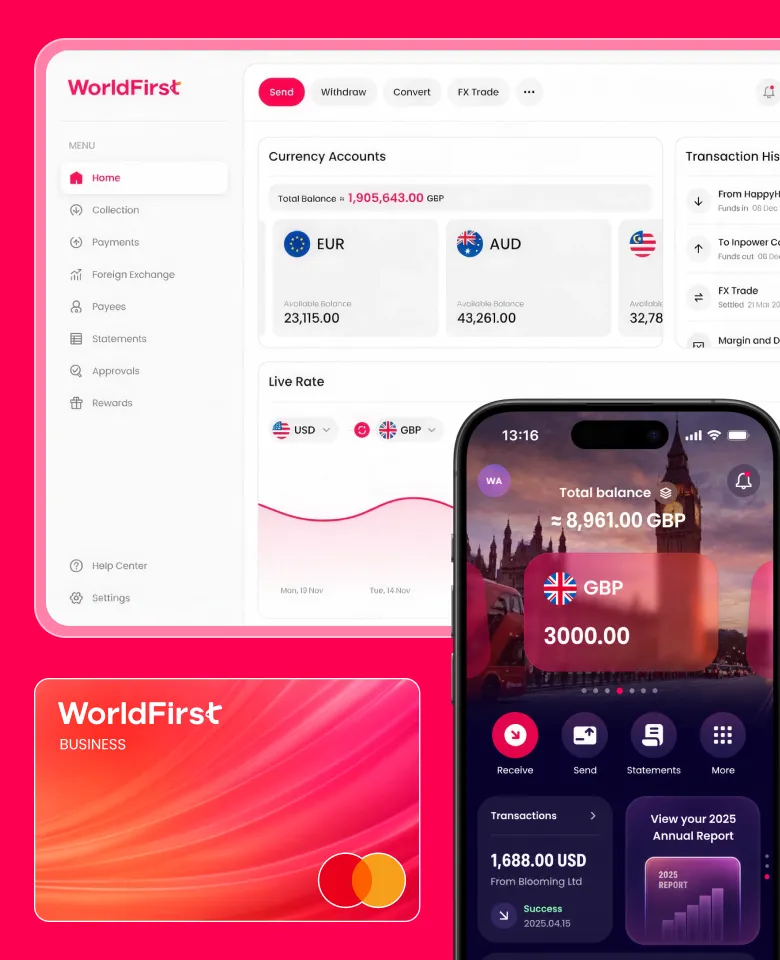
WorldFirst’s World Account is a multi-currency account built around the two-stage payment pattern common to import businesses: a deposit on order confirmation and a balance payment on or before dispatch, often weeks apart and exposed to rate movement in between.

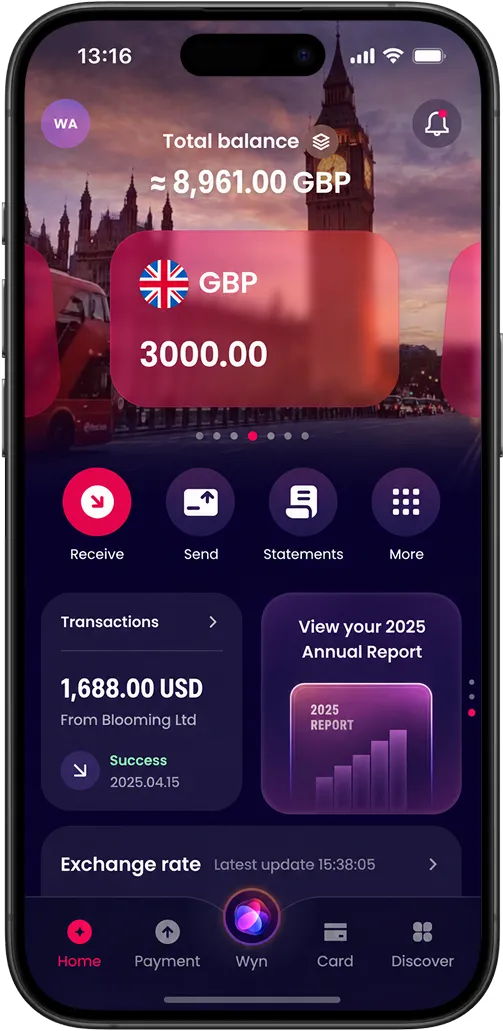
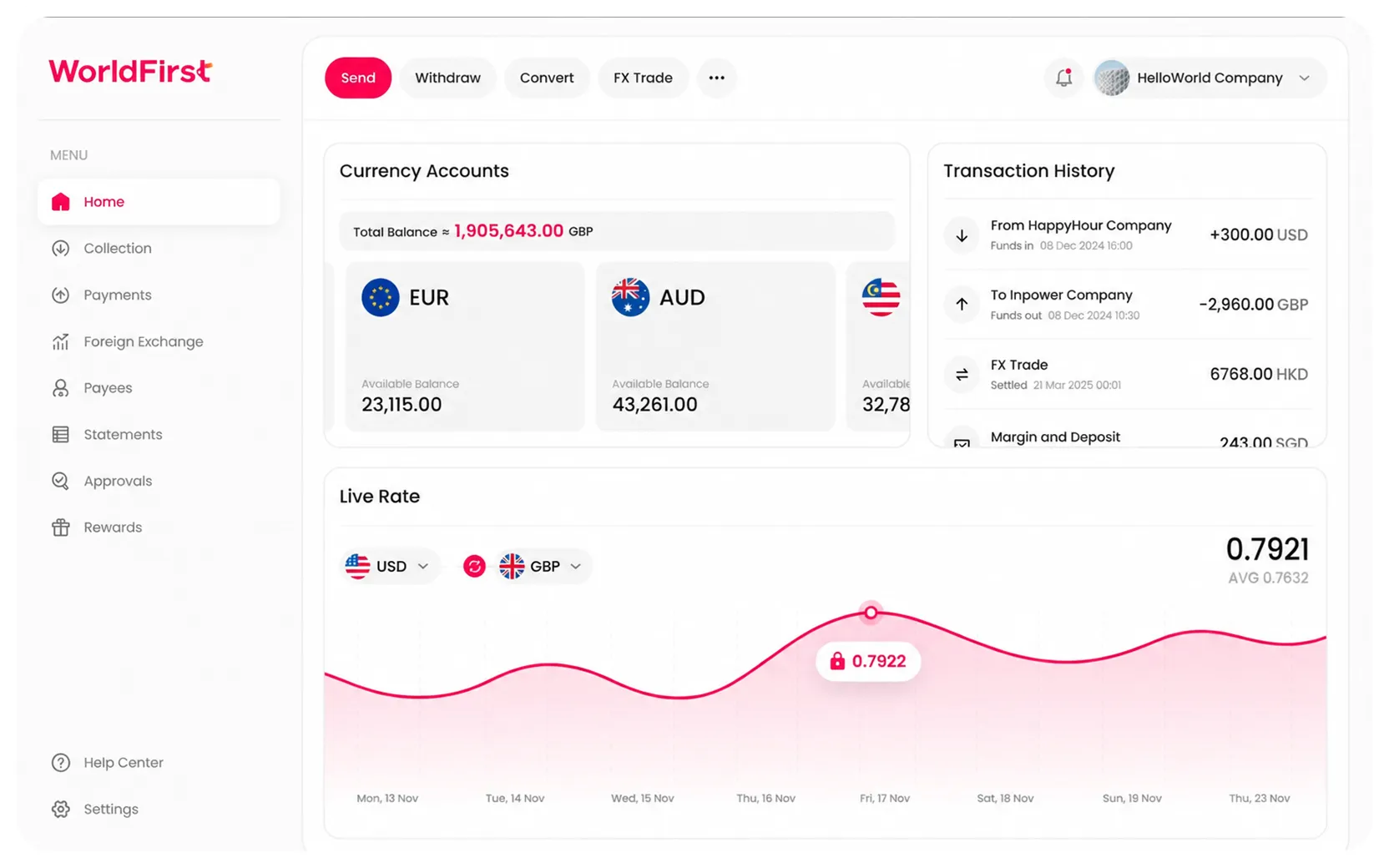
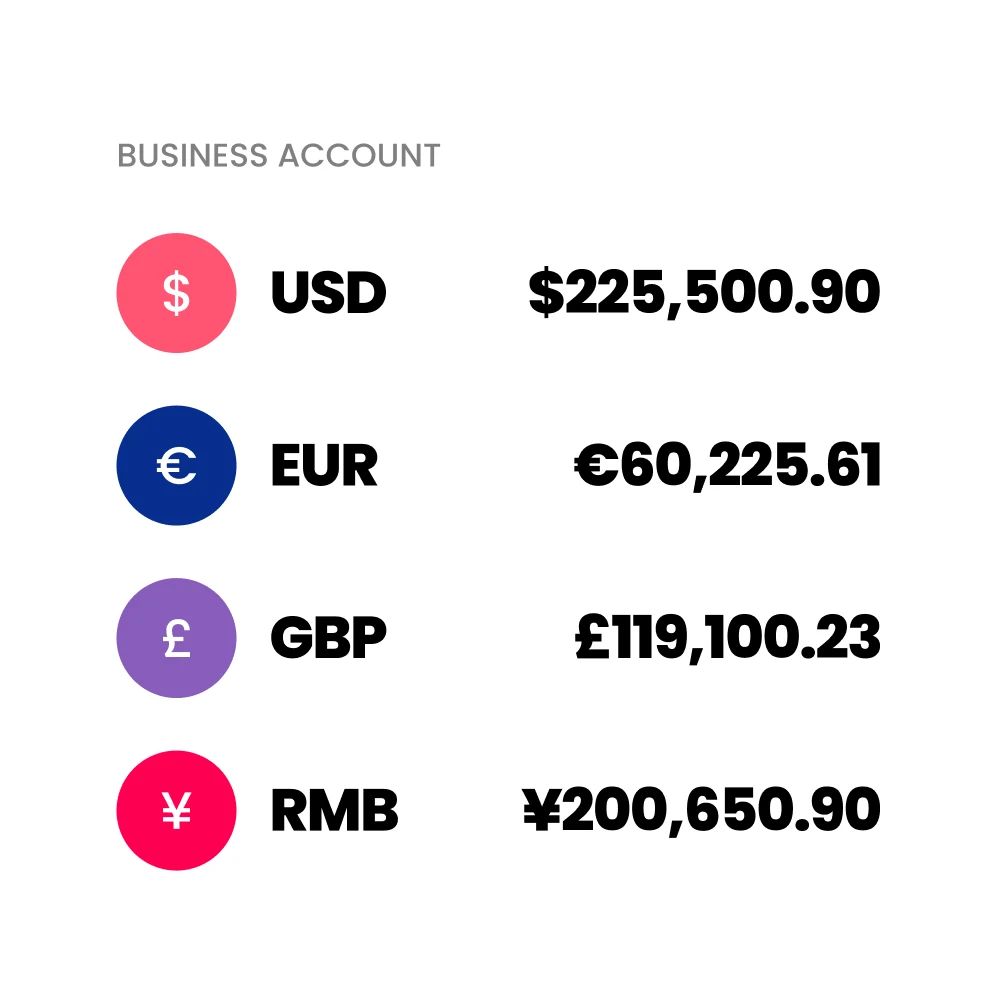
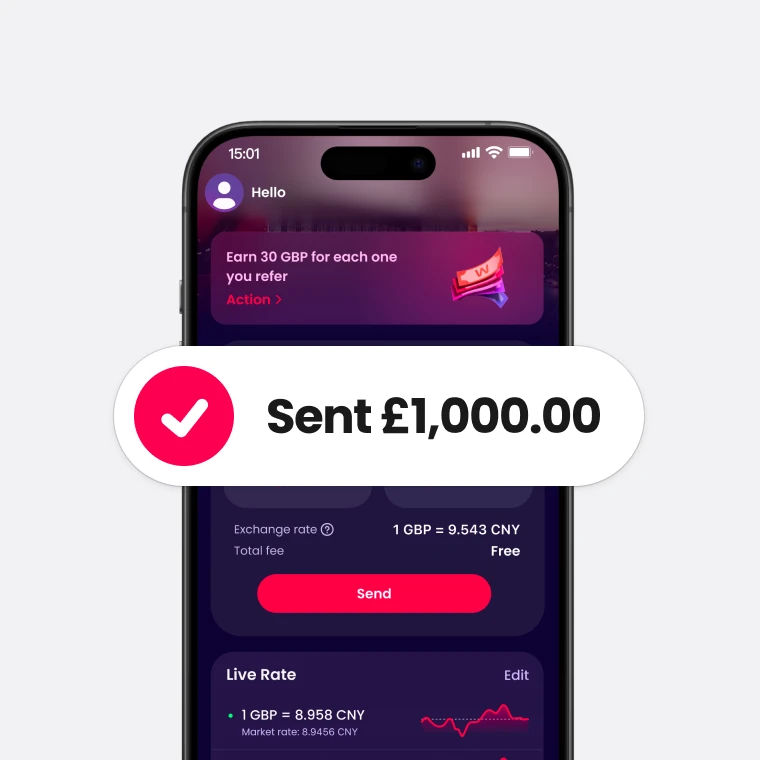
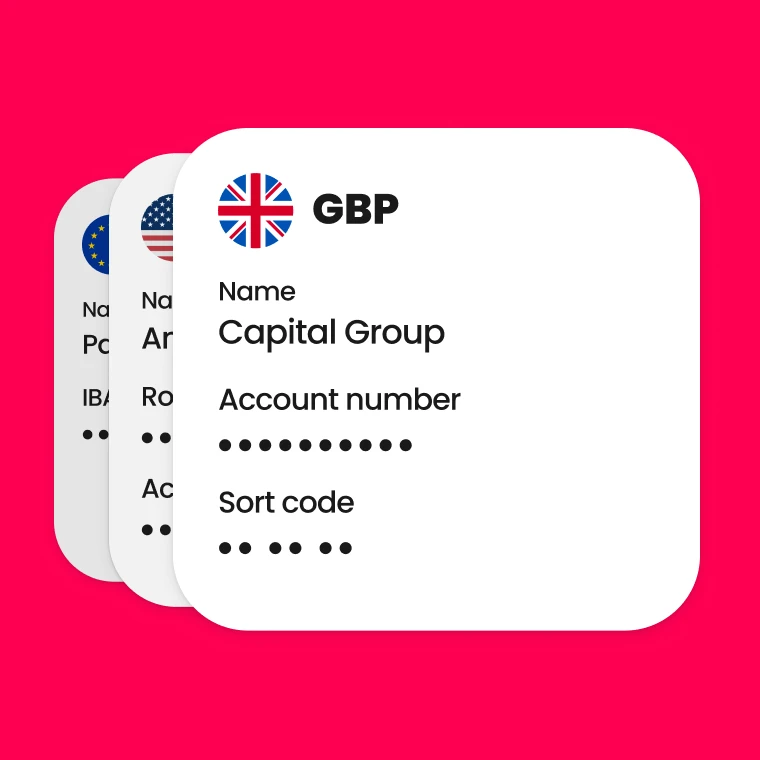
The account lets you open receiving accounts in 20+ currencies with local account details, and send payments in 100+ currencies to 210+ regions, with support for getting paid by 130+ marketplaces if you also sell overseas. Forward contracts let you lock in a rate ahead of that balance payment, while rate alerts notify you in real time when your target rate is hit, and firm orders can auto-execute a conversion at a chosen rate for up to a month.

On cost, WorldFirst’s FX margin runs up to 0.6% above the mid-market rate for major currency conversions, against the 3 to 5% typical at high-street banks referenced earlier in this guide. Transfers between World Account balances are instant and fee-free, and the account itself is free to open with no ongoing account fees.

For day-to-day spending, the World Card offers 0% FX fees across 15 currencies and up to 1.2% cashback on eligible spend, and the account connects with Xero for reconciliation.

WorldFirst customers report tangible results from this setup. Infapower’s director credits a forward exchange rate with helping to ‘minimise any potential exchange rate risks’ on scheduled payments, while Bantam’s director points to the confidence of making advance payments to suppliers safely, and Argofield’s director highlights the value of transparent pricing paired with a dedicated account manager.

WorldFirst isn’t a bank. World First UK Limited is authorised by the FCA as an Electronic Money Institution under the Electronic Money Regulations 2011. Customer funds are safeguarded rather than protected by the FSCS, and WorldFirst doesn’t provide lending, overdrafts, payroll or full domestic banking.

Open a World Account to compare forward contracts and rate alerts against what your current bank offers on your next supplier payment.

FAQs

1. What does a foreign exchange risk management company do?

A foreign exchange risk management company helps businesses reduce the financial impact of currency movements on international payments. Alongside currency conversion, these providers may offer forward contracts, rate alerts, limit orders, multi-currency accounts and other tools that help businesses manage exchange-rate exposure before a payment is due.

2. What is the main foreign exchange risk for UK importers?

For most UK importers, the biggest concern is transaction risk. This occurs when a business agrees a supplier price in a foreign currency but pays weeks or months later. If the exchange rate moves unfavourably during that period, the sterling cost of the purchase can increase and reduce the expected margin.

3. How can importers protect themselves against currency fluctuations?

Importers can use several approaches, including forward contracts to lock in an exchange rate, rate alerts and market orders to act when a target rate is reached, and multi-currency accounts to hold foreign currency until it is needed. Businesses with both foreign-currency income and expenses may also use natural hedging to offset some of their exposure.
4. What is the difference between a spot contract and a forward contract?

A spot contract converts currency at the current exchange rate for near-immediate settlement. A forward contract allows a business to agree an exchange rate today for a payment that will be made at a future date. Spot contracts are generally suited to immediate payments, while forwards are designed to provide greater cost certainty for known future obligations.

5. Are FX brokers cheaper than banks for international business payments?

They can be. The article notes that high-street banks typically apply higher FX margins than specialist brokers and fintech platforms. However, actual pricing depends on the provider, currency pair, transaction size and account arrangement, so businesses should compare the quoted rate against the mid-market rate rather than relying on headline claims.

6. What should I look for when choosing an FX risk management provider?

Key factors include the provider’s FCA regulatory status, the FX margin charged against the mid-market rate, the availability of forward contracts and other hedging tools, multi-currency account support, accounting integrations and how customer funds are protected. Businesses should also check whether the relevant tools are available for their transaction size rather than restricted to larger clients.

7. Do small businesses need FX hedging?

Not every small business needs a complex hedging strategy, but businesses with recurring overseas supplier payments can still be exposed to meaningful exchange-rate risk. The more time there is between agreeing a foreign-currency price and making the payment, the greater the potential for currency movements to affect the final cost.

Sources:

  1. https://www.investopedia.com/terms/f/foreignexchangerisk.asp
  2. https://www.finextra.com/newsarticle/43743/british-smes-lost-28-billion-in-2023-to-rip-off-bank-fx-fees-says-wise
  3. https://openstax.org/books/principles-finance-2e/pages/20-3-exchange-rates-and-risk
  4. https://www.currencyexpert.com/business/corporate-fx/
  5. https://compareyourfx.com/blog/ebury-vs-wise-vs-ofx-the-uk-business-fx-showdown-that-could-/
  6. https://www.kaeltripton.com/fx-platform-uk-business/
  7. https://www.alt21.com/blog/fx-hedging-software/
  8. https://blog.ibanfirst.com/en/fx-risk-management-tools
  9. https://www.fca.org.uk/firms/electronic-money-payment-institutions
  10. https://www.fca.org.uk/firms/payment-services-regulations-e-money-regulations

Continue reading

Pay your suppliers around the world. Collect payments for free in 20+ currencies. Convert when it suits you. All in one place.
foreign exchange risk management companies

The simpler way to pay and get paid

Save money, time, and have peace of mind when expanding your global business.

扫描二维码下载WorldFirst app
打开手机扫一扫

It looks like you're sending money to family or friends — that's a personal transfer, which is best handled through our app.

Sending money to family or friends? Download our app for the best experience.

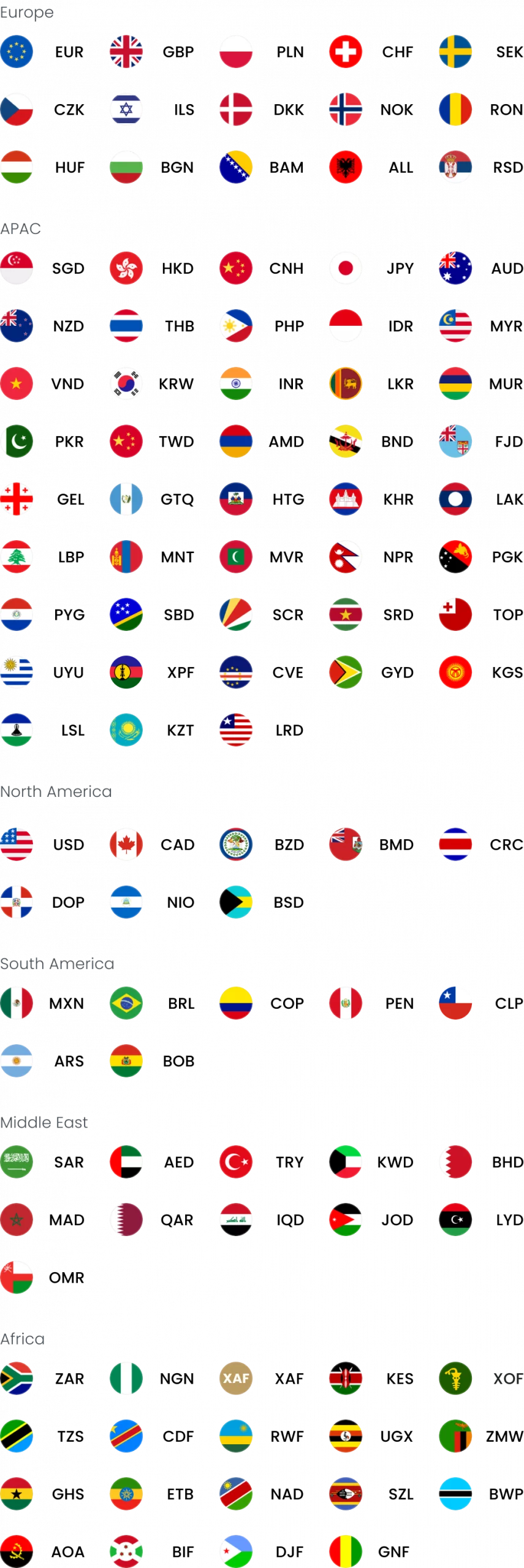
Pay in 15 currencies with World Card, no FX fees

Enjoy zero FX fees when paying in the following 15 currencies with World Card.

Send money in 100+ currencies

You can send money in your WorldFirst account to any of the currencies we support.

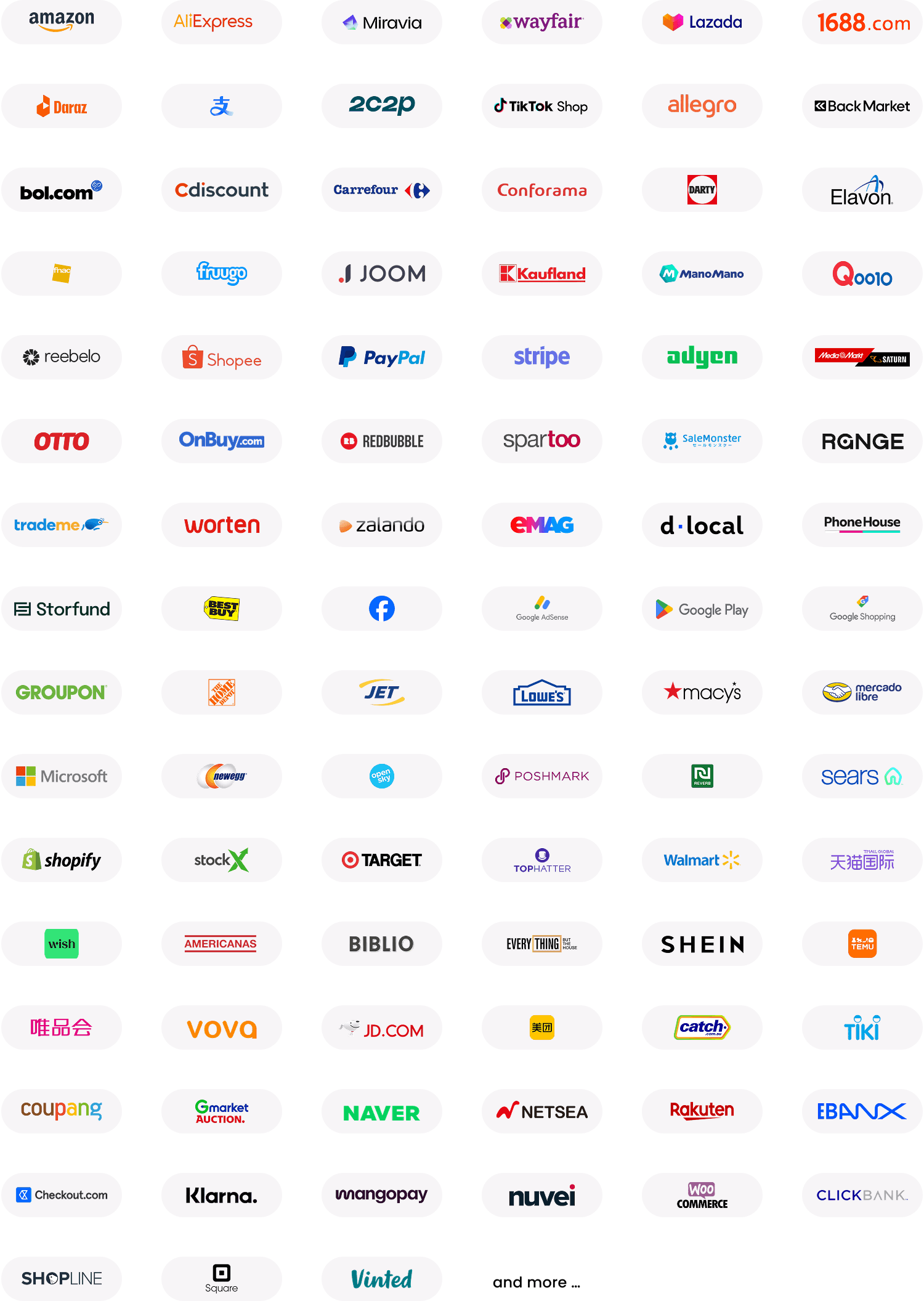
Get Paid by 130+ marketplaces

Seamlessly get paid by 130+ marketplaces and pay your suppliers anywhere.

Collect money in 20+ currencies

You can collect money in 20+ currencies. It only takes a few minutes to open an account in the currency you need.