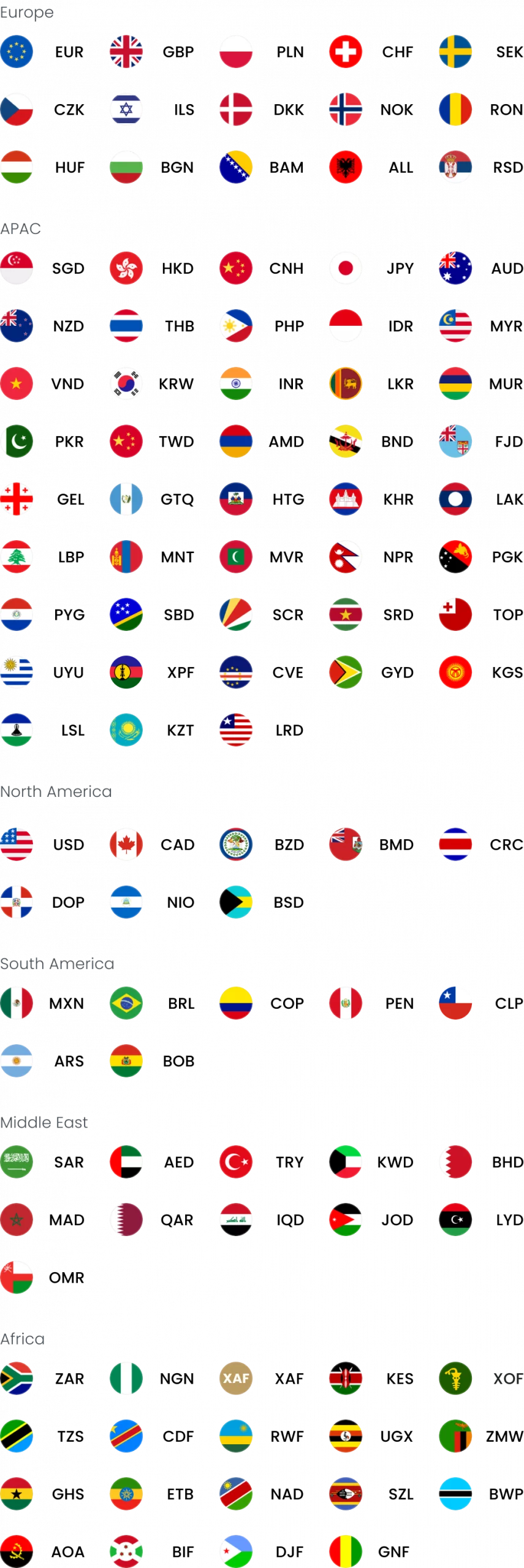
We provide coverage in South Asia and Middle East: servicing 210+ countries and territories.

WorldFirst Home > blog > Global Business Tips > eBay fulfilment UK: options, costs and seller guide
If you’re juggling eBay orders, supplier invoices in yuan, and a payout that lands in sterling three days later than you expected, you already know that fulfilment isn’t just about boxes and couriers. It’s a cash-flow problem wearing a logistics costume.
Get the fulfilment model wrong and you tie up working capital in stock and storage. Get the payment side wrong and even a well-run fulfilment operation bleeds margin to hidden FX costs.
eBay’s own numbers show why this matters at scale: the platform reported $74.7 billion in gross merchandise volume and 134 million active buyers worldwide in 2024, alongside roughly 2.4 billion live listings, according to eBay’s Q4 2024 investor results. That’s a lot of parcels moving through a lot of different fulfilment routes, and a lot of payouts converting through a lot of different FX margins.
This article explains what eBay fulfillment actually covers in the UK, breaks down the ‘fulfillment parcel’ workflow, and looks at how HMRC’s reporting rules and eBay’s own policies affect sellers, so you can choose a fulfilment approach and keep your payments under control at the same time.
Open a World Account to collect eBay payouts in multiple currencies and pay suppliers without routing everything through your everyday bank.
eBay fulfilment covers everything that happens between a buyer clicking ‘buy it now’ and a parcel landing on their doorstep, and on eBay’s UK marketplace that work is split between the seller, third-party logistics providers, and a handful of eBay-managed shipping tools rather than one unified in-house service.
That’s a meaningful difference from marketplaces built around a single fulfilment programme. eBay has experimented with owning more of this process before.
It launched eBay Now, a same-day delivery trial, back in 2013, and later attempted Managed Delivery in July 2019, an end-to-end fulfilment service run through third-party warehouses, according to eBay’s official 2019 announcement. Both were shelved, with Managed Delivery closing by the end of that same year after a change in eBay’s leadership, as EcommerceBytes reported.
What’s left today is a mix of self-fulfilment, third-party logistics partnerships, and platform-managed shipping tools aimed mainly at private sellers.
For a marketplace seller running a real operation, that means the fulfilment decision is genuinely yours to make, and it sits alongside another decision that’s just as important: how you collect and convert the money eBay pays out. If you sell into the US, EU or further afield, your payout arrives in whatever currency the buyer paid in, and what happens to it next, whether it’s converted at a marketplace rate, a bank rate, or something more transparent, has a direct effect on your margin.
Read more: Beyond eBay and Amazon: 5 more international marketplaces to master
eBay does not run its own fulfilment service in the way Amazon operates FBA.
Instead, it offers a named third-party fulfilment partnership, a managed shipping tool for eligible listings, and an international shipping programme, while most business sellers continue to fulfil orders themselves or through their own 3PL arrangements.
The UK’s clearest fulfilment product is eBay fulfilment by Orange Connex, run by Orange Connex Global UK Ltd. According to eBay’s UK Seller Centre, the service covers storage, picking, packing and dispatch, with same-day handling up to a defined cut-off time and a choice of next-day or standard delivery.
It’s a fully tracked service with seller protection for delivery-related defects, and it’s built to be multi-channel, meaning Orange Connex can fulfil orders from your eBay listings, your own online shop, and other selling platforms from the same stock pool.
Pricing is structured as a flat fulfilment fee based on product weight plus a storage fee charged per cubic metre per month, which makes it comparable in shape to other 3PL pricing models rather than a flat marketplace fee.
Separately, eBay UK introduced Simple Delivery, a managed shipping tool, in May 2024, initially limited to clothing before expanding to most categories.
From 15 April 2025, it became mandatory for private sellers on eligible items. Under Simple Delivery, eBay automatically selects the postage option and issues prepaid labels or QR codes, working with carriers including EVRi, Royal Mail, DHL and InPost, as confirmed by Value Added Resource’s coverage.
It’s not available to business sellers, so if you’re running a registered trading account, this one doesn’t apply to you directly, though it’s worth knowing about if you also sell casually on a personal account.
For cross-border orders, eBay’s Global Shipping Programme hands off customs paperwork, international tracking and delivery logistics once a parcel leaves the UK. That’s useful for reducing the admin burden of international sales, but it doesn’t touch the FX side of the transaction: you still need to decide how the resulting overseas payout gets converted back into a currency you can spend or bank.
Outside these named programmes, most established eBay sellers self-fulfil or contract an independent 3PL provider that isn’t affiliated with eBay directly. As logistics platform ShipHero notes, eBay doesn’t stock and ship products on a seller’s behalf outside these specific services, so working with an outside fulfilment partner, or doing it yourself, remains the default for most business accounts.
A fulfillment parcel is the physically packed, labelled shipment that comes out the other end of the fulfilment process, ready for a courier to collect and deliver to the buyer.
It’s the tangible output of a workflow that runs from stock arriving in a warehouse to a tracking number being generated.
That workflow typically has five stages, according to Shopify’s fulfilment guide and DHL’s e-commerce advice:
NetSuite’s ecommerce fulfilment resource frames this as a single continuous pipeline rather than isolated tasks, which is a useful way to think about cost.
Every stage adds a small cost, and those costs differ depending on whether you’re running in-house fulfilment, using a 3PL, dropshipping directly from a supplier, or using a marketplace-operated service such as Orange Connex on eBay or Amazon’s FBA, per Shopify’s breakdown of fulfilment models and Amazon’s own fulfilment overview.
The table below sets out how the main UK eBay fulfilment routes compare on who does the work and what it costs to run:
| Fulfilment route | Who handles storage & pick/pack | Who ships | Seller type | Fee model |
| Self-fulfilment | Seller | Seller (own carrier account) | Business & private | Postage costs only, no third-party fee |
| eBay fulfilment by Orange Connex | Orange Connex (3PL) | Orange Connex | Business (multi-channel) | Flat fee by weight plus storage fee per cubic metre/month |
| Simple Delivery | Seller | eBay-selected carrier (EVRi, Royal Mail, DHL, InPost) | Private sellers (mandatory on eligible items from 15 April 2025) | Built into eBay’s managed postage |
| Global Shipping Programme | Seller (domestic leg) | eBay-managed international leg | Business & private, cross-border orders | Programme handling fee on international orders |
| Independent 3PL | Third-party provider | Third-party provider | Business | Provider-set pricing, typically per-order plus storage |
Comparison compiled from eBay UK Seller Centre and Help pages, checked December 2025.
Whichever route you pick, the parcel-level cost is only half the picture. If a chunk of your revenue arrives from US or EU buyers, the currency conversion on that payout is a cost that sits quietly next to your fulfilment fees, and it’s often less visible because it’s baked into an exchange rate rather than itemised on an invoice.
Read more: The best e-commerce platforms in the UK
Whichever fulfilment model you choose, your eBay payouts still need to be collected, converted and sent to suppliers, and that’s the part a fulfilment provider doesn’t touch. This is where a multi-currency account built for marketplace sellers earns its place alongside your logistics setup.
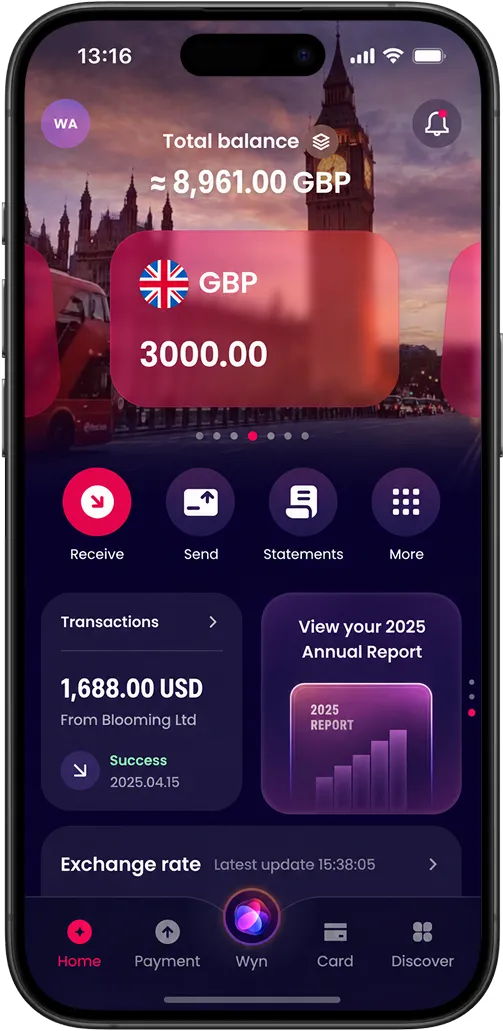
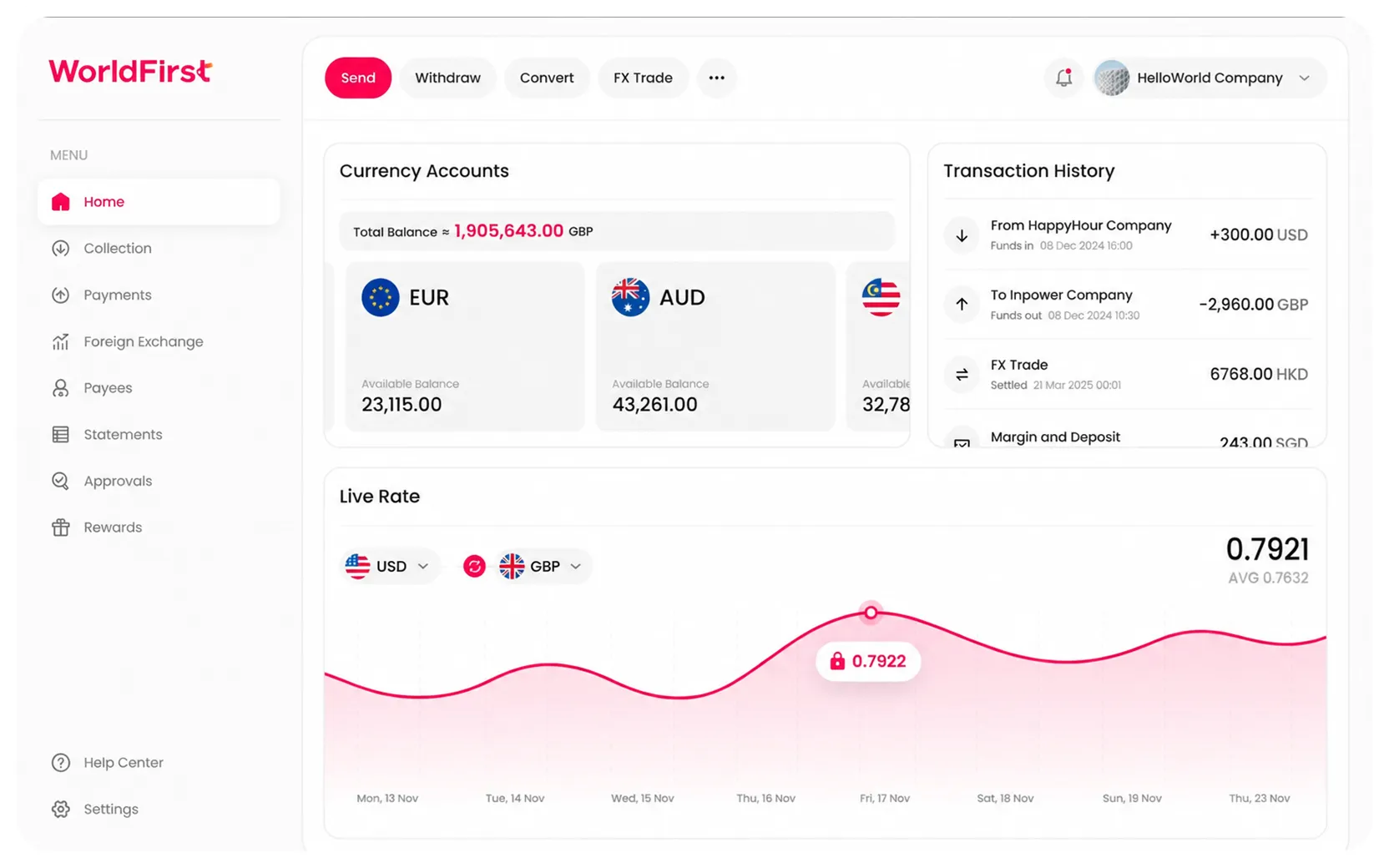
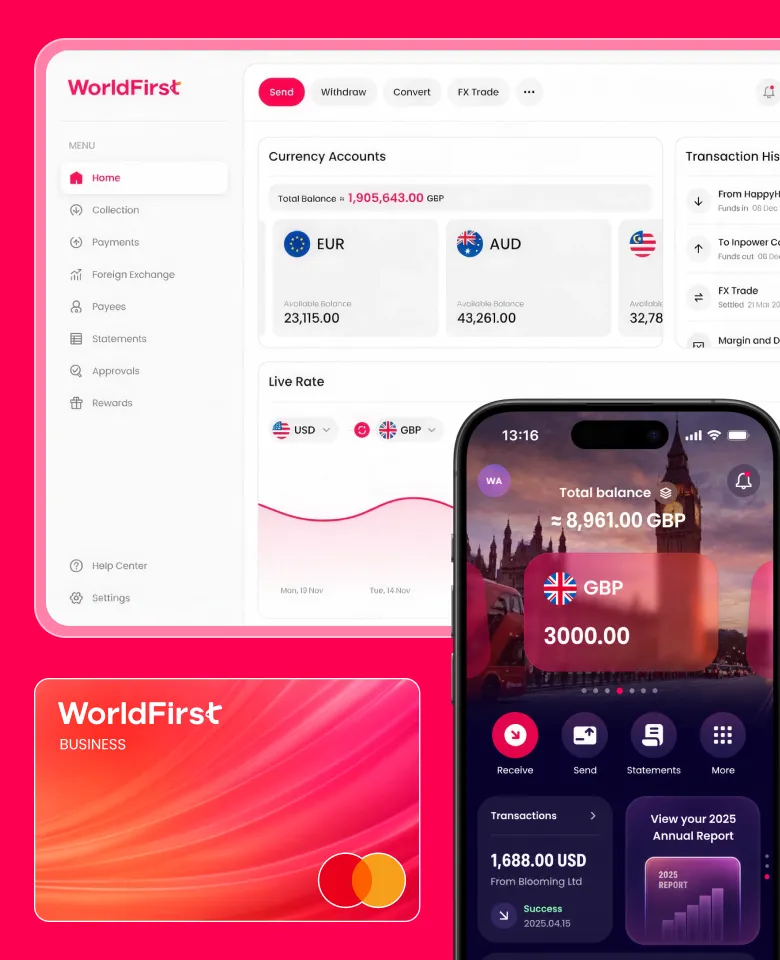
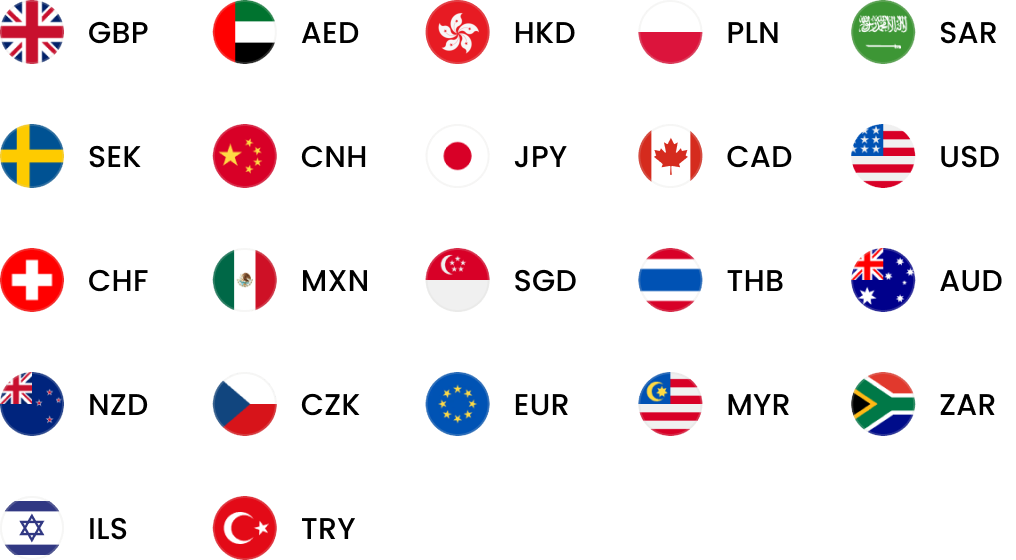
WorldFirst’s World Account lets you hold and receive 20+ currencies in one place, so an eBay payout in US dollars or euros doesn’t have to be converted into sterling the moment it lands. You can hold it, pay a supplier directly in that currency, or convert it when the rate suits you rather than on eBay’s schedule.
That matters for a seller managing Orange Connex storage fees in one currency and supplier invoices in another, because it separates the timing of conversion from the timing of collection.
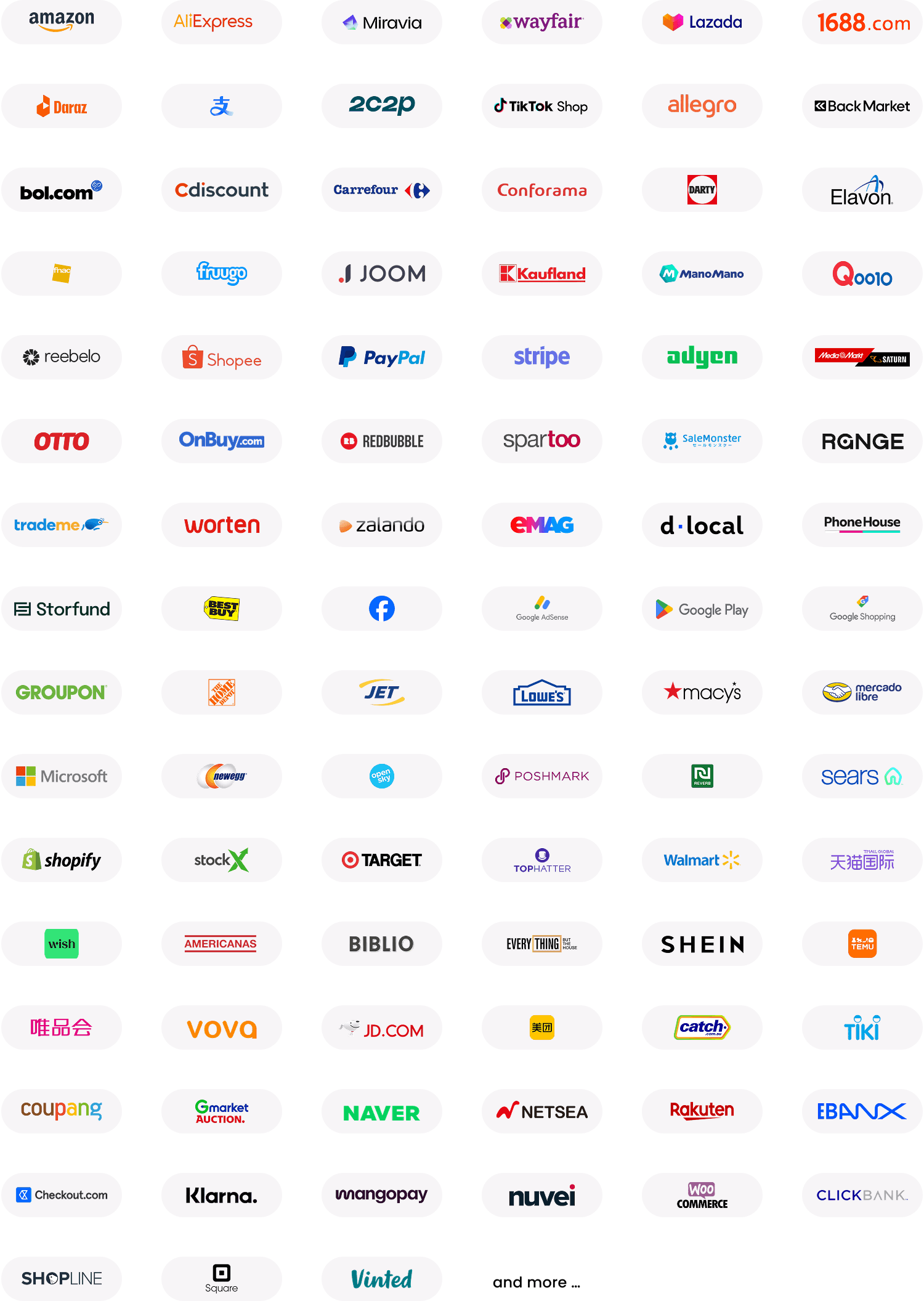
For supplier payments, particularly into China, WorldFirst supports payments in CNH (the offshore yuan used for international transfers, distinct from the onshore CNY that suppliers invoice in domestically) or USD, and World Pay is the authorised international payment provider for 1688.com, useful if part of your sourcing runs through that platform.
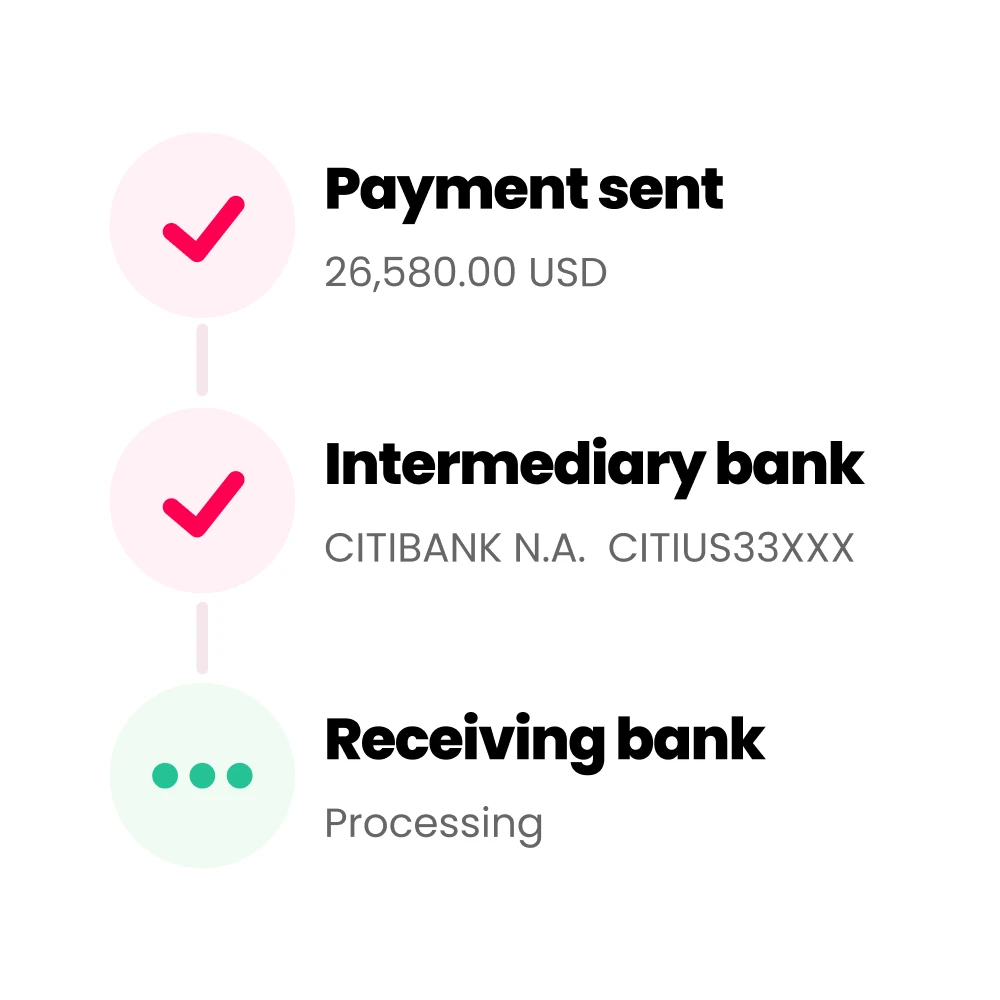
Before you confirm a transfer, the exchange rate is shown upfront, with fixed fees and no intermediary deductions on the receiving side for supported corridors, which gives you a clearer read on what a payment actually costs before you send it rather than after.
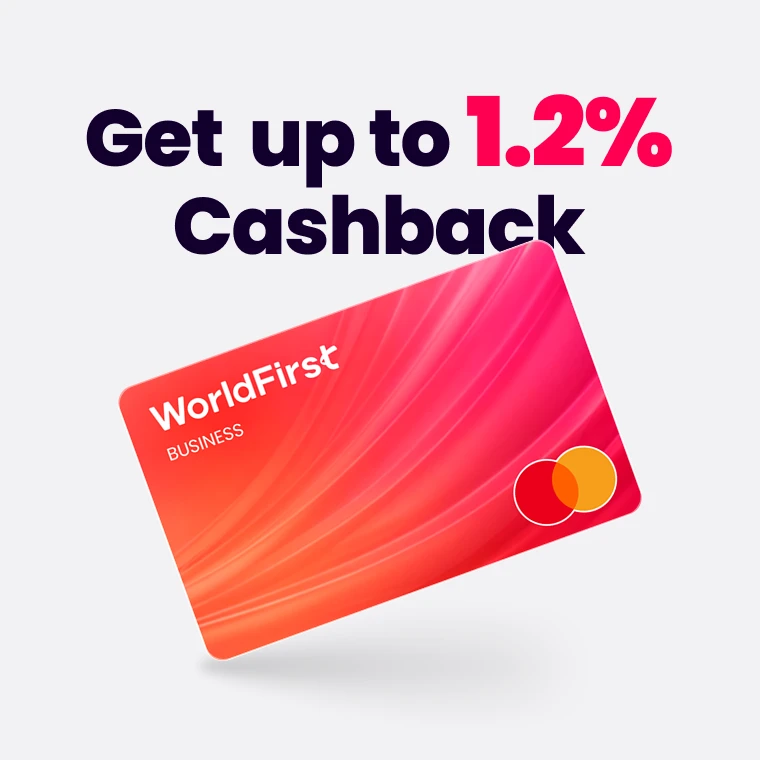
On the spending side, the World Card is a multi-currency business Mastercard with 0% FX fees across 16 currencies and up to 1.2% uncapped cashback, useful for covering ad spend, courier top-ups or software subscriptions in whatever currency they’re billed in, up to 25 cards per account for teams that need to delegate spending.
There are no setup fees, no monthly fees, and no minimum balance requirement to open a World Account, which matters if you’re a smaller seller not ready to commit to a subscription-style platform.
WorldFirst isn’t a bank. It’s authorised and regulated by the FCA as an electronic money institution, and client funds are held in segregated safeguarded accounts rather than covered by the FSCS deposit protection scheme that applies to UK bank deposits. WorldFirst also doesn’t provide lending, payroll or full domestic banking services, so it sits alongside your existing bank rather than replacing it entirely.
Open a World Account to bring your eBay payouts, supplier payments and card spending into one place with visible FX rates from day one.
Not in the way Amazon runs FBA. eBay tried and retired its own logistics services (eBay Now in 2013, Managed Delivery in 2019), and today it offers eBay fulfilment by Orange Connex as a third-party partnership covering storage, pick/pack/ship and multi-channel dispatch, plus Simple Delivery managed shipping for eligible private-seller listings and a Global Shipping Programme for international orders. Most business sellers self-fulfil or use an independent 3PL.
It’s the physically packed, labelled shipment produced at the end of the fulfilment workflow, receiving, storage, order processing, picking and packing, ready to hand to a courier. On eBay, that parcel might come from your own packing station, an independent 3PL, or Orange Connex under the eBay fulfilment programme, depending on which route you’ve chosen.
No new taxes have been introduced. Since January 2024, eBay has been legally required to report seller data to HMRC if you hit £1,707 in sales or 30+ transactions in a year, with reporting for 2024 having started in January 2025. HMRC has confirmed this doesn’t change what tax you owe, only what data it can see, and existing Self Assessment rules (registering if trading income exceeds the £1,000 trading allowance) still apply as before.

Listing counterfeit or prohibited items, running multiple accounts to dodge selling limits, using fake tracking numbers, ignoring identity verification requests, shill bidding, taking sales off-platform, and using non-compliant third-party fulfilment arrangements are the main triggers for account warnings, restrictions or permanent suspension. Poor seller performance metrics, such as persistent late shipments or feedback below roughly 98% positive, compound the risk.
Sources:
Choose a product or service to find out more
Save money, time, and have peace of mind when expanding your global business.
It looks like you're sending money to family or friends — that's a personal transfer, which is best handled through our app.
Sending money to family or friends? Download our app for the best experience.