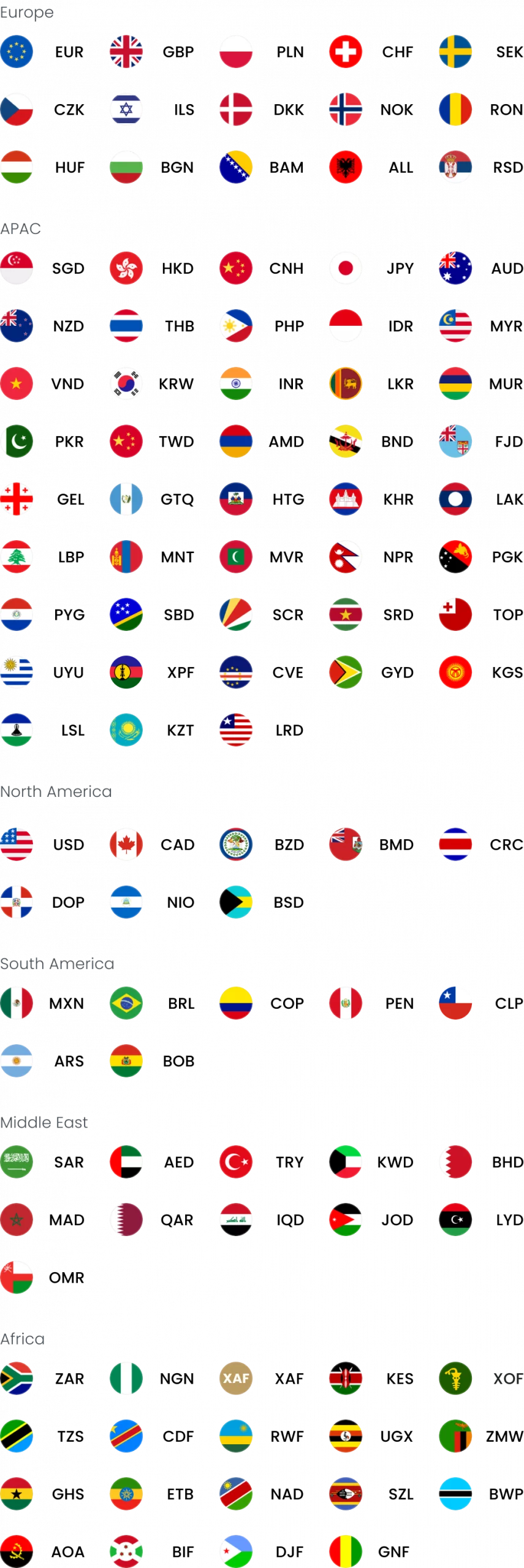
We provide coverage in South Asia and Middle East: servicing 210+ countries and territories.

WorldFirst Home > blog > Global Business Tips > Do I need a business bank account if I’m self-employed? 7 providers compared
You’ve found an overseas supplier, agreed the price and received your first invoice. Until now, your personal current account may have been enough, but paying for stock in another currency can be the point when a self-employed business bank account starts to make more sense.
For a new importer, the answer depends partly on your business structure and partly on the rules your account provider sets for business use.
This article explains if you need a business bank account when you’re self-employed and compares seven options for managing UK costs and overseas supplier payments.
Open a World Account to hold supported currencies and make overseas supplier payments as your importing business grows.
Your business structure determines how far your business finances need to be separated from your personal money:
| Your business structure | Legal position | What it means for your account |
| Sole trader | You and the business are the same legal person | A separate business account isn’t generally required by law, although your personal account provider may restrict business use |
| Limited company | The company is legally separate from its directors and shareholders | Company money needs to remain separate from the personal finances of its directors |
HMRC still requires sole traders to keep accurate records of business income and expenses, even when they use a personal account.
Since 6 April 2026, the first mandatory phase of Making Tax Digital for Income Tax (MTD) has required qualifying sole traders and landlords with total annual income from self-employment and property exceeding £50,000 to keep digital records and submit quarterly updates. MTD doesn’t itself require a dedicated business bank account.
Personal account terms still matter for a new importer. A provider may restrict business use even when a separate account isn’t required by law, including the types of commercial transactions the account can be used for.
Read more:
For a self-employed importer, a business bank account needs to support both everyday UK banking and the way you pay overseas suppliers.
The comparison evaluates seven UK providers against six factors that matter when you’re choosing an account for a new importing business:
The first two factors receive greater emphasis because the cost and route of overseas supplier payments are central to a new importer’s account choice.
Read more:
The comparison table shows the main difference between each provider before looking at the accounts in more detail:
| Provider | Account type | International payment fit | Main limitation |
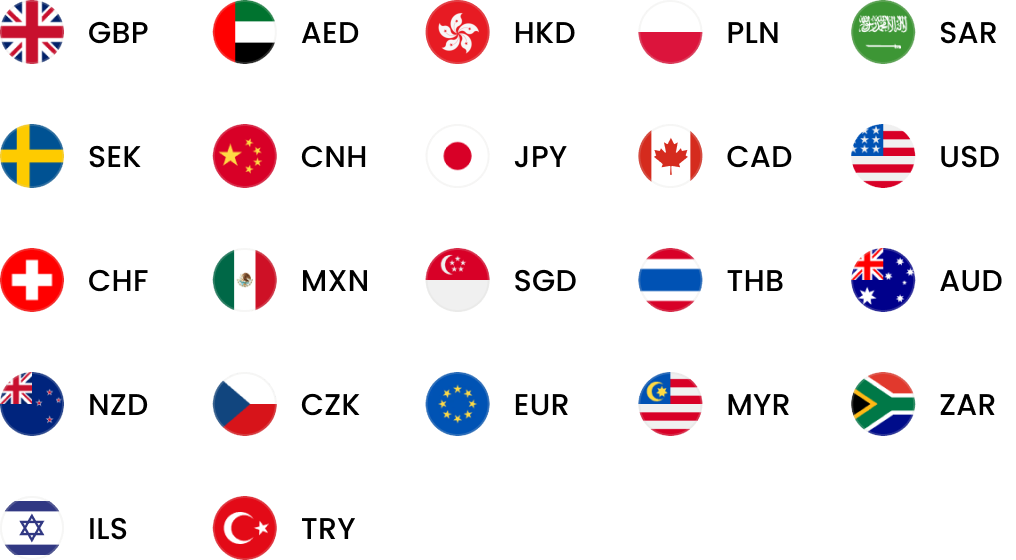
| WorldFirst World Account | Multi-currency business account | Receive and hold 20+ currencies; pay suppliers in 100+ currencies to 200+ countries and regions | No full UK business current account |
| Starling Sole Trader Account | UK business current account | Send 17 currencies to bank accounts in 34 countries using local or SWIFT routes | Narrower foreign currency holding |
| Mettle | UK business bank account | Receive international payments into the account | No outbound international payments |
| Monzo Business | UK business current account | Pay international suppliers in 30+ currencies | Incoming currencies converted into GBP |
| Tide Business Account | UK business current account | Send EUR through SEPA and USD through a US local payment route; receive 30+ currencies through SWIFT | Incoming currencies converted into GBP |
| Wise Business | Multi-currency business account | Hold 40+ currencies; access receiving details in 22 currencies with the required setup | No full UK business current account |
| HSBC Business Banking Account | UK business current account | Send international payments in most currencies; hold foreign currency through separate accounts | Separate account required for foreign currency holding |
Best for: Self-employed trading internationally
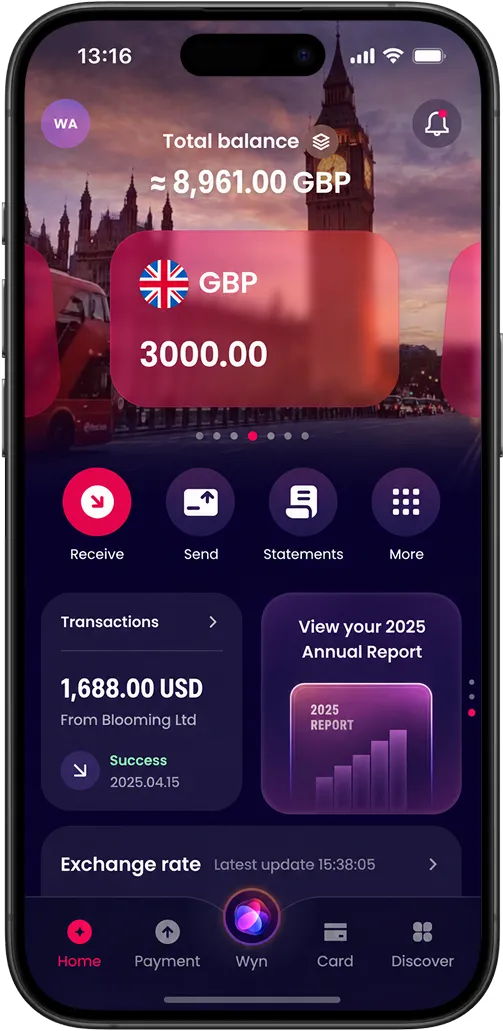
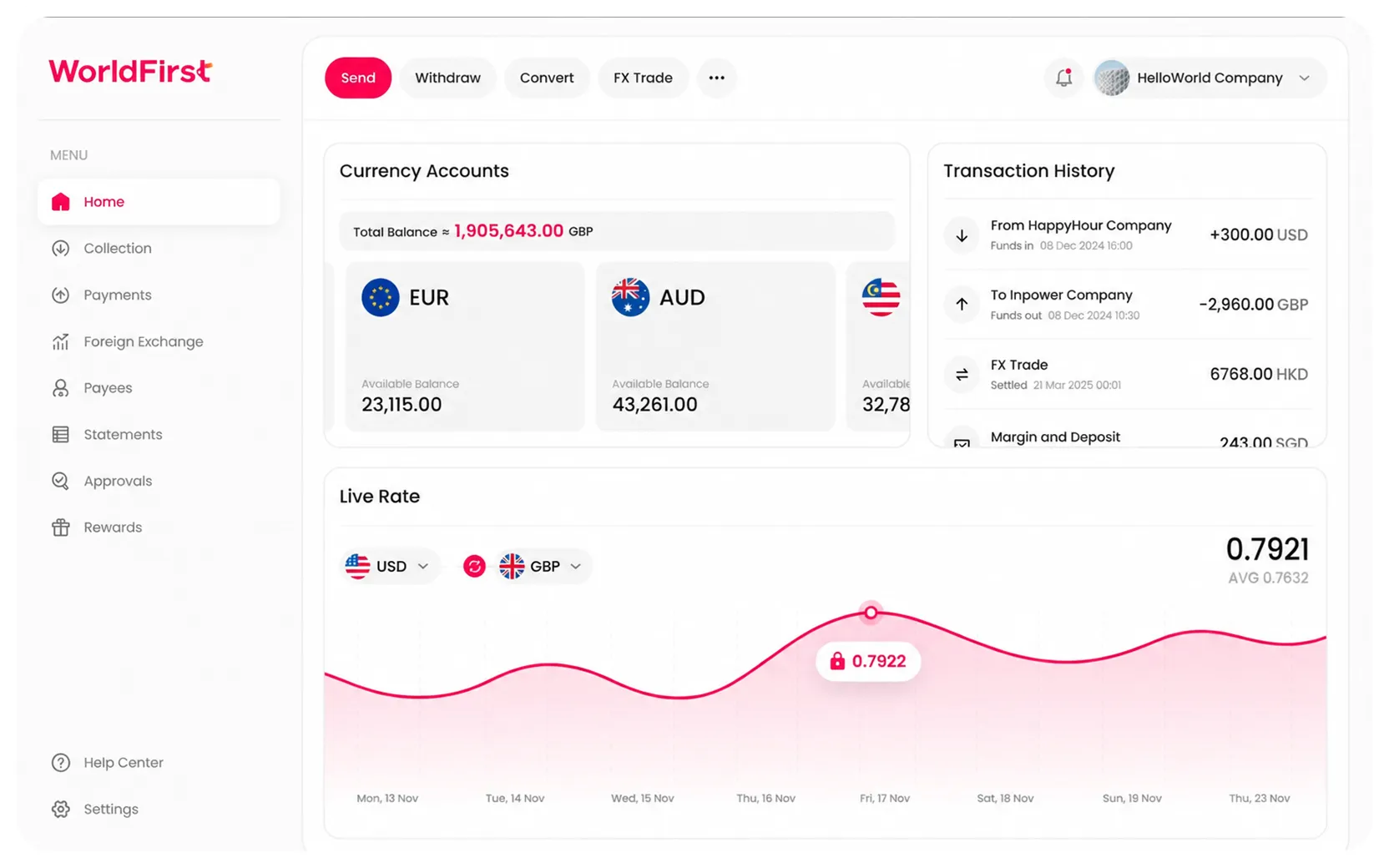
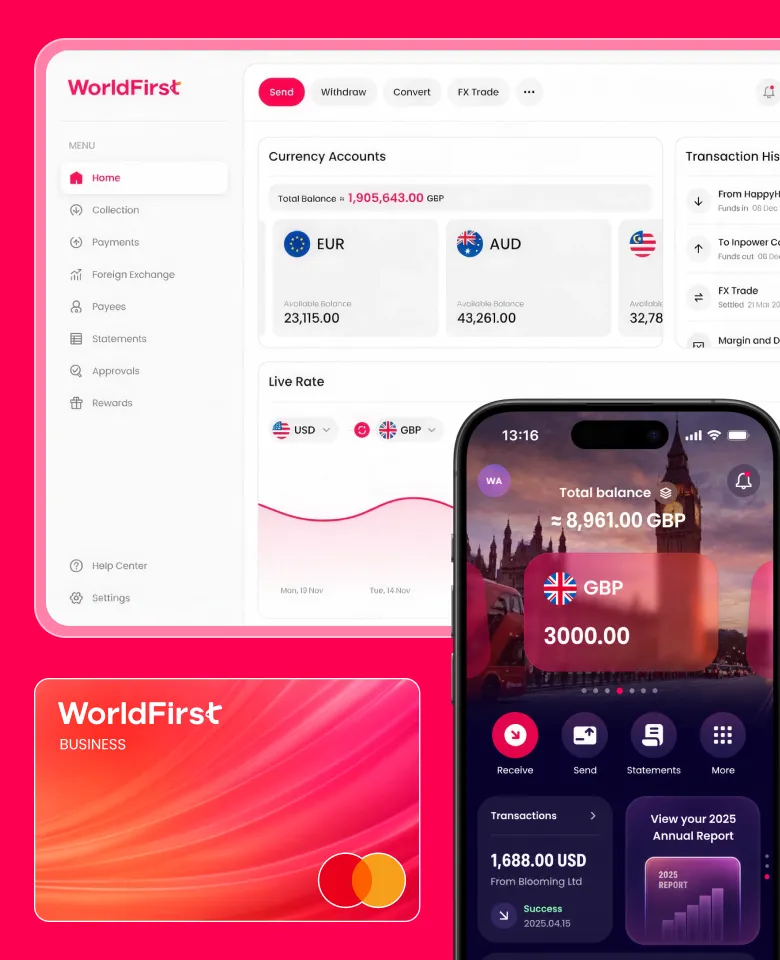
The World Account is a multi-currency business account for receiving, holding, converting and sending money across borders. For a new importer, it connects foreign currency balances with the payments used to settle overseas supplier invoices.
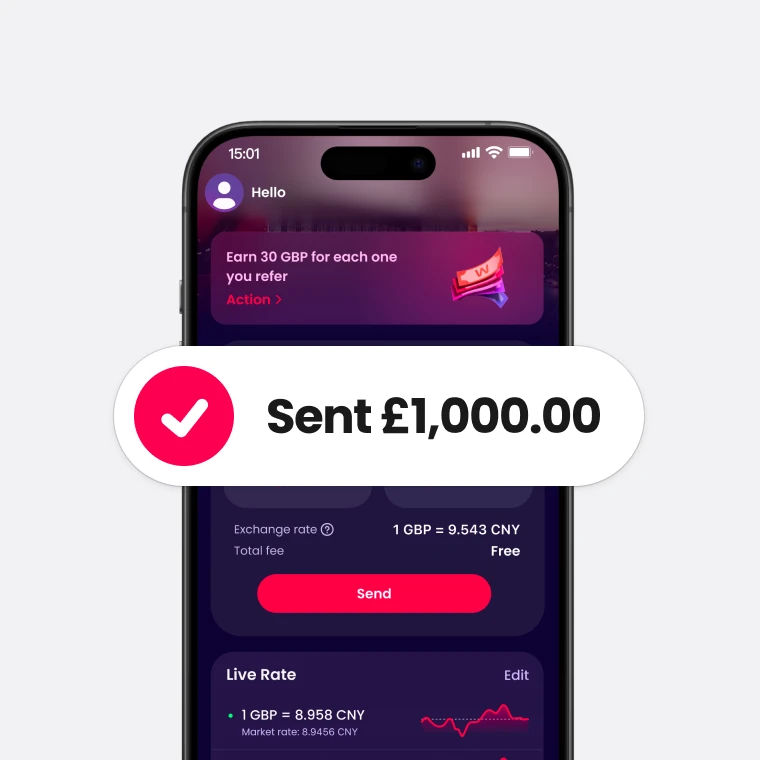
Funds can come from an authorised bank account or money already held in the World Account. Its most relevant features include:
WorldFirst also supports direct payments to 1688.com suppliers through 1688 World Pay. You can connect your World Account to 1688, fund or convert your balance to CNH (offshore renminbi) and pay at checkout without opening a Chinese bank account.
The World Account has no opening or ongoing account fee. Current UK pricing includes:
WorldFirst isn’t a bank and the World Account isn’t a traditional UK business bank account. Businesses that need services such as branch banking or traditional bank lending may need a separate banking relationship.
Best for: UK sole traders wanting mobile-first banking
The Starling Sole Trader Account is a UK business current account. Its main strength is combining domestic banking, mobile account management and bookkeeping functions with the ability to make international transfers.
Its UK and international banking features include:
The Sole Trader Account has no monthly account fee. Current international payment costs include:
Starling also offers a separate euro business account for £2 a month.
Starling’s currency-holding options are more limited than those of specialist multi-currency providers. Its separate USD business account is limited to eligible limited companies rather than sole traders. As of 8 August 2026, Starling isn’t accepting new applications for that account.
Best for: Sole traders prioritising bookkeeping and tax records
Mettle is a UK business bank account provided by NatWest for eligible sole traders and limited companies with up to two owners.
Its strongest functions centre on bookkeeping, tax records and domestic banking:
Mettle has no account-maintenance fee. Current charges include:
FreeAgent remains included when at least one transaction is made from the Mettle account each month, subject to its terms.
Mettle doesn’t support outbound international payments, which prevents an importer from using the account to pay an overseas supplier directly. Only one owner can access the account, including when an eligible limited company has two owners.
Best for: Digital-first UK micro-businesses
Monzo Business is a UK business current account available to eligible sole traders and limited company directors. It combines mobile banking and tax-management tools with international supplier payments from the same GBP account.
Its strongest digital features cover payments, budgeting and tax:
Monzo currently offers three business plans:
Pro adds features such as invoicing, automated Tax Pots, and accounting integrations. Monzo displays applicable international payment costs before an outbound transfer is confirmed.
Monzo doesn’t provide a broad set of foreign currency balances. Accepted incoming currencies are converted into GBP, which removes the option to retain that foreign currency for a later supplier payment.
Read more:
Best for: UK-focused sole traders
Tide provides a UK business current account powered by ClearBank with invoicing, cash deposits and business administration tools. It also supports selected international payment routes.
Its domestic and international functions include:
Tide currently offers:
FX markups for EUR and outbound USD payments currently vary by plan:
Tide doesn’t provide the same foreign currency holding structure as a specialist multi-currency account. Incoming foreign currency payments are converted into GBP rather than remaining available in their original currency, limiting the ability to retain those funds for a later supplier payment.
Best for: International freelancers and small services exporters
Wise Business is a multi-currency business account for holding, converting, receiving and sending money internationally.
Its international functionality includes:
Registering for Wise Business is free. Current UK pricing includes:
Wise isn’t a bank, so money held as e-money doesn’t receive FSCS deposit protection. Wise instead safeguards relevant customer funds under the regulatory rules that apply to its payment services.
Businesses that need branch cash deposits or traditional bank lending would need those services elsewhere.

Read more:
Best for: Established UK SMEs with branch banking needs
The HSBC Business Banking Account is a UK business current account designed for established small and medium-sized businesses.
It combines everyday banking with a dedicated Relationship Manager, branch access and HSBC’s wider international banking products:
Eligible new Business Banking Account customers currently receive 12 months with no monthly account fee and free standard transactions on the primary account.
After the introductory period:
HSBC positions the Business Banking Account for established businesses, so it may not match a newly started importer in the same way as accounts designed for earlier-stage businesses.
Read more: HSBC multi-currency account review
A self-employed business account may cover everyday UK costs such as Direct Debits, card spending and tax payments. Importing adds foreign currency conversion and international payment routes to that setup.
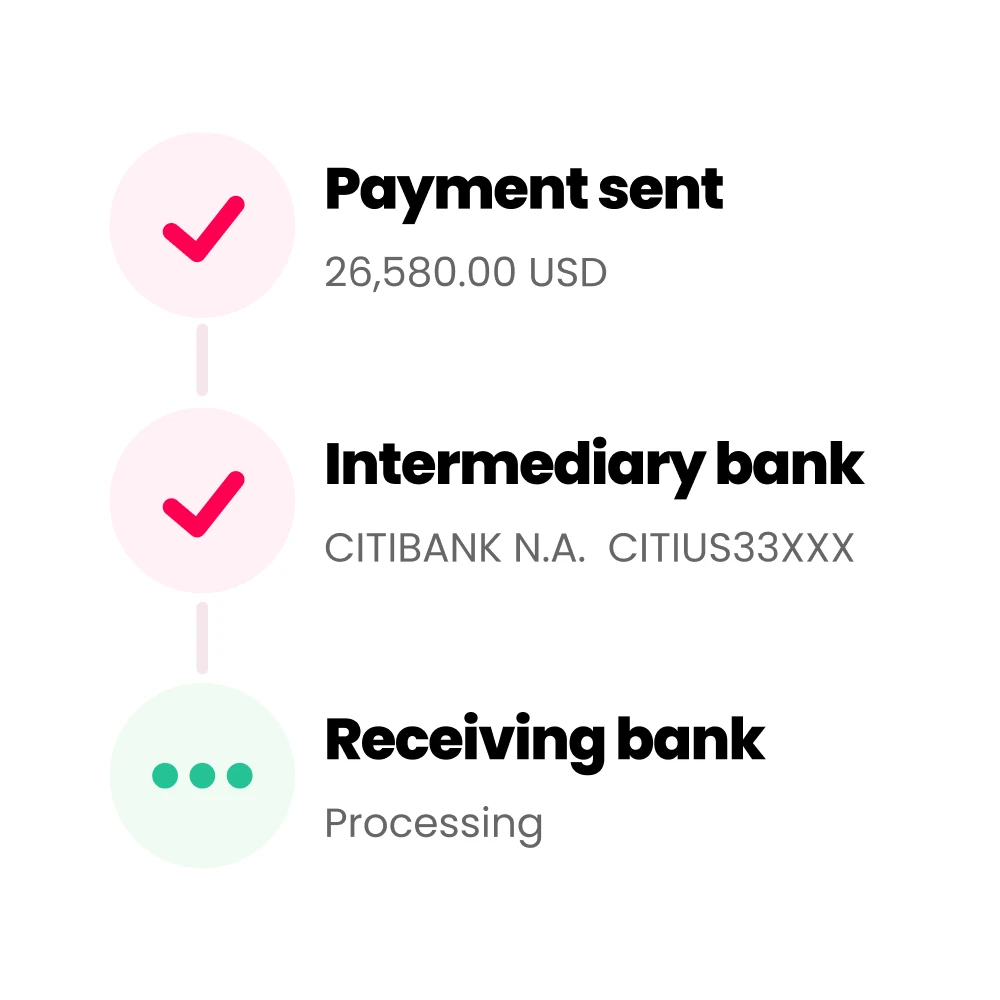
Imagine you’re a sole trader sourcing stock from China through 1688.com every two months. Your UK business account handles domestic costs, but your 1688 order needs to be settled in CNH before the goods can move. With 1688 World Pay, you can connect your World Account to 1688, fund or convert your balance to CNH and pay eligible orders at checkout without opening a Chinese bank account.

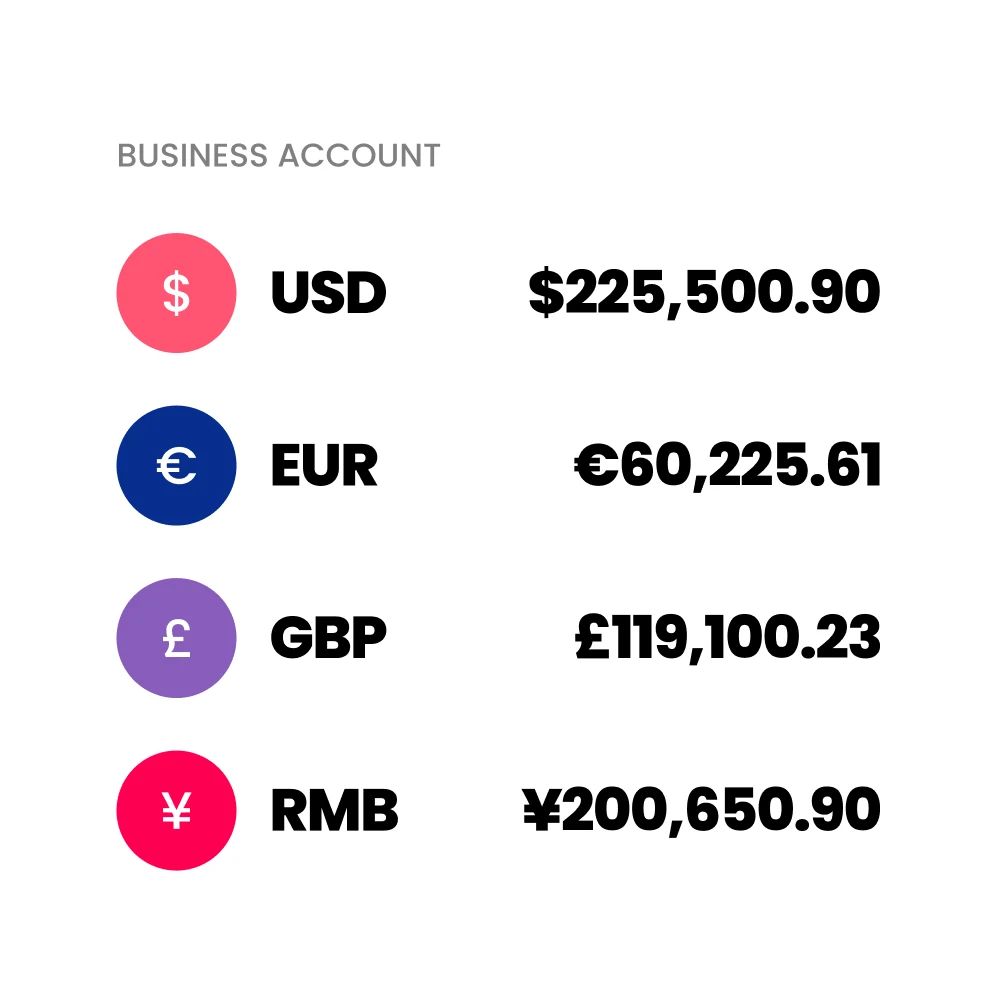
With a World Account, you can add funds from an authorised bank account, hold supported currencies and convert money when needed before paying the invoice. If you later receive overseas revenue in a supported currency, you can also keep those funds available for future business payments instead of converting them immediately into GBP.
WorldFirst isn’t a bank. World First UK Limited is authorised by the FCA as an Electronic Money Institution under firm reference number 900508. Electronic money isn’t covered by the FSCS, and customer funds are safeguarded in accordance with regulatory requirements.
Open a World Account to manage foreign currencies and international payments for your importing business.
You’ll typically need proof of identity and address, plus information about your business. Providers may also ask for your trading name, business address, start date, expected turnover and details of your business activity.
Yes, business-related bank charges are usually allowable expenses for a sole trader. HMRC treats business bank, overdraft and credit-card charges as allowable expenses, although you can’t separately deduct expenses if you use the £1,000 trading allowance instead.
Yes, a sole trader can have more than one business account where the providers allow it. Eligibility and account limits vary, so you may use separate accounts for UK banking and international payments if that setup works for your business.
Usually, you’ll need an Economic Operators Registration and Identification (EORI) number when moving goods between Great Britain and other countries. The exact requirement depends on where the goods are moving to or from and the customs process involved.
Yes, you can use a suitable business account to pay import VAT and Customs Duty. HMRC supports bank-account payments and bank transfers for Customs Declaration Service charges, while qualifying regular importers can use Direct Debit through a duty deferment account.
Sources:
Choose a product or service to find out more
Save money, time, and have peace of mind when expanding your global business.
© 2026, Ant International or its affiliates
It looks like you're sending money to family or friends — that's a personal transfer, which is best handled through our app.
Sending money to family or friends? Download our app for the best experience.