We provide coverage in South Asia and Middle East: servicing 210+ countries and territories.

WorldFirst Home > blog > Global Business Tips > Digital payments for business: methods, costs and how to choose
Payment method, exchange rate and conversion timing all affect what a supplier payment costs by the time funds arrive. Yet many established importers rely on default bank setups without considering whether a better option exists for each corridor or currency.
As you pay the same suppliers month after month, FX margin and routing decisions become a recurring cost worth reviewing.
This article covers what UK importers need to know about digital payments for business, including the main payment methods, what each one costs and how to choose the right option for each transaction.
Digital payments for business cover every non-cash method a company uses to send and receive money.
For UK importers, that includes domestic transfers to UK-based freight forwarders and warehouse operators, as well as cross-border payments to overseas suppliers in euros, US dollars or Chinese yuan.
The method you choose affects how quickly your supplier gets paid and what the transfer costs. A Faster Payment to a UK freight forwarder clears in seconds, while a SWIFT transfer to a supplier in China or Italy can take several days and involve fees you won’t always see upfront.
Payments also move in both directions. Supplier refunds, credit notes and marketplace payouts are paid back to you, and the currency they land in affects what your next outbound payment costs.
The payment method you use depends on whether you’re paying domestically or cross-border, what currency your supplier needs and how quickly funds need to arrive.
| Payment method | Best for | Typical speed | Cost signal |
| Faster Payments | Domestic UK supplier payments, payroll | Near instant | Low to zero |
| BACS | Scheduled UK payments, direct debits | Three working days | Low |
| CHAPS | High-value same-day domestic transfers | Same day | Fixed fee
(~£20 to £35, indicative) |
| SEPA Credit Transfer | EUR payments to European suppliers | One working day (SEPA Instant: seconds) | Low |
| SWIFT | International payments in most currencies | One to five working days | Variable; intermediary fees apply |
| Open banking (A2A) | Domestic B2B invoice settlements | Often same day | Low |
| Virtual cards | Online supplier purchases, subscriptions | Instant at point of payment | FX fees on foreign currencies |
Faster Payments is the default rail for most routine UK business transfers. Pay.UK operates the scheme, and payments move between UK bank accounts in seconds, around the clock, with no fixed transfer fee on most business accounts.
Domestic supplier invoices to freight forwarders, packaging suppliers or UK-based logistics partners typically go through Faster Payments, and it’s usually the least expensive option.
BACS handles scheduled, recurring UK payments: payroll, standing orders and regular supplier runs. Settlement takes three working days, so it suits payments where timing is flexible.
CHAPS is the UK’s same-day high-value rail, operated by the Bank of England. Suppliers that need cleared funds on a specific date can receive them the same day, provided the payment reaches your bank before its same-day payment deadline. This varies by bank but is typically between 2pm and 5pm.
There is no upper payment limit, which makes it the right option when a transfer exceeds your bank’s Faster Payments cap.
SEPA (Single Euro Payments Area) covers euro payments across 41 countries and territories. Paying German, French, Italian or Spanish suppliers in EUR via SEPA is often faster and cheaper than routing the same payment via SWIFT.
Standard SEPA transfers settle within one working day, whereas SEPA Instant settles within seconds where available.
The UK remains within SEPA’s geographical scope as a non-EEA member, but your payment provider controls the routing. Check with your provider before defaulting to SWIFT for European EUR transfers. On repeat orders, the difference in cost and speed can be significant.
SWIFT is the messaging network behind most cross-border international payments. It covers currencies outside SEPA’s reach, including USD, Chinese yuan (CNH), JPY and AUD, and connects banks across more than 200 countries.
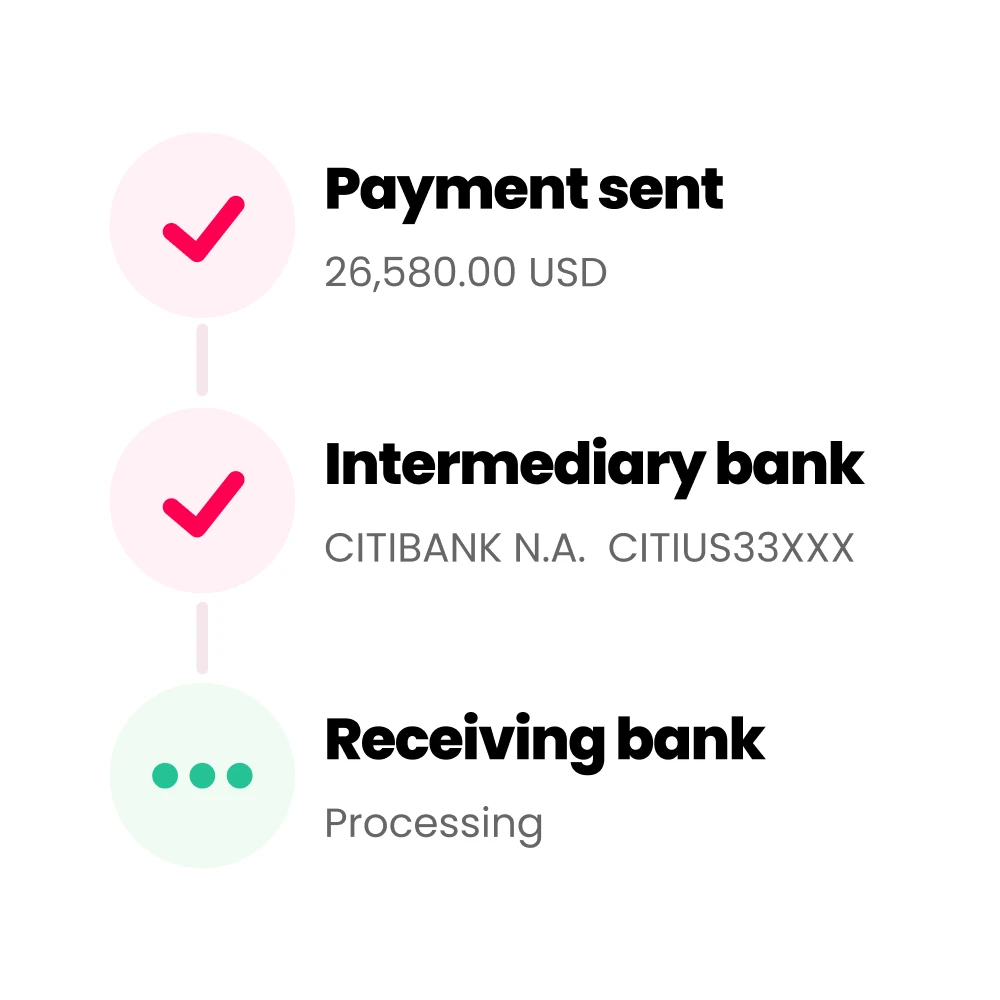
Payments can pass through one or more correspondent banks along the way, each of which may deduct a fee before funds reach your supplier. Those deductions aren’t always disclosed before you confirm the payment, so the amount your supplier receives may differ from what you sent.
Open banking payments move funds directly between bank accounts, bypassing card networks. The Payment Systems Regulator supports the UK infrastructure.
Settling domestic supplier invoices this way can be faster and more cost-effective than paying by card. Cross-border use is still limited, so it works best when both you and your supplier hold UK accounts.
Virtual cards are issued to a specific transaction, supplier or spending category. They work well for:
When the card currency differs from the transaction currency, FX fees apply. Check how your provider handles foreign currency spending before using a virtual card for overseas supplier payments.
When you send a cross-border payment, the cost doesn’t always show up as a single charge. A typical international supplier payment can involve a transfer fee, an FX margin, intermediary bank deductions and a receiving bank fee at the other end.
| Cost component | What it is | Typical range |
| Transfer fee | Fixed charge to send the payment | £0 to £35 per transfer |
| FX margin | The difference between the mid-market rate and the rate you’re quoted | 0% to 3%+ of the transfer value |
| Intermediary bank fees | Deductions applied by correspondent banks mid-route | £5 to £35 per bank in the chain |
| Receiving bank fee | Charge applied by the supplier’s bank on arrival | £0 to £20 |
Note: Ranges are indicative and vary by provider, corridor and payment volume.
Domestic UK payments involve few or none of these costs, while SWIFT international transfers can involve all four.
Of the four components, the FX margin typically has the biggest impact on what you pay. A bank may advertise a low or zero transfer fee but apply a 2% to 3% margin to the exchange rate. For instance, a 2.5% FX margin on a £50,000 supplier payment adds £1,250 to the cost.
The Financial Conduct Authority has noted that many providers embed FX markups in the quoted rate rather than disclosing them as a separate charge. That guidance covers retail customers—business payments fall outside it, which means the importer has to do the benchmarking. Comparing your provider’s rate against the Bank of England’s exchange rate data is the most reliable way to identify this cost before you approve the transfer.
Before sending a cross-border supplier payment, check:
The difference between a bank’s rate and the mid-market rate may look manageable on a single invoice. Across repeat orders, deposits and seasonal stock runs, however, it adds up in ways that directly affect your landed cost and margin.
The video below explains how international transfer costs are structured and where the margin is typically applied.
Why International Transfers Cost More Than You Think
Choosing the right payment method for your business means asking the same questions every time, regardless of which supplier or currency you’re paying in.
Before confirming each payment, check:
Some of the most avoidable FX costs for UK importers come from converting currency twice within the same trade cycle.
A typical example: you receive US dollars from a marketplace payout or a US client. Your bank converts them to GBP automatically, because that’s your account’s base currency. A few weeks later, you need to pay a supplier in EUR or CNH. You convert from GBP again, paying FX costs on funds that only needed to move once.
The same pattern appears when a supplier issues a credit note in EUR, and you convert it to GBP, only to need EUR again for the following order. On a €4,000 credit note, a 2% to 3% conversion in each direction could add £140 to £210 before the invoice is settled.
Holding the balance in the original currency and paying the next supplier invoice directly from it removes both conversions entirely. On a €4,000 credit note, that’s up to £210 back in your margin rather than lost to unnecessary conversion. A multi-currency account is all you need.
A payment setup that worked when you started may not be the most cost-effective one now. The following patterns are worth reviewing:
WorldFirst operates as an FCA-authorised Electronic Money Institution for businesses managing money across currencies and markets. It helps UK businesses send and receive payments across borders through international transfers, multi-currency accounts and FX.
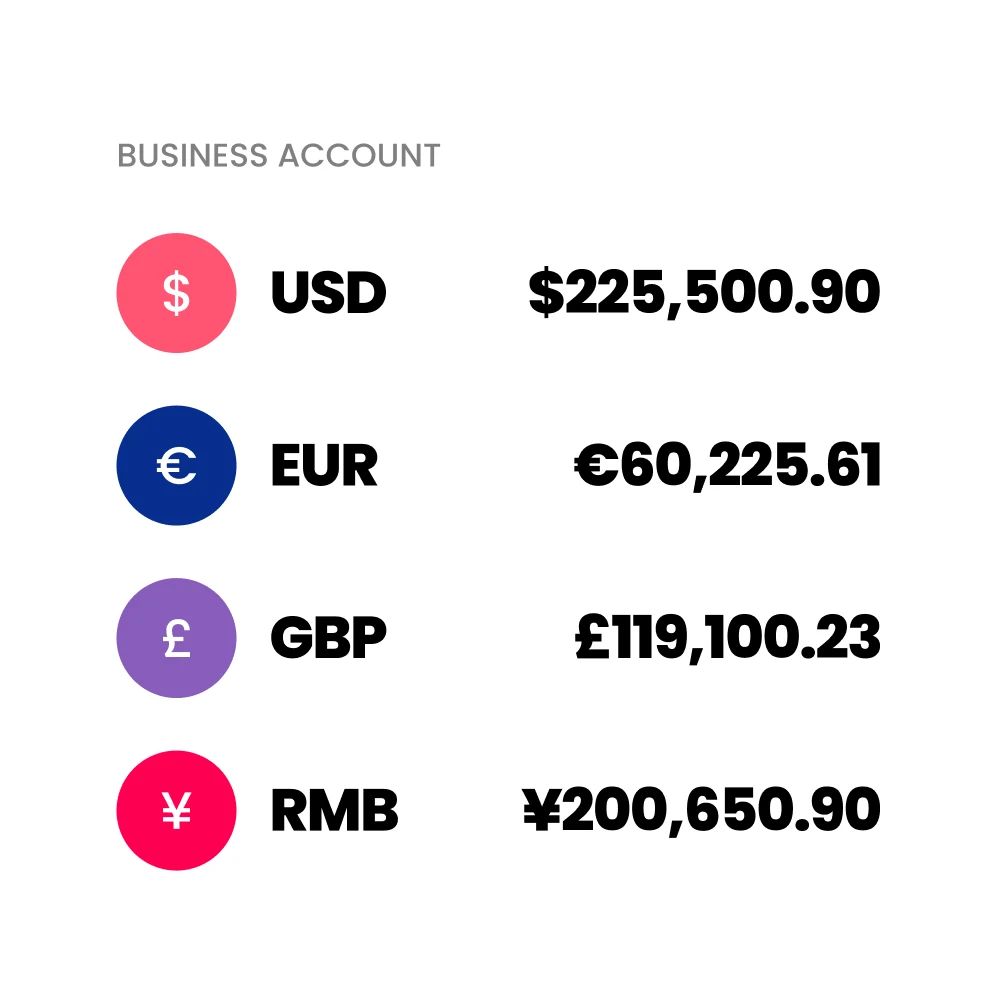
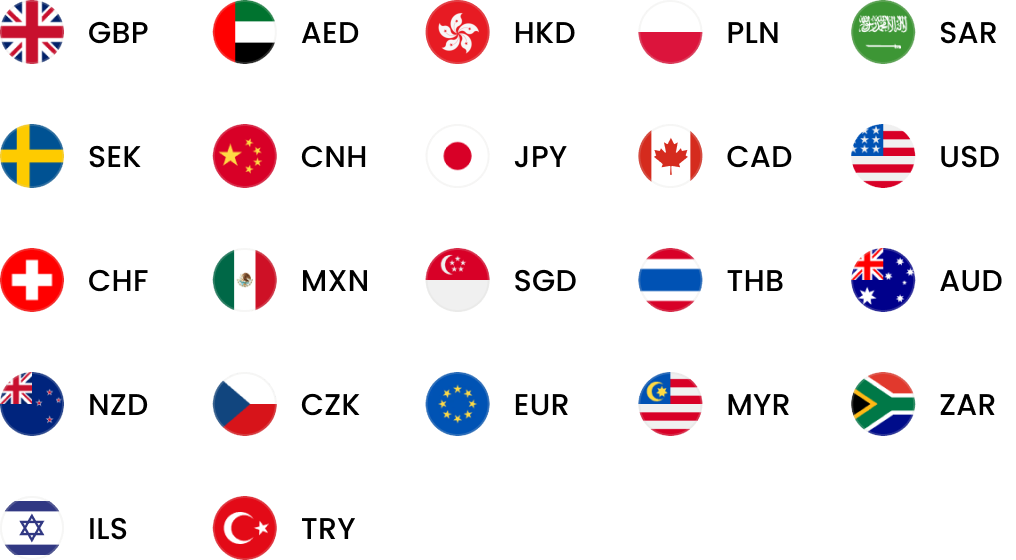
With a World Account, you can receive and hold funds in 20+ currencies and pay suppliers in 100+ currencies to 210+ countries and territories where supported. FX margins on major currencies are up to 0.5%, and the account is free to open with no monthly fee.
Say you run a UK importing business that buys textiles from a Turkish supplier invoiced in EUR and components from a Chinese manufacturer invoiced in CNH. Each month, you fund your HSBC Business account in GBP, request SWIFT transfers and accept the bank’s FX rate.
On an illustrative €40,000 Turkish invoice at a bank FX margin of 2.5%, the currency cost alone is around £870 above mid-market. On a CNH 350,000 component invoice at the same margin, it’s around £950 more. Across those two payments alone, the FX cost above mid-market is around £1,820.

At a WorldFirst FX margin of up to 0.5%, the same two payments would cost around £364 in conversion fees, a saving of approximately £1,456.
With a World Account, you could hold EUR and CNH balances, pay each supplier directly from the matching currency and use local payment rails where available. This keeps conversion costs down and removes the need to fund each payment separately from GBP.
WorldFirst charges zero transfer fees on local payments and transfers to key destinations where supported. You can also connect with Xero or NetSuite to keep payment records aligned with your accounting.
Open a World Account for free and manage your international supplier payments with clearer costs and greater control.
You’ll typically need the beneficiary name, IBAN or account number, BIC/SWIFT code, bank name and address, payment currency and invoice reference. For SEPA payments within Europe, the IBAN usually covers the main account details, though some providers may still ask for a BIC.
Payments processed through FCA-authorised providers and established rails (Faster Payments, CHAPS, SWIFT) operate within a regulated framework with fraud controls and transaction monitoring. Funds held with an Electronic Money Institution are safeguarded rather than covered by the Financial Services Compensation Scheme. Always verify supplier bank details before sending, particularly if they have changed recently.
You need a business payment account, but it doesn’t have to be a traditional bank account. FCA-authorised Electronic Money Institutions can hold funds, make payments and manage FX in multiple currencies. Funds are safeguarded under the Payment Services Regulations rather than covered by the Financial Services Compensation Scheme.
SEPA handles euro payments across 41 countries and territories, typically settling within one working day at low cost. SWIFT is a global messaging network covering most other currencies and corridors, but payments can pass through multiple correspondent banks, each potentially deducting a fee before funds arrive.
The two main levers are the FX margin your provider applies and the payment rail you use for each corridor. Comparing your provider’s quoted rate against the Bank of England’s mid-market rate before each payment, and using local rails such as SEPA where available, can reduce costs significantly on repeat orders.
Sources:
Choose a product or service to find out more
Save money, time, and have peace of mind when expanding your global business.
© 2026, Ant International or its affiliates
It looks like you're sending money to family or friends — that's a personal transfer, which is best handled through our app.
Sending money to family or friends? Download our app for the best experience.