Built for faster payments, smarter liquidity, and robust compliance-all powered by our next-gen API toolkit and Al-native architecture.
Named a Top Global Fintech Company by CNBC & Statista, we’ve supported 1.5M+ businesses since 2004.
Europe
Asia
Oceania
Africa

We provide coverage in South Asia and Middle East: servicing 210+ countries and territories.

How much money can I send abroad from the UK? Rules, limits and costs

Contents

There is no legal limit on how much money you can send abroad from the UK. In practice, three things govern what you can send and what it costs: your bank’s online transfer cap, the compliance checks that apply to large payments, and the FX margin embedded in every conversion.

For established importers making repeat supplier payments, those factors only become a problem when a payment is delayed, a limit is hit or the final cost comes in higher than expected.

If you’re sending large amounts abroad regularly, this guide covers what the regulations mean in practice, where bank limits apply and how to manage the cost of large supplier payments abroad.

Key takeaways:

  • There is no UK legal cap on how much you can send abroad: Banks set their own online limits, which vary by provider and can stop a large payment before it leaves your account
  • Compliance checks are a process, not a barrier: Having your supplier invoice, purchase order and bank statements ready before you initiate the transfer prevents delays that can push settlement back by a full business day
  • The FX margin typically costs more than the transfer fee: A 2–3% margin embedded in a bank’s quoted rate can mean paying significantly more each year than the headline transfer fee suggests
  • Timing matters as much as cost: A cheaper route that arrives too late can hold up production and strain supplier relationships, so check settlement times before you commit to a provider
  • A multi-currency account reduces both cost and complexity: WorldFirst’s World Account lets you hold supplier currencies and pay from existing balances, with FX margins up to 0.5% on major currencies and no monthly fee

Open a World Account and manage large supplier payments with greater cost transparency.

How much money can I send abroad from the UK? Laws and limits that apply

The UK doesn’t set a legal limit on the amount of money you can send abroad. The regulations focus on transparency and financial crime prevention, governing how transfers are processed and monitored, not the amounts businesses can move for legitimate trade.

Three main rules apply to international transfers from the UK:

  • Money Laundering Regulations 2017 (MLR 2017): Requires all banks and payment providers to apply Know Your Customer (KYC) checks, monitor transactions for suspicious activity, and report to the National Crime Agency where required. These obligations cover all transfers, not just large ones.
  • Funds Transfer Regulation (FTR): Requires complete sender and recipient information to accompany every electronic transfer. For transfers above the equivalent of €1,000 (the threshold is set in euros within the regulation), providers must verify that information before processing. Incomplete or inaccurate details can delay or block the payment.
  • Sanctions screening: Runs automatically on every international transfer, checking against UK government and international sanctions lists. Payments to sanctioned countries, entities or individuals are blocked before funds are released.

The FCA Financial Services Register lists all authorised banks and payment providers in the UK. Always ensure that your provider appears on the register before sending large payments abroad.

While you can send large amounts, your provider may ask questions about the source or purpose of funds. Being prepared for that process helps you avoid unnecessary hold-ups.

Bank transfer limits for international payments

The law sets no cap on international transfers, but UK banks set their own per-transaction and daily limits. These vary by bank, account type and payment channel, and they can stop a large international payment before it leaves your account.

Limits can differ depending on how you send the payment. Online banking channels tend to carry lower caps than telephone or branch channels, and business accounts often carry different restrictions from personal accounts.

Most banks do not publish a single fixed limit for business customers. The cap that applies to your account depends on your account tier, your relationship with the bank, and, in some cases, agreement with your business banking team.

As a general guide, online international transfer limits at major UK high-street banks for standard accounts typically range from £10,000 to £100,000 per day. Branch transfers at most banks carry no fixed upper limit, though some require up to 24–48 hours’ advance notice for high-value transfers.

When your payment exceeds your online cap, most banks offer two routes. You can call your bank’s telephone banking team to process the transfer by phone, usually with additional identity checks. Alternatively, you can visit a branch.

Businesses that send large payments to overseas suppliers regularly should discuss their transfer limits with their bank’s business team. Banks often accommodate increases for customers with a clear transaction history and established supplier relationships.

What compliance checks to expect on large transfers

Compliance checks are a standard part of international payments processing. Established importers sending regular, high-value payments will find them easier to manage once they know what to expect.

Source of funds

Your provider may ask you to confirm where the funds being transferred came from. This is a requirement under the MLR 2017, and it applies regardless of how long you’ve been a customer.

Established importers typically need only a few standard business records:

  • A supplier invoice or purchase order for the goods being paid
  • Bank statements showing the funds in your business account
  • Correspondence or a contract confirming the business relationship, if the payment is to a new supplier

Have these ready before you initiate a transfer. Missing documents can push settlement back by a full business day or more.

Staged and split payments

Sending several smaller transfers that together add up to a large amount can trigger the same AML review as a single large payment. Providers monitor for structured payment patterns, where transfers appear linked by beneficiary, timing, or cumulative value.

Paying suppliers in stages (a deposit followed by a balance payment, for example) is a normal part of trade. What matters is that each payment has a clear, documented commercial purpose.

To keep the process smooth:

  • Use the same beneficiary details across every payment in the same order.
  • Reference the same purchase order on each transfer.
  • Keep records that show the commercial purpose behind the payment structure.
Sanctions screening

Every international transfer is screened automatically against UK sanctions lists and international watchlists before funds are released. This is handled by your payment provider, not HMRC. For most importers trading with mainstream markets, it runs in the background without adding delay.

If you’re paying a supplier in a market that carries elevated compliance risk, your provider may request additional information before processing the payment.

HMRC and large international transfers

The UK doesn’t require businesses to report international bank transfers to HMRC on the basis of the amount alone. Reporting is part of wider tax compliance work, but this sits outside the transfer process itself.

Taxable income not yet declared is a different matter and worth discussing with a qualified accountant first, but routine business-to-supplier payments from UK trading revenue generally don’t trigger any HMRC reporting requirement.

What large international transfers actually cost

The transfer limit is rarely the main constraint for established importers. The cost is, and it’s usually higher than the headline fee suggests.

A large international supplier payment typically involves three layers of cost:

  • Transfer fee: a flat charge in the range of £15–£40 per outgoing SWIFT payment at major UK high-street banks, applied per transaction regardless of the amount sent, though the exact fee varies by bank, currency and payment channel
  • FX margin: the difference between the mid-market exchange rate and the rate your bank applies when converting GBP to your supplier’s currency, typically 2–3%, built into the quoted rate rather than shown as a separate line item
  • Intermediary bank charges: fees deducted by correspondent banks when a payment passes through them before reaching the recipient, which means the final amount credited to your supplier’s account can differ from what you sent

The video below covers three practical tools for reducing the cost of international currency exchange:

How much money can I send abroad from the UK? Rules, limits and costs

3 Tools to Stop Overpaying on Currency Exchange

Example: estimating the GBP cost of a CNY supplier payment

Use this as a starting point before you pay:

CNY invoice amount ÷ GBP/CNY rate + transfer fees = approximate GBP cost

Say you’re paying a Chinese supplier CNY 500,000 for a production run. Chinese suppliers typically invoice in CNY (onshore renminbi); cross-border payments from the UK settle in CNH (offshore renminbi). At an illustrative mid-market rate of CNY 9.20 per pound, the sterling equivalent is approximately £54,348.

Through a UK high-street bank at a 2.5% FX margin, the cost could look like this:

  • Illustrative mid-market rate: CNY 9.20 per £1
  • GBP equivalent at mid-market: CNY 500,000 ÷ 9.20 = £54,348
  • Bank rate at 2.5% FX margin: CNY 8.97 per £1
  • GBP equivalent at bank rate: CNY 500,000 ÷ 8.97 = £55,741
  • Difference before fees: £1,393
  • Transfer fee: £15–£40 on top
  • Intermediary deductions: variable

The £1,393 is the FX margin cost alone, before any transfer fee or intermediary deductions. On a single payment this difference may look manageable, but the FX margin cost scales directly with the size and frequency of what you send.

How to send large amounts abroad more efficiently

Each of the three cost layers in a large international transfer can be reduced with a few practical decisions:

  • Choose an FCA-authorised payment specialist. Payment providers built for international trade typically offer higher online limits, more transparent FX pricing and faster payment routes that can help you avoid some SWIFT correspondent bank costs.
  • Hold the destination currency between orders. If you pay the same supplier repeatedly, keeping a balance in CNH (offshore renminbi, used for cross-border payments to China), EUR, or USD means you convert once and draw down across multiple invoices, avoiding repeated GBP conversion costs on each payment.
  • Set rate alerts for large planned payments. Setting a target rate and automating the conversion when it’s reached can reduce the FX expense on high-value payments tied to a confirmed purchase order, as opposed to converting at the moment the invoice arrives.
  • Prepare compliance documents before initiating the payment. Having your invoice, purchase order, and bank statements ready before you start the process prevents back-and-forth that can delay cleared funds by a full business day.

Keep in mind that timing matters as much as cost. If your supplier needs cleared funds before dispatch, a cheaper route that arrives too late can delay the shipment.

Send large international payments with WorldFirst

Paying a CNY 500,000 supplier invoice through a UK high-street bank typically means accepting a 2–3% FX margin built into the quoted rate, a SWIFT transfer fee in the same range, and potential intermediary deductions before funds reach the supplier. Settlement usually takes several working days.

Importers managing multiple orders per quarter see those costs grow with every payment.

With a World Account, you can hold supplier currencies between orders and pay from existing balances when the next invoice is due, so each payment draws from the right currency without a fresh conversion where supported.

FX margins run up to 0.5% on major currencies, against the 2–3% typically embedded in a high-street bank rate. On the same CNY 500,000 payment, a high-street bank rate of 2.5% costs approximately £55,741. At WorldFirst’s 0.5% margin, that comes to approximately £54,622, a saving of around £1,119 on a single payment, or over £4,000 across four orders a year.

A World Account also gives you access to a broader set of tools for managing international payments in one place.

  • Pay suppliers in 100+ currencies to 200+ countries and regions where supported
  • Send faster transfers to 150,000+ Chinese suppliers already on WorldFirst, with payments arriving instantly where supported
  • Schedule or automate payments so transfers go out at the right time without manual processing
  • Set rate alerts to convert automatically when a target rate is reached

WorldFirst isn’t a bank. WorldFirst entities in the UK hold FCA authorisation as an Electronic Money Institution for issuing electronic money and providing payment services. Customer funds are safeguarded in line with the Electronic Money Regulations 2011, but are not covered by the Financial Services Compensation Scheme (FSCS).

Sign up for a World Account and manage large international supplier payments with clearer FX pricing.

FAQs

1. How long does it take to send money abroad from the UK?

SWIFT transfers to most destinations typically take one to five working days, depending on the currency, destination country and number of correspondent banks involved. Payment providers that use local payment rails rather than SWIFT for certain corridors can often deliver same-day or next-day settlement.

2. Do I need to pay tax on money I send abroad from the UK for supplier payments?

Sending money abroad is not a taxable event. Tax applies when you earn or receive income, not when you transfer it, so routine supplier payments from UK trading revenue don’t create a liability.

3. Are there restrictions on sending money to certain countries from the UK?

The UK maintains sanctions lists that block payments to certain countries, individuals and entities. Your provider screens every transfer automatically, so if a destination is sanctioned, the payment will not go through.

Check the current list via the Office of Financial Sanctions Implementation.

4. What happens if my international bank transfer is delayed or rejected?

Delays most often come from incomplete payment details, a pending compliance check, or manual processing by an intermediary bank. Contact your provider as soon as a payment is flagged, and have your supplier invoice and beneficiary bank details ready to speed up resolution.

5. Can I send money abroad in a foreign currency directly from a UK business account?

Most high-street banks convert GBP at the point of payment rather than letting you pay from a held foreign currency balance. A multi-currency account lets you hold currencies such as EUR, USD or CNH and pay suppliers directly from those balances, which prevents a fresh conversion on each invoice.

Sources:

  1. https://www.legislation.gov.uk/uksi/2017/692/contents
  2. https://register.fca.org.uk/
  3. https://www.legislation.gov.uk/eur/2015/847
  4. https://www.gov.uk/government/collections/uk-sanctions
  5. https://www.nationalcrimeagency.gov.uk/what-we-do/crime-threats/money-laundering-and-illicit-finance
  6. https://www.gov.uk/government/organisations/hm-revenue-customs
  7. https://www.bankofengland.co.uk/statistics/exchange-rates

Continue reading

Pay your suppliers around the world. Collect payments for free in 20+ currencies. Convert when it suits you. All in one place.

The simpler way to pay and get paid

Save money, time, and have peace of mind when expanding your global business.

扫描二维码下载WorldFirst app
打开手机扫一扫

It looks like you're sending money to family or friends — that's a personal transfer, which is best handled through our app.

Sending money to family or friends? Download our app for the best experience.

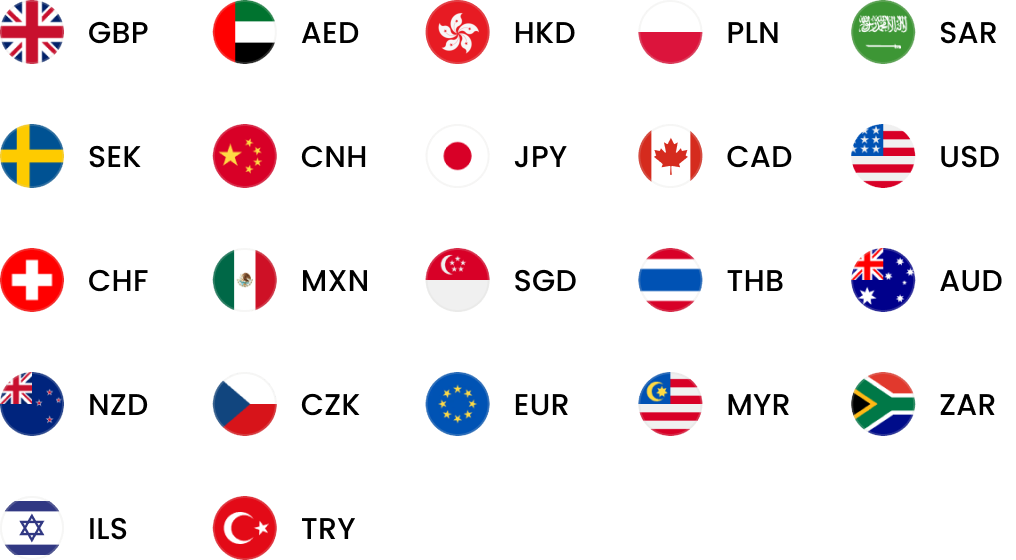
Pay in 15 currencies with World Card, no FX fees

Enjoy zero FX fees when paying in the following 15 currencies with World Card.

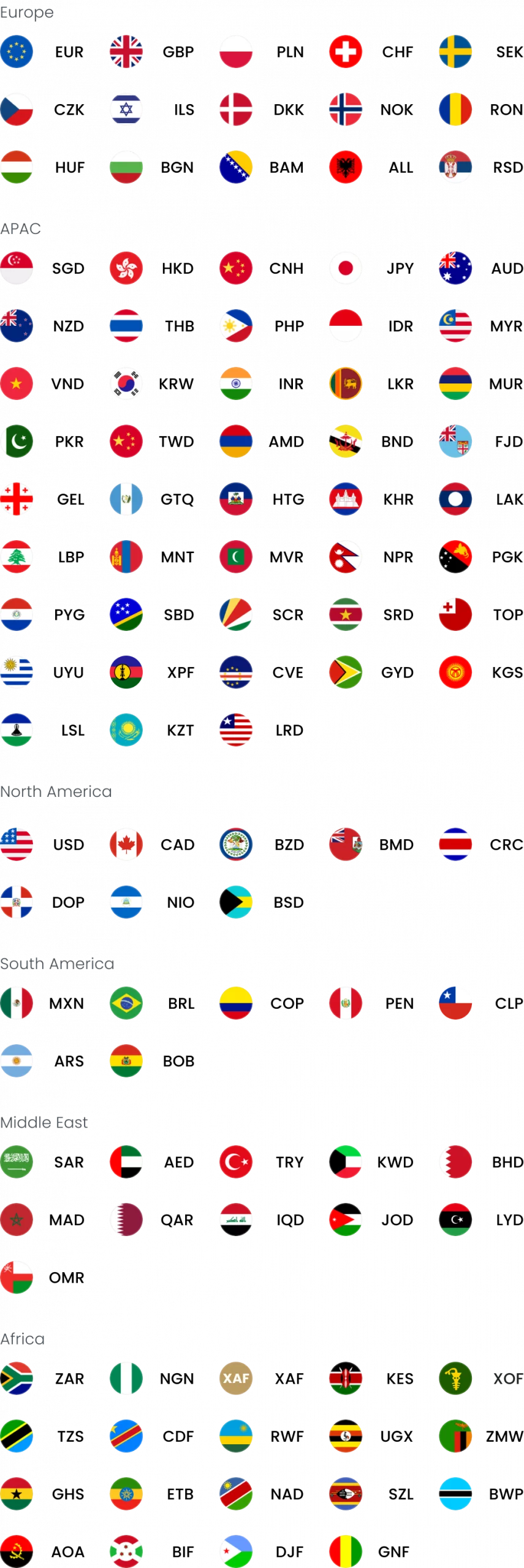
Send money in 100+ currencies

You can send money in your WorldFirst account to any of the currencies we support.

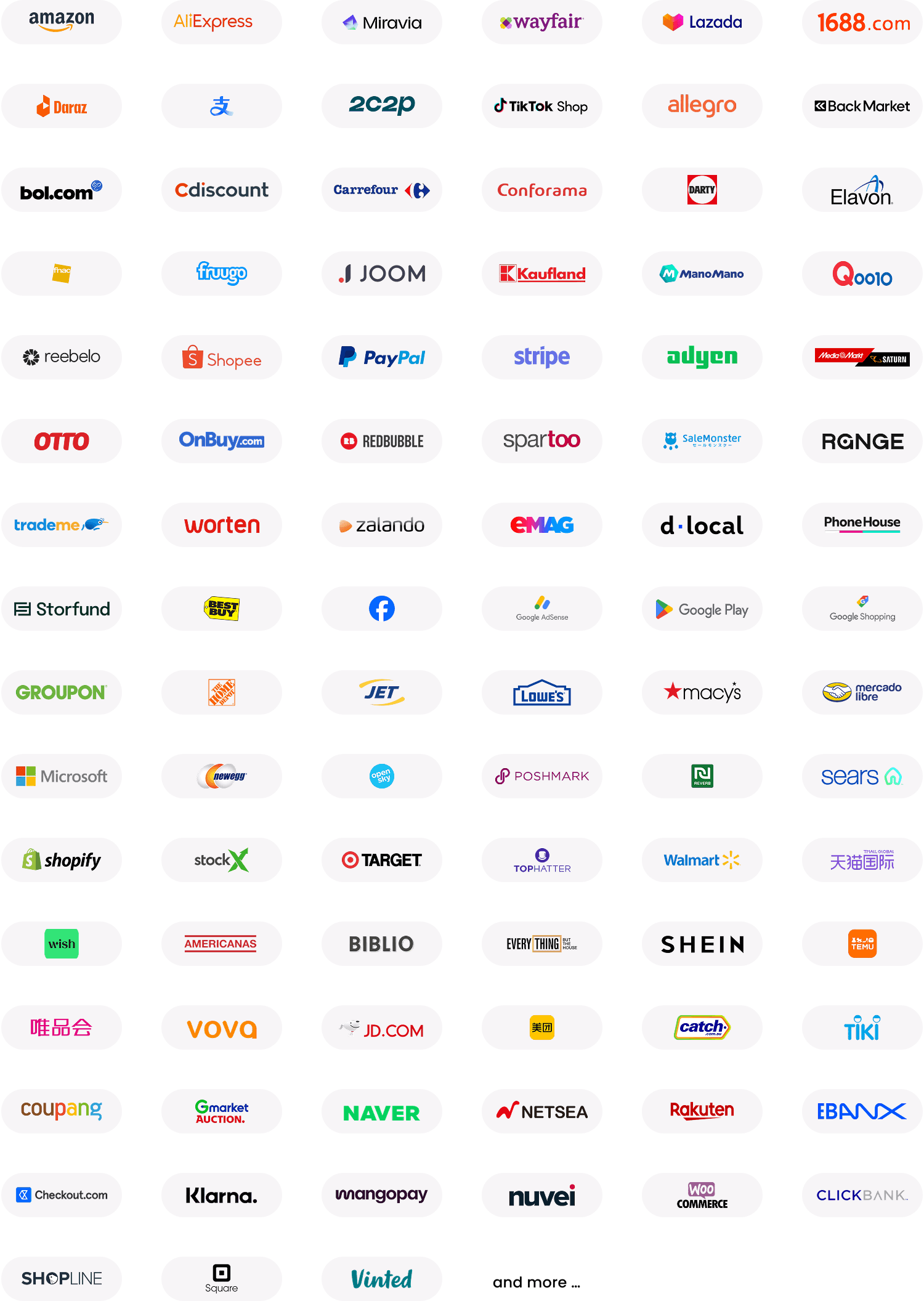
Get Paid by 130+ marketplaces

Seamlessly get paid by 130+ marketplaces and pay your suppliers anywhere.

Collect money in 20+ currencies

You can collect money in 20+ currencies. It only takes a few minutes to open an account in the currency you need.