We provide coverage in South Asia and Middle East: servicing 210+ countries and territories.

WorldFirst Home > blog > Global Business Tips > Difference between a forward and a futures contract
You confirm an overseas stock order and agree to pay the supplier several months later. The invoice amount stays the same, but if the pound weakens before payment, the order costs more in sterling and leaves less room in your budget.
Forward and futures contracts can give you more certainty about future costs, but they work differently. A forward contract can reflect the amount and settlement date of a specific supplier payment. A futures contract follows standard exchange terms, and its value changes each day, which may require extra cash before the supplier balance falls due.
In this article, you’ll learn the difference between forward and futures contract structures, how each one works and which may align more closely with your overseas supplier payments.
Open a World Account to plan foreign-currency costs and manage international supplier payments through the same platform.
HMRC defines a forward contract as a legally binding agreement to exchange a specified amount of one currency for another at a fixed price on a future date. Accepting the terms commits you to completing the exchange.
Say you’ve approved an overseas order while the goods are still in production. The supplier balance won’t fall due for several months, leaving its sterling value open to exchange-rate movements. A forward gives you a known sterling figure for the covered amount before payment.
The forward rate isn’t a forecast of the rate that will apply on the settlement date. Providers calculate it using the spot rate and forward points, which reflect factors such as the interest-rate difference between the two currencies.
If sterling weakens, you’ll still use the agreed rate for the covered amount. If sterling strengthens, you won’t benefit from the better spot rate. Changing or closing the contract may also create additional cost if the supplier changes the order value or payment schedule.
The settlement structure should match how and when your supplier expects payment. Common forward structures include:
A futures contract is a binding, standardised agreement to buy or sell currency at an agreed price for a future date. HMRC describes futures as highly standardised contracts that normally trade on an exchange.
You choose the available contract that most closely matches your supplier payment. Currency futures may come in standard, E-mini or Micro sizes, but each follows the amount and expiry terms set by the exchange. If the contract doesn’t match the invoice, part of the payment may remain exposed, or your position may cover more currency than you need.
You’ll need to provide initial margin when you open a position. The exchange then records gains and losses each day. If the position moves against you, you may need to add funds before the supplier balance falls due, even when the hedge offsets part of the change in your currency cost.
Businesses commonly close futures through an equal and opposite exchange trade rather than using them to settle the underlying currency payment. You’ll therefore usually need to arrange the currency conversion and send the supplier funds separately.
The table below shows how each contract handles the terms, funding and settlement of a future supplier payment:
| Feature | Forward contract | Futures contract |
| Trading structure | Private agreement with a provider | Contract listed on an exchange |
| Contract amount | Tailored to the transaction | Uses standard contract sizes |
| Settlement date | Can match a specific payment date or period | Uses listed expiry dates |
| Rate or price | Agreed with the provider | Set through exchange trading |
| Cash requirements | Deposit and margin call may apply | Initial and daily variation margin may apply |
| Daily settlement | Usually no daily cash settlement | Exchange calculates gains and losses each day |
| Counterparty structure | Contract sits between the customer and provider | A clearing house stands between buyers and sellers |
| Early exit | Provider must agree to changes or cancellation | Holder can normally offset the position through the exchange |
| Currency delivery | Can provide the currency needed for payment | Many users close the position and arrange payment separately |
| Typical business use | Matching a known or forecast commercial payment | Hedging standardised exposures through exchange markets |
The points below explain what these differences mean for your supplier invoice, cash flow and day-to-day administration:
A forward can match the currency amount and payment date of a supplier invoice. A futures contract uses standard sizes and listed expiry dates, so the position may cover slightly more or less than the payment or expire at a different time.
A forward may require a deposit when you book and an additional margin payment if rates move significantly. Futures require initial margin and settle gains and losses each day, which can create earlier and more frequent cash demands.
A provider quotes the forward rate for your amount, currencies and settlement terms. Futures prices come from exchange trading and apply to the standard contract and expiry you select.
Changing or closing a forward requires the provider’s agreement and may create a cost. You can normally offset or move a futures position through another exchange trade, subject to liquidity and market pricing.
A forward creates a direct agreement between you and the provider. Futures use exchange clearing between market participants, reducing direct reliance on the trader taking the opposite position.
A forward can provide the foreign currency needed to settle the supplier invoice. A futures position usually remains separate, so you still need to arrange the currency conversion and cross-border payment.
A forward mainly requires you to prepare for the agreed settlement date. Futures require more regular oversight of margin, contract value and expiry.
For an established small importer, the better fit depends on how directly the hedge needs to connect to a supplier payment.
A forward will usually align more closely with an individual order because you can include it in the same planning and approval workflow. That links the agreed rate to a specific payment without adding a separate market position to manage.
Futures are more relevant when currency risk forms part of a wider treasury strategy. They tend to fit businesses with broker access, internal controls and staff who already manage exchange-traded positions.
The contract is only one part of an international supplier payment. You also need to plan the currency conversion, funding and final cross-border payment to the supplier.
Managing the FX contract and supplier payment through separate providers can add extra administration when the final balance falls due.
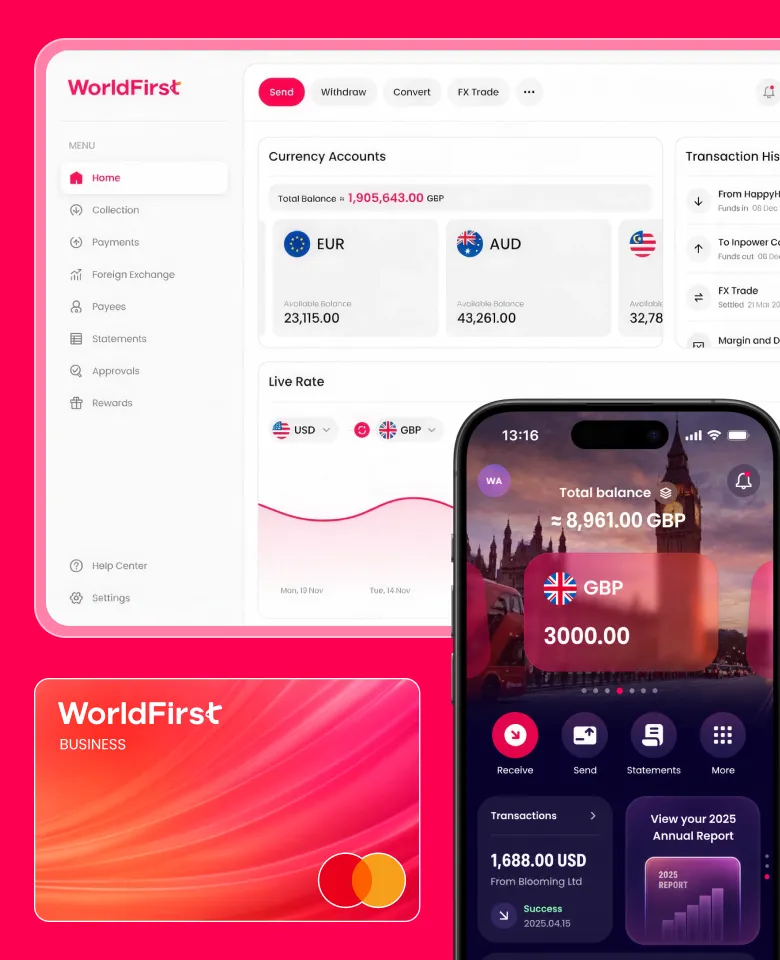
WorldFirst is a global business payments platform that offers the World Account, a multi-currency account for managing currency conversion and international supplier payments.
WorldFirst offers forward contracts for genuine upcoming business payments. You can secure a rate for up to two years, depending on the available currencies and contract terms.
A WorldFirst firm order serves a different purpose. You choose a target rate, and WorldFirst executes the currency conversion automatically if the market reaches that level.
Here’s how the two parts can work together.
Say a UK importer confirms a US$120,000 supplier invoice and pays 30% when production starts. The remaining US$84,000 falls due three months later. The importer could book a forward contract for the final balance and select a settlement date that reflects the supplier’s deadline.
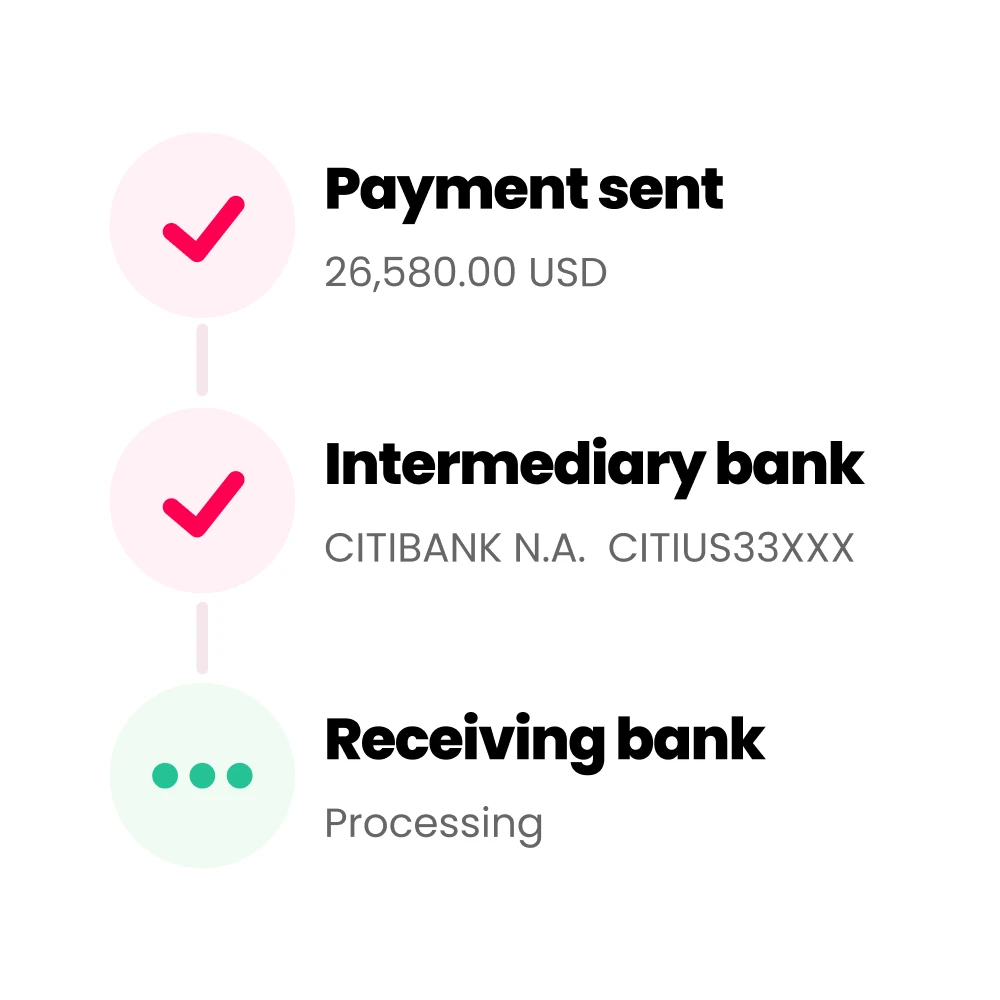
At settlement, the importer funds the required sterling amount and adds the supplier payment to the booked forward. WorldFirst applies the agreed rate and sends the US dollar payment to the supplier, linking the forward contract directly to the final cross-border payment.
Most WorldFirst forward contracts require a 5% to 10% deposit, depending on the currency and contract length. Some customers may qualify for a margin waiver. A significant adverse market movement may also lead to a margin call.
This video explains how forward contracts secure a rate for a future payment:
How to Use FX Forwards to Lock Your Exchange Rate | WorldFirst Tutorial
WorldFirst isn’t a bank. World First UK Limited is authorised by the Financial Conduct Authority as an Electronic Money Institution. Funds corresponding to electronic money held in a World Account are safeguarded in line with regulatory requirements, but they aren’t covered by the Financial Services Compensation Scheme.
Open a World Account to manage international supplier payments and explore WorldFirst forward contracts.
Yes. You can use a forward for part of the invoice and convert the remaining amount at the rate available when payment falls due, subject to the provider’s terms.
Retain the contract confirmation, supplier invoice, payment approval, proof of payment and any records of amendments or cancellations.
You may be able to book against a reliable payment forecast, subject to approval. Check the expected amount and date carefully, as later changes may create additional costs.
Failing to fund the contract breaches the agreement. The provider may close it and charge you for any resulting market loss and reasonable costs, depending on its terms.
A forward can make the sterling cost of the covered currency more predictable, supporting pricing and margin planning. You can use the gross profit formula to measure how supplier and production costs affect profitability. It won’t protect against changes in freight, duty, supplier prices or sales revenue.
Sources:
Choose a product or service to find out more
Save money, time, and have peace of mind when expanding your global business.
© 2026, Ant International or its affiliates
It looks like you're sending money to family or friends — that's a personal transfer, which is best handled through our app.
Sending money to family or friends? Download our app for the best experience.