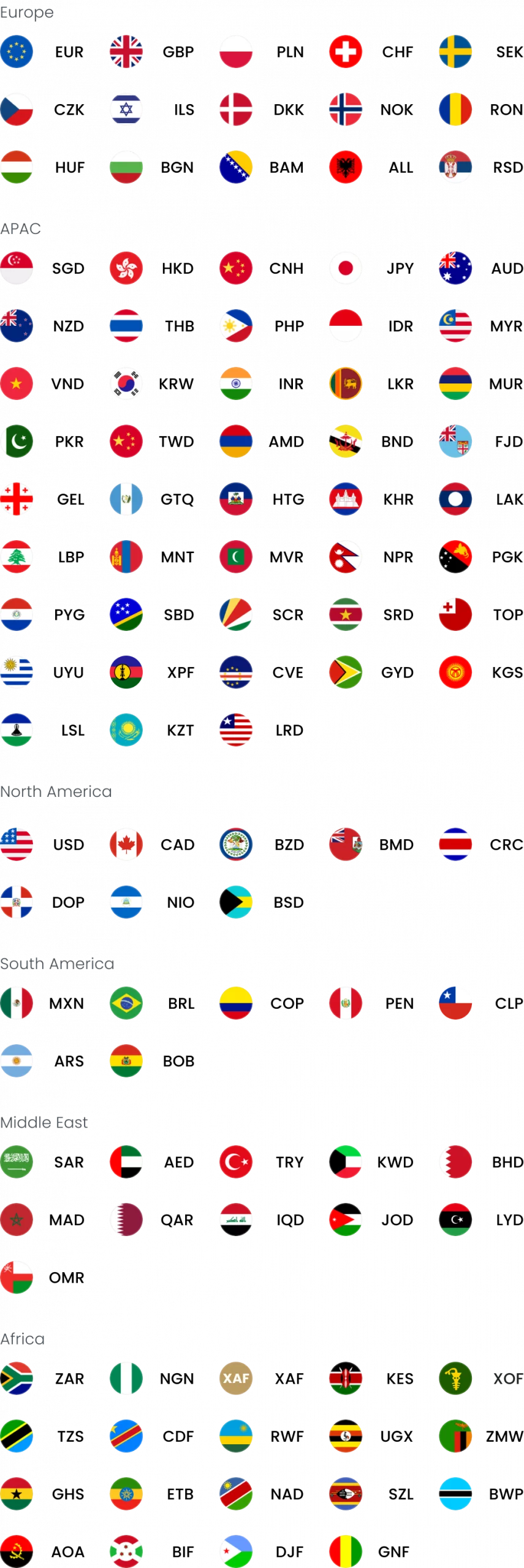
We provide coverage in South Asia and Middle East: servicing 210+ countries and territories.

WorldFirst Home > blog > Global Business Tips > How to find reliable China wholesale suppliers [Definitive Guide]
China is a major sourcing market for UK businesses, as trade volumes show: in the four quarters to the end of September 2025, total UK imports from China were £72.9 billion, making China the UK’s third-largest import partner in that period.
However, the scale of trade doesn’t remove the practical challenges of sourcing from overseas. Low unit prices rarely reflect the operational realities of working with overseas suppliers, which could include higher minimum orders, longer lead times, more difficult deposit terms or unreliable suppliers.
Add compliance failures, delays and currency movements and the expected margin gains can disappear.
This guide shows you how to find China wholesale suppliers using structured, practical steps. The focus is on proven sourcing routes, supplier verification and payment approaches that protect margins from the first order.
Open a World Account and take control of cross-border payments to China from one platform.
China retains its position as the world’s largest merchandise exporter, accounting for roughly 14–15% of global goods exports in 2024.
For UK importers, that position reflects a manufacturing base that supplies everything from consumer electronics and homeware to industrial components and private-label retail goods. But reliability is what turns opportunity into profit.
In early discussions, most suppliers appear equally capable, with timely samples, responsive communication and competitive pricing. The fuller picture tends to emerge only when higher volumes and tighter timelines properly test consistency, capacity and process control.
Reliability affects day-to-day operations in ways that go beyond the unit cost. Problems tend to show up in predictable areas:
For UK importers, these issues directly influence working capital and stock planning. A delayed shipment can stall a product launch. A rejected batch can wipe out the entire quarter’s margin. Time spent resolving disputes is time not spent growing the business.
China offers strong commercial potential. The difference between a smooth supply chain and constant disruption usually comes down to how carefully buyers assess reliability before scaling orders and transferring deposits.
One of the easiest ways to waste time in sourcing in China is to focus only on product and price while ignoring how the supplier actually operates. You’re choosing how responsibility flows if something goes wrong.
Most UK buyers will come across three main operating models:
Manufacturers run production themselves. They oversee materials, labour, machinery and output directly, even when they source certain components from external suppliers.
Buyers who work directly with a manufacturer gain clearer accountability. When specifications change, defects surface or timelines move, the production team responds directly without an intermediary relaying information.
As volumes increase and consistency becomes more important than headline price, that direct relationship becomes commercially valuable.
Working with a manufacturer often makes sense when you need:
Manufacturers, however, expect commitment. They typically require defined order volumes, reliable forecasts and structured communication. Their operations prioritise steady production flow rather than frequent last-minute changes.
Trading companies purchase goods from one or several manufacturers and resell them to overseas buyers. Some act purely as intermediaries. Others take on a broader role, consolidating product lines, coordinating multiple factories and handling export paperwork.
For UK buyers placing smaller, mixed or trial orders, that structure can simplify early sourcing. A trading company may negotiate across factories, reduce minimum order quantities and manage communication in English, which lowers initial friction.
Trading companies often appeal when buyers need:
Transparency, however, requires attention. When quality issues arise, tracing the root cause becomes more difficult if you don’t know which manufacturer produced the goods. Without clear contractual terms, responsibility can blur between the trading company and the production source, slowing resolution and adding commercial tension.
Sourcing agents represent your interests on the ground. They search for suppliers, compare quotations, negotiate pricing, coordinate sampling and often arrange inspections or logistics for shipments.
For UK businesses without a local presence or in-country network, they can shorten the learning curve and accelerate supplier identification.
A capable sourcing firm can add structure during early-stage procurement, especially when buyers lack time to screen hundreds of listings or travel for in-person audits.
Sourcing agents typically support buyers by:
Responsibility needs to be clear from the start. Some agents verify production and compliance documents, while others only make introductions. Some manage quality control directly, while others arrange third-party inspections.
Buyers should define scope, reporting and accountability in writing because the agent’s value depends on the agreed-upon role from the outset.
No single sourcing channel works in every situation. Experienced buyers combine several, because each one serves a different purpose.
Online platforms remain the quickest way to understand a category and benchmark pricing:
Wholesale marketplaces help buyers compare price ranges, minimum order quantities and communication responsiveness within days. They accelerate discovery and reduce initial research time.
However, listings often present a polished commercial profile. A storefront doesn’t automatically confirm who owns production, who holds export rights or who controls quality systems.
Before committing funds or signing contracts, buyers should verify the legal entity behind the listing and confirm the actual production source.
Trade fairs continue to play a valuable role in supplier validation.
The Canton Fair (China Import and Export Fair) brings together exporters and international buyers in a structured setting. Meeting in person allows you to examine product samples closely, assess technical knowledge and evaluate how clearly a supplier communicates under pressure.
Trade fairs become particularly useful when:
Referrals often produce stronger starting points than open search.
Freight forwarders, inspection companies, trade associations and experienced industry contacts tend to recommend suppliers that already export to the UK or EU. That prior export history usually indicates that the supplier understands documentation requirements, shipping procedures and basic compliance expectations.
Professional networks can reduce early uncertainty, especially when you need suppliers who already operate within regulated markets.
Referrals are particularly useful when you want:
LinkedIn can help you identify export-ready suppliers and reach decision-makers directly, especially in industrial categories. Used properly, it supports early credibility checks before you move to formal verification. Focus on:
A structured verification approach protects margins, reduces fraud risk and provides a documented trail:
Don’t rely on the English trading name shown on a website or marketplace listing. Request a copy of the Chinese business licence and ensure the registered Chinese name matches the name of the company that signs the contract and issues the invoice.
English company names have no legal standing in China. Only the registered Chinese name carries legal authority. The contracting party, the bank account holder and the business licence should all align with that Chinese legal entity.
Payment fraud often appears as a ‘last-minute’ bank account change or a request to pay a different entity. Treat any alteration to payment instructions as high risk.
Confirm changes through a separate channel you control, such as a verified phone number, rather than replying to the same email thread.
A serious supplier should clearly explain its production process. Ask about production lines, quality control checkpoints, lead times and minimum order quantities.
If a supplier can’t describe how it maintains consistency or handles defects, larger orders will likely expose weaknesses.
Independent factory audits and inspections aren’t limited to large corporations. They provide clarity when you can’t visit in person or when the order value makes failure costly.
Audits make particular sense for:
If you import goods under your own brand, UK rules may treat you as the responsible manufacturer for UKCA purposes. That increases your legal obligations.
Before listing products or shipping at volume, ensure you can obtain and retain technical documentation, declarations of conformity and relevant lab reports.
Here’s what to watch for when assessing suppliers:
A quote that sits well below comparable suppliers deserves scrutiny rather than enthusiasm.
Significant price gaps often point to one of three issues:
Operational discipline often reveals itself through communication. Delayed replies, changing answers or reluctance to confirm details in writing usually indicate internal disorganisation.
When specifications require clarification, reliable suppliers provide precise explanations. Vague commitments at this stage tend to produce inconsistent outcomes later.
Healthy commercial relationships allow time for verification. Urgency around deposits, sudden changes to bank accounts or resistance to reasonable checks should slow the process.
Common warning signs include:
Once you trust a supplier, the next step is to structure the payment carefully. Every payment method involves trade-offs. The goal is to deliberately control exposure.

UK importers typically rely on:
Each option involves trade-offs in terms of timing, fees, documentation requirements and protection mechanisms. The right choice depends on supplier maturity, order size and risk tolerance.
International bank transfers remain common, particularly for deposits and balance payments before shipment. However, they introduce several practical challenges:

For businesses operating on tight margins, these variables complicate landed-cost forecasting. If exchange rates move between order confirmation and payment date, profitability can shift without any change in product pricing.
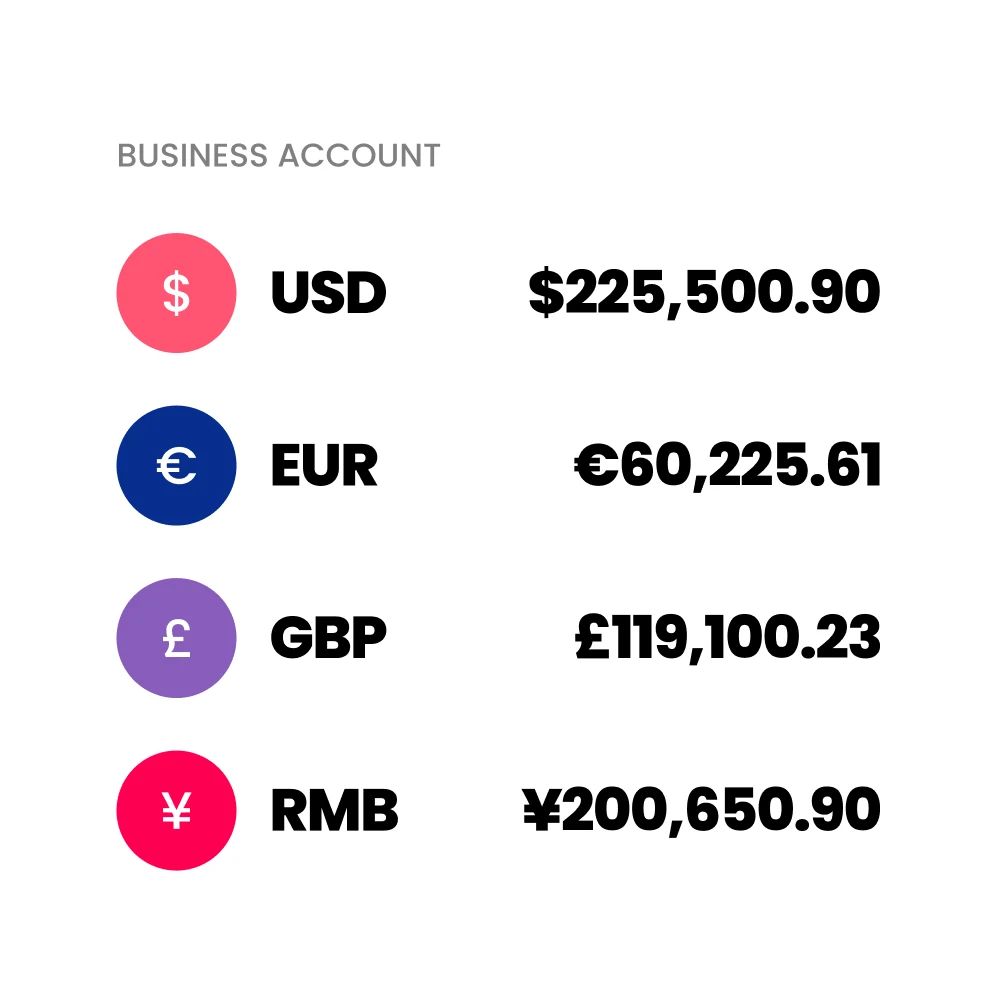
A multi-currency business account changes how you manage currency before payment.
Instead of converting GBP into USD or CNY at the moment you send funds, you can:
In this video, we compare paying Chinese suppliers in RMB versus USD, uncover hidden transfer costs and share a five-question checklist to review before you send your first payment:
Don’t Send Money to China Until You Watch This: The USD vs. RMB Trap
If you’re paying suppliers in China while receiving revenue in multiple currencies, payment execution and FX timing become part of the sourcing process.
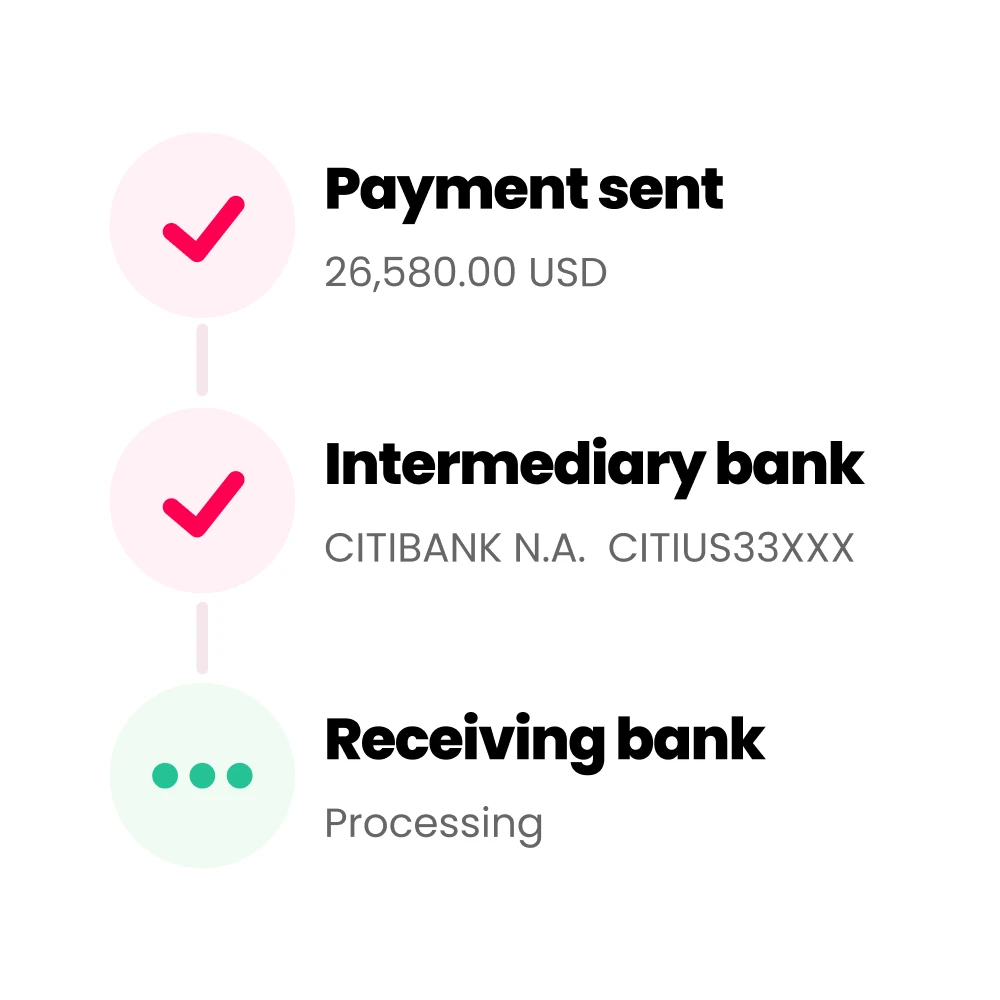
Traditional correspondent banking chains can add intermediary fees and unpredictable settlement timing. WorldFirst routes payments through established global networks, providing upfront visibility into FX rates and fees so you can see the total cost before you transfer funds.
WorldFirst is not a bank. It’s a regulated payment institution focused on international business payments. The platform combines multi-currency accounts, supplier payments and marketplace collections into one system.
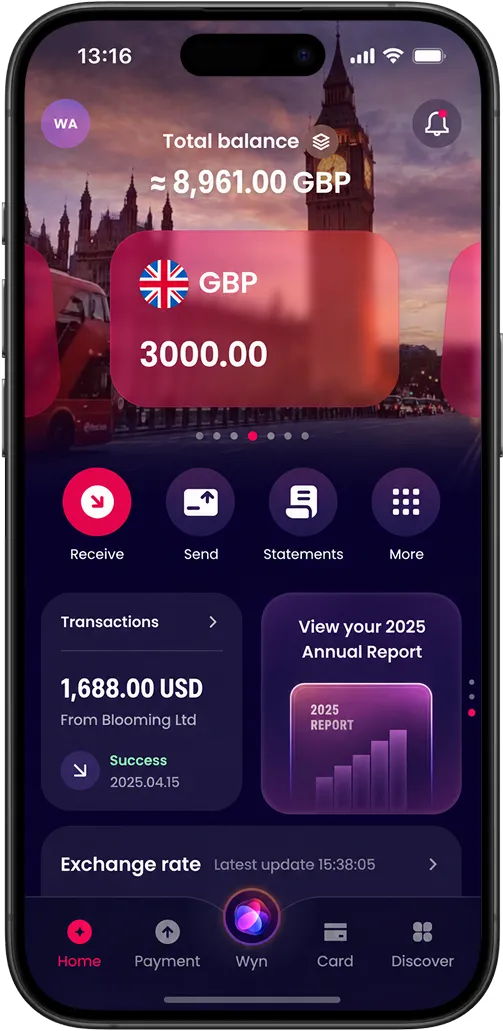
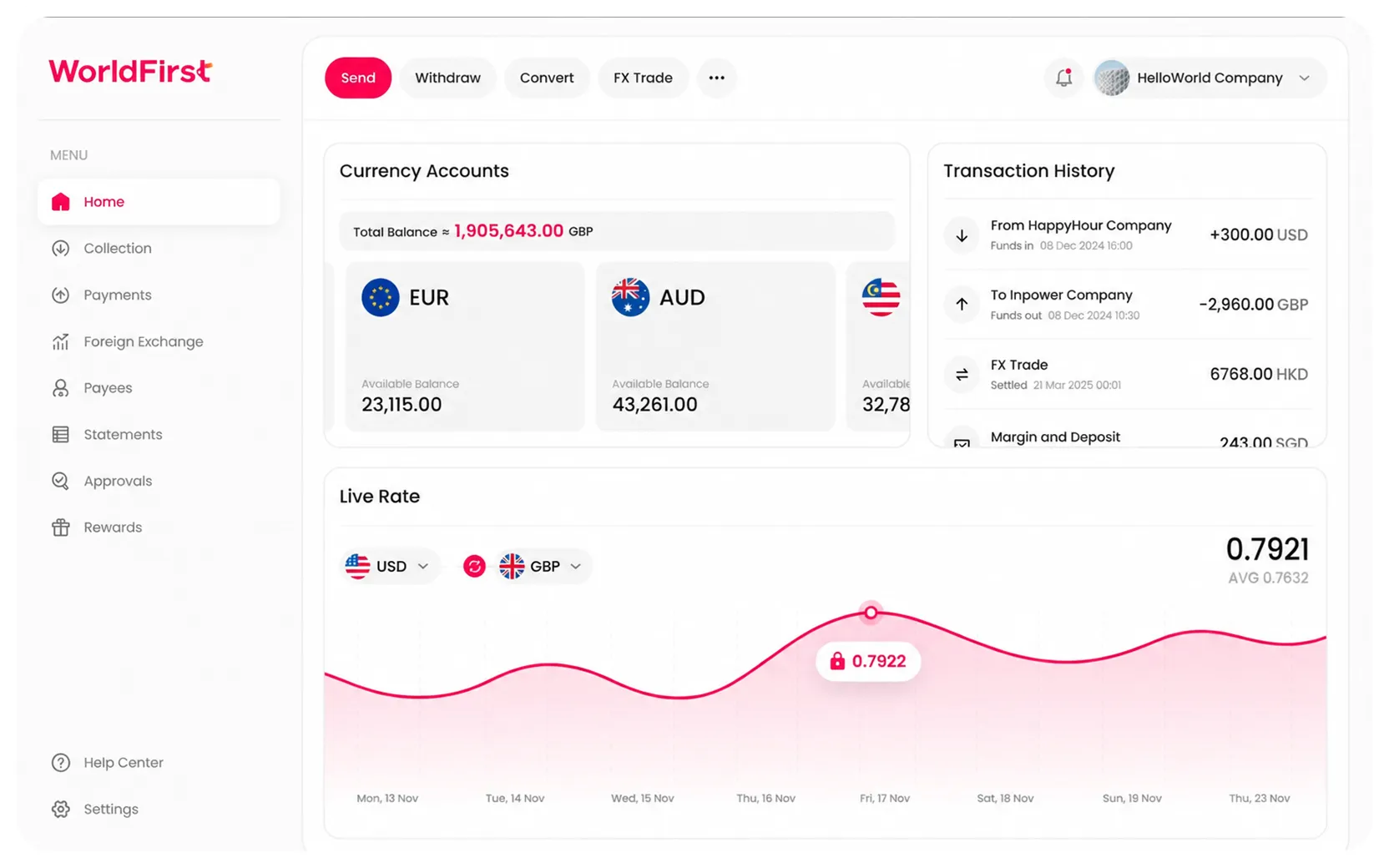
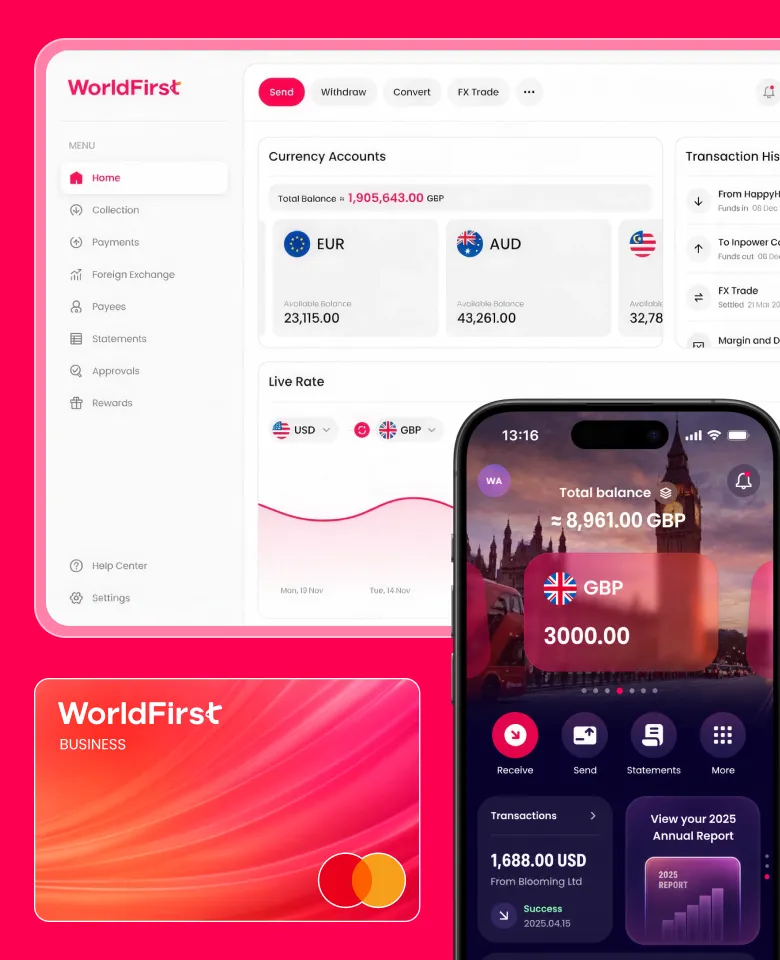
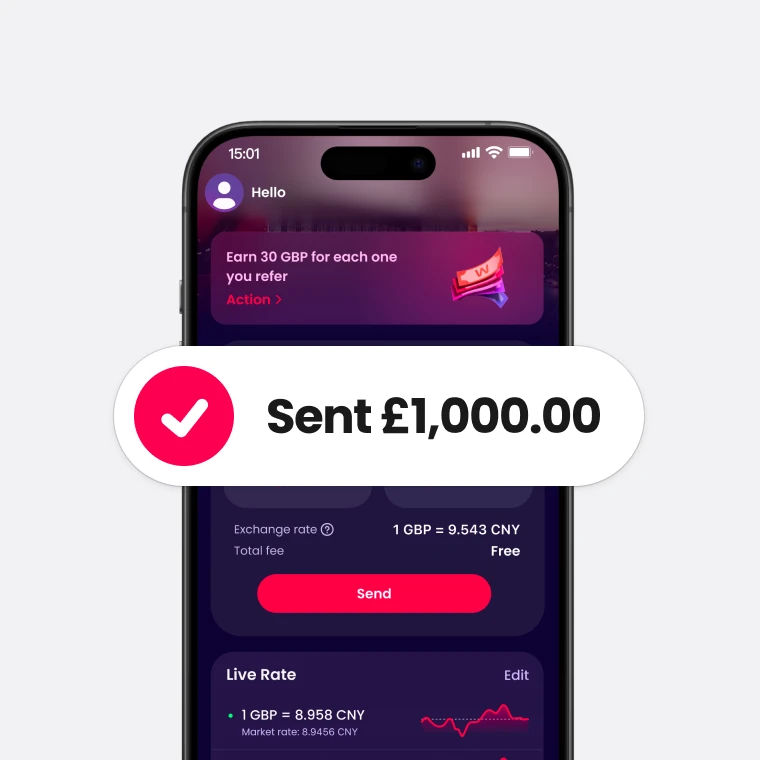
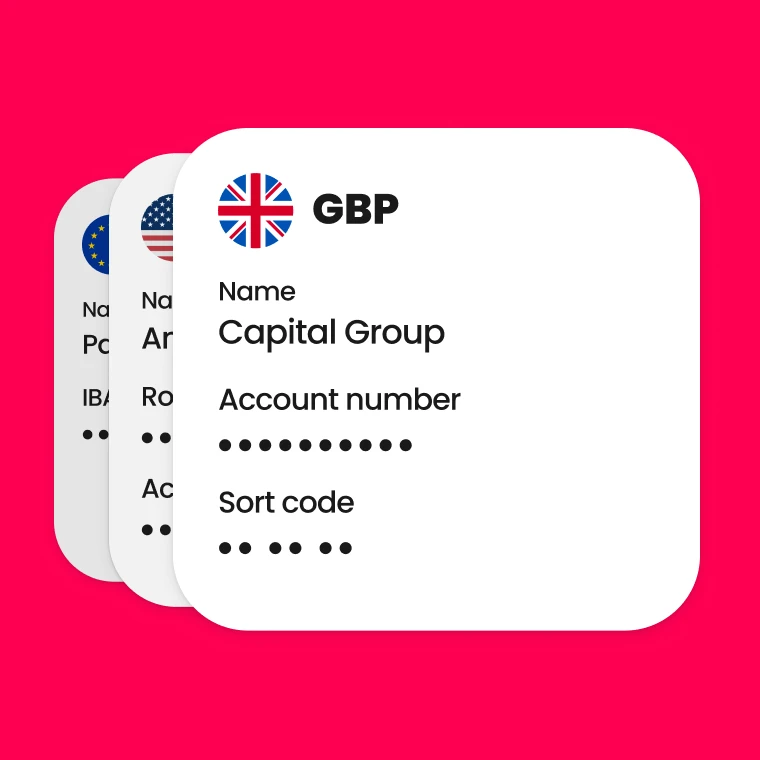
The World Account from WorldFirst is a multi-currency business account that lets UK companies send payments internationally, including to China and manage currency conversion from one platform. You can hold foreign currencies, convert at a time that aligns with your cost planning and pay suppliers directly from your balance.
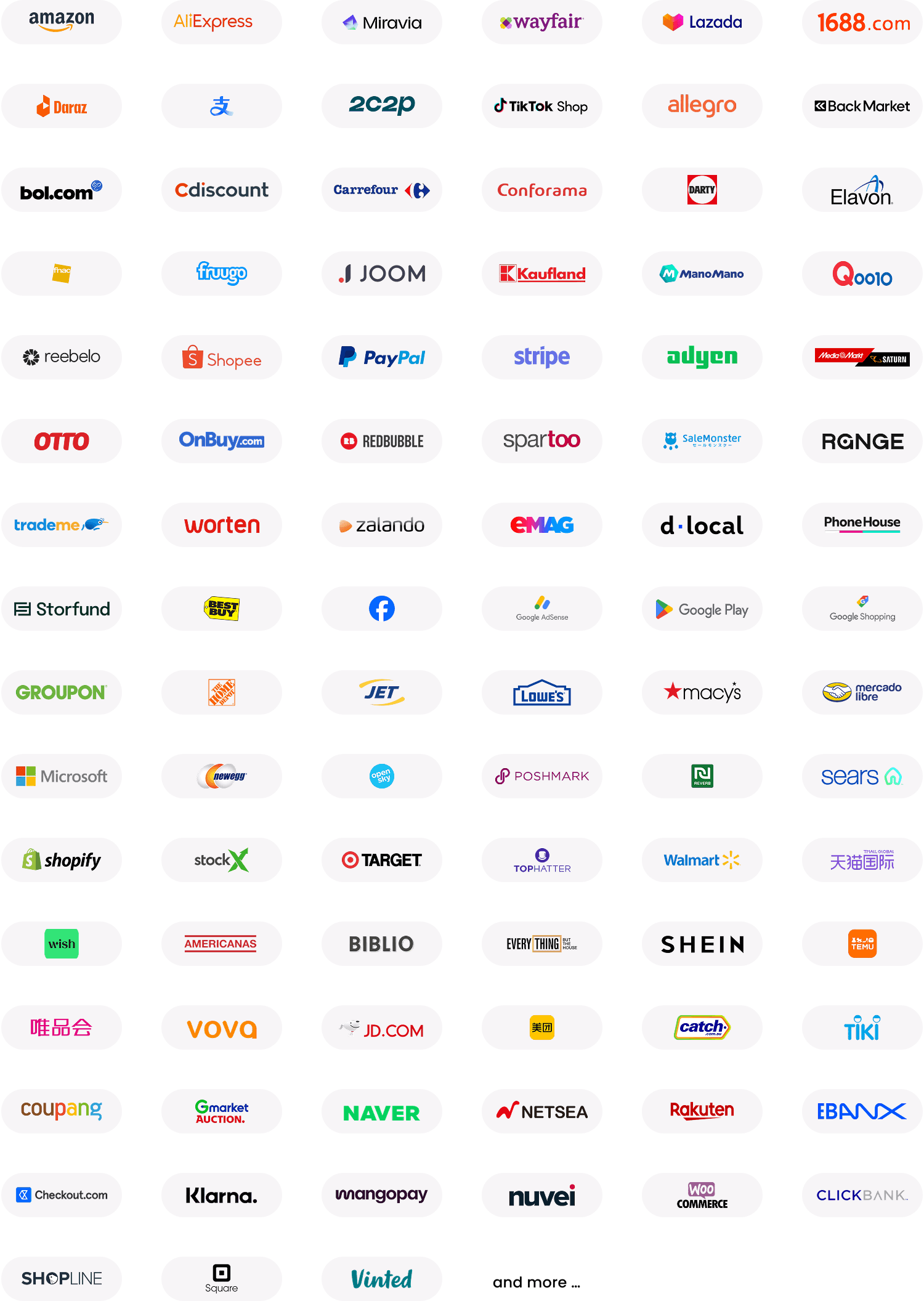
1688.com is one of China’s largest domestic wholesale marketplaces, widely used by manufacturers and small factories to list their products and capabilities. Overseas buyers have historically struggled to pay on 1688.com because the platform primarily supports domestic payment methods.
WorldFirst’s World Pay for 1688 connects your World Account directly to your 1688.com account, allowing you to:
Many UK importers source through Alibaba.com, especially during product discovery and supplier testing. While Alibaba provides escrow-style protection through Trade Assurance, buyers still need to fund transactions efficiently and manage currency exposure.
With a World Account, you can:
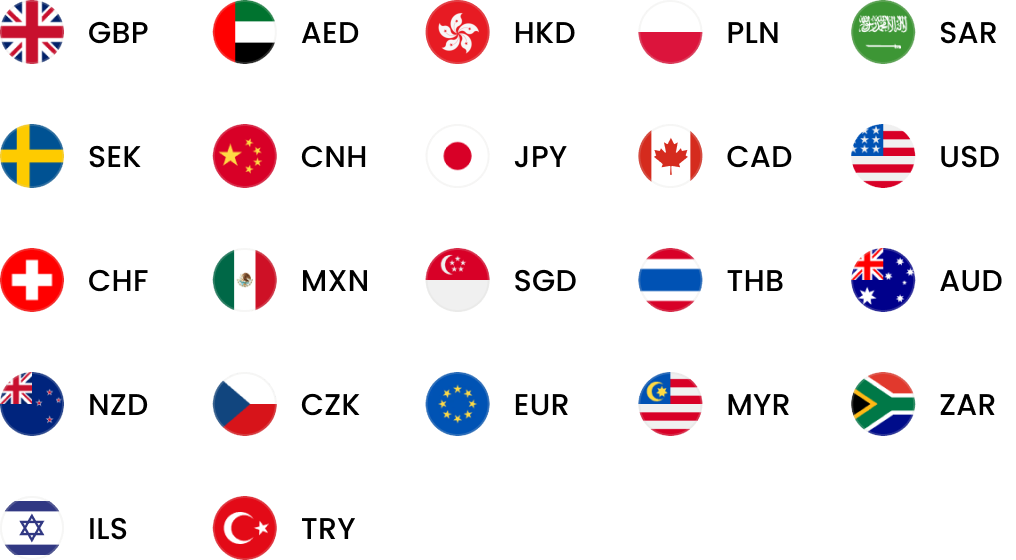
WorldFirst enables UK businesses to send payments in 100+ currencies and collect funds in 20+ currencies from global marketplaces and overseas customers.
That matters for sourcing because many UK importers:
Holding and managing these currencies within a single account reduces friction and improves visibility into total landed cost.
For UK businesses sourcing from China, WorldFirst provides the infrastructure to manage payments, currency and supplier funding without unnecessary friction:
Learning how to find China wholesale suppliers is only half the job – is your payment setup ready for the other half?
Open a World Account for free and manage supplier payments to China with clearer FX control and better cash flow visibility.
Sources:
Shawn Ma leads business development at WorldFirst UK, with a deep expertise in fintech, risk management and cross-border commerce.
Shawn Ma
Author
Choose a product or service to find out more
Save money, time, and have peace of mind when expanding your global business.
© 2026, Ant International or its affiliates
It looks like you're sending money to family or friends — that's a personal transfer, which is best handled through our app.
Sending money to family or friends? Download our app for the best experience.