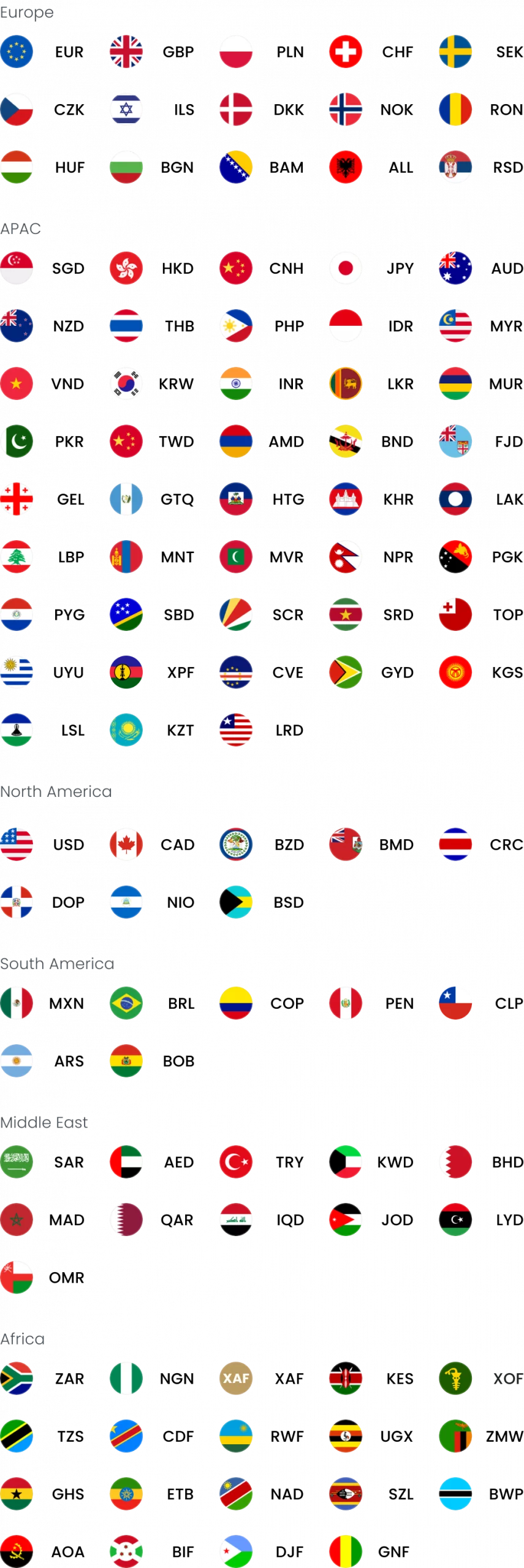
We provide coverage in South Asia and Middle East: servicing 210+ countries and territories.

WorldFirst Home > blog > Global Business Tips > Traditional banks vs digital banks: fees, speed and limits
If you manage international payments for a UK business, the differences between traditional banks and digital banks become apparent in day-to-day operations.
With traditional banks, costs tend to surface indirectly. Banks apply FX at execution, fees follow after settlement and transfer timing depends on cut-off windows and intermediary routing. Payment limits can force split transfers or delays that quietly compound across a month of payments.
Digital banks assume cross-border payments are routine. Holding funds in foreign currencies, choosing when to convert and paying locally reduces repeated FX charges and improves control over timing. Settlement is faster, balances are clearer and forecasting is simpler.
This article examines traditional banks vs digital banks across fees, speed and payment limits and how those differences affect UK businesses managing international payments as part of everyday operations.
Open a World Account to manage international payments in multiple currencies and reduce unnecessary cross-border costs. WorldFirst is not a bank, but a payments and financial services provider.
Traditional banks are regulated financial institutions that provide core banking services and use correspondent banking networks for international payments, often resulting in higher costs, slower settlement, and less transparency.
Their operating model assumes that most business activity happens in a single base currency, with international payments handled as exceptions rather than routine flows.
As a result, banks process cross-border payments through older infrastructure rather than integrating them into everyday account management.
In practical terms, this typically means:
Traditional banks remain central to domestic lending, deposits and cash management.
Their international payment capabilities, however, were added mainly as businesses globalised, rather than designed for companies that move money across borders as part of normal operations.
Digital banks and online payment service providers are regulated financial institutions that operate primarily online, offering banking and payment services through digital platforms and technology-driven systems, with faster processing, lower fees, and greater transparency than traditional banks.
Their operating model assumes that businesses receive, hold and pay in multiple currencies as part of regular trading activity.
Digital banks treat international payments as expected account functions, not exceptions layered onto existing infrastructure.
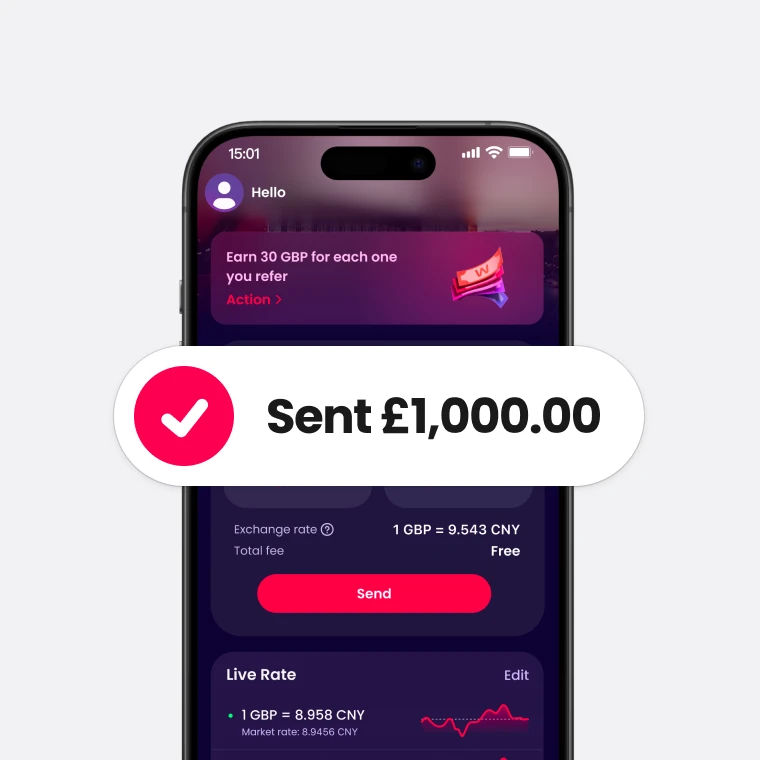
In practical terms, this typically means:
Digital banks focus on transactional efficiency and cost control rather than bundled banking services. For UK businesses with recurring international payments, this model offers more transparent pricing, faster settlement and more predictable cash flow management.
With global cross-border payment volumes exceeding US$194 trillion annually, even slight differences in fees, settlement speed and payment control can have a material impact on business cash flow over time.
The table below summarises the key differences between traditional banks and digital banks before we examine each area in more detail:
| Area | Traditional banks | Digital banks |
| Account structure | Single-currency accounts by default, usually GBP, with separate accounts needed for other currencies | Multi-currency accounts built in, allowing businesses to hold and manage multiple currencies in one place |
| Account and maintenance fees | Monthly fees, minimum balance requirements, and charges for additional currency accounts | Little or no maintenance fees, with pricing that scales by usage rather than account count |
| Transfer fees | Outbound, inbound, and intermediary fees often applied along the payment route, with limited upfront visibility | Transfer fees typically shown before execution, with fewer intermediary deductions through local routes |
| FX pricing and transparency | FX margins embedded into exchange rates, making true costs harder to identify | FX costs shown more clearly, with control over when conversions take place |
| Payment routing | SWIFT-based correspondent banking with multiple intermediaries | Local clearing routes used where possible, reducing reliance on correspondents |
| Settlement speed | Batch processing and cut-off times can delay payments by one or more business days | Continuous processing enables same-day or next-day settlement in many corridors |
| Payment limits | Fixed daily caps and manual approval thresholds that can restrict large or urgent payments | Higher and more flexible limits designed for regular international trading volumes |
| Operational experience | Manual setup, limited self-service tools, and slower reconciliation across currencies | Centralised dashboards, real-time tracking, and faster reconciliation across markets |
| Compliance approach | Relationship-led reviews and conservative thresholds that can slow execution | Automated screening and continuous monitoring built into payment flows |
| Best suited to | Domestic banking and occasional international payments | Businesses managing regular international payments and multi-currency activity |
Fees are where the differences between traditional and digital banks (and other payment service providers) become most visible over time. Not because of a single large charge, but because costs accumulate across repeated transactions.
Traditional banks still organise business banking around single-currency accounts. For companies trading across borders, this often results in multiple accounts with different fee structures.
Common charges include:
For a business operating in several markets, this can quickly translate into layered costs and added administration to keep accounts open.
Digital banks take a different approach. Instead of charging per account, they typically bundle multiple currencies into a single business account.
In practice, this means:
This structural difference removes both cost and operational overhead before a business even makes a payment.
International transfers through traditional banks often carry several charges that only become clear after the fact.
These may include:
Because these charges sit along the payment route, businesses often can’t see the full cost upfront. Reconciliation becomes harder and forecasting payment costs becomes guesswork.
Digital banks usually publish transfer fees clearly before execution. Many also reduce or remove intermediary deductions by using local payment rails where possible. For finance teams, this means fewer surprises and cleaner reconciliation. That said, transfer fees are rarely the largest cost driver on their own.
Foreign exchange is where costs quietly compound.
Traditional banks typically embed FX margins directly into the exchange rate rather than listing them as a separate fee. On paper, a transfer may have a fair charge. In reality, a less favourable rate can cost far more than the stated fee, especially at scale.
An analysis by the European Central Bank shows that across nearly one-quarter of global payment corridors, total cross-border costs still exceed 3% of transaction value, with FX margins accounting for a significant share of those costs.
Digital banks separate FX costs from transfer fees and show rates clearly at the point of conversion. Many also allow businesses to hold foreign currencies and choose when to convert, rather than forcing conversion at the moment of payment.
For businesses moving large volumes or operating on tight margins, visibility into FX pricing often matters more than shaving a few pounds off a transfer fee.
Speed affects more than convenience. It influences cash flow, supplier confidence and the reliability of finance teams’ planning.
Traditional banks route most international payments through correspondent banking networks. These systems rely on:
Missing a cut-off can delay a payment by an entire business day. Public holidays in intermediary countries can add further delays. Even when banks advertise same-day or next-day payments, international settlement often takes longer in practice.
According to the European Central Bank, around one-third of retail cross-border payments still take longer than one business day to settle, even before factoring in public holidays or intermediary delays.
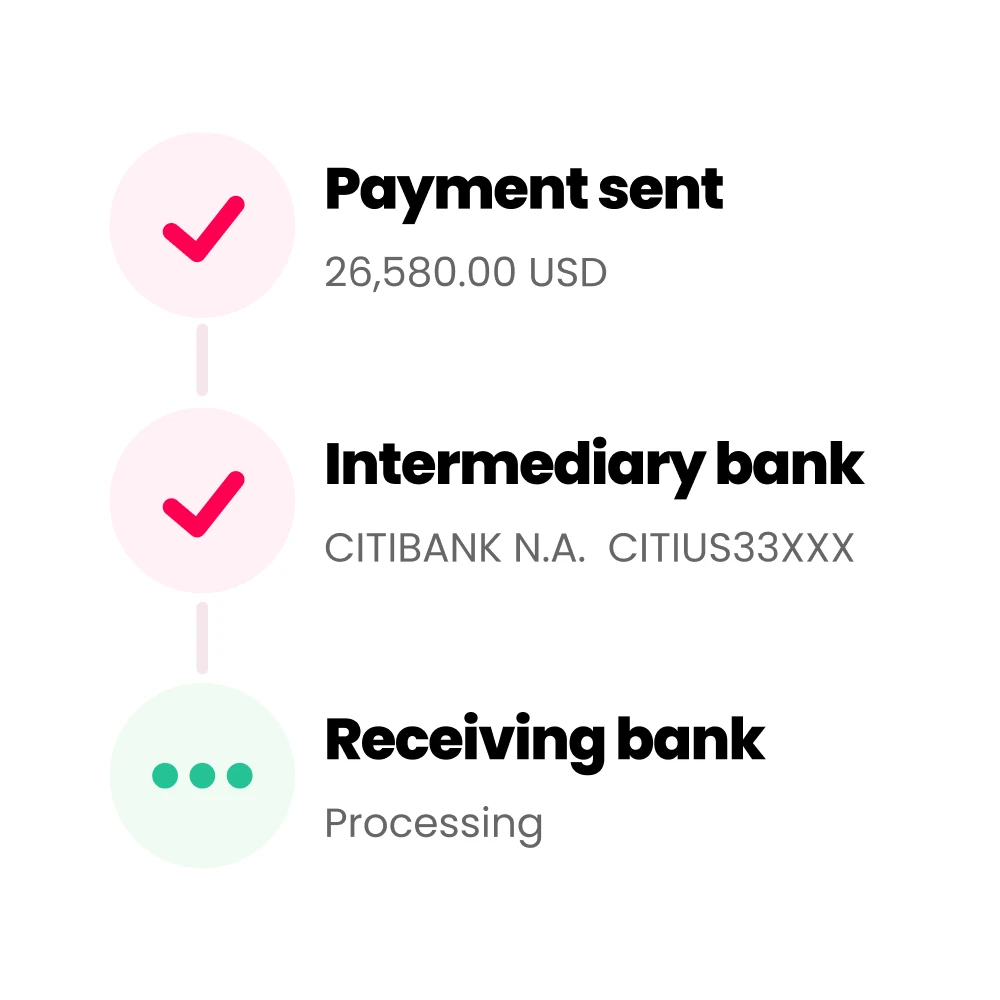
For finance teams, this introduces uncertainty. Payments leave the account, but funds may not arrive for several days, with limited visibility in between.
Digital banks typically process payments continuously rather than in batches. By using local clearing systems where possible, they can credit funds to the destination faster.
In practice, this often results in:
Instead of waiting for correspondent banks to pass funds along, payments take more direct routes.
Faster settlement has knock-on effects across the business:
Over time, these improvements compound into stronger working capital management and more predictable cash positions.
Financial Stability Board data indicates that more than 84% of wholesale cross-border payments are credited within one business day, highlighting how settlement speed improves when payment routing and infrastructure are optimised.
Payment limits rarely attract attention until they start blocking activity.
Rigid limits force workarounds. Flexible limits allow businesses to grow without introducing unnecessary operational steps at the worst possible moment.
Traditional banks commonly apply:
Raising these limits often involves paperwork, account reviews or interactions with branches. When volumes rise or a large supplier payment is due, finance teams may need to split transfers across days or channels, which adds operational friction.
Digital banks usually design limits around active trading rather than occasional payments. This often includes:
This flexibility matters for large supplier invoices, marketplace payout cycles and seasonal spikes, where rigid limits quickly become a constraint.
Currency structure is the most precise dividing line between the two models.
Most traditional banks centre business accounts around a single base currency, usually GBP.
When businesses receive or send foreign currency, banks automatically convert funds. Managing multiple markets often requires opening separate accounts, each with its own setup and reporting.
This increases:
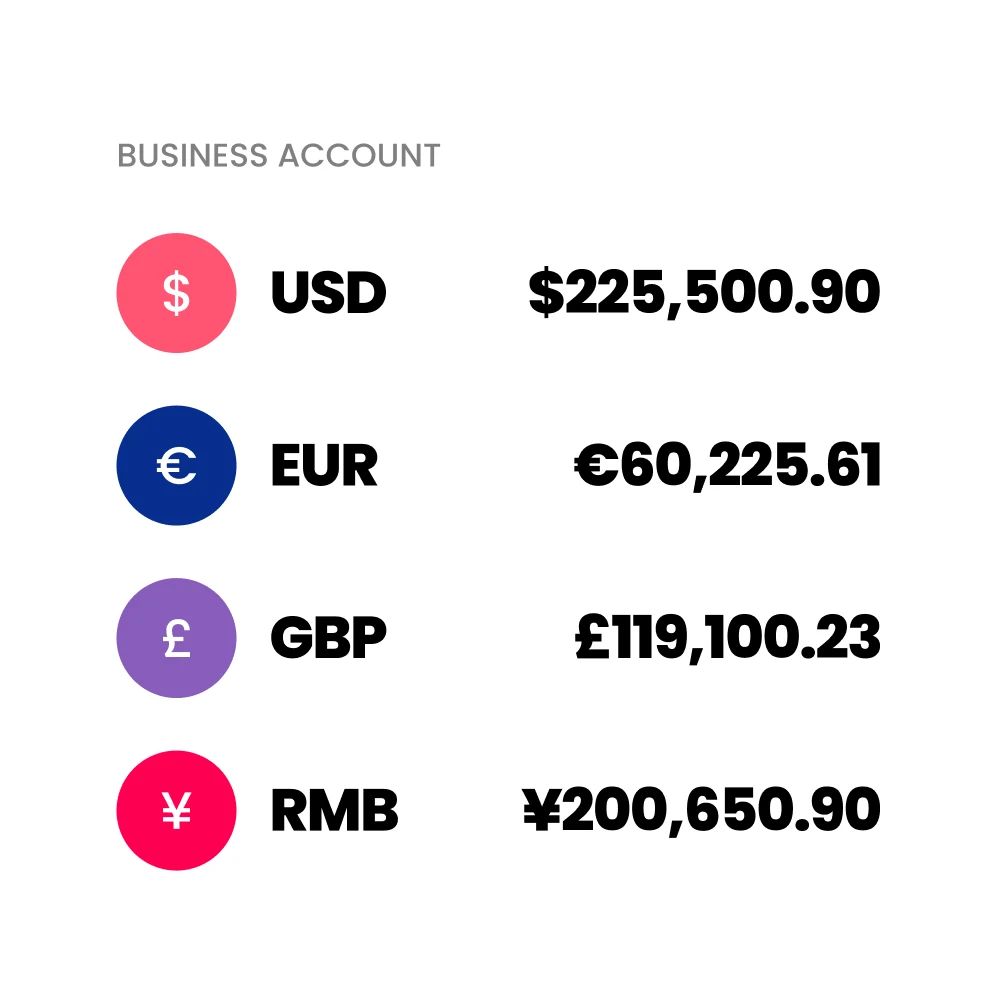
Digital banks typically allow businesses to hold multiple currencies in a single account, enabling finance teams to receive funds locally, pay suppliers in the same currency and convert only when timing and rates make sense.
The result is fewer unnecessary conversions and better control over cash positions across markets.
When businesses control when and how currency conversion happens, they can:
Over time, this protects margins in a way that fee reductions alone cannot.
Pricing and settlement speed matter, but day-to-day usability often determines how much time finance teams spend managing international payments.
With traditional banks, international transfers typically involve more manual steps and follow processes designed for occasional use.
Common challenges include:
These workflows work when international payments are rare. They become inefficient as volumes rise, currencies multiply or payment frequency increases.

Digital banks take a more integrated approach to international payments.
In practice, this usually means:
As a result, finance teams spend less time chasing payments and more time managing cash positions and planning activity across markets.
Speed and flexibility only matter when they sit within a robust regulatory framework. For UK businesses, trust comes from how providers manage risk, protect funds and apply controls in practice.
Traditional banks tend to rely on established, relationship-led compliance processes. These often include:

This approach prioritises caution and regulatory certainty. The trade-off is that reviews can slow payments, particularly when values increase or activity patterns change.
Digital banks design compliance into their payment flows. In practice, this usually involves:
Background checks allow payments to move faster while maintaining control and regulatory oversight.
Regardless of which model a business uses, due diligence should focus on:
Clear controls and reporting allow finance teams to understand decisions and access the information they need
WorldFirst is not a bank. We’re a regulated financial platform built specifically for businesses that trade across borders.
Rather than replicating full-service retail or commercial banking, we focus on the parts of financial operations that matter most to international traders: cross-border payments, foreign exchange and currency control.
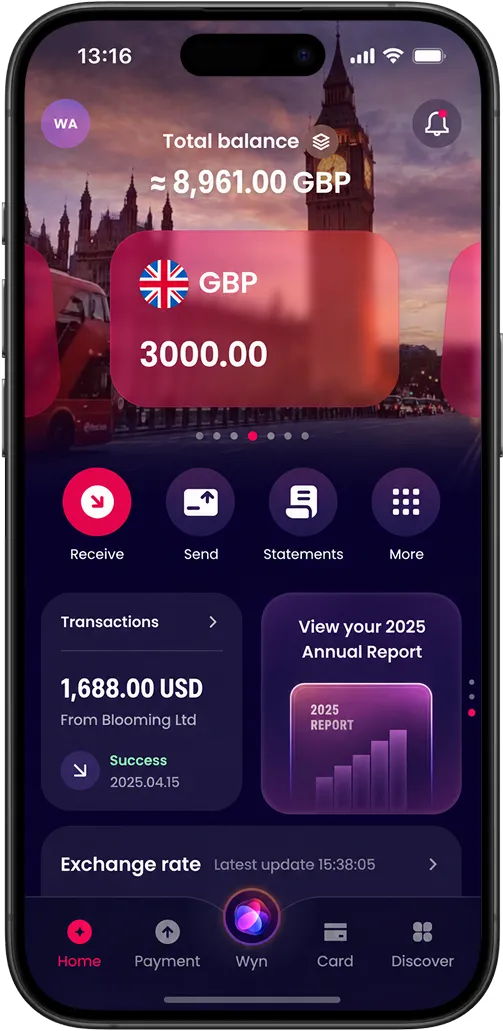
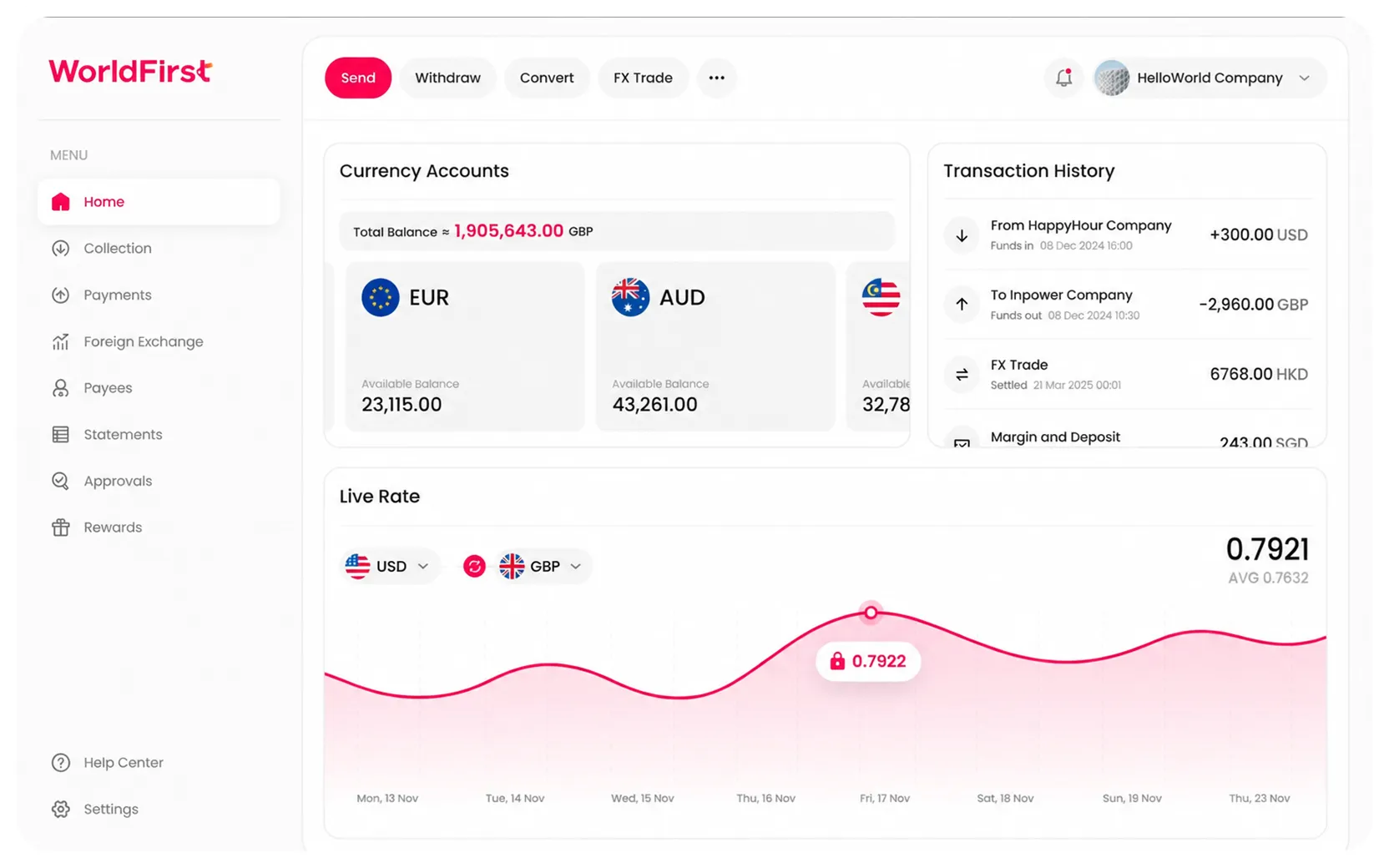
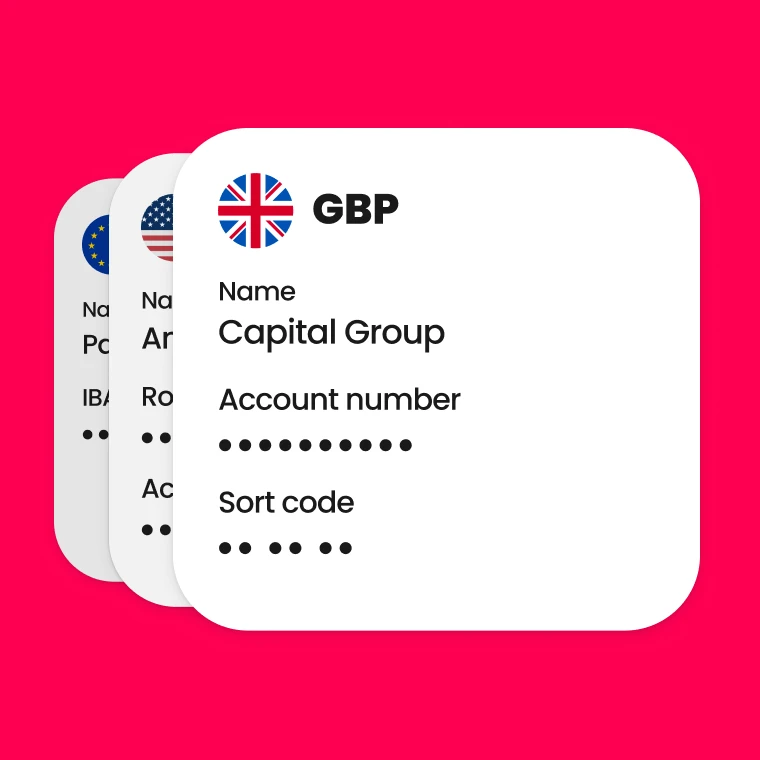
At the centre is the World Account, a multi-currency business account that allows companies to:
All activities run through a single platform, eliminating the need to manage multiple currency accounts or banking relationships.
In practice, businesses use the World Account to:
Businesses typically move from traditional banks to WorldFirst for operational reasons, including:
For companies that trade internationally, WorldFirst fits alongside or in place of traditional banking by addressing cross-border payment needs directly rather than treating them as secondary services.
Open a World Account to receive, hold and pay in multiple currencies and reduce unnecessary conversion and cross-border fees.
Sources:
Shawn Ma leads business development at WorldFirst UK, with a deep expertise in fintech, risk management and cross-border commerce.
Shawn Ma
Author
Choose a product or service to find out more
Save money, time, and have peace of mind when expanding your global business.
© 2026, Ant International or its affiliates
It looks like you're sending money to family or friends — that's a personal transfer, which is best handled through our app.
Sending money to family or friends? Download our app for the best experience.