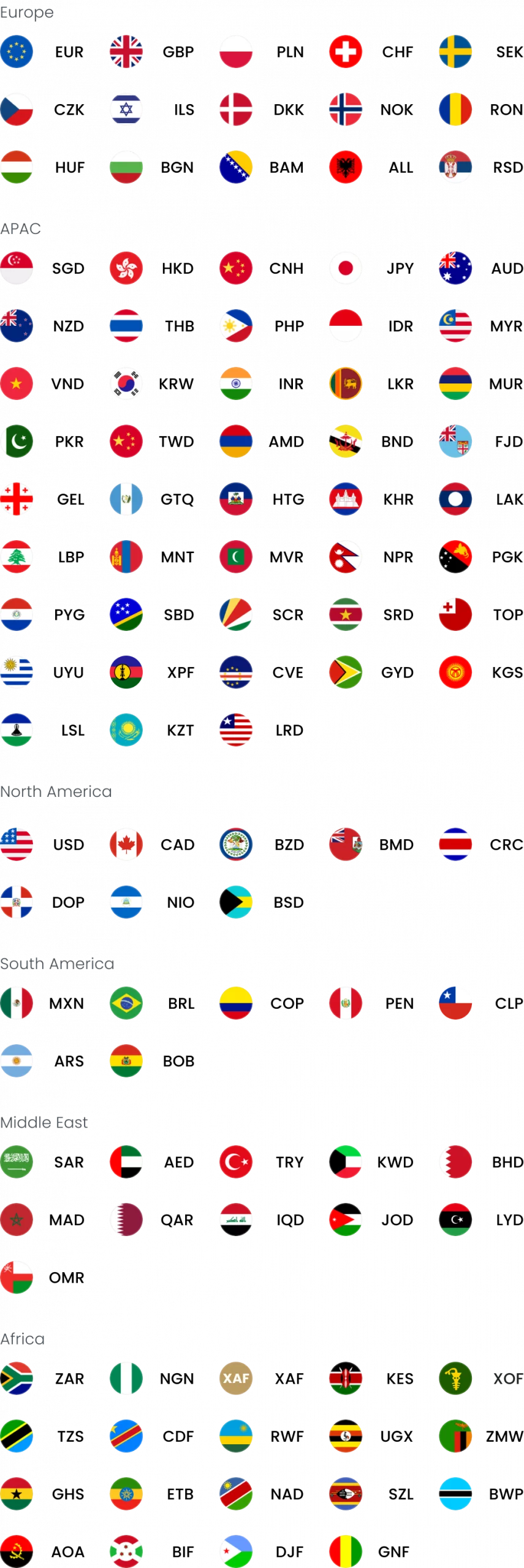
We provide coverage in South Asia and Middle East: servicing 210+ countries and territories.

WorldFirst Home > blog > Global Business Tips > How to send international payments: 6 options for businesses
Sending money across borders is still harder than it should be – slow, expensive and often frustrating.
Whether you’re paying a supplier in Shenzhen, withdrawing earnings from Amazon USA, or sending funds to a freelancer team in Europe, you’ve probably run into the same issues:
And yet, international payments are at the heart of how global business happens today. As such, you want to send and receive money across borders as easily as you move it locally – in a way that’s fast, affordable and in the right currency.
In this article, we’re exploring:
Get started with a WorldFirst account. Open your multi-currency account for free now and start collecting, converting and paying like a local.
There’s no shortage of ways to move money across borders. Some are built for speed, others convenience, and some were never built for modern business at all.
Here are six of the most common options, with their pros, cons and who they’re best suited for:
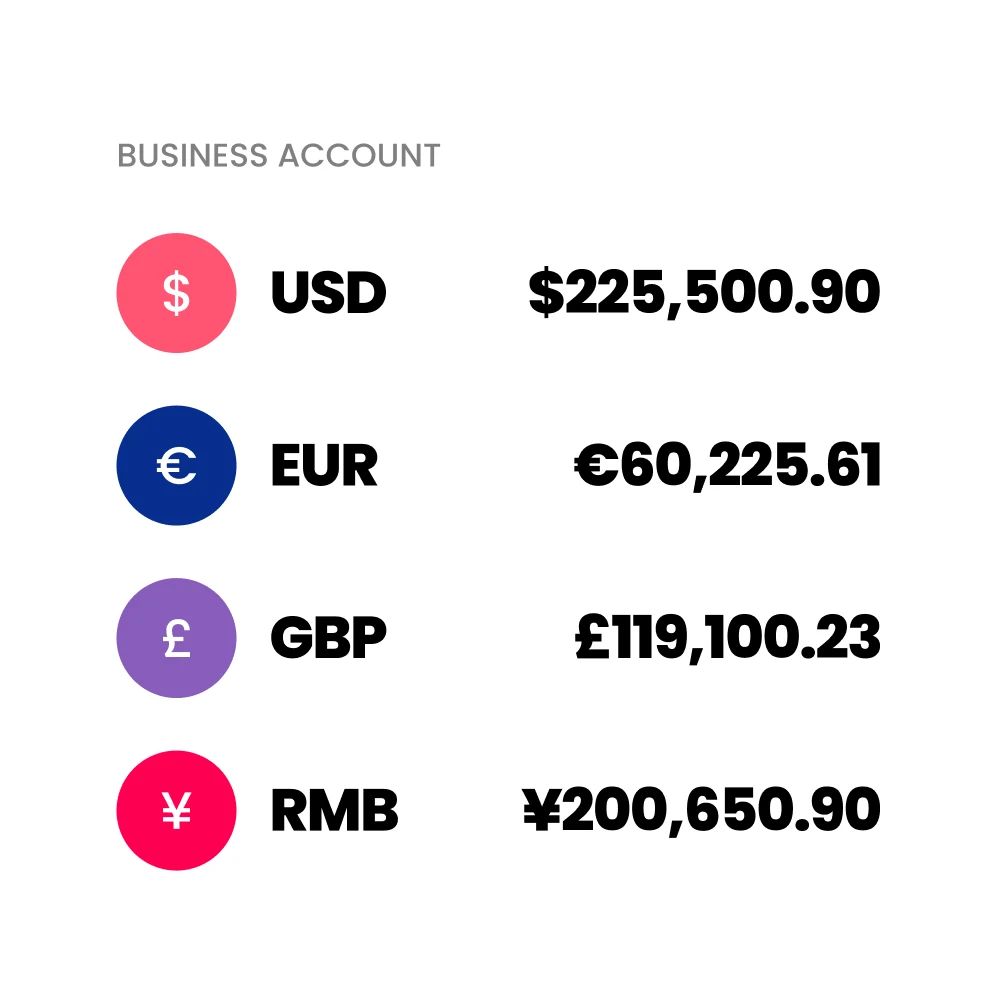
When you’re running an international business, juggling different currencies can quickly become a logistical headache. A multi-currency business account simplifies that.
Instead of needing separate bank accounts in every country you sell to (which often requires local residency or a business entity), you can use one platform to hold, pay and receive in multiple currencies – all under one login.
With WorldFirst for example, you can:
This makes it easier for customers, partners and marketplaces to pay you at domestic rates and without third-party fees. It’s especially useful if you’re selling on global marketplaces, sourcing from international suppliers or expanding into new markets.
Why it matters: Multi-currency accounts aren’t just about convenience. They can save your business time, reduce your costs and make it much easier to scale internationally without the complexity of setting up in each new market.
Best for: SMEs, marketplace sellers and digital businesses scaling across borders.
Before modern alternatives came along, the SWIFT network was the gold standard for sending money across borders – and for many banks, it still is.
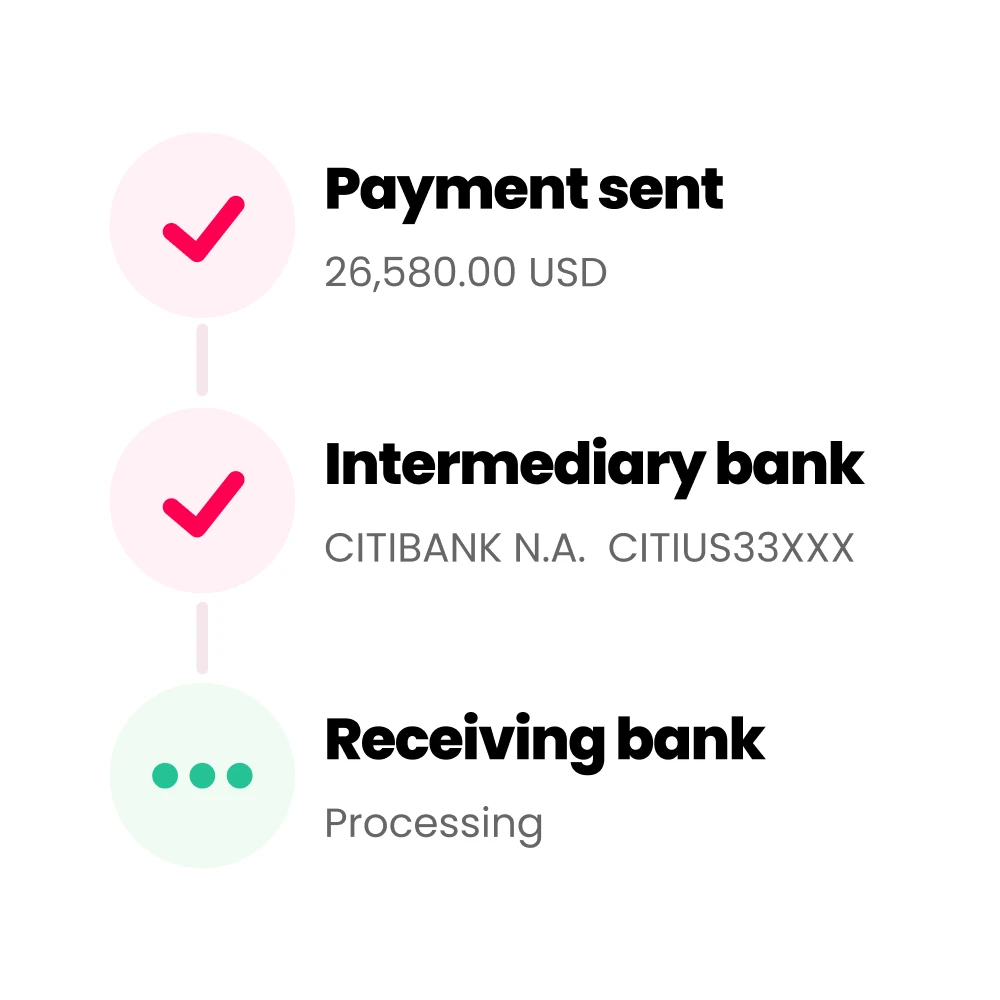
SWIFT (Society for Worldwide Interbank Financial Telecommunication) is a global messaging system used by over 11,000 financial institutions to securely communicate payment instructions. When you send a payment via SWIFT, your money doesn’t go directly to the recipient’s account. Instead, it may pass through a chain of intermediary banks, particularly if the sending and receiving banks don’t have a direct relationship.
Why it’s still used:
But there are some major trade-offs:
Best for: Large corporates with longstanding bank relationships, or businesses in regulated industries where compliance and established financial controls are prioritised over speed and cost.
If you’re sending or receiving money in euros within Europe, SEPA payments are often your most efficient option.
SEPA stands for Single Euro Payments Area. It’s an EU-led initiative that simplifies cross-border euro payments between EU countries, the European Economic Area (EEA) and a few non-EU countries like Switzerland and the UK. It essentially treats all euro transactions within this area as domestic payments, meaning they follow the same format, speed and pricing – regardless of which country the sender or recipient is based in.
Where SWIFT is a global messaging system used to move money between banks worldwide – with long settlement times and high fees – SEPA is a regional payment scheme specifically built for euro transactions in Europe. It uses local banking rails and standardised data formats to make payments cheaper, faster and more predictable.
Key benefits:
Limitations:
Best for: European businesses with euro-dominated operations, such as importers, exporters or service providers paying and receiving money within Europe.
Platforms like Wise and PayPal have become a popular payment method with individuals, freelancers and sole traders thanks to their simple user experience, fast transfers and upfront pricing. These services typically let you:
Unlike banks that rely on legacy systems and the SWIFT network, platforms like Wise often use domestic payment rails in both the sender’s and recipient’s countries. This “multi-local” model means funds arrive faster (sometimes within minutes or hours) and the final cost is visible upfront.
But these platforms aren’t always fit for business use:
Best for: Freelancers, small sellers or businesses making ad hoc international payments – but not scaling companies with complex payment flows or international teams.
Remittance services like Western Union and MoneyGram are designed for speed and accessibility, especially in areas where banking infrastructure is limited.
These services typically allow you to:
Plus, they’re often the only viable option for recipients without bank accounts, particularly in developing countries or cash-based economies, where digital payments are less common.
Remittance services do come with significant limitations:
While useful in very specific personal contexts, these services aren’t appropriate for companies. They lack the compliance features, reporting tools and cost-efficiency required for cross-border business operations.
Best for: Emergency personal transfers or sending money to individuals without bank accounts – not for SMEs or e-commerce sellers.
Prepaid and debit cards and digital wallets are popular tools for managing small-scale international spending, especially for individuals or employees who need to travel or make purchases abroad.
Platforms like Revolut, Wise or multi-currency cards like World Card allow you to:
As such, they’re ideal for managing minor business travel expenses, such as hotels, meals or transport abroad. And they help you avoid surprise FX fees on company cards while overseas.
While they’re convenient for spending, these solutions don’t always meet the needs of growing businesses when it comes to receiving or managing money at scale:
Best for: Solo operators or employees who need a simple way to spend internationally – not for businesses that need to send, receive and manage payments across borders.
If you’re a growing e-commerce brand or global SME, international payments aren’t just a back-office task. You might be collecting sales in euros, paying suppliers in renminbi and running payroll in dollars – all while trying to manage FX rates and transfer times across different platforms.
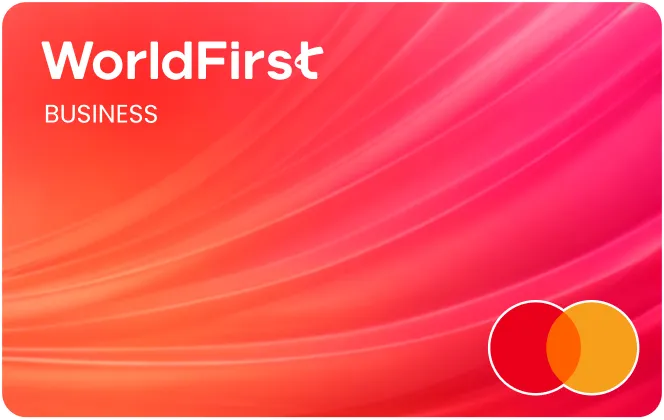
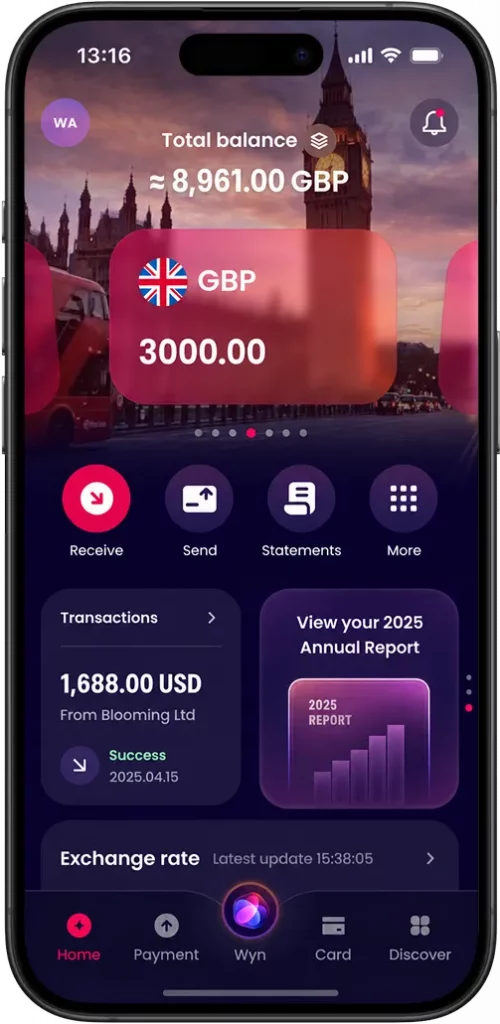
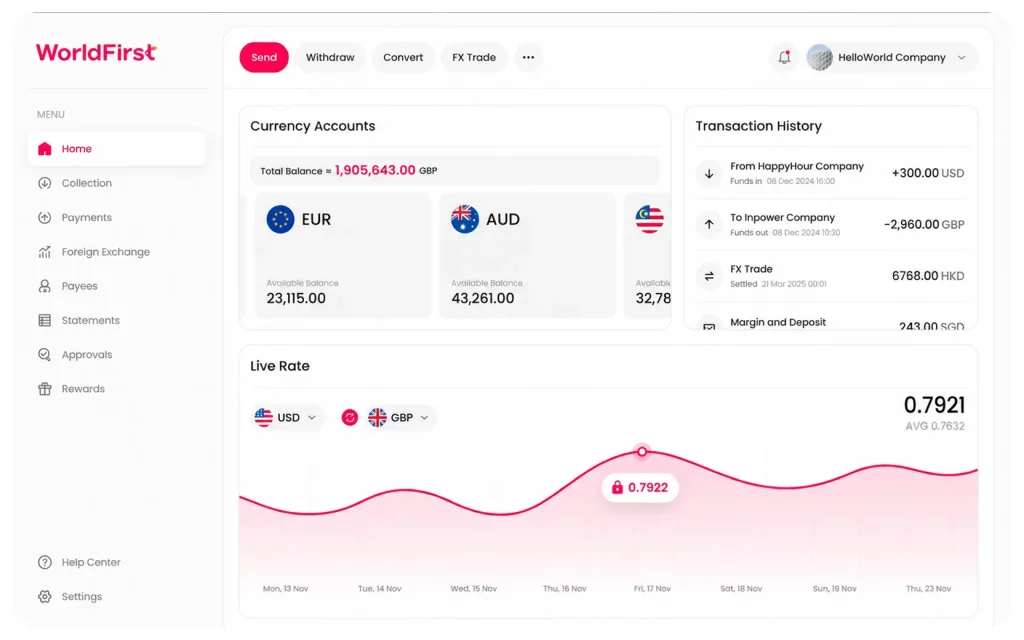
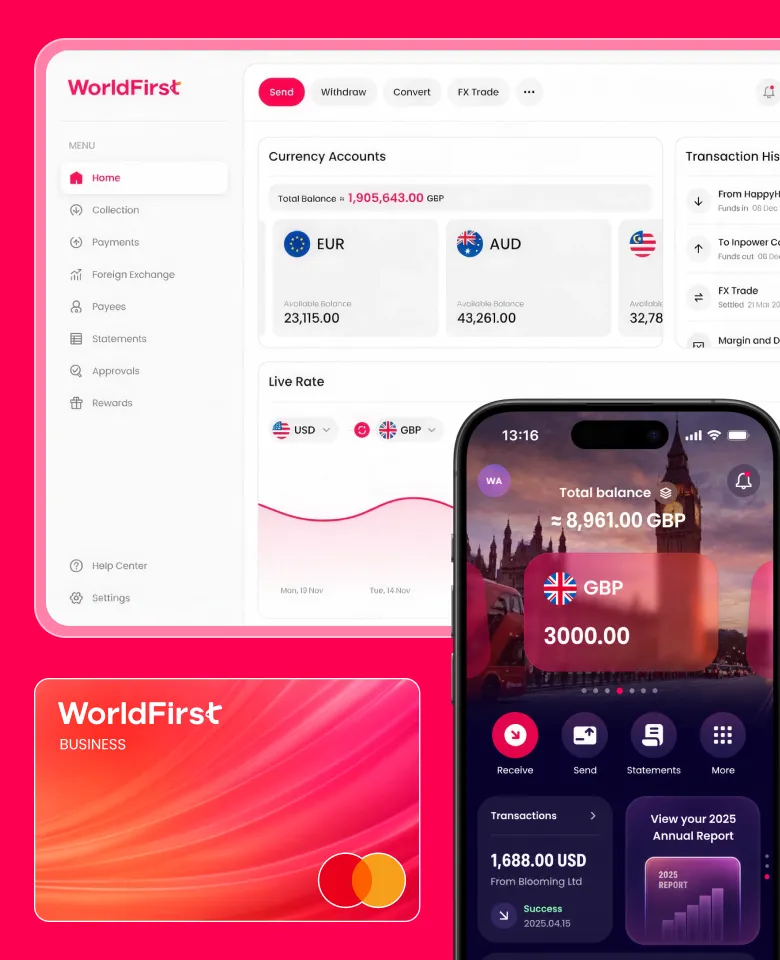
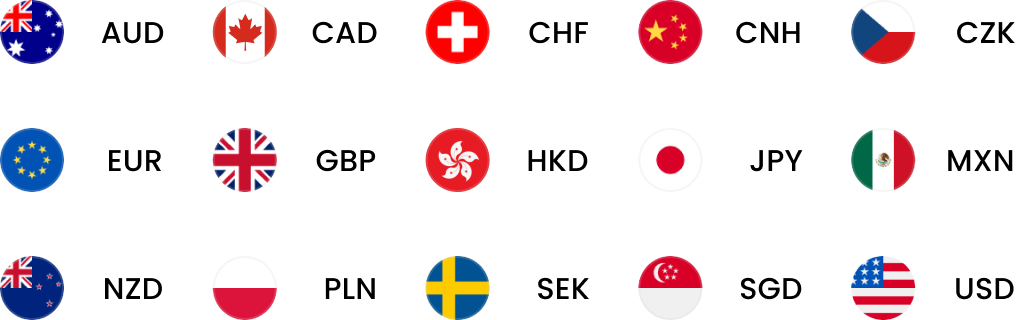
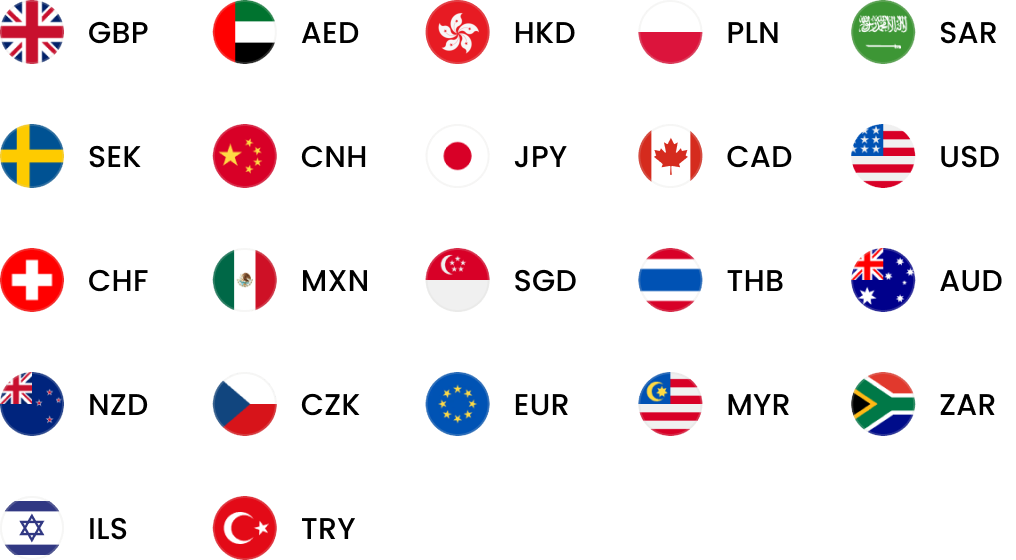
WorldFirst is a global payments platform designed precisely for ambitious businesses trading internationally. With the WorldFirst account, you can hold and manage balances in 20+ currencies, pay international suppliers in 100+ currencies and get local bank details (like a US routing number) all from a single login.
Whether you’re receiving income from Amazon or paying partners in China, WorldFirst makes it simple, secure and cost-effective to do business across borders. Below, we’ll walk through how it works – and why it could be a smarter alternative to conventional bank wires or personal finance apps.
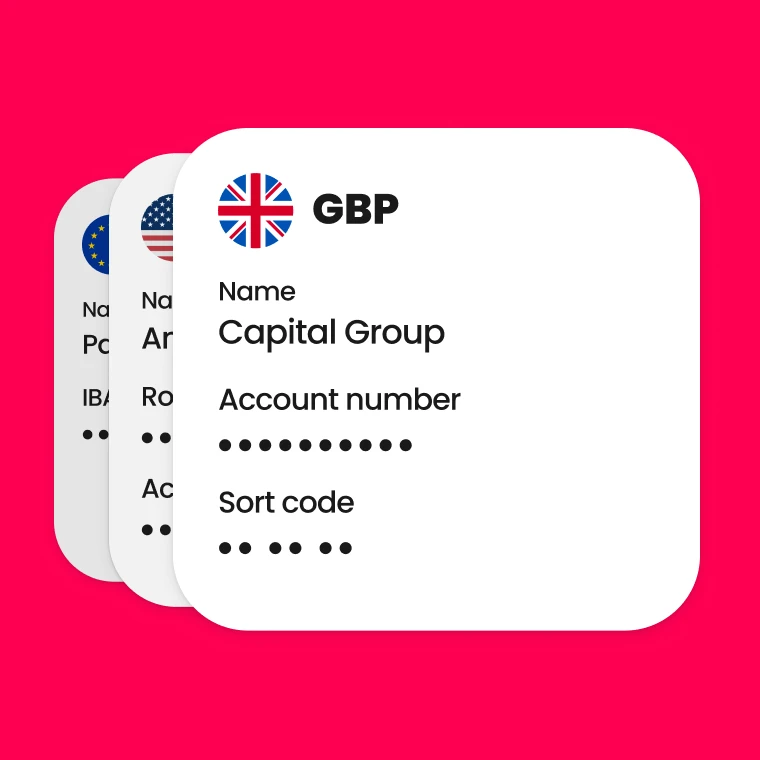
With a WorldFirst account, you can hold balances in over 20 major currencies – including USD, GBP, EUR, RMB, AUD and SGD – and receive local bank details for each one. Depending on the currency, you’ll get a US routing number, a UK sort code or European IBAN, so you can send and receive money like a local business.
That makes it easy to:
For international suppliers and digital-first businesses, it’s a simpler, smarter way to take control of your global cash flow without the need to open a bank account in every country.
Traditional international payments often rely on the SWIFT network, which can be slow, costly and unpredictable. WorldFirst takes a different approach.
By using local payment rails in over 60 countries, WorldFirst ensures your money moves faster and your recipients get paid in full, with no surprise deductions or delays. Here’s what that means in practice:
And if your business deals in multiple currencies or operates on tight margins, WorldFirst offers advanced FX tools to help you stay in control:
The result? Lower transfer costs, smoother supplier relationships and more predictable cross-border cash flow – all from one central account.
Unlike consumer money transfer apps, WorldFirst is designed specifically for the demands of fast-moving, international businesses. That means scalable tools, hands-on support, and automation where it counts.
Here’s how a WorldFirst account helps you streamline operations:
Paying Chinese suppliers has traditionally been one of the trickiest parts of global trade. Conventional methods like wiring money via SWIFT can be slow and expensive. You often face long settlement times, opaque fees and limited visibility once the funds are sent.
WorldFirst removes these obstacles, helping you pay Chinese suppliers faster, more affordably, and with full confidence:
Running a cross-border business often means juggling multiple bank accounts, currencies and platforms – each with its own fees, timelines and logins. It’s a recipe for inefficiency and lost revenue.
WorldFirst simplifies this with one account built to unify your global operations:
Whether you’re selling in five countries or sourcing from three continents, WorldFirst gives you one login to manage the entire picture — reducing admin and unlocking greater control over your international finances.
Start simplifying your international payments today. Open a WorldFirst account for free in minutes and get local account details in 20+ currencies.
Glamour Empire, a UK-based maternity and womenswear brand, was rapidly expanding across Europe – with 85% of its sales coming from Germany.
But managing cross-border FX payments and collecting revenue in multiple currencies was becoming time-consuming and stressful. Their previous provider didn’t offer local support, and setting up bank accounts in new regions (like the US) was a bureaucratic nightmare.

Monika, Glamour Empire’s founder, switched to WorldFirst after being offered:
Now, Glamour Empire sells seamlessly across Germany, Spain, Italy, France, Sweden, the Netherlands, Poland – and formerly, the USA – without the admin burden of setting up local bank accounts or chasing support.
Read more: Fashioning success with e-commerce brand Glamour Empire
Whether you’re expanding to new marketplaces, paying suppliers overseas or collecting revenue in multiple currencies, sending international payments doesn’t have to be complicated or expensive.
From traditional bank transfers to specialist remittance apps, there are plenty of options on the market. But few are built with global e-commerce businesses in mind.
WorldFirst combines the flexibility of a multi-currency account with the practical tools growing businesses need:
If you’re looking for a simpler way to run your international business, open a WorldFirst account for free today and start sending international payments with confidence.
Choose a product or service to find out more
Save money, time, and have peace of mind when expanding your global business.
© 2026, Ant International or its affiliates
It looks like you're sending money to family or friends — that's a personal transfer, which is best handled through our app.
Sending money to family or friends? Download our app for the best experience.