




























Discover how to source products, vet suppliers and navigate Alibaba for your business needs
Key takeaways
- Alibaba connects global buyers with suppliers, offering over 200 million products across categories like electronics, clothing and accessories
- The platform supports bulk purchasing, with many sellers offering discounts for MOQs
- Alibaba provides tags like ‘Verified’ and ‘Gold’ for vetted suppliers, ensuring buyer security
- Secure international payment methods are available
- The Alibaba Group includes other e-commerce platforms like Taobao, Tmall, AliExpress and 1688.com
Introduction
Alibaba is one of the biggest B2B marketplaces in the world. Founded in 1999 by Jack Ma, it’s a wholesale e-commerce platform that helps buyers connect with sellers.
Over 200,000 suppliers list more than 200 million products from various categories, including clothing, electronics, accessories, fashion devices and more. The marketplace attracts 20 million active buyers from 190+ countries who send 280,000+ inquiries every day.
Sourcing from Alibaba allows businesses to connect directly with suppliers and manufacturers based in China. You get access to a secure platform that streamlines sourcing, payments and dropshipping.
In this blog, we take a look at everything you should know about buying from Alibaba.
What is Alibaba?
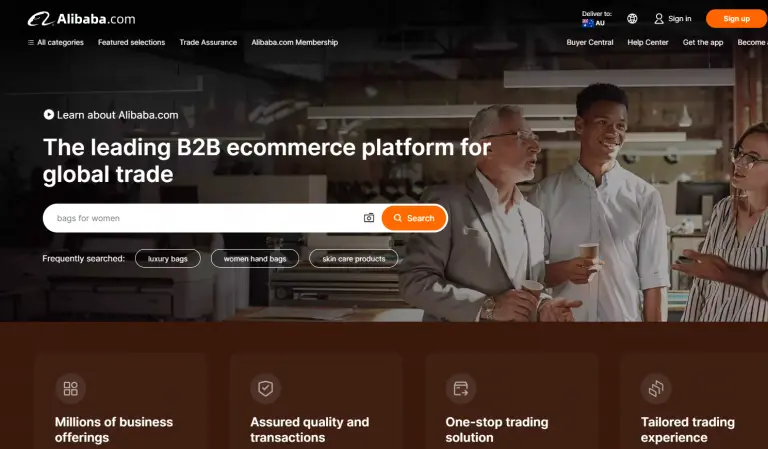
Alibaba is a global B2B e-commerce platform that connects buyers with manufacturers, wholesalers and suppliers. Buyers can check product listings across dozens of categories, compare products from different suppliers, connect with pre-vetted suppliers, make secure payments and track shipments–all through the same platform.
Here are a few things you should know about Alibaba:
It’s a wholesale platform: While buying single products from Alibaba is possible since most products have zero MOQ requirements, it is a B2B marketplace. The real benefit of buying from Alibaba lies in sourcing bulk products. Most sellers offer discounts on large MOQs. You can also place orders for white label and private label products. Many brands and retailers (e-commerce and brick-and-mortar brands) source their products from Alibaba.
It only sells physical products: Alibaba is known for selling physical products. You won’t find digital products like eBooks or apps on the platform.
It doesn’t sell products of its own: While Alibaba is often called the Amazon of China, it doesn’t sell its own products like Amazon. Instead, it only connects buyers with suppliers.
Apart from Alibaba.com, there are several other e-commerce platforms that are part of the Alibaba Group, including:
Taobao: It’s a popular C2C and B2C platform that caters to medium and low-end markets.
Tmall: As the sister brand of Taobao, it’s also a B2C marketplace that allows Chinese customers to access leading brands. Overseas brands can easily list their products on Tmall Global to expand their reach in the Chinese market.
AliExpress: It’s also a B2C e-commerce marketplace that allows global customers to buy products from Chinese suppliers. If you are new to e-commerce, you can consider sourcing products from AliExpress or even dropship from AliExpress. Although, the product pricing may be slightly higher than Alibaba.
1688: Similar to Alibaba, 1688.com is also a B2B marketplace that connects businesses with suppliers, wholesalers and manufacturers based in China. The major difference between 1688 and Alibaba is that 1688 helps domestic buyers connect with suppliers in China. Alibaba, on the other hand, is focused on helping global businesses connect with Chinese suppliers. To learn more about the differences between the two, take a look at our 1688 vs Alibaba guide.
Is Alibaba legit?
Alibaba has been around for more than two decades. The Alibaba Group is a publicly traded company listed on the New York Stock Exchange and Hong Kong Stock Exchange.
While the website itself is legitimate and Alibaba has a good reputation in the global e-commerce industry, you should still be careful when connecting with new suppliers and manufacturers.
Vet every new supplier before you decide to work with them. You can also leverage the various security features that Alibaba has in place to protect customers. For instance, you can check the suppliers with the verified tag to only connect with those who have been pre-vetted by Alibaba.
How does Alibaba work?
As a wholesale platform, Alibaba is majorly used by buyers looking to purchase large quantities of products at bulk prices. You can find ready-to-sell products, private label products and custom products. It’s also possible to negotiate directly with suppliers to get better prices.
This is usually how Alibaba works:
- Search for the products you want to buy on Alibaba.com
- Look into the product specifications and find suppliers that offer the product
- Connect with suppliers to negotiate pricing, discuss product customization and finalize shipping methods
- Place the order on Alibaba and wait for the goods to be delivered
Note: If you are placing a dropshipping order, the exact steps may differ.
Pros and cons of sourcing from Alibaba
Pros
Wide product selection: You get access to a wide selection of products across various categories, including clothing, electronics, accessories, stationary and more
Support for international shipping: Suppliers on Alibaba can ship across all the major countries. Most suppliers can also help you ship products to Amazon warehouses, making it easier to sell your products through Amazon FBA
Availability of product samples: You can ask suppliers to send product samples before you place a large order. Prices for sample products are usually higher
Scalability: When sourcing products, you don’t have to worry about setting up a factory or expensive equipment costs. You can scale up or down as your business requirements change over time
Reliable suppliers: Alibaba takes several measures to vet suppliers and ensure you connect with only experienced and trusted suppliers
Cons
Long shipping time: Since most suppliers on Alibaba are based in China, shipping time can vary a lot depending on your location and mode of shipping
Communication challenges: While Chinese suppliers on Alibaba are used to dealing with global customers, they may still have limited English knowledge, which could potentially lead to communication issues.
Quality control: You are essentially placing bulk orders with a manufacturer you haven’t met face to face. While you can order product samples to get a sense of product quality, ensuring each product you order adheres to the required quality standards can be challenging. Take a look at how to manage quality control when sourcing from China.
How to buy from Alibaba
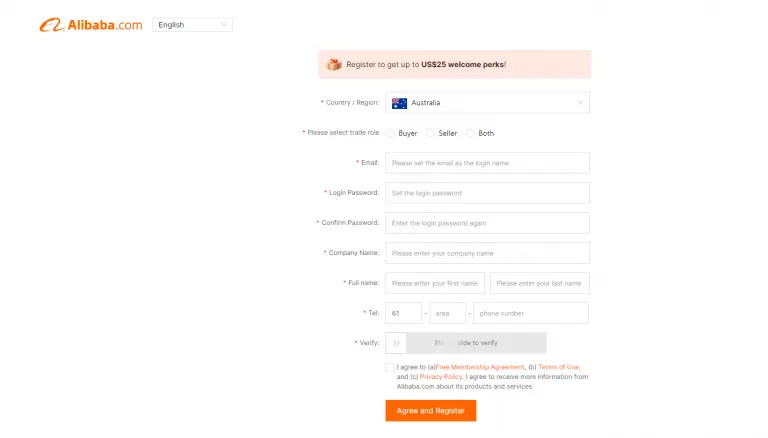
Step 1: Create an Alibaba account
It’s possible to browse products without signing up on Alibaba, but you’ll have to set up an account to connect with suppliers, place orders and track shipments.
Step 2: Search for products
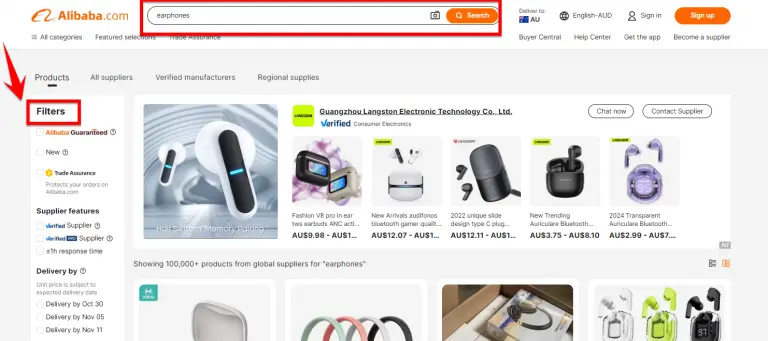
Go through the product directory on Alibaba to find your desired products. You can search for products by checking the different categories or typing the relevant keywords. Try to use more detailed keywords for accurate results.
Image search is also possible on Alibaba if you have a specific product in mind. Click the camera button on the search bar to upload the product image.
You can also use filters to refine your search results and find required products. You can use filters for different product features, MOQs and supplier tags (verified or not).
Step 3: Look for reliable suppliers
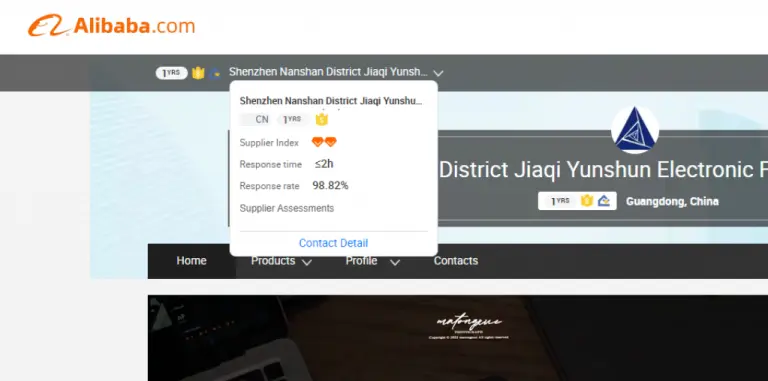
The next and most important step is to find reliable suppliers on Alibaba. Always make sure to check the tags Alibaba has provided to suppliers.
Alibaba provides different certifications to suppliers depending on their experience and background checks that have been previously conducted. The main supplier tags include:
Gold suppliers: These are paid members who have already been verified as registered businesses
Verified suppliers: These suppliers’ production capabilities, process controls and business registration have already been pre-vetted by third-party agencies through offline or online means.
Trade Assurance: These suppliers access payments through Alibaba.com. As the customer, you also get payment protection in case your order is delayed or not delivered.
Step 4: Contact and negotiate with suppliers
When you have already shortlisted suppliers, you should get in touch with them to discuss order details. Here are a few tips to keep in mind when contacting suppliers for the first time.
- Showcase that you’re a serious customer with a genuine business. You can start by introducing yourself and providing details about your business. You can also share your company details, website and email address
- Set clear product expectations. Be as specific as possible about the product specifications you require, including colours, customisation, branding and safety. Unclear product details can lead to more problems later
- Ask questions to ensure the supplier is a good fit for your business. Look into their prices, product certifications, available stock, manufacturing capabilities and shipping timelines
Remember that the price you see on product listings is not always the final price. You can always negotiate with the supplier to get the best price per unit. Check the prices of similar products from other suppliers to gauge the market price. If a supplier seems to be charging more than others, you should look into why. The supplier may just have a better quality product than the others.
Also, check the MOQs required by the supplier. While the supplier may offer a lower price per unit, they could have a high MOQ. You can instead negotiate on MOQs by making a pre-payment for small orders.
Step 5: Make secure payments
Alibaba supports various international and domestic payment methods, making it easy for you to place orders. The platform also offers Trade Assurance, which is a secure way for you to make payments. When you place orders with suppliers enrolled in Trade Assurance, the payment stays in an escrow with Alibaba and it is only transferred to the supplier when you confirm you have received the order.
Some of the main payment methods supported by Alibaba include:
- Telegraphic transfer (T/T) or bank wire transfer
- PayPal
- Debit cards and credit cards
- Apple Pay
- Google Pay
- ClearPay
- AfterPay
Depending on your agreement with the supplier, you may have to pay 30-50% upfront and the remaining on deliver
Step 6: Track your shipment and follow up if necessary
Once the order is shipped, the supplier will share tracking details with you, along with the estimated delivery timelines. You can track the shipment and check the product quality thoroughly after it’s delivered.
If you have ordered custom products or placed an order directly with a manufacturer, it can take longer to get your products shipped. You should follow up with the manufacturers and ensure there are no issues.
Taking proactive quality control measures to ensure high product quality every time is also a good idea. If your business doesn’t have a presence in China, you can consider partnering with a third-party inspection agency.
One World Account for managing supplier payments and marketplace collections
WorldFirst is a global payment provider that helps online sellers and global businesses streamline international transfers. With one World Account, you can pay overseas suppliers and collect payments from 130+ marketplaces. Repatriate the collected funds to your bank account any time or use the funds to pay suppliers, tax authorities and other business partners.
Your World Account is a multi-currency account that allows businesses to open 15+ virtual local currency accounts for sending, receiving and holding funds in international balances. Supported currencies include GBP, USD, EUR, AUD, JPY, NZD, SGD, HKD, CNH and CAD.
Disclaimer: The information contained is general only and largely our views. Before acting on the information you should consider whether it is appropriate for you, in light of your objectives, financial situation or needs. Although information has been obtained from and is based upon multiple sources the author believes to be reliable, we do not guarantee its accuracy and it may be incomplete or condensed. All opinions, estimates, mentioned products/services and referenced material constitute the author’s own judgement as of the date of the briefing and are subject to change without notice. WorldFirst shall not be responsible for any losses or damages arising from your reliance of such information.