


























Learn how to sell on Amazon US from NZ with the right strategy for payments, logistics and marketplace success
Key takeaways
- New Zealand sellers can list products on Amazon US by registering on the platform and meeting product and tax requirements
- Holding a USD account instead of converting funds to NZD every time you get a payment can help avoid high foreign exchange fees and increase profit margins
- Choosing the right fulfillment and shipping method is essential for cost-effective order delivery and customer satisfaction
- Amazon charges various selling fees, including subscription, fulfillment and referral fees, which sellers must factor into pricing
- A multi-currency account can simplify payments to suppliers, streamline currency conversions and help sellers scale globally
Amazon US makes up for 82% of Amazon’s total global customer base. By the end of 2025, Amazon will occupy 40.9% of the total US e-commerce market.
If you’re a New Zealand seller looking to expand into the US, Amazon is a great starting point.
But successfully selling on Amazon US isn’t as easy as signing up for a new account and listing products. You need to choose the right products that appeal to the American audience, streamline logistics to get your products from the suppliers to the US and manage cross-border payments while ensuring the fluctuating foreign exchange rates don’t cut through your profits.
In this blog, we take a look at everything e-commerce sellers from New Zealand should know about selling on Amazon.
Can I sell on Amazon US from New Zealand?
Yes, you can sell products on Amazon US from New Zealand by registering as a seller on the Amazon US website. But there are a few key points that you should keep in mind:
- International sellers can collect payments in a USD bank account or have Amazon convert funds to NZD (Amazon deducts its own foreign transaction fee and currency conversion fees in this case)
- The products you list on the online marketplace should be approved for sale in the US
- You should understand your US tax obligations and requirements
- You need to secure your product barcodes (GS1, GTIN, EAN, JAN, UPC) or seek an exemption
- If you plan to sell products under your brand name, secure approval for it
Why should you sell on Amazon USA from New Zealand?
Here are some of the many reasons to sell on Amazon US:
- Bigger sales potential: Expanding your e-commerce business into the US gives you the ability to reach a much larger market with a higher purchasing power than New Zealand
- Growing US-NZ trade: The US is the second-largest export destination for New Zealand goods (as of 2024), right behind China. In 2024, New Zealand’s exports to the US exceeded $9 billion.
- Diversification of revenue streams: Selling products on Amazon US allows you to diversify your revenue streams beyond the domestic market
- Competitive advantage: You can offer products in the US market that may be too saturated in New Zealand
- Support for global expansion: You can simplify your global expansion into the US by benefiting from Amazon’s supply chain solution, advertising and brand tools, and vast customer base
- Low upfront costs: You don’t need a physical presence in the US to launch your Amazon store; just set up inventory and pay Amazon’s monthly seller fee
- Risk mitigation: Test demand for NZ products with small batches before scaling
Create your Amazon.com selling account: Steps to start selling on Amazon US on NZ
Step 1: Register as a seller
Go to Seller Central and register as a new seller. With a North American seller account, you can sell directly in the US, plus Canada, Mexico and Brazil.
When signing up, you’ll be required to provide the following information:
- Your name and a government-issued ID
- Phone number and email address
- An international credit card for paying monthly seller fees
- Bank account information for collecting payments
- Proof of address
- Tax information
If you’re not using a US bank account to collect sales, you can use the Amazon Currency Converter to deposit your US sales proceeds into your NZD bank account. However, Amazon charges its own foreign transaction fees and applies market exchange rates, likely with a built-in markup, reducing your overall earnings and adding unpredictability.
To avoid these fees and gain more control over your funds, consider WorldFirst’s multi-currency account. You can open a virtual USD receiving account without a US address or the hassle of setting up a traditional US bank account.
With World Account, you can:
- Collect payments from Amazon US and 130+ other marketplaces in 20+ currencies
- Hold funds in multiple currencies and convert them at competitive rates
- Use the received funds to pay international suppliers, marketing agencies, or US-based shipping partners directly in USD, without unnecessary conversions
- Lock in exchange rates for up to 24 months with firm orders and forward contracts, helping you manage revenue fluctuations
Opening a World Account and receiving payments is free. You can also get multi-currency debit cards for your team to make payments easier.
Step 2: Decide what to sell
Amazon suggests reviewing the US taxes and regulations, along with product compliance and listing restrictions, before you decide what you want to sell.
Next, check the best-selling products under each category to see what’s trending in the marketplace right now. You can also use Amazon research tools like Helium10 and JungleScout to get deeper insights into the most popular products on the platforms.
Here are some of the main factors you should consider:
- How is the demand for the product?
- Will you be able to make a reasonable profit margin after considering all the other factors?
- How much will it cost to source and ship the products to the end customers?
- Is the product category already saturated?
- Can you offer competitive pricing, at least in the start, to get ahead of other regional sellers who already have high ratings and reviews?
Step 3: List your products
When listing products on Amazon for the first time, you’ll get two options: You can either match offers to existing product pages or create new pages for your unique products.
If you are creating a new product page, start by identifying important search keywords that can increase organic traffic and boost the visibility of your product listings. Even if you are adding an offer to an existing listing, you still get the option to include more details or product images (subject to Amazon’s approval).
Here are some important factors to keep in mind when creating product listings:
- Product titles and descriptions should include target keywords
- Product images should always adhere to Amazon image guidelines
- All listings should have universal product codes (UPC) to identify products
If you want to sell your own branded products on Amazon, you’ll have to enroll in the Amazon Brand Registry before you can list your products in the US. If your product is part of a brand that’s already listed on the Amazon Brand Registry, you need to be a brand representative or an authorized reseller to be able to list the products.
Step 4: Choose a fulfilment and shipping method
As an international seller, you need to manage two shipping processes:
Shipping from the factory to US warehouses
If your supplier is based in China, you can use Amazon Global Logistics to ship your products directly to Amazon fulfilment warehouses in the US. Alternatively, you can partner with freight forwarders who specialise in cross-border shipping to manage the entire shipping process for you.
Delivering goods to customers
Once your stock arrives in the US, you need to plan last-mile delivery. Here are two ways to do that:
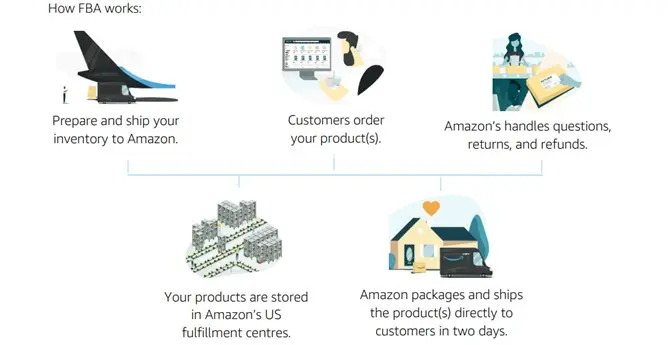
- Fulfilment by Amazon (FBA): You ship goods to one of Amazon’s warehouses and Amazon handles the entire order fulfilment on your behalf. There’s separate fees when you opt for FBA.
Amazon claims that shipping with FBA ends up costing 70% less per unit, as compared to other US fulfilment services. You can take a look at the FBA revenue calculator to estimate how much you’ll be paying Amazon for storing your products and managing shipping.
- Fulfilment by merchant (FBM): You ship and fulfil orders on your own. You can also use the Amazon Buy Shipping tool to easily purchase and print shipping labels for your orders and get access to discounted rates for UPS, USPS, FedEx and Amazon Shipping.
What does it cost to sell on Amazon US from NZ?
Take a look at the main fees you’ll be expected to pay as an Amazon US seller:
Monthly subscription fees
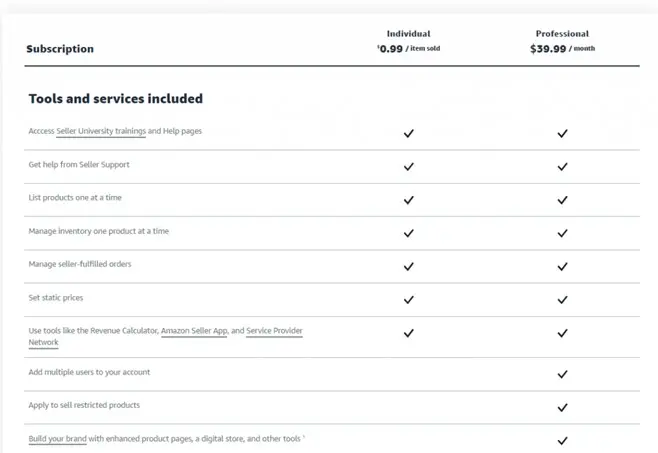
On the professional selling plan, you’ll have to pay USD $39.99 + GST per month.
There are also individual selling plans for sellers who don’t expect to move more than 40 products a month. There’s no subscription fee for individual sellers. Instead, you must pay a fixed closing fee of $0.99 per item sold.
Amazon FBA fees
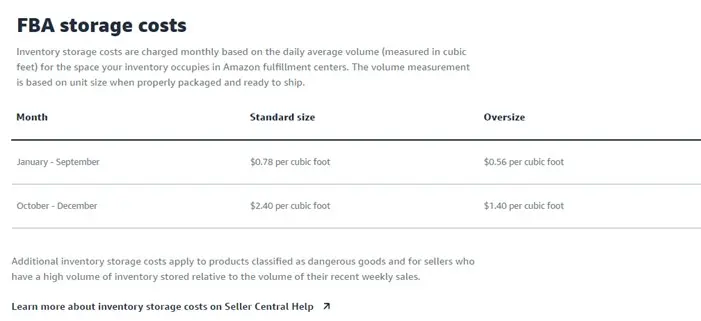
If you are opting for Amazon FBA, you will have to pay fulfilment fees and inventory storage fees, which will depend on the size and volume of your products, along with how long they stay in storage. There is a separate long-term storage fee that’s charged for inventory that doesn’t get cleared within 365 days.
Fulfilment fees
This covers the costs of packaging, delivery and customer service for all the products sold. Usually, it’s a flat fee that’s charged per product unit and the fee depends on the weight and size of the product.
Closing fees
There can also be additional fees when you sell items under the media category, which can include music, books, software, video games and DVDs.
Referral fees
All the items that you sell on Amazon will be charged a referral fee. It ranges from 6-45 percent and the exact amount will depend on the product category and price.
For a full list of fees, visit Amazon’s Seller Central hub.
While Amazon’s fees are just one part of your costs, you should also factor in the following when pricing your products:
- International shipping costs
- Customer service expenses (if you will be fulfilling orders yourself)
- Currency conversion fees (for converting USD to NZD)
- Taxes and duties
- SaaS tool costs (for marketing or business management)
Collect Amazon funds like a local with WorldFirst
A major hurdle for Kiwi businesses selling on Amazon US is handling cross-border payments.
As an overseas seller, you’ll be required to manage international payments on several fronts:
- Payments to suppliers based in China
- Payments to shipping companies, dropshipping agents, or freight forwarders
- Payments from customers in the US
When you’re operating on tight profit margins, choosing an international payment provider that offers fast, secure and cost-effective multi-currency payments is crucial.
With WorldFirst, you can streamline cross-border transactions while protecting your bottom line.
A World Account lets you:
- Get access to 15+ local currency accounts including USD, GBP, EUR, JPY, CNH, HKD and AUD
- Collect payments from 130+ global marketplaces and payment gateways, including Amazon, eBay, AliExpress and Stripe
- Hold funds or pay international suppliers directly from your account (including 1688.com suppliers)
- Repatriate funds anytime with competitive exchange rates
- Move and exchange currencies seamlessly between accounts
Disclaimer: The information contained is general only and largely our views. Before acting on the information you should consider whether it is appropriate for you, in light of your objectives, financial situation or needs. Although information has been obtained from and is based upon multiple sources the author believes to be reliable, we do not guarantee its accuracy and it may be incomplete or condensed. All opinions, estimates, mentioned products/services and referenced material constitute the author’s own judgement as of the date of the briefing and are subject to change without notice. WorldFirst shall not be responsible for any losses or damages arising from your reliance of such information.