





























Starting an online store can help Malaysian businesses reach more customers, build their brand, and grow beyond traditional sales channels. Shopify Malaysia gives businesses the tools to create and manage an e-commerce store without building everything from scratch.
But setting up a Shopify store involves more than adding products and choosing a theme. You’ll need to consider costs, payments, taxes, and shipping, as well as currencies and cross-border payments if you plan to sell internationally.
This guide explains how to start a Shopify store in Malaysia, what it costs, what to prepare before selling, and how to expand into international markets while managing international payments with WorldFirst.
Key Takeaways
- Shopify Malaysia provides the tools to build and manage an online store, making it suitable for businesses selling locally or internationally.
- Understand the costs, business registration, tax obligations, product requirements, and fulfilment involved before launching your store.
- Setting up a Shopify store involves choosing a plan, adding products, customising your store, configuring payments and shipping, setting taxes, testing, and launching.
- If you plan to sell internationally, prepare for foreign currencies, cross-border payments, international shipping, taxes and duties, and overseas supplier payments. WorldFirst can help you receive and manage Shopify earnings in 20+ currencies.
What Is Shopify?
Shopify is an e-commerce platform that helps businesses create and manage an online store. It provides the tools needed to showcase products, manage inventory, process orders, accept customer payments, and track store performance from one platform.
For Malaysian businesses, Shopify can help build a branded online store for customers in Malaysia and overseas. It supports different sales channels and integrations, making it suitable for businesses at different stages of their ecommerce journey.
Some of Shopify’s key features include:
- Storefront builder: Create and customise an online store using Shopify’s themes and design tools.
- Product and inventory management: Add products, manage variants, track stock and organise products into collections.
- Checkout: Give customers a streamlined way to review their orders and complete purchases.
- Payment integrations: Connect supported payment providers to accept payments from customers.
- Order management: Manage customer orders, fulfilment, and order status from the Shopify admin.
- Analytics: Track sales, orders, customer activity, and other performance metrics.
- Marketing and sales channels: Promote products and connect with channels such as social media and other e-commerce platforms.
Learn more: Best e-commerce platforms in Malaysia
Who Is Shopify Suitable for in Malaysia?
Shopify can suit a wide range of Malaysian businesses, from small businesses starting their first online store to established brands looking to expand their e-commerce presence. It can also be useful for businesses that want to sell internationally and build a direct sales channel alongside marketplaces.
Why Should Malaysian Businesses Use Shopify?
For Malaysian businesses, having your own online store can give you more control over how you present your brand, reach customers, and grow your e-commerce business. Shopify provides the infrastructure to build that store while giving businesses flexibility as their needs change.
Here are some reasons Malaysian businesses may choose Shopify:
- Build an independent online store and brand: Create a dedicated storefront that reflects your brand, products, and customer experience.
- Have greater control over the customer experience: Control your store’s design, product presentation, checkout journey, and customer communications.
- Sell directly to customers: Build a direct sales channel instead of relying solely on third-party platforms to reach shoppers.
- Connect with other sales channels: Extend your reach through social media, online marketplaces, and other supported sales channels.
- Manage your ecommerce operations in one place: Manage products, inventory, orders, and store performance through Shopify.
- Expand beyond Malaysia: Start by serving Malaysian customers and explore international markets as your business grows.
- Use Shopify alongside marketplaces: Shopify doesn’t have to replace marketplaces such as Shopee or Lazada. Businesses can use their own Shopify store alongside marketplaces to diversify their sales channels.
How Much Does Shopify Cost in Malaysia?
Shopify pricing in Malaysia includes four plans: Basic, Grow, Advanced, and Plus. The first three plans can be paid monthly or annually, while Shopify Plus is designed for more complex businesses.
| Plan | Pay yearly | Pay monthly |
| Basic | US$22/month | US$25/month |
| Grow | US$58/month | US$65/month |
| Advanced | US$359/month | US$399/month |
| Plus | From US$2,300/month | From US$2,300/month |
All pricing details are up to date as of September 2026. Shopify pricing, features, and promotions may change, so check Shopify’s official Malaysia pricing page for the latest information.
Other costs to consider
The Shopify subscription is only part of your total ecommerce costs. Malaysian businesses should also budget for:
- Domain: Shopify includes a free myshopify.com domain, but businesses can connect or purchase a custom domain.
- Payment processing: Payment provider fees vary. If you use a third-party payment provider, Shopify’s additional transaction fee depends on your plan.
- Apps and integrations: You may need paid apps for functions such as reviews, subscriptions, marketing, inventory, or fulfilment.
- Shipping and fulfilment: Costs depend on your products, delivery locations, courier, and fulfilment model.
- Marketing: You may need to budget for SEO, paid advertising, social media, email marketing, and other customer acquisition activities.
- International selling: If you sell outside Malaysia, factor in international shipping, currency conversion, and other cross-border payment costs.
There are no setup fees for Shopify plans, so your initial costs will mainly depend on the plan you choose and the additional services your store needs.
What Malaysian Businesses Should Prepare Before Selling on Shopify
Before launching your Shopify store, make sure you have the basic business, tax, product, and fulfilment requirements in place. What you need will depend on your business structure, products, and where you plan to sell. Here are the key things to consider before you start selling:
- Business registration: Consider registering your business with the Companies Commission of Malaysia (SSM). Depending on your business, this could be a sole proprietorship, partnership, or company.
- Tax obligations: Your business may need to comply with Malaysian tax requirements, including Sales and Service Tax (SST) where applicable. Shopify also allows you to configure tax settings for your store. Requirements can vary, so check the latest rules with the relevant Malaysian authorities or a qualified tax adviser.
- Product-specific requirements: Certain products may require licences, registrations, certifications or approvals before they can be sold. Check with the relevant Malaysian authority for requirements that apply to your product category.
- Shipping and fulfilment: Plan how you’ll handle domestic delivery, shipping rates, delivery times and returns. If you plan to sell internationally, consider international shipping, customs requirements, and fulfilment options as well.
How to Start a Shopify Store in Malaysia
Setting up a Shopify Malaysia store involves more than simply adding products and choosing a theme. You’ll need to configure your store, payments, shipping, and tax settings before you’re ready to accept orders. Here’s a step-by-step guide to getting your Shopify store up and running.
Step 1: Create your Shopify account
Visit Shopify and click Start free trial to begin. Enter your email address and follow the setup prompts. Shopify will ask for some basic information about your business, including where you’re based and what you plan to sell.
You can then choose your store name and complete the initial account setup before moving on to your store settings.
Step 2: Choose a Shopify plan
Once your account is set up, choose a Shopify plan based on your store’s needs and budget. Shopify offers Basic, Grow, Advanced, and Plus, with different features and pricing for businesses at different stages.
You can choose between monthly or annual billing. For a new business, the Basic plan may be a practical starting point if you’re running the store on your own. As your team and sales grow, you can upgrade to a higher plan with additional features.
Step 3: Set up your store details
Once your plan is selected, set up the basic details of your Shopify store. Add your Malaysian business address, select the currency for your store, and set the time zone and other essential preferences. Then, connect a custom domain to give your store a professional web address that customers can easily find.
Step 4: Add your products
Add the products you plan to sell and provide the key information customers need to make a purchase. Upload clear product images, write detailed descriptions, set your prices, and add any product variants such as size or colour. You can also track stock levels and organise products into collections to make your store easier to browse
Step 5: Choose and customise your theme
Choose a Shopify theme that fits your brand and the type of products you sell. You can start with a free theme or choose a paid theme for more design and customisation options. Adjust your branding, navigation, and product pages, and make sure your store looks and works well across mobile and desktop devices.
Step 6: Set up payments
Choose a payment setup that makes it easy for customers to pay and for you to receive your sales. Review the payment options available to Malaysian Shopify merchants and connect a supported payment provider where required. Consider transaction fees, payout times, and settlement currencies when making your choice.
If you plan to sell internationally, you’ll also need a way to receive and manage payments in different currencies. WorldFirst lets Shopify sellers receive and manage earnings in multiple currencies through a World Account.
Step 7: Configure shipping and fulfilment
Set up your shipping options based on where you plan to sell and how you’ll fulfil orders. Start by creating domestic shipping zones and adding the appropriate shipping rates. Choose courier and fulfilment options that work for your products and delivery requirements.
If you plan to sell internationally, add the relevant international shipping zones and rates. Make sure customers can easily see shipping costs and estimated delivery times before completing their purchase.
Step 8: Set up your tax settings
Before launching your store, make sure you understand the tax obligations that apply to your business in Malaysia. Configure the relevant tax settings in Shopify based on your business and products.
Tax requirements can vary depending on factors such as your business activities and sales. If you’re unsure about what applies to you, check with the relevant Malaysian authorities or a qualified tax professional.
Step 9: Test your store
Before going live, test your store from a customer’s perspective to make sure everything works as expected. Place a test order and check the payment and checkout process, shipping calculations, and order confirmation emails. Also review how your store looks and functions on both mobile and desktop devices.
Step 10: Launch your Shopify store
Once everything has been tested, you’re ready to make your store live. Remove the storefront password, confirm that your domain is working correctly, and review your product pages and checkout one last time. Once everything is ready, launch your store and start driving traffic through your chosen marketing channels.
How to Grow Your Shopify Business in Malaysia
Once your Shopify store is up and running, the next step is to attract more customers and increase sales. Focus on improving your visibility, customer experience, and sales channels as your business grows. Here are some practical ways to grow your Shopify business in Malaysia:
- Drive organic traffic: Use SEO and helpful content to attract customers searching for your products.
- Promote your store: Use social media, influencer marketing, and paid advertising to reach more potential customers.
- Build an email list: Capture customer emails and use email marketing to encourage repeat purchases.
- Sell across multiple channels: Use Shopify alongside marketplaces such as Shopee and Lazada to reach more customers.
- Track your performance: Analyse sales, customer behaviour, and traffic data to understand what’s working.
- Improve conversions: Optimise product pages, checkout, pricing, and customer experience to turn more visitors into buyers.
- Expand your product range: Add complementary products based on customer demand and sales data.
- Explore international markets: Once your local business is established, consider selling to customers overseas and prepare for international payments, shipping, and taxes.
How to Sell Internationally With Shopify From Malaysia
Selling internationally can help Malaysian businesses reach new customers, but expanding beyond Malaysia also means managing different currencies, payment methods, shipping requirements, and tax rules. Before opening your Shopify store to overseas customers, consider the following:
- Choose your international markets: Start with markets where there is clear demand for your products and where shipping, regulations, and fulfilment are manageable.
- Set prices for overseas customers: Consider your product costs, shipping, currency conversion, taxes, and other expenses when setting prices for different markets.
- Accept international payments: Make sure your payment setup can support customers in your target markets and understand how and when you’ll receive your payouts.
- Plan international shipping: Compare couriers and fulfilment options, and clearly communicate shipping costs and delivery times to international customers.
- Understand taxes and duties: Check whether your products are subject to import duties, taxes or other requirements in the countries you sell to.
- Manage foreign currencies: Selling internationally means you may receive payments in different currencies. Consider how you’ll hold, convert and withdraw these funds while managing currency conversion costs.
- Pay overseas suppliers: If you source products or services from suppliers outside Malaysia, consider how you’ll make international payments efficiently and manage payments in different currencies.
Learn more: How to receive international payments in Malaysia
Learn more: Best way to pay overseas suppliers from Malaysia
Why Malaysian Shopify Businesses Choose WorldFirst
For businesses using Shopify Malaysia to reach customers locally and overseas, managing international payments can become more complex as sales grow. WorldFirst connects with Shopify to help businesses receive, manage, and use their international earnings from one place.
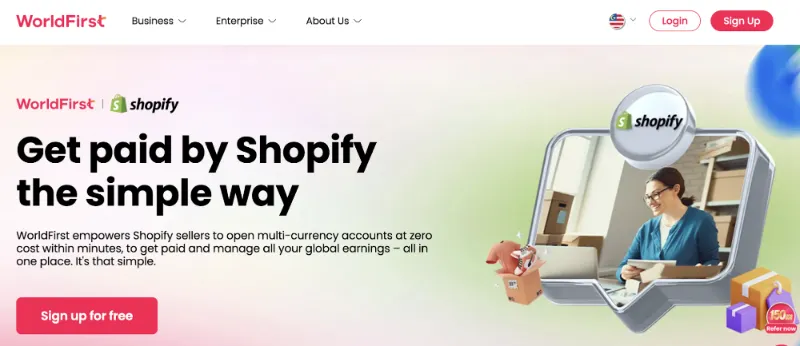
Here’s how WorldFirst can support your international ecommerce payments:
- Connect Shopify to your World Account: Link your WorldFirst receiving account to Shopify and receive payouts in supported currencies.
- Collect and hold multiple currencies: Receive Shopify earnings in 20+ currencies and hold funds in the currencies you receive them in, giving you more flexibility over when to convert.
- Convert and withdraw your funds: Convert your earnings when needed and withdraw funds to your Malaysian bank account.
- Pay overseas suppliers: Pay suppliers in 100+ currencies across 210+ countries and territories, including suppliers in China.
- Manage international payments: Manage the money coming into your business from Shopify sales and payments going out to overseas suppliers through one account.
- Connect with other marketplaces: Beyond Shopify, WorldFirst supports integrations with multiple ecommerce marketplaces, helping businesses manage international marketplace earnings as they expand across sales channels.
Ready to simplify your Shopify payments? Open a WorldFirst account and connect it to your Shopify store to start receiving and managing your international earnings.
FAQs
1. Is Shopify available in Malaysia?
Yes. Malaysian businesses can use Shopify to create and manage an online store, sell to customers locally and internationally, and connect with different sales channels and payment providers.
2. How much does Shopify cost in Malaysia?
Shopify offers four plans: Basic, Grow, Advanced, and Plus. Basic, Grow, and Advanced can be paid monthly or annually, while Shopify Plus is designed for more complex businesses. Pricing can change, so check the latest Shopify Malaysia pricing before choosing a plan.
3. Can I start a Shopify store in Malaysia without technical skills?
Yes. Shopify provides tools to create and customise an online store without needing to build one from scratch. You can choose a theme, add products, configure payments and shipping, and manage your store through the Shopify admin.
4. Can I sell internationally from Malaysia using Shopify?
Yes. Shopify can be used to sell to customers outside Malaysia. Before expanding internationally, consider your target markets, pricing, payment methods, shipping, taxes and duties, and foreign currency management.
5. How can I receive Shopify payments in different currencies?
Businesses selling internationally need to consider how they will receive and manage payouts in different currencies. WorldFirst allows Shopify sellers to connect a WorldFirst receiving account to Shopify and receive earnings in 20+ currencies, subject to applicable requirements.
6. Do I need to register my business to sell on Shopify in Malaysia?
Yes. Most businesses operating commercially in Malaysia need to register with the Companies Commission of Malaysia (SSM). The type of registration depends on your business structure, such as a sole proprietorship, partnership, or company.
Sources:
- https://www.shopify.com/my/pricing
- https://www.shopify.com/my/about
- https://www.ssm.com.my/Pages/Home.aspx
- https://www.worldfirst.com/my/