





























Learn how to use Alipay as a foreign in African regions–how to open an account and fund it with the World Card
Key takeaways
- Alipay is one of China’s leading mobile payment platforms, used for everyday consumer payments, e-commerce checkouts, supplier payments and travel
- Cards issued by many African banks can sometimes get declined when linked to Alipay, making the funding step the biggest hurdle for users
- The practical workaround is to link an international multi-currency card supported on Alipay such as the World Card
- Alipay’s safety features include end-to-end encryption, time-limited QR codes, real-time fraud monitoring and biometric verification.
- The World Card from WorldFirst is a Mastercard-powered virtual business payment card that links to Alipay and can be funded in CNH directly through the World Account.
For African businesses sourcing from China, or anyone travelling there for business, Alipay can help streamline payments to China. The app is accepted across e-commerce platforms, retail stores, hotels, transport providers and supplier networks in China. But for businesses in regions like Nigeria, Kenya, Morocco and Ghana, getting Alipay can be a bit challenging without the right international payment card.
Local bank cards can get declined when linked to Alipay, leaving the user with an account they cannot use. This guide explains how Alipay works, how to open an account from Africa, what to know about safety, and how to fund the account using a World Card.
What is Alipay?
Alipay is one of China’s leading mobile payment platforms, with hundreds of millions of users across the country. The app supports payments at retail stores, restaurants, hotels and tourist attractions through QR codes; online checkouts on Chinese e-commerce marketplaces; direct payments to suppliers and merchants; and routine spending on transport, utility bills and event tickets.
For an African business, there are many ways that Alipay can help:
- Sourcing from China: paying smaller orders or sample purchases directly through Alipay, where wire transfer fees would otherwise eat into the transaction
- Business travel: When travelling to China, you can use Alipay to make everyday payments at hotels, restaurants, and other vendors
How does Alipay work?
Alipay is a mobile app and digital wallet. The user links a funding source, typically a bank account, a debit card, or a credit card or another supported wallet, and pays from the linked balance through the app.
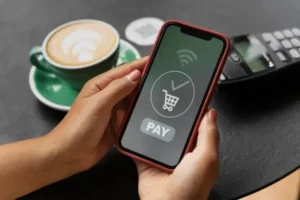
To pay in person, the user can scan the merchant’s QR code with the Alipay app or display their own QR code for the merchant to scan. Both options process in seconds. For online purchases, the checkout page either redirects to the Alipay app or displays a QR code to scan from the phone. Once the transaction is verified, funds become available in the recipient’s Alipay account almost immediately.
Where currency conversion is required, Alipay converts the funding card’s currency to Chinese yuan at the point of payment, with the prevailing rate applied by the card issuer.
How to open an Alipay account from Africa
Here are the steps to open an Alipay account
- Download the Alipay app from the App Store or Google Play
- Sign up with your mobile number and confirm with the SMS verification code sent to that number
- Complete identity verification by adding the required documents. Foreign users must verify identity with a passport or another government-issued ID
- Link a funding source like a bank account or credit/ debit card or an international multi-currency card like the World Card
- Start paying via QR code or in-app checkout, with funds drawn from the linked card
Is Alipay safe?
On the technical side, customer data is protected with end-to-end encryption. QR codes generated for payment are time-limited, meaning a screenshot taken by a third party cannot be reused after the code expires. Real-time fraud monitoring flags unusual transaction patterns too.
Two-step verification using a password and a biometric scan (Face ID or fingerprint) is required for higher-value transactions.
Fund your Alipay account with the World Card
The World Card is a Mastercard-powered virtual business payment card which can be linked to Alipay in the same way as any international Mastercard. The card draws funds from the World Account, which is a multi-currency account that lets people hold, send, and receive funds in 15+ major currencies including CNH, USD, GBP, and EUR.
Because the World Account holds CNH directly, an Alipay payment made on the World Card can draw from the existing CNH funds the user has already. So World Account holders can fund their CNH local currency balance when the exchange rates are favourable and then make direct transactions through Alipay without worrying about dynamic exchange rates.
There are no fees when you make a payment with the World Card in one of the 15 supported currencies, as long as you have sufficient funds. Where the World Account does not hold sufficient balance in the transaction currency, funds are converted from another held currency at competitive exchange rates.
Key features of the World Card
- Mastercard-powered virtual business payment card, accepted wherever Mastercard is
- Linked to the multi-currency World Account holding 15+ currencies including CNH
- Up to 20 World Cards at no additional cost with separate spending controls per card
- Zero fees on 15 supported currencies when sufficient balance is held
- Can be linked to Alipay for QR-code, online and merchant payments in China
FAQ
Does Alipay work in Nigeria, Kenya and Ghana?
The Alipay app can be downloaded and used in African markets, including Nigeria, Morocco, Kenya and Ghana. Whether Alipay will work for you or not also depends on the card you use for funding your Alipay account
How do I fund Alipay from Africa?
For foreigners using Alipay without a Chinese bank account, the standard route is to link an international card to the Alipay app.
Is Alipay safe to use for paying Chinese suppliers?
Alipay’s safety features such as end-to-end encryption, time-limited QR codes, real-time fraud monitoring and biometric two-step verification,make it secure for everyday payments within its limits. For supplier payments specifically, additional precautions apply: verify the supplier’s business identity before transacting, and keep transaction records.
This article is intended for informational purposes only and does not constitute legal advice or professional advice. This article should not be regarded as constituting an offer or a solicitation to buy or sell any regulated or financial products or services. WorldFirst makes no representations or warranties regarding the accuracy, completeness, or applicability of the content, and readers are encouraged to consult with legal professionals or other professionals for advice tailored to their specific situation. WorldFirst does not guarantee the accuracy and completeness of this article and expressly disclaims any and all liability to any person in respect of the consequences of anything done or omitted to be done wholly or partly in reliance on this article.