




















We provide coverage in South Asia and Middle East: servicing 210+ countries and territories.
Home > blog > e-Commerce & Online Sellers > 10 Digital Products to Sell Online in Africa[2026]
From ebooks and templates to online courses, here is what people are actually buying, and what changes once your customers start paying from abroad.
Digital products are goods you create once and sell online again and again, with no shipping, printing, or inventory involved. This guide walks through 10 digital products worth selling in 2026, how to choose the one that fits your skills, and what happens once your buyers are based overseas and start paying you in US dollars or euros instead of Moroccan dirhams.
Key Takeaways
A digital product is anything you create once and deliver electronically, with no physical shipment involved.¹ Common examples include ebooks, online courses, templates, presets, digital planners, stock photography, software, and downloadable design assets. Buyers usually get instant access through a download link, an app, or a members’ area.
This is different from a physical product you import or manufacture. There is no supplier to pay, no shipping to arrange, and no stock to hold, so you can sell the same file to one customer or 10,000 without extra production cost.¹ Because the main cost is the time it takes to build the product once, profit margins are often far higher than on physical goods.¹
The global market for digital products has grown well past USD 157 billion, and the online course segment alone is now valued at around USD 200 billion worldwide.²,³ Here are 10 categories worth considering, based on current demand and typical pricing.
| Digital Product | Example | Typical Price Range | Where It’s Commonly Sold |
| Ebooks and guides | Recipe collection, how-to guide | USD 5 to USD 30 | Own website, Amazon, Gumroad |
| Online courses | Video lessons on a specific skill | USD 20 to USD 300 | Teachable, Udemy, own website |
| Templates | Notion, Canva, spreadsheet templates | USD 5 to USD 50 | Etsy, Gumroad, Creative Market |
| Digital planners and printables | Daily planner, wall art, worksheets | USD 3 to USD 25 | Etsy, own website |
| Presets and LUTs | Photo or video colour presets | USD 10 to USD 60 | Etsy, own website, social media |
| Stock photos, video and audio | Licensed images, footage, sound | USD 5 to USD 100 per licence | Stock marketplaces, own website |
| Software, plugins and apps | Browser extension, mobile app | USD 10 to USD 200 or more | App stores, own website |
| AI prompt packs and guides | Prompt bundles for image or text tools | USD 3 to USD 30 | PromptBase, Gumroad |
| Fonts and design assets | Custom typefaces, icon sets | USD 10 to USD 40 | Creative Market, Etsy |
| Memberships and subscriptions | Ongoing access to content or community | USD 5 to USD 50 per month | Patreon-style platforms, own website |
Note: Features and availability may vary by region and are subject to change. Always verify current offerings directly with each provider before making a decision.
These figures are indicative rather than fixed. Templates and printables tend to sell at lower prices but cost very little to produce, so margins often stay above 70 percent, while structured products like online courses can charge more because buyers are paying for a full outcome, not just a file.⁴ AI-related products, including prompt packs and AI-assisted templates, are currently one of the fastest-growing categories as more buyers look for shortcuts to using new tools.⁴
The right digital product usually balances three things: what you already know how to do, whether people are already buying something similar, and how much ongoing support you are willing to give buyers after the sale.
Start with a skill or piece of knowledge you already have, rather than chasing whatever looks popular. A spreadsheet template built from real work experience usually outsells a generic one copied from a trend, because it solves a specific problem you understand firsthand.
Search for your product idea on Etsy, Gumroad, or Google before spending weeks creating it. If similar products already have reviews and repeat listings, that is a sign of real demand, not proof the space is too crowded to enter.
An ebook needs almost no ongoing support once it is written. A course or a piece of software usually needs updates, customer questions answered, and occasional fixes. Pick a format that matches how much ongoing time you actually want to spend.
Once you list a digital product on a marketplace or your own website, a share of your buyers will likely be outside Morocco. Morocco’s own digital services exports have been growing steadily, reaching roughly USD 2.8 billion in 2024 and continuing to climb through 2025, so selling digital skills or products abroad is already a well-established path for Moroccan entrepreneurs, not a fringe idea.⁵,⁶
This changes very little about how you create the product, but it changes a great deal about how you get paid. Many creators currently receive international payments through PayPal, Payoneer, or a direct bank transfer, and Moroccan freelancers commonly mix these with SWIFT wires for larger amounts.⁷ Whichever route you use, it is worth checking who you are dealing with. Verify a marketplace or payment platform before sharing banking details, and treat unsolicited requests to move money outside the platform with the same caution you would use with an unfamiliar supplier.
Once your buyers are paying in USD, EUR, or GBP, your priority shifts from creating the product to collecting and using that money well. Outgoing international bank wires typically cost USD 35 to USD 50 per transfer before any currency conversion markup, and on smaller digital-product payouts, that can represent 5 to 10 percent of a single sale.⁸,⁹ This is where a multi-currency business account becomes useful, rather than relying only on a personal PayPal account or a one-off bank wire.
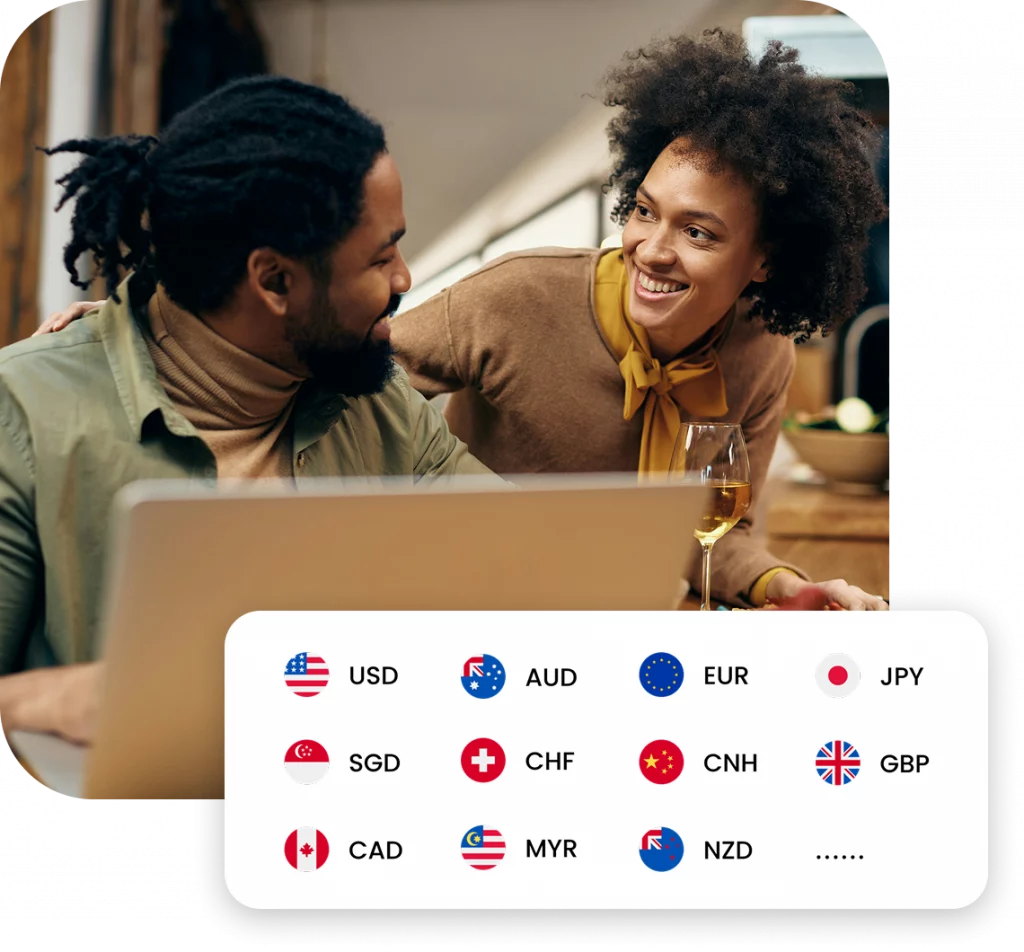
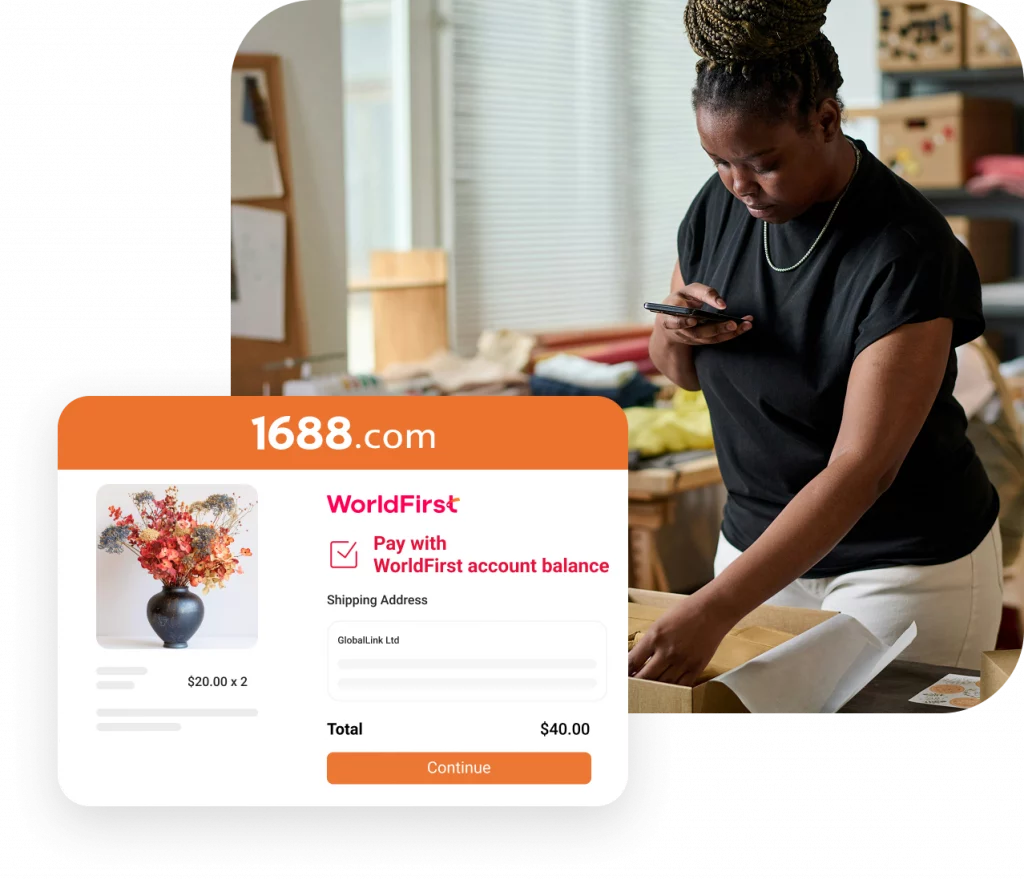
WorldFirst, backed by Ant International, lets you get paid directly by international clients or collect payouts from online marketplaces into one account that holds G10 currencies, including USD, EUR, and GBP, without opening a separate bank account for each one. From there, Convert lets you exchange your balance into another currency when you need to pay a collaborator, a subscription, or yourself.
If you also spend online, on ad campaigns, software subscriptions, or course-hosting platforms, a virtual card built for freelancers can draw directly from that balance instead of your personal card. When you are ready to move money to a Moroccan bank account, that transfer goes out by SWIFT, the same network most cross-border payouts use, so it is worth checking the USD to MAD exchange rate before converting rather than assuming a fixed rate.
Opening a business account takes an online application and standard identity verification, and your funds sit in a regulated multi-currency setup rather than a single personal wallet.
Here is a simple path from idea to first sale, without over-planning it.
Start with something you already know how to do, then check whether people are already searching for or buying similar products on marketplaces like Etsy or Gumroad. A product built around real experience usually performs better than one copied from a trend.
Yes. Marketplaces such as Etsy, Gumroad, and Creative Market let you list and sell digital products without hosting your own site, though you will usually pay a listing or transaction fee to the platform.
Most marketplaces pay out in USD, EUR, or GBP by default. You can collect this into a multi-currency business account and convert it into another currency yourself, rather than accepting whatever conversion the marketplace applies.
This depends on your income level and local rules, so it is worth checking Morocco’s requirements for self-employed or freelance registration once your sales become regular income rather than an occasional side income.
This depends on the platform. Marketplaces often batch payouts weekly or monthly, while direct payments from clients can arrive within a few business days once cleared.
Yes. Many sellers pair a digital product, such as a template, with a related physical item through print-on-demand, though this combines two different fulfilment models and is worth planning separately.
Digital products remain one of the more accessible ways to earn online, precisely because there is no shipping, sourcing, or inventory to manage. Pick one category from this list, validate the demand, and make sure you can collect USD, EUR, or GBP payments before your first sale rather than after it.
Sources
This article is intended for informational purposes only and does not constitute legal advice or professional advice. This article should not be regarded as constituting an offer or a solicitation to buy or sell any regulated or financial products or services. WorldFirst makes no representations or warranties regarding the accuracy, completeness, or applicability of the content, and readers are encouraged to consult with legal professionals or other professionals for advice tailored to their specific situation. WorldFirst does not guarantee the accuracy and completeness of this article and expressly disclaims any and all liability to any person in respect of the consequences of anything done or omitted to be done wholly or partly in reliance on this article.
Linna is a Senior Content Strategy Manager specializing in fintech, cross-border payments, and global ecommerce. With extensive experience in international B2B growth content, and global market expansion, she leads content initiatives that help businesses navigate cross-border trade, international payments, and digital commerce at scale.
Choose a product or service to find out more
Save money, time, and have peace of mind when expanding your global business.

© 2026, Ant International or its affiliates