






















We provide coverage in South Asia and Middle East: servicing 210+ countries and territories.
Home > blog > Marketplaces & Platforms > What Is Alibaba? A Guide for Businesses Buying Wholesale from China [2026]
A practical explainer on the world’s largest B2B marketplace, and how businesses source products and pay suppliers safely.
Alibaba is a Chinese business-to-business (B2B) marketplace that connects wholesale buyers with manufacturers and suppliers, mostly based in China. This guide explains what Alibaba is, how it works, whether it is safe, and how importers verify suppliers and pay them securely. It is written for SME owners, online retailers, and first-time importers researching Alibaba before placing a wholesale order.
Key Takeaways
Alibaba is an online wholesale marketplace where businesses buy products in bulk from suppliers and manufacturers, most of them in China. It is a B2B (business-to-business) platform, meaning it is built for companies buying stock to resell, not for individual shoppers buying single items.
Alibaba.com is the international arm of Alibaba Group Holding Limited, which was founded in Hangzhou, China, in 1999 by Jack Ma and a group of co-founders.¹ The group has since grown into one of the world’s largest technology companies, spanning e-commerce, cloud computing, and logistics, with fiscal year 2025 revenue reported at around USD 137 billion.² For an importer, though, the part that matters is simple: Alibaba.com is where you find factories and trading companies willing to sell wholesale quantities and ship internationally.
Listings usually show a minimum order quantity (MOQ), unit pricing that drops as volume rises, and supplier details such as years in business and response rate. You contact a supplier, negotiate terms, agree on quantity and price, then arrange payment and shipping.
Alibaba works by connecting a buyer directly with a supplier, then providing tools to negotiate, order, and pay within the platform. You search for a product, compare suppliers, request a quote, and place an order once terms are agreed.
The typical flow looks like this. You browse listings and filter by supplier type, certifications, or protection status. You message shortlisted suppliers to confirm specifications, MOQ, lead time, and shipping. Many buyers request a paid sample first. Once satisfied, you confirm the order and pay, often a deposit upfront and the balance before shipment. The supplier manufactures or packs the goods, arranges dispatch, and you handle customs clearance and final delivery in your country.
A large share of Alibaba’s supplier base sits in mainland China, which is why importers in Nigeria and Bangladesh frequently need to pay in Chinese yuan. You can pay Chinese suppliers directly rather than routing every transaction through a slow correspondent bank chain.
Alibaba is used by wholesale buyers, resellers, importers, and manufacturers rather than everyday consumers. The core users are businesses that buy stock to sell on again, either locally or through international marketplaces.
In practice, that includes e-commerce sellers listing on Jumia, Amazon, or Temu, retailers sourcing inventory for physical shops, and importers bringing in electronics, fashion, or home goods in bulk. Alibaba is designed for volume, so it suits buyers who want factory pricing and are comfortable ordering quantities above a supplier’s minimum. Casual buyers wanting a single unit are usually better served by Alibaba’s retail-focused sister site, AliExpress, or by other consumer platforms.
Alibaba is a legitimate, established platform, but safety on any marketplace depends on how carefully you choose suppliers and how you pay. Alibaba itself operates a buyer protection scheme, yet fraud risk still exists at the individual supplier level, so caution matters.
The platform’s main safeguard is Trade Assurance, a free service that protects orders placed and paid for through Alibaba.com.³ It covers issues such as goods not shipping on time or products not matching the agreed quality, and it works like an escrow arrangement: funds are held and released to the supplier once the order terms are met.⁴ The critical condition is that Trade Assurance only applies when you pay through the official Alibaba platform, not when you send money to a supplier outside it.³ Buyers can raise a dispute and, if unresolved, escalate it for Alibaba to mediate based on submitted evidence.⁵
Trade Assurance reduces risk but does not remove it. Claims require evidence, and payments made off-platform are not covered. Treating supplier verification as your first line of defence, rather than relying on the platform alone, is the sensible approach.
Alibaba and Amazon are often confused, but they serve different purposes. Alibaba is a wholesale B2B marketplace connecting businesses with suppliers, while Amazon is largely a retail marketplace selling finished products to consumers.
The table below sets out the practical differences for a business buyer.
| Feature | Alibaba.com | Amazon |
| Primary model | B2B wholesale | Retail (B2C), plus some B2B |
| Typical buyer | Businesses, importers, resellers | Individual consumers |
| Quantities | Bulk, with minimum order quantities | Single units |
| Pricing | Negotiable, drops with volume | Fixed retail price |
| Main role for a seller | Source stock to resell | Sell finished stock to end customers |
This table is for general guidance only and reflects the typical use of each platform. Features may change over time; confirm current details directly with each platform.
Many Nigeria and Bangladesh e-commerce businesses use both at once: they source wholesale stock on Alibaba, then resell it to consumers on Amazon or locally. If that is your model, understanding how to get paid by international marketplaces is as important as knowing how to pay your suppliers.
Buying wholesale on Alibaba follows a clear sequence: research suppliers, request quotes and samples, negotiate terms, then order and pay. Getting each step right protects both your money and your margins.
A workable process looks like this:
For Nigeria and Bangladesh importers, planning the payment step early avoids surprises. Sourcing communities on WhatsApp and at trade fairs can be useful for cross-checking a supplier’s reputation before you commit.
Verifying a supplier before paying is the most effective way to avoid loss on Alibaba. The goal is to confirm the business is real, capable, and consistent before any money leaves your account.
Practical checks include reviewing how long the supplier has been active, whether they hold verified-supplier or Trade Assurance status, and how quickly and clearly they respond to detailed questions. Ask for business documentation, request references or existing client examples, and order a sample so you can inspect quality first-hand. Be cautious if a supplier pushes you to pay to a personal account or move the deal off the platform, as payments made outside Alibaba lose Trade Assurance protection.³ Cross-checking bank or account details directly with the supplier through a known contact, before sending a large first payment, is a simple but powerful safeguard against interception fraud.
The safest way to pay Alibaba suppliers is to keep the transaction protected and to send funds in the supplier’s own currency where possible. Paying in Chinese yuan (CNY/CNH) can avoid layers of conversion and correspondent-bank cost.
Traditional SWIFT bank transfers are a common route, but for many Nigeria and Bangladesh importers, they are slow, offer poor visibility on where the money is, and can absorb a meaningful share of an order’s value through fees and margins before it reaches China. Using a dedicated payments provider that supports CNH/CNY payments can address several of these pain points at once: you convert once, send directly, and track the payment’s status.
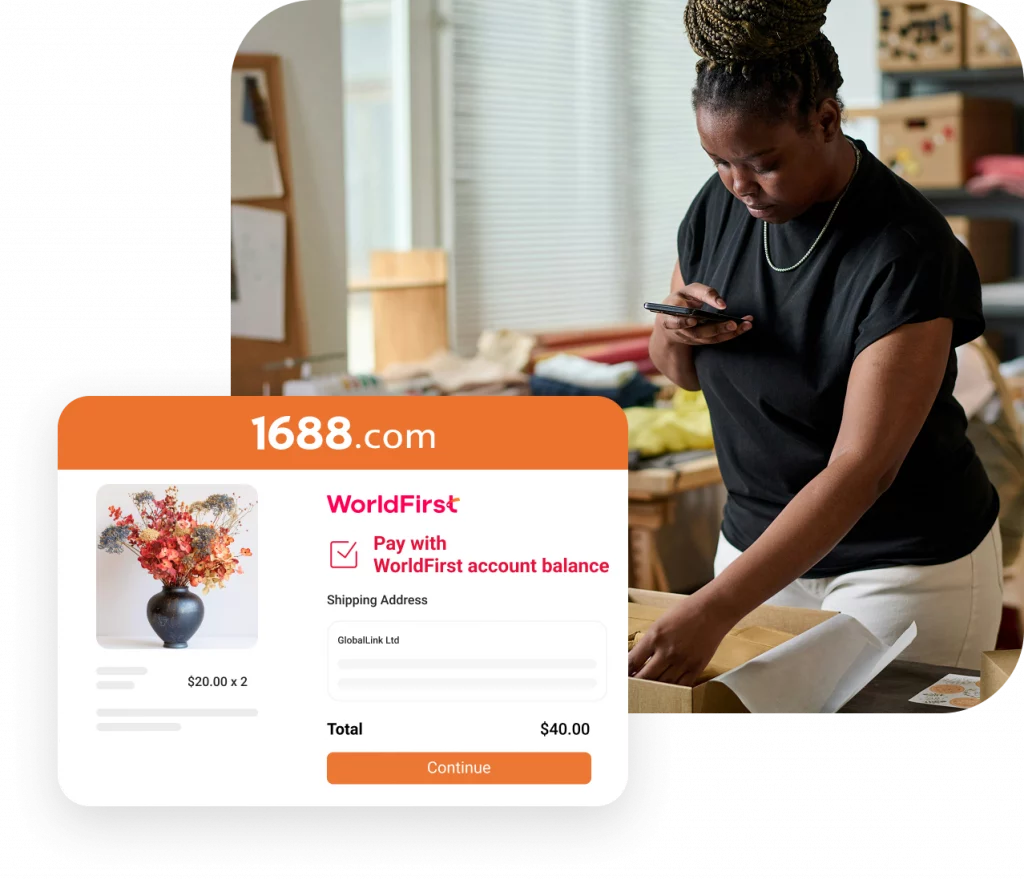
This is where a WorldFirst multi-currency business account is relevant. WorldFirst is a payments provider backed by Ant International, and it lets you hold and convert multiple currencies and pay suppliers in CNH or CNY. Registration is free with no monthly fees on a pay-as-you-go basis. To open an account, prepare your business registration documents, company information, and identity verification in advance, along with proof of business where required. Note that WorldFirst does not remove exchange-rate movement or guarantee any specific fee, so always confirm current pricing before you transact.
The most common importing mistakes involve paying too quickly, skipping verification, and underestimating total cost. Each is avoidable with a little discipline before you commit.
Frequent errors include paying a full order upfront to an unverified supplier, moving payment off-platform and losing protection, and ignoring the total landed cost by forgetting shipping, duties, and currency conversion. Others include ordering large quantities without first testing a sample, and assuming the cheapest unit price is the best deal when quality or reliability is weaker. Verifying the supplier and protecting the payment matter more than shaving a few cents off the unit price. Building relationships slowly, starting with smaller orders, tends to serve first-time importers better than committing to a large purchase on day one.
Yes. Businesses in Nigeria and Bangladesh can register on Alibaba.com, source from suppliers, and arrange international shipping. The practical challenges are usually payment and logistics rather than access. Paying suppliers in CNH/CNY through a payments provider and planning customs clearance in advance make the process smoother for African importers sourcing electronics, fashion, and consumer goods.
Alibaba.com is operated by Alibaba Group Holding Limited, a company founded in China in 1999 and headquartered in Hangzhou.¹ It is a publicly listed company with shares traded on international exchanges, so ownership is spread among public and institutional shareholders rather than the state. Its origins and main operations, however, are firmly rooted in China.
No. Alibaba.com is a B2B wholesale platform for businesses buying in bulk, while AliExpress is a retail platform aimed at individual shoppers buying single items. Both are part of Alibaba Group, but they serve different buyers. If you want factory pricing on volume, use Alibaba.com; for one-off retail purchases, AliExpress is the better fit.
Delivery time depends on production lead time and shipping method rather than a fixed schedule. Manufacturing can take days to weeks depending on the product and quantity. Sea freight to Nigeria and Bangladesh is cheaper but slower, often several weeks, while air freight is faster and costlier. Confirm both the production lead time and shipping estimate with your supplier in writing before ordering.
If you paid through Alibaba with a Trade Assurance supplier, you can open a dispute and provide evidence such as photos and your agreed order terms.⁵ Alibaba can mediate and, where justified, help recover funds. If you paid off-platform, this protection does not apply, which is why keeping payments inside the platform matters.
Understanding what Alibaba is comes down to one idea: it is a wholesale marketplace built for businesses, not a retail shop. Used carefully, verifying suppliers, protecting payments, and sending funds efficiently in the right currency, it can be a reliable way for Nigeria and Bangladesh businesses to source from China. When you reach the payment stage, having a business account that supports CNH/CNY supplier payments ready before your first order keeps the process smooth.
Sources
This article is intended for informational purposes only and does not constitute legal advice or professional advice. This article should not be regarded as constituting an offer or a solicitation to buy or sell any regulated or financial products or services. WorldFirst makes no representations or warranties regarding the accuracy, completeness, or applicability of the content, and readers are encouraged to consult with legal professionals or other professionals for advice tailored to their specific situation. WorldFirst does not guarantee the accuracy and completeness of this article and expressly disclaims any and all liability to any person in respect of the consequences of anything done or omitted to be done wholly or partly in reliance on this article.
Linna is a Senior Content Strategy Manager specializing in fintech, cross-border payments, and global ecommerce. With extensive experience in international B2B growth content, and global market expansion, she leads content initiatives that help businesses navigate cross-border trade, international payments, and digital commerce at scale.
Choose a product or service to find out more
Save money, time, and have peace of mind when expanding your global business.

© 2026, Ant International or its affiliates