























Home > blog > Doing Business with China > Chinese Currency Explained: What African Importers Need to Know About CNY, CNH and RMB
Chinese Currency Explained: What African Importers Need to Know About CNY, CNH and RMB
China’s official currency is the renminbi (RMB), while the yuan is its primary unit used in domestic and international transactions. For importers sourcing products from China, understanding the difference between RMB, CNY, and CNH is important because it directly affects supplier payments, FX conversion costs, payment speed, and cross-border settlement workflows.
Key Takeaways
- China’s official currency is the renminbi (RMB), while CNY and CNH refer to the onshore and offshore versions of the Chinese yuan.
- CNY is used within mainland China under tighter regulation by the People’s Bank of China, while CNH is traded internationally with more flexible exchange rates.
- Importers paying Chinese suppliers often transact in CNH internationally before funds settle into CNY domestically.
- Exchange rate differences between CNY and CNH can affect supplier payment costs, especially for businesses making frequent international transfers.
- Many traditional banks route China payments through SWIFT networks, which can increase settlement time and FX costs.
- Multi-currency payment platforms can help businesses collect local currency, convert funds efficiently, and pay suppliers in China faster.
What Currency Does China Use?
China’s official currency is the renminbi (RMB), which translates from Mandarin as “People’s Currency.” The primary unit of the renminbi is the yuan, which carries the currency code CNY for domestic use and CNH for international transactions. Think of RMB as the name of the currency overall, and CNY and CNH as the two forms it takes depending on where it is being used and traded.
When your supplier in Guangzhou sends you an invoice denominated in “RMB” or “yuan,” they are referring to the same underlying currency. The distinction that matters for your payment is which version (onshore CNY or offshore CNH) your payment platform will actually deliver.
What Is the Difference Between CNY and CNH?
CNY is the onshore yuan used exclusively within mainland China, regulated and managed by China’s central bank. CNH is the offshore yuan traded internationally outside mainland China. Both represent the same currency, but they operate under different rules, carry slightly different exchange rates, and are accessible through different financial channels.
Here is what this means in practice for an importer:
- When you pay a Chinese supplier from outside China, your payment is processed in CNH(the offshore version) because that is what international banks and payment platforms have access to.
- The rate you are quoted for CNH may differ slightly from the CNY rate you see published online. This gap is normal and reflects different liquidity conditions in each market.
- Some banks in Nigeria, Kenya, and Ghana have limited or no capability to process direct CNY transactions, which is one reason supplier payments often get delayed or rejected.²
Why Exchange Rates Sometimes Differ
CNY and CNH usually trade very closely together. Still, they’re not always identical.
Because CNH trades in offshore markets, its value reacts more directly to:
- international demand
- liquidity conditions
- geopolitical sentiment
- global currency flows
CNY remains more tightly managed domestically.
The gap is often small. But for businesses moving larger payment volumes, even minor FX differences can affect landed product costs over time.
How African Importers Are Losing Money on China Payments Today
African importers using traditional SWIFT bank transfers to pay Chinese suppliers face some of the highest cross-border payment costs of any global trade corridor. Fees, unfavorable exchange rates, and correspondent bank deductions can consume 15–20% of total transaction value, directly reducing profit margins on every order.¹
Exchange rate markup
Your bank applies its own exchange rate, which typically includes a margin above the real mid-market rate. This margin is rarely disclosed transparently and is applied to every transaction.
SWIFT correspondent fees
International bank transfers pass through one or more correspondent banks before reaching China. Each institution in the chain may deduct a handling fee, and these are not always predictable in advance.
Agent and intermediary costs
Many importers in Nigeria, Kenya, and Ghana rely on third-party agents to complete China payments because their banks don’t support CNY directly. These agents charge service fees on top of the existing banking costs and introduce security risks, since you are transferring funds to a third party rather than directly to your supplier.⁴
Fraud exposure
This is a serious and documented risk. Nigerian trade communities have extensive documented guidance warning importers about fraudulent agents, fake supplier accounts, and payment interception. When you cannot pay a supplier directly, you create additional opportunities for funds to be misdirected.⁵
How to Pay Chinese Suppliers in CNY or CNH From Africa
The most cost-effective and reliable way to pay Chinese suppliers from Africa is through a specialist cross-border payment platform that holds local African currency, converts directly to CNH at competitive rates, and delivers funds to Chinese bank accounts within 24 hours — bypassing the SWIFT correspondent chain entirely.
WorldFirst’s World Account supports this workflow directly. Here is how it works for importers in Nigeria, Kenya, and Ghana:
- Collect funds in your local currency. Your World Account can hold Nigerian naira (NGN), Kenyan shillings (KES), and Ghanaian cedis (GHS), meaning you do not need to first convert to USD or EUR before sending to China.
- Convert to CNH at a transparent rate. WorldFirst provides real-time FX rates without hidden markups, and you can lock in a rate for up to 24 months if you want to protect against currency fluctuations.
- Pay your supplier directly in CNH. Funds are delivered to your supplier’s Chinese bank account, typically within 24 hours, with full payment status visibility throughout.
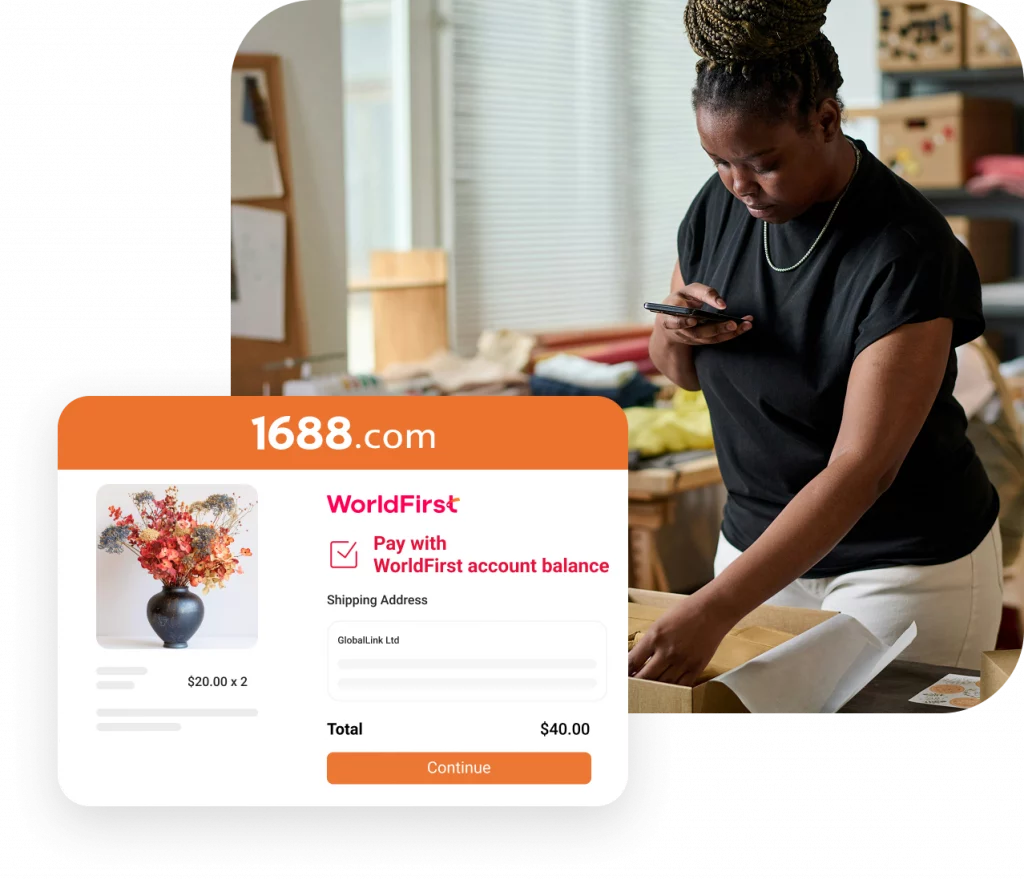
- Pay 1688 suppliers with one click. WorldFirst is one of the international payment platforms directly integrated with 1688.com, China’s largest B2B wholesale marketplace. If you source products there, you can pay suppliers instantly without agents or intermediaries.
CNY vs CNH: Quick Comparison
| Feature | CNY (Onshore Yuan) | CNH (Offshore Yuan) |
|---|---|---|
| Full name | Chinese Yuan (onshore) | Chinese Yuan (offshore) |
| Where it circulates | Mainland China only | International markets |
| Who controls the rate | People's Bank of China | Open market forces |
| Accessible to African importers? | No — requires mainland bank account | Yes — via international platforms |
| Exchange rate vs CNY | — | Near 1:1, minor daily variation |
| Used when paying suppliers | Supplier receives in CNY | Importer sends in CNH |
| Available via WorldFirst? | Delivered to supplier | Yes — full CNH payment support |
| Risk of SWIFT delays | High via traditional banks | Reduced via specialist platforms |
Features and availability may vary by region and are subject to change. Always verify current offerings directly with each provider before making a decision.
The table above reflects the operational reality for African importers.⁶ While CNY and CNH represent the same currency, the route your money travels (and who handles it along the way) determines whether your payment arrives quickly and cost-effectively, or disappears into a chain of intermediary fees and delays.
Why WorldFirst simplifies cross-border payments to China
WorldFirst’s World Account is a multi-currency account that empowers your business to grow beyond borders.
Since 2019, we’ve been part of Ant Group, the Chinese company that operates the lifestyle platform Alipay. Since Alipay serves 1.3 billion users worldwide, we’re able to leverage one of the largest global commerce ecosystems in the world and enable users to make transfers in 100+ currencies.
Here are some of the key benefits of having a World Account:
Pay anyone in China within 24 hours
As part of Ant Group, WorldFirst has strong relationships with all major banks in China. This enables users to send payments to any bank in China within 24 hours.
Unlike traditional banks, which may take several days or even a week to process payments, With WorldFirst, businesses can send same-day or next-day payments in USD or CNH, ensuring faster supplier settlements and helping you secure better rates and more favorable terms.
Enjoy the best foreign exchange (FX) rates
There are no ongoing fees for holding an account, and no FX rate changes (such as at weekends). You can also lock in currency conversion rates for up to 24 months to maintain budgeting certainty.
Open and hold accounts in multiple currencies
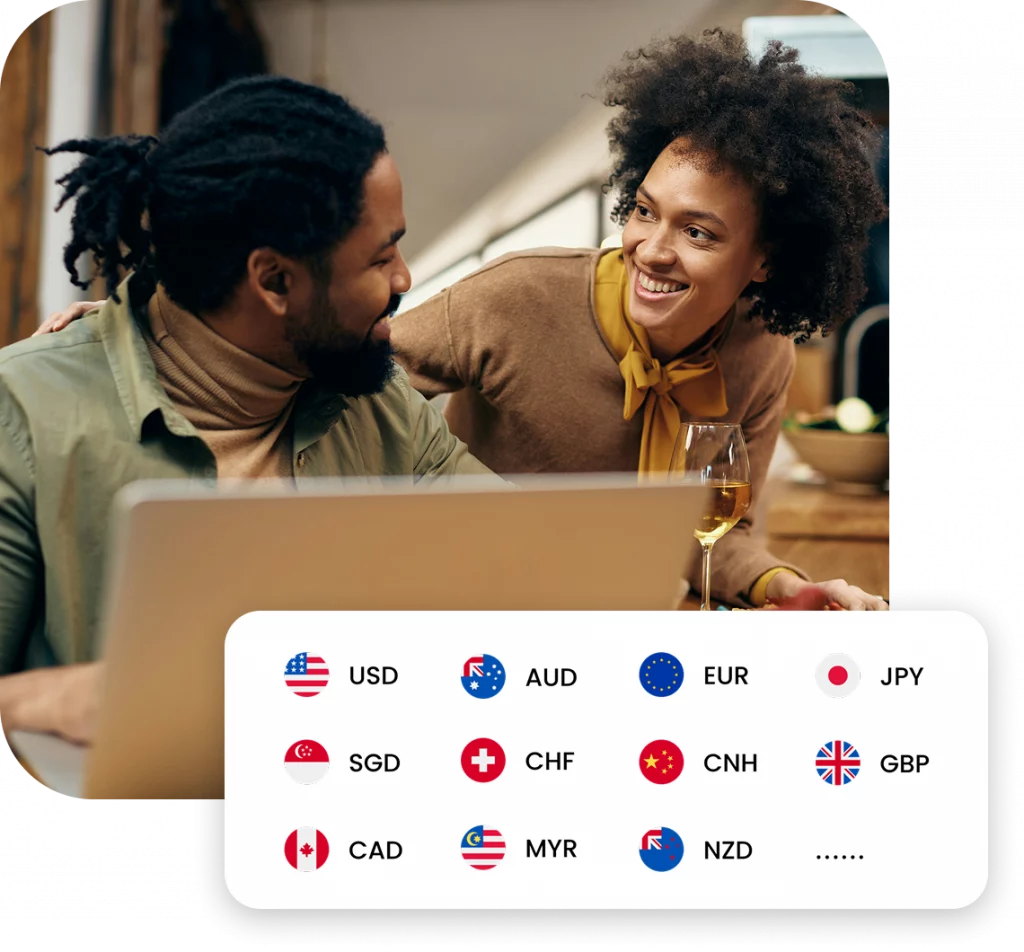
With a World Account, you can create 20+ currency accounts and make payments in 100+ currencies, including USD, GBP, EUR, JPY, CHF and more. This gives you the flexibility to pay suppliers in their local currency while saving on FX fees.
Additionally, you can set up local currency accounts in regions where you don’t have a local entity, making it easier to manage payments across different marketplaces like the United Kingdom, the United States and Europe – all from a single account.
FAQ
What currency does China use?
China uses the renminbi (RMB) as its official currency. The yuan is the primary unit of RMB and is commonly represented internationally as CNY or CNH depending on where the currency is traded.
What is the difference between RMB, CNY, and CNH?
RMB (renminbi) is the official name of China’s national currency. CNY is the currency code for the yuan as used inside mainland China. CNH is the code for the offshore version of the yuan, traded internationally. For importers outside China, CNH is the relevant version for supplier payments. All three terms refer to the same underlying currency in different contexts.
Can I pay a Chinese supplier directly in CNY from Nigeria, Kenya, or Ghana?
Most local banks in these markets do not support direct CNY transfers, because CNY is restricted to mainland China’s domestic financial system. In practice, international payments to Chinese suppliers are processed in CNH, the offshore yuan. Specialist platforms like WorldFirst convert your local currency directly to CNH and deliver it to your supplier’s Chinese bank account.
Sources:
- https://www.worldbank.org/en/topic/financialsector/brief/remittances
- https://www.centralbank.go.ke/foreign-exchange/
- https://www.bis.org/publ/work727.pdf
- https://www.swift.com/our-solutions/compliance-and-shared-services/financial-crime-compliance/correspondent-banking
- https://www.efcc.gov.ng/consumers/fraud-alert
- https://www.pboc.gov.cn/en/3688110/3688172/index.html
- https://www.ifc.org/en/topic/financialinclusion/sme-finance
- https://alibaba.com/trade/search?keywords=1688
This article is intended for informational purposes only and does not constitute legal advice or professional advice. This article should not be regarded as constituting an offer or a solicitation to buy or sell any regulated or financial products or services. WorldFirst makes no representations or warranties regarding the accuracy, completeness, or applicability of the content, and readers are encouraged to consult with legal professionals or other professionals for advice tailored to their specific situation. WorldFirst does not guarantee the accuracy and completeness of this article and expressly disclaims any and all liability to any person in respect of the consequences of anything done or omitted to be done wholly or partly in reliance on this article.
Linna is a Senior Content Strategy Manager specializing in fintech, cross-border payments, and global ecommerce. With extensive experience in international B2B growth content, and global market expansion, she leads content initiatives that help businesses navigate cross-border trade, international payments, and digital commerce at scale.
Linna
Author
Continue reading
Choose a product or service to find out more
The simpler way to pay and get paid
Save money, time, and have peace of mind when expanding your global business.