


























Top 8 e-commerce platforms in Singapore [2026 comparison list]
Last update: 12 Jan 2026
Singapore’s e-commerce scene is growing rapidly and showing no signs of slowing. More businesses are taking their products online, building stronger connections with customers at home and across international markets.
If you’re building your first online store or looking to expand into new markets, the right e-commerce platform can make all the difference. It shapes how you manage payments, handle logistics and deliver excellent customer experiences in Singapore’s competitive digital economy.
In this guide, we compare eight of the best e-commerce platforms available in Singapore for 2026. You’ll find key features, pricing in SGD, pros and cons and what makes each platform stand out for local merchants and cross-border sellers.
Singapore e-commerce market snapshot and growth outlook
Singapore’s e-commerce market is one of the most advanced in Asia, combining strong infrastructure with a digital-first consumer base. Online shopping has become second nature for most Singaporeans and the momentum is only building.
For example, one report estimates that the market will grow at a compound annual growth rate (CAGR) of about 8% to SG$37.5 billion (approx. US$28.9 billion) by 2030. Other sources forecast a CAGR of around 11% between 2025 and 2030, with the market reaching roughly US$9.39 billion by 2030.
The differences depend on how each study defines e-commerce, but the takeaway is the same – growth is consistent and full of opportunity for local and cross-border sellers.
What's driving Singapore's e-commerce growth
Several factors are fuelling this continued rise:
- High connectivity: With almost universal internet access and one of the world’s highest smartphone penetration rates, shopping online is quick, easy and trusted
- Tech-savvy consumers: Singapore’s shoppers are comfortable making online purchases, from daily essentials to high-value items
- Reliable logistics: Efficient fulfilment networks and fast delivery options make e-commerce practical even for smaller merchants
- Cross-border expansion: Singapore’s small size and regional trade links make cross-border selling a natural next step for local businesses
- Open 20+ local currency accounts and get paid like a local
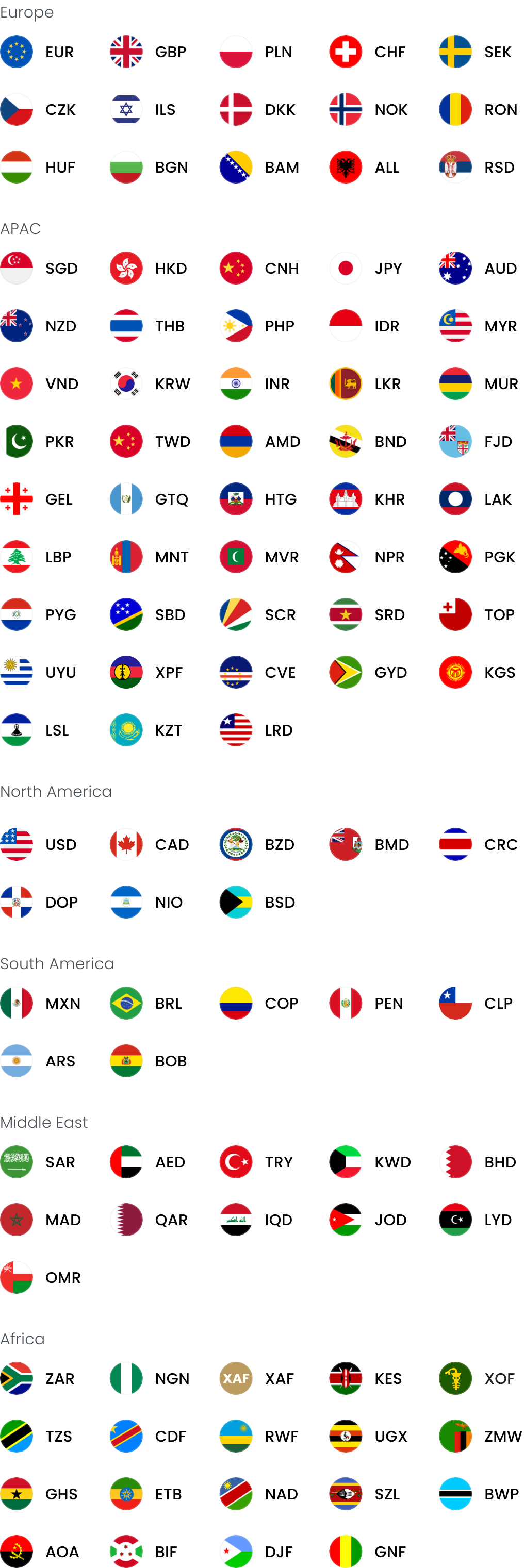
- Pay suppliers, partners and staff worldwide in 100+ currencies
- Collect payments for free from 130+ marketplaces and payment gateways, including Amazon, Etsy, PayPal and Shopify
- Save with competitive exchange rates on currency conversions and transfers
- Lock in exchange rates for up to 24 months for cash flow certainty
How we selected the platforms
To help Singapore-based merchants make confident choices, we evaluated each e-commerce platform against four key criteria designed for both local and export-ready businesses:
1. Localisation for Singapore
We assessed how well each platform supports local operations, including pricing in SGD, integration with popular payment gateways and connections to trusted fulfilment partners.
2. Cross-border readiness
We focused on features that simplify regional expansion, such as multi-currency support, international shipping tools and marketplace integrations that make selling abroad easier.
3. Merchant scalability
Growth potential was another priority. We looked for platforms that offer team accounts, inventory management and a strong app ecosystem to handle marketing, accounting and automation needs.
4. Compatibility with multi-currency and collection workflows
Finally, we examined how well each platform integrates with global payment and collection systems, including the ability to connect with WorldFirst for smooth transfers, payouts and currency management.
Top 8 best e-commerce platforms in Singapore
Here is how Singapore’s top e-commerce platforms compare on features, pricing and scalability:
| Platform | Best for | Pricing | Strengths | Drawbacks |
|---|---|---|---|---|
| Shopify | SMEs launching local + export stores | From SG$29/month (Grow SG$99) | Fast setup, broad app ecosystem, strong support | Monthly/app costs add up; limited deep customisation |
| WooCommerce | Those needing full control and custom workflows | Free core; hosting ~ SG$15–25/month | Full flexibility, large plugin library | You handle hosting/security; steeper learning curve |
| BigCommerce | Multi-country brands from Singapore | From SG$55/month | Many built-in features, good performance, no transaction fees | Plan upgrades tied to sales volume; fewer themes/apps |
| Wix eCommerce | Boutiques/service providers seeking speed & design | From SG$36/month | Easy launch, good templates, all-in-one | Limited commerce depth; no local payment gateway support |
| Lazada | Sellers wanting immediate marketplace reach in SG + ASEAN | Free to list; commission ~ 3–5% + payment ~2% | High local traffic, integrated logistics, regional footprint | Margin pressure from fees; intense competition |
| Shopee | Mobile-first B2C sellers and rapid product testing | Free to start; transaction 2.18% + commission 5–7% | Massive mobile audience, strong promo engine, local payments | Multiple fee layers; limited branding and control |
| Amazon Singapore | Premium/niche brands and global expansion | SG$1 per item (Individual) or SG$29.95/month usual; referral 7–15% | Global trust, Prime/FBA benefits, strong tools | High fees; strict policies; heavy competition |
| Magento (Adobe Commerce) | Large enterprises with complex integrations | Open Source free; hosting SG$50–500/month; licence from SG$30,000/year | Ultimate customisation and scale | High build/maintenance cost; requires specialist team |
1. Shopify
Many Singapore merchants choose Shopify for its simplicity, scalability and global reach.
It offers a fully hosted solution – you design your website using drag-and-drop tools, list products and Shopify handles the tech (hosting, security, updates).
Key features:
- Simple setup and intuitive dashboard suitable for all experience levels
- Thousands of apps for marketing, accounting and delivery, including Singapore options like EasyParcel and Ninja Van
- Accepts Visa, Mastercard, Amex, PayNow (via Stripe), GrabPay and more through Shopify Payments or third-party gateways
- List products in SGD and offer checkout in multiple currencies using Shopify Payments
Pros:
- Fast setup with professional templates
- Broad app ecosystem for local and global operations
- Scales smoothly from startups to enterprises
- Reliable performance and 24/7 support
Cons:
- Monthly and app fees can add up
- Extra transaction fee (1%–2%) if not using Shopify Payments
- Limited deep customisation without Liquid coding
Relevance to Singapore:
Shopify is well-suited for Singapore SMEs targeting both local and overseas customers. It supports SGD pricing, local payment methods and integrates easily with logistics providers across the region.
Pricing:
- Basic plan from SG$29/month, Grow plan SG$99/month, Advanced plan SG$399/month
- Transaction fee 1–2% if not using Shopify Payments
- Credit card fees around 3.0% + SG$0.50 for local cards
Integration with WorldFirst:
Shopify stores can easily use WorldFirst for managing incoming payments from overseas sales. By linking a WorldFirst account as your bank account in Shopify’s admin, you collect earnings in foreign currency with zero receiving fees, then later convert to SGD at better rates.
2. WooCommerce
WooCommerce turns WordPress into a fully fledged store that you own and control. It’s popular among Singaporean merchants who want precise control over design, checkout, SEO and data. The core plugin is free; you choose your host and decide which extensions to add.
That modular approach makes WooCommerce attractive for bilingual stores, highly specific checkout flows and deep integrations with locally used ERPs or accounting tools.
Key features:
- Open ecosystem with thousands of themes and extensions for shipping, tax, promotions, memberships, bookings and B2B
- Flexible payments via official gateways for cards, PayPal, Stripe and local methods like GrabPay or PayNow through third-party plugins
- Multi-currency and multilingual through proven plugins, so you can price in SGD, show regional currencies and offer English plus Chinese content
- Custom checkout and data ownership are helpful for regulated categories or complex B2B workflows that require full control
Pros:
- No licence fee, pay only for hosting and chosen plugins
- Total design and feature control
- Large developer and agency pool
- Scales well with proper hosting and optimisation
Cons:
- You handle hosting, security and updates
- Paid extensions can add up
- No single vendor support line
- Higher learning curve than turnkey SaaS
Relevance to Singapore:
WooCommerce is a strong choice for businesses that want to localise heavily or have unique needs. For instance, if you want a store that integrates with a specific Singapore accounting software or an ERP, a developer can likely make it happen with WooCommerce.
Pricing:
- Free core plugin, hosting from SG$15–25/month
- Optional premium themes or extensions from SG$20–100 one-time
- Card gateway fees via Stripe are about 3.4% + SG$0.50
3. BigCommerce
BigCommerce is a hosted platform with many advanced retail features built in, reducing reliance on third-party apps. It suits Singapore sellers who want multi-currency storefronts, robust product rules and enterprise-grade performance without managing infrastructure.
BigCommerce delivers strong performance and security, with consistently fast loading speeds and enterprise-grade hosting across regions.
Key features:
- Native multi-currency storefront and customer groups for price lists, promos and tax handling out of the box
- Strong catalogue and promotions with variants, price rules and built-in reviews that would need apps elsewhere
- Omnichannel selling to marketplaces and social media from a single backend, plus decent SEO features
- Open APIs and headless options for deeper integrations into regional logistics, POS or financial systems at scale
Pros:
- Rich features without heavy app spend
- Solid performance and security
- Mature APIs and integrations
- Good SEO tooling
Cons:
- Annual sales thresholds trigger plan upgrades
- Fewer design themes and apps than Shopify
- The interface can feel busy initially
Relevance to Singapore:
A good fit for brands running multi-country catalogues from Singapore that need price lists and multiple currencies managed centrally. Helpful when finance teams want less app sprawl and predictable operations.
Pricing:
- Standard plan SG$55/month, Plus SG$150/month, Pro SG$570/month
- No extra transaction fees; only payment processor charges apply
- Free 15-day trial available
4. Wix eCommerce
Wix is a visual site builder that adds commerce features for simple, good-looking stores. It’s best for small catalogues, brand-led sites and service hybrids where design speed matters.
Singapore users like the quick setup, built-in marketing tools and multilingual options, though the commerce depth is lighter than specialist platforms.
Key features:
- Visual editor and polished templates that non-developers can adapt quickly
- Built-in marketing and SEO tools with email, basic automation and analytics
- Multilingual and SGD support, helpful for English-plus-Chinese sites
- App market to add reviews, chat and simple inventory or booking add-ons as you grow
Pros:
- Easy to design and launch
- All-in-one hosting and management
- Affordable entry for small stores
- App marketplace extends features
Cons:
- Wix Payments is not available in Singapore, so you rely on third-party gateways
- Limited code-level customisation
Relevance to Singapore:
Great for boutiques, creators and service providers who want a professional storefront fast. Works well if cards and PayPal meet customer expectations and you value design control without developer overhead.
Pricing:
- Business plan from SG$36/month
- No sales commission; only card processing fees apply (~3.3% + SG$0.50)
- Annual plans include a free domain for 1 year
5. Lazada
Lazada is a major Southeast Asian marketplace with substantial traffic in Singapore. Often dubbed the “Amazon of Southeast Asia”, Lazada operates as an online marketplace where sellers can list products and benefit from Lazada’s existing customer base, logistics and marketing.
Sellers manage listings in Seller Center, join mega events and can opt for Fulfilment by Lazada to speed delivery.
Key features:
- Large local audience and frequent campaign events for discovery and sales lift
- Seller Center toolkit for vouchers, bundles, ads, analytics and chat
- Lazada eLogistics and FBL for pickup, warehouse storage and fast last-mile delivery
- Regional pathway to expand across six SEA markets from a Singapore base
Pros:
- Immediate audience and trust
- Integrated logistics options
- Built-in promotions and ads
- Easy regional expansion
Cons:
- Category commission and payment fees cut margins
- Intense price competition
- Limited brand control and buyer data
- Scheduled disbursements affect cash flow
Relevance to Singapore:
For a Singapore merchant, being on Lazada means tapping into a trusted local platform where customers are already shopping daily. It’s especially relevant for categories that perform well online, such as electronics, fashion, beauty, etc.
Pricing:
- Free to open a seller account
- Commission typically 3–5%, payment fee around 2% per order
- Fulfilment by Lazada (FBL) from about SG$1.50/item for local delivery
Integration with WorldFirst:
If you sell only on Lazada Singapore, your payouts arrive in SGD to your local bank, so WorldFirst’s role is limited unless you need to convert or send funds overseas.
But suppose you expand to Lazada Malaysia, Thailand or other markets. In that case, WorldFirst lets you open local accounts in MYR, THB and more to collect payouts without forced conversion, then manage all currency exchanges centrally.
6. Shopee
In Singapore, Shopee is the top e-commerce platform by traffic, reportedly drawing over 13 million visits per month.
The platform’s frequent campaigns and built-in wallet options drive conversion. Sellers use Shopee Supported Logistics for couriers and can scale to other markets through the Shopee International Platform.
Key features:
- Massive mobile audience with discovery via app feeds, search and live commerce
- Localised payment methods such as cards, ShopeePay and PayNow that align with buyer habits
- Shopee Supported Logistics with integrated labels and discounted courier rates
- Cross-border listings via SIP to expand from Singapore to regional markets
Pros:
- Massive reach and in-app engagement
- Low barrier to start selling
- Strong local payment mix
- Frequent promotions and vouchers
Cons:
- Multiple fees once established
- High competition and price pressure
- Limited branding and first-party data
- Algorithm and policy changes impact visibility
Relevance to Singapore:
Hard to ignore for B2C sellers. Ideal for value-driven categories, fast product testing and social-led selling via live streams and app-native promos.
Pricing:
- Free to start selling
- Transaction fee 2.18%, category commission 5–7% depending on product type
- Additional program fees (e.g., Coins Cashback) 1–3% if opted in
Integration with WorldFirst:
Shopee, being a regional platform, is strongly supported by WorldFirst. WorldFirst explicitly has a Shopee seller payment solution that enables Shopee sellers to collect earnings in multiple currencies.
7. Amazon Singapore
Amazon.sg gives Singapore sellers access to Prime shoppers, verified reviews and a robust fulfilment network. Fulfilment by Amazon (FBA) boosts conversion rates through fast delivery and Amazon-managed customer service.
Seller Central provides detailed reporting and advertising tools and Global Selling lets you expand to the US or EU once you stabilize locally.
Key features:
- Prime and FBA for fast shipping and higher trust, plus Easy Ship for self-fulfilment
- Seller Central analytics and ads for keyword targeting and conversion optimisation
- Global Selling to move from Amazon.sg into the US and EU catalogues
- Brand tools like Brand Registry and enhanced content for stronger PDPs
Pros:
- High buyer trust and review system
- FBA can boost conversion
- Mature PPC and reporting stack
- Clear pathway to global markets
Cons:
- Referral fees can be high in some categories
- FBA storage and fulfilment costs
- Competitive and rules-heavy
- Limited direct customer ownership
Relevance to Singapore:
Strong channel for premium, niche or international-leaning ranges where Prime delivery and reviews matter. Also, a good training ground before expanding to Amazon US or EU.
Pricing:
- Individual plan SG$1.00 per item, Professional plan SG$29.95/month (waived until Dec 2026)
- Referral fees 7–15% by category
- FBA fulfilment from SG$3–4 per unit
Integration with WorldFirst:
WorldFirst helps Amazon sellers collect multi-currency Amazon payouts with no receiving fees, offering better FX rates and providing a single interface to handle all Amazon marketplace earnings across regions.
8. Magento (Adobe Commerce)
Magento is the platform for teams that treat e-commerce as a custom application. The Open Source edition gives you complete code control, while Adobe Commerce adds enterprise features, cloud hosting and SLAs. Multi-store, multi-language and multi-currency are native.
Singapore implementations often connect Magento to SAP or Oracle ERPs, handle complex B2B pricing or manage multiple country stores from a single backend.
Key features:
- Multi-store architecture to operate multiple brands or countries from a single admin
- Advanced catalogue and pricing with complex promos, customer groups and B2B modules
- Extensible marketplace for gateways, couriers, PIM and analytics, plus custom modules
- Cloud option with Adobe Commerce for managed hosting, autoscaling and Adobe integrations
Pros:
- Ultimate flexibility for complex builds
- Handles extensive catalogues and mixed B2C/B2B
- Strong permissions and workflows
- Full ownership of data and code
Cons:
- Higher implementation and maintenance effort
- Requires specialist developers and hosting
- Ongoing patching and upgrades
Relevance to Singapore:
Best for mid- to large-sized enterprises that need tight ERP integration, multi-warehouse fulfilment and country-by-country control across ASEAN from a Singapore hub.
Pricing:
- Open Source version free; hosting from SG$50–500/month
- Adobe Commerce licence from SG$30,000/year with cloud hosting included
- Credit card gateway fees are around 3% typically
Powering Singapore's e-commerce growth with WorldFirst
Choosing the right e-commerce platform in Singapore is only the first step. Once sales start growing, managing cross-border payments efficiently becomes just as important. That’s where WorldFirst helps – providing the financial infrastructure that powers thousands of online sellers expanding beyond Singapore.
WorldFirst is the global payment backbone that connects all your e-commerce platforms into one multi-currency ecosystem.
Each platform, marketplace or payment gateway brings its own currency and fees, which can quietly erode margins. WorldFirst solves this problem by letting you get paid like a local in each market, while managing all currencies from one secure account.
For example, your Lazada Malaysia sales can settle in MYR, your Amazon US payouts in USD and your Shopify EU payments in EUR – all received directly into your WorldFirst account without forced conversions. You can then hold those balances, convert them at competitive rates or pay overseas suppliers instantly.
Key features of WorldFirst for e-commerce sellers:
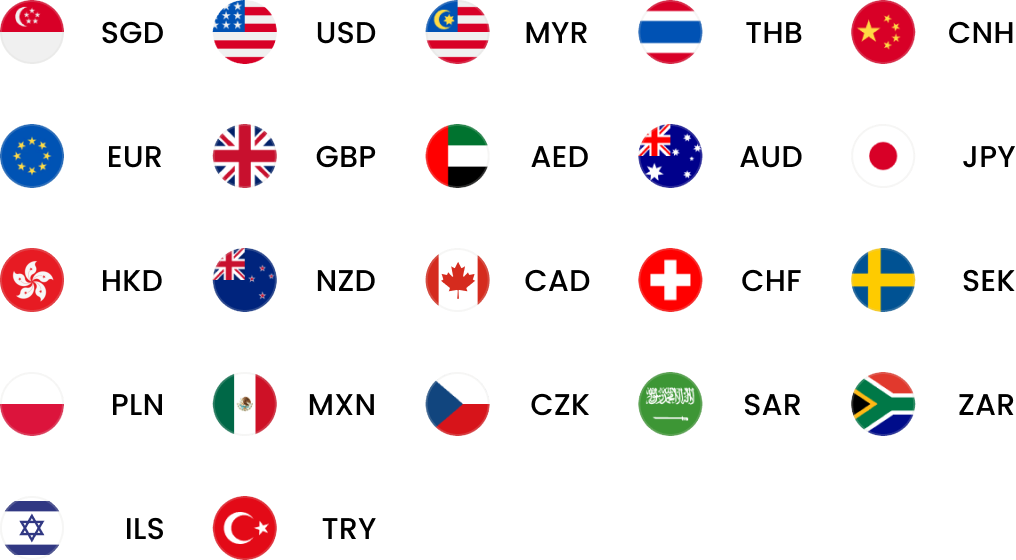
- Multi-currency World Account: Collect, hold and send money in 20+ major currencies, including SGD, USD, EUR, CNH and MYR
- Local receiving accounts: Get local bank details in key markets to receive payouts from Amazon, Shopify, Shopee, Lazada and 130+ other platforms
- Transparent FX rates: Enjoy real-time currency exchange with margins capped at 0.6% above the mid-market rate for major currencies
- Global payments network: Pay suppliers, partners or team members in over 100 currencies across 210 countries
- World Card (virtual business debit card): Spend online in 150+ currencies, with 0% FX fees in 15 major currencies when you hold existing balances
- No hidden fees: No setup, monthly or incoming payment fees; only small transfer fees when sending overseas
- Local presence and compliance: Regulated by the Monetary Authority of Singapore (MAS) and tailored for regional merchants
The best e-commerce platforms help you sell. WorldFirst helps you stay profitable.
Open your WorldFirst account for free today and start managing your international e-commerce earnings all in one place.
Sources:
- https://www.shopify.com/sg/pricing
- https://woocommerce.com
- https://www.bigcommerce.com
- https://www.wix.com/ecommerce/website
- https://sellercenter.lazada.sg
- https://seller.shopee.sg
- https://services.amazon.sg
- https://sell.amazon.com/global-selling
- https://business.adobe.com/sg/products/magento/magento-commerce.html
- https://www.mordorintelligence.com/industry-reports/singapore-ecommerce-market
- https://www.globenewswire.com/news-release/2025/05/12/3079274/28124/en/Singapore-Social-Commerce-Market-Intelligence-Report-2025-2030-E-Commerce-Leaders-Such-as-Shopee-Lazada-Facebook-and-Instagram-Boost-Live-Shopping-with-Streaming-Tech-and-Niche-Mar.html
Disclaimer.This article is updated as at 12 January 2026. This article is intended for informational purposes only and does not constitute legal advice or professional advice. This article should not be regarded as constituting an offer or a solicitation to buy or sell any regulated or financial products or services. World First Group makes no representations or warranties regarding the accuracy, completeness, or applicability of the content, and readers are encouraged to consult with legal professionals or other professionals for advice tailored to their specific situation.World First Group does not guarantee the accuracy and completeness of this article and expressly disclaims any and all liability to any person in respect of the consequences of anything done or omitted to be done wholly or partly in reliance on this article.

Businesses trust WorldFirst
- Almost 1,500,000 businesses have sent US$500B+ around the world with WorldFirst and its partner brands since 2004
- Your money is safeguarded with leading financial institutions