




























Paying Chinese suppliers in USD? Learn how to avoid hidden fees, payment delays, and the most common mistakes when sending money to China
Key takeaways
- Chinese suppliers often prefer USD to avoid currency risks and simplify export paperwork
- Traditional USD transfers can come with hidden intermediary fees and delays that disrupt supplier relationships and slow down shipments
- With a World Account, you can pay Chinese suppliers in USD quickly and transparently

Many Chinese suppliers prefer to be paid in USD, but sending USD to China isn’t always straightforward or cost-effective.
Traditional international transfers often involve intermediary banks that take a cut along the way, delay settlements, and make it hard to trace where your money is. You may end up paying more than expected, waiting longer than planned, and dealing with frustrated suppliers who won’t ship until the funds arrive.
WorldFirst helps businesses make fast and secure USD payments to China. With a World Account, you can send USD directly to your supplier’s account, minus the delays and banking friction.
In this blog, we’ll break down the common challenges of paying suppliers in the US and how WorldFirst simplifies this process.
Why pay Chinese suppliers in USD?
Many Chinese suppliers now prefer payments in USD rather than RMB. And this isn’t just a random choice, it’s tied to how global trade works and how Chinese businesses handle exports.
For buyers, paying in USD can also bring a few unexpected advantages.
- USD is globally accepted and stable
- As the world’s dominant reserve currency, USD is widely used for cross-border trade. It gives suppliers confidence in receiving payments that are universally recognised and easy to convert.
- It protects suppliers from RMB exchange rate volatility
Fluctuations in the Chinese yuan can impact supplier profit margins. By quoting and receiving payments in USD, suppliers can avoid sudden currency losses when exchanging funds. - Many suppliers issue invoices in USD for export purposes
Export paperwork and customs declarations can get comparatively easier when transactions are done in USD. - Simplifies payments
If you’re already holding USD in your business account, paying suppliers directly in Dollars saves you from an extra currency conversion. This can also reduce fees from banks or payment platforms which can directly affect your margins specially when you’re investing a significant capital for importing from China to Australia and then shipping the goods from China.
The biggest challenge of sending supplier payments to China in USD: Intermediary banks
If you’re importing from China and planning to pay your suppliers in USD, there’s a common, but often overlooked challenge that can complicate the process: intermediary banks.
When you make an international USD transfer using the SWIFT network, the funds often don’t go straight from your account to your supplier’s. Instead, they pass through one or more intermediary banks. These are third-party institutions that help facilitate the transfer behind the scenes.
For small businesses and new importers, this can create several problems:
- Lack of transparency: Neither you nor your supplier can easily track where the payment is or how much has been deducted along the way, until it reaches the supplier
- Delays and confusion: For importers trying to build trust with Chinese suppliers, especially on first-time orders, a delayed or underpaid transfer can cause unnecessary friction. If the supplier receives less than expected, they may pause production or delay shipment until the full amount clears, causing a ripple effect across your entire sourcing schedule
So, why does this happen?
Unlike domestic payments which are settled directly between banks, international USD payments often take a more complex route through correspondent banks. And while this network is essential for moving funds across borders, it’s also largely invisible to the sender, making it hard to predict costs and timelines.
How to send supplier payments to China with WorldFirst
WorldFirst makes it easier and cost-effective to pay Chinese suppliers in USD. With competitive exchange rates (up to 0.6% for major currencies), you can hold USD in your multi-currency World Account, lock in exchange rates in advance, and make same-day or next-day transfers (depending on cut-off times). It’s a fast and transparent alternative to traditional international bank transfers.
Here’s how to send payments to your supplier’s CNH account in Mainland China via WorldFirst:
1. Add your supplier’s account as a payee
- Go to the “Payees” tab and click “Add a new payee” in the top-right corner
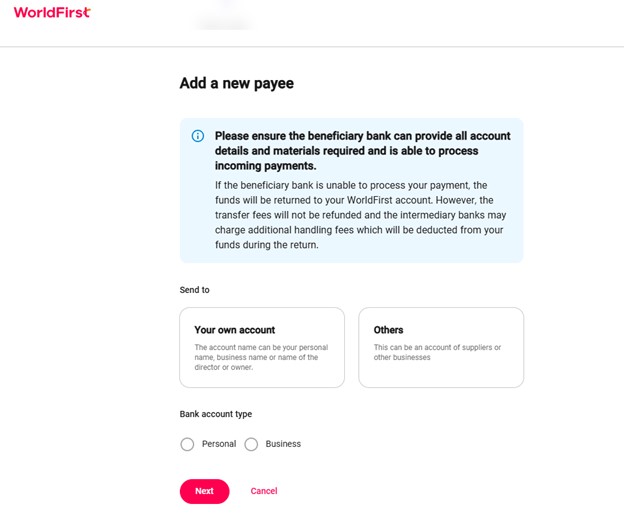
- Select “Add a single payee”
- Choose “Your own account” and then pick the account type you want to link: Personal account or Business account
- Choose the correct account type (personal or corporate) based on your supplier’s account
- Select “USD” as the receiving currency and enter your supplier’s account details
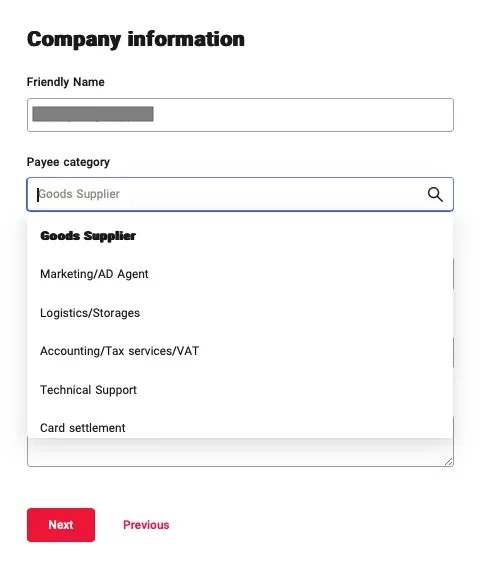
2. Specify the nature of services provided by your supplier
- This ensures the payment is classified correctly and complies with regulations
3. Complete verification
- Confirm the payee using either Authy or SMS verification. The account will now be saved as a payee
4. Initiate the payment
- Go to “Payments” > “Send & Withdraw”
- On the next screen, choose the purpose of payment based on your trade relationship with the supplier
5. Enter the transfer amount
- Input the amount you’d like to send
- Choose whether to send it immediately or schedule it for a future date
6. Review and confirm the transfer
- Click “Next” and complete the verification process to book the payment to your supplier
By using WorldFirst, you can simplify USD payments to Chinese suppliers, avoid hidden bank fees, and maintain a smooth sourcing workflow.
Disclaimer: The information contained is general only and largely our views. Before acting on the information you should consider whether it is appropriate for you, in light of your objectives, financial situation or needs. Although information has been obtained from and is based upon multiple sources the author believes to be reliable, we do not guarantee its accuracy and it may be incomplete or condensed. All opinions, estimates, mentioned products/services and referenced material constitute the author’s own judgement as of the date of the briefing and are subject to change without notice. WorldFirst shall not be responsible for any losses or damages arising from your reliance of such information.