



















About WorldFirst
Resources
More brands of Ant International
We provide coverage in South Asia and Middle East: servicing 210+ countries and territories.

WorldFrist Home > Blog > Business Banking Insights > Foreign transaction fee: Meaning and when it applies to you
Key takeaways

Every dollar saved is a dollar earned—especially for businesses operating on an international scale. For companies that make frequent cross-border payments, hidden costs like foreign transaction fees and high currency conversion rates can quietly eat into profits, turning what should be routine transactions into significant expenses.
This is why you need to calculate and account for these fees. But before you do that, you must understand how these work and what strategies can be used to reduce foreign transaction fees. This article talks all about foreign transaction fees and strategies to save on it.
A foreign transaction fee is a charge applied by banks or payment providers when a transaction involves a foreign currency or is processed internationally. This fee is also known as an international transaction fee or a foreign currency transaction fee. It is typically incurred when making payments in currencies different from your account’s home currency.
The fee usually consists of a percentage of the transaction amount or a fixed amount set by the payment provider. There can also be other processing charges or currency conversion fees.
Foreign transaction fees are applied whenever you make payments in a foreign currency or when transactions are routed through an international banking network, resulting in additional costs for cross-border financial activities. These fees compensate banks and payment providers for the costs associated with currency conversion and cross-border transaction processing.
Note: You may also incur a markup on the exchange rate, which varies depending on the payment provider. Many banks and payment platforms offer currency calculators on their websites to help you estimate transaction costs before completing a payment.
You pay a foreign transaction fee whenever a payment or purchase is made in a currency different from your account’s base currency. For example, making a payment in USD or NZD from an AUD bank account will incur a fee.
This applies to direct bank transfers, online payments and credit/debit card transactions, whether in person or online.
Some payment providers will also charge foreign transaction fees when you receive payments in a foreign currency. In this case, the foreign transaction fee will be deducted from the total funds you receive.
Yes, there are several ways to reduce or even eliminate foreign transaction fees, making international payments more cost-effective for businesses. Here’s how you can minimise fees on international transactions and avoid unnecessary costs:
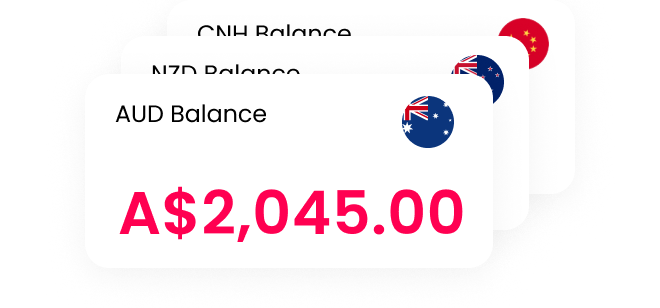
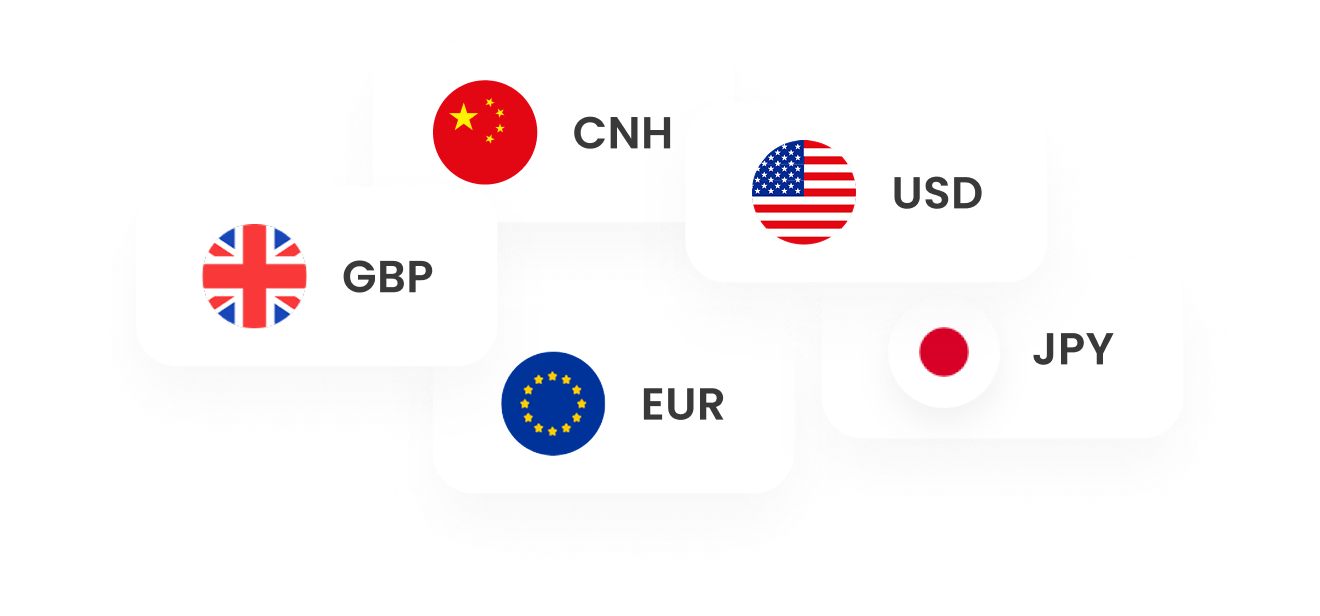
A multi-currency account allows you to hold, send and receive multiple currencies without converting them back to your base currency. That means you can avoid frequent currency conversion fees and reduce the international transaction fee on the bank account.
For example, if you frequently transact in USD or EUR, holding those currencies in your account eliminates the need for constant conversions. For example, if you collect funds in USD, you can keep them in your multi-currency account instead of converting them to AUD or NZD (your base currency). You can then use these USD funds to pay directly for SaaS tools or US-based suppliers.
A multi-currency card works seamlessly with a multi-currency account. You can use the existing funds in your multi-currency account to make payments through the multi-currency cards without incurring additional international transaction fees or exchange rate markups—provided you already hold sufficient funds in the currency of the payment.
Before committing to a payment provider, always check the foreign transaction fees they charge. Payment providers often have different rates for international transfers; even a small percentage difference can save your business significantly over time. Look for providers that offer competitive rates for international transactions.
Timing payments to align with favourable exchange rates can reduce costs significantly. For example, a 1% improvement on a $50,000 payment saves $500. Opt for providers offering tools like forward contracts to lock in rates or firm orders to execute payments at target rates, ensuring cost-effective international transactions.
Check whether your bank or payment provider uses mid-market rates or includes a markup in their exchange rates. A 2% markup on large transfers can add hundreds to your costs. Consolidating payments into fewer transactions can also help reduce multiple international transfer fees.
Open a World Account to save on international transactions with competitive exchange rates and quick transfers. WorldFirst aims to simplify international payments and collections for online sellers, SMEs and global businesses.
Disclaimer: The information contained is general only and largely our views. Before acting on the information you should consider whether it is appropriate for you, in light of your objectives, financial situation or needs. Although information has been obtained from and is based upon multiple sources the author believes to be reliable, we do not guarantee its accuracy and it may be incomplete or condensed. All opinions, estimates, mentioned products/services and referenced material constitute the author’s own judgement as of the date of the briefing and are subject to change without notice. WorldFirst shall not be responsible for any losses or damages arising from your reliance of such information.
Rick Hill has worked in payments and financial services for the past nine years. He began his career at a large institutional bank and has since worked across startups and scaleups. Over the past four years, his experience with e-commerce retailers has led him to believe that WorldFirst will be crucial in helping brands expand globally by demystifying the complexities of entering new markets.
Rick Hill
Author
Choose a product or service to find out more
© 2026, Ant International or its affiliates