






























Telegraphic transfer vs wire transfer vs SWIFT: a guide for Malaysian importers
A supplier invoice can make a simple overseas payment feel confusing before you even open your bank form. The payment terms say TT, the supplier calls it a wire transfer, and the bank asks for a SWIFT/BIC code.
Malaysia’s total trade reached RM336.73 billion in April 2026. As more Malaysian businesses buy from overseas suppliers, more importers have to deal with foreign bank details, payment terms and transfer charges before orders can move forward.
In this guide, we’ll compare telegraphic transfer vs wire transfer vs SWIFT and explain what to check before you pay.
We’ll also explain how a multi-currency account from WorldFirst can support overseas supplier payments, currency conversion and payment records in one place.
Key takeaways:
- TT and wire transfer usually mean the same type of payment: Both refer to an electronic bank-to-bank transfer, but TT is more common on Asian supplier invoices, while wire transfer is more common with US suppliers
- SWIFT routes many international payments: A SWIFT/BIC code identifies the supplier’s bank, so your bank or payment provider can send the payment instruction to the right place
- Payment details matter more than the label: Check the beneficiary name, account details, currency, SWIFT/BIC code, invoice reference and charge option
- The transfer fee is not the full cost: FX rates, intermediary charges, receiving bank fees and charge options can all change the final MYR amount and what your supplier receives
- WorldFirst can make repeat supplier payments easier to manage: With a World Account, you can receive, hold, convert and pay across currencies while keeping supplier details and payment records in one place
Open a World Account to manage overseas supplier payments from Malaysia in one place.
Telegraphic transfer vs wire transfer vs SWIFT: quick comparison
Telegraphic transfer, wire transfer and SWIFT are not three completely separate payment methods. Most of the time, they describe different parts of the same international bank payment.
| Term | What it usually means | What Malaysian buyers should know |
| Telegraphic transfer | An international bank-to-bank payment, often called TT or T/T | Common on Asian supplier invoices, especially for import payments |
| Wire transfer | An electronic bank-to-bank payment | Common wording with US suppliers and international bank instructions |
| SWIFT transfer | An international payment routed through the SWIFT network | Usually needs a SWIFT/BIC code and may involve intermediary banks |
If your supplier asks for TT, they are usually asking for a bank transfer to the account details listed on the invoice. A US supplier may refer to the same type of payment as a wire transfer.
SWIFT is usually used when a payment crosses borders through the banking network. The SWIFT/BIC code tells your bank or payment provider which bank should receive the payment instruction.
Read more: International money transfer services for Malaysian businesses
What is a telegraphic transfer?
A telegraphic transfer is an international bank-to-bank payment. Suppliers often shorten it to TT or T/T on invoices, especially in Asia and import trade.
The name dates back to when banks used telegraph messages to send payment instructions. The payment process has changed, but the term is still common.
You’ll usually see TT when an overseas supplier requires payment before the order can proceed. That could mean paying for samples, sending a production deposit, settling the balance before shipment or paying an invoice in USD, CNH, EUR or another foreign currency.
Bank Negara Malaysia also uses TT as the short form for telegraphic transfer in foreign currency rate disclosures, so you may see it on bank pages, supplier invoices and payment forms.
A TT usually needs more detail than a local Malaysian transfer. Before sending any money, confirm that the invoice includes:
- Beneficiary name that matches the supplier or registered payment entity
- Beneficiary bank name and bank address
- Account number or IBAN, where relevant
- SWIFT/BIC code for international routing
- Invoice currency, invoice number and order reference
- Payment purpose
- Charge option, such as OUR, SHA or BEN
What is a wire transfer?
A wire transfer is an electronic bank-to-bank payment.
In supplier payments, it often refers to the same type of overseas transfer as TT, but the wording is more common with US suppliers and in international bank instructions.
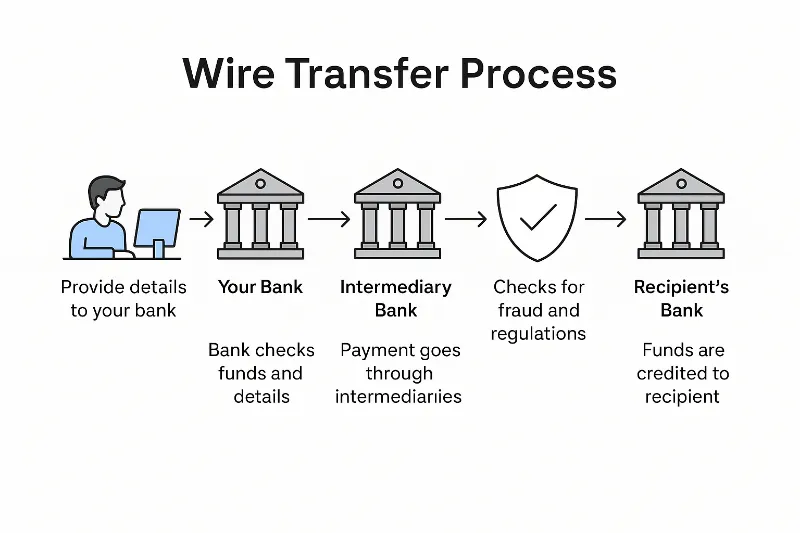
Trade with the US accounted for 10.8% of Malaysia’s total trade in April 2026, so Malaysian businesses may see wire transfer instructions when paying American manufacturers, wholesalers or distributors.
Keep in mind that a domestic US routing number may only support local payments inside the US. Ask the supplier for international wire instructions, including the correct bank address, account details and SWIFT/BIC code.
After you pay, save the payment confirmation and share it with the supplier. That gives them the reference they need to match the transfer to your invoice and move the order forward.
What is a SWIFT transfer?
A SWIFT transfer is an international bank payment that uses the SWIFT network to send payment instructions between banks and financial institutions.
SWIFT provides the messaging system banks use to route cross-border payments.
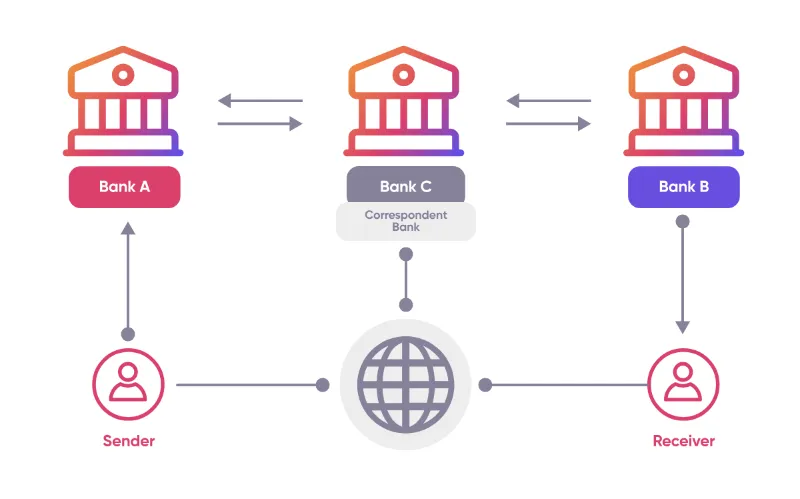
The detail you’ll usually see on a supplier invoice is the SWIFT/BIC code. That code identifies the supplier’s bank, so your bank or payment provider knows where to send the payment instruction.
Malaysia’s cross-border payment infrastructure has also moved towards richer payment data. Bank Negara Malaysia says Malaysia became the first country to fully adopt ISO 20022 for cross-border payments in 2025, ahead of SWIFT’s global compliance deadline. For supplier payments, that makes accurate payment details even more important.
SWIFT matters because it can affect how your payment travels after you send it. If your bank and the supplier’s bank do not have a direct route, one or more intermediary banks may handle part of the transfer.
Before you send a supplier payment through SWIFT, check:
- SWIFT/BIC code for the supplier’s bank
- Beneficiary name and account number
- Bank name and bank address
- Invoice currency and payment reference
- Charge option, such as OUR, SHA or BEN
How much can TT, wire and SWIFT payments cost?
When paying an overseas supplier from Malaysia, the final amount in MYR can also change because of the FX rate, bank charges and the route the payment takes.
Before you approve the transfer, check the full cost:
- Sending fee: the fee charged by your bank or payment provider
- FX rate: the rate used to convert MYR into USD, CNH, EUR or another invoice currency
- Intermediary bank charges: fees that may apply if another bank handles part of the transfer
- Receiving bank fees: fees that the supplier’s bank may deduct before crediting the money
The FX rate can make a bigger difference than the transfer fee, especially once you move beyond sample orders. A slightly weaker rate may not matter on a small test payment, but on a larger deposit or balance payment, it can add a noticeable amount to your total cost in MYR.
The charge option tells the banks who should pay the transfer charges. It matters because bank fees can reduce the amount your supplier receives.
| Charge option | What the code means | What it means for your supplier payment |
| OUR | You pay the charges | Better for full-invoice supplier payments |
| SHA | Charges are shared | You pay your bank’s fee, and other fees may reduce what the supplier receives |
| BEN | The beneficiary pays the charges | Bank fees are deducted from the payment amount, so the supplier may receive less than the invoice amount |
Say your supplier invoice is US$1,000, and production starts only after the full amount arrives. If you choose SHA or BEN, bank charges may reduce what the supplier receives. They may then ask you to send the difference, which means another payment, another fee and another delay.
Before you pay, ask the supplier how much needs to arrive in their account. Then compare the total MYR cost, including the FX rate, transfer fee and charge option.
How long do TT, wire and SWIFT payments take?
TT, wire and SWIFT payments do not follow one fixed timeline in Malaysia.
As a general reference, Malaysian banks publish timelines that look like this:
| Payment stage | Typical Malaysia timing | What to remember |
| Provider processing | Same day if submitted before the deadline, or next working day if late | Processing can start quickly, but the supplier may receive funds later |
| International bank transfer arrival | Often one to three working days | Plan around this for deposits and balance payments |
| SWIFT payment route | Up to four business days on some routes | Intermediary banks and checks can affect the arrival |
| US wire transfer | Usually similar to international TT or SWIFT timing | For US suppliers, ask for international wire instructions |
For a first supplier payment, allow enough time for the payment to clear and for any potential mistakes to be corrected.
A late transfer, missing invoice reference or intermediary bank delay can hold up confirmation, and the supplier may not move the order forward until the funds are matched to your invoice.
Common mistakes new importers make with TT and wire payments
Before you send your first TT or wire payment, here are a few common mistakes you should avoid:
- Treating TT, wire and SWIFT as separate payment choices – Focus on the payment details instead of the label. Check the supplier name, account details, currency, fees, SWIFT/BIC code and payment proof before you send the money.
- Sending the wrong currency – Match the transfer currency to the invoice. If you send a different currency, the supplier’s bank may convert it at its own rate or reject the payment.
- Checking only the transfer fee – A low sending fee does not always mean a low total cost. Check the FX rate, charge option, intermediary fees and expected received amount.
- Choosing the wrong charge option – SHA or BEN can leave the supplier short if banks deduct fees from the payment. Ask the supplier how much needs to arrive and confirm whether you should choose OUR.
- Leaving out the invoice reference – Without an invoice number, order number or proforma invoice reference, the supplier can take longer to match your payment. Add the reference every time and share the payment confirmation.
- Not checking the beneficiary name – The beneficiary name should match the supplier or registered payment entity. Pause before paying if the name looks unrelated or the supplier asks you to pay a personal account.
- Accepting changed bank details too quickly – A last-minute change in bank details can create payment risk. Verify the change through a contact method you already trust and keep a written record before you pay.
When a bank transfer is enough and when WorldFirst makes more sense
A standard bank transfer can work for a first sample order or a one-off supplier payment. You confirm the invoice, enter the supplier’s bank details, accept the FX rate, send the money and share the payment proof.
However, when you’re working with the same supplier every month, small issues can repeat across each order, from FX costs and bank fees to invoice references, payment confirmations and reconciliation.
Say you are a Penang electronics importer paying a Shenzhen factory CNY700,000 before shipment. If one payment provider applies a 0.6% FX markup and another applies 0.2%, the difference can add about RM1,674 to one payment. Transfer fees, intermediary charges and receiving bank deductions can increase the cost further.
With a World Account, you can bring more of that workflow into one place. You can collect payments in 20+ currencies, hold funds in multiple currencies, convert when needed and pay suppliers in 100+ currencies to 210+ countries and territories. Also, you can track incoming and outgoing payments, manage saved supplier details and keep payment records together for reconciliation.
For China sourcing, WorldFirst also supports 1688 World Pay, an official payment solution from 1688.com and WorldFirst. It allows overseas buyers to pay for supported 1688 orders from their World Account balance without opening a Chinese bank account.
WorldFirst isn’t a bank, and some payments may still use local networks or SWIFT. The difference is the setup around the payment. Instead of treating every supplier payment as a separate bank-transfer task, you can receive, hold, convert and pay across currencies from one account.
Open a World Account to manage repeat overseas supplier payments, currency conversion and payment records from one place.
FAQ
1. Do I need an IBAN to pay an overseas supplier from Malaysia?
Not always. You need an IBAN when paying suppliers in countries that use IBANs, especially in Europe. If the supplier’s country does not use IBANs, ask for the account number, bank name, bank address and SWIFT/BIC code instead.
2. What is the difference between a SWIFT/BIC code, routing number and account number?
A SWIFT/BIC code points to the supplier’s bank for an international payment. A routing number usually points to a US bank for local US payments. An account number tells the bank which supplier account should receive the money.
3. Can I pay a Chinese supplier in CNY from Malaysia?
Not directly to a domestic CNY account. For cross-border RMB payments, Malaysian businesses usually use CNH. With WorldFirst, Malaysian customers can pay suppliers’ CNH accounts in Mainland China through the World Account, but they cannot pay domestic CNY accounts directly.
Sources:
- https://www.dosm.gov.my/portal-main/release-content/monthly-external-trade-statistics-apr2026
- https://bnm.gov.my/documents/20124/938039/pd_product_transparency_and_disclosure_dec2024.pdf
- https://www.matrade.gov.my/en/about-matrade/press-release/april-2026-trade-performance
- https://bnm.gov.my/publications/ar2025/ch1e