






























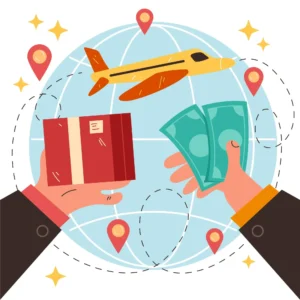
What is dropshipping? It’s a retail model where you sell products online without ever holding stock yourself. Picture running an online store, taking orders, and having a supplier ship each item straight to your customer. You never touch the inventory. This setup has become one of the lowest-barrier ways to launch an international online business, letting you reach global buyers with minimal upfront capital. So how does the model actually work in practice?
Key Takeaways
- Dropshipping is a retail model where you sell products online while a third-party supplier stores the stock and handles order fulfilment directly to your customer.
- You never hold inventory, which keeps startup costs low and removes the need for warehouse space.
- Your profit comes from margins between your retail price and the supplier’s cost, typically around 20 to 30 percent gross before fees.
- Success depends on choosing reliable suppliers, managing longer shipping times, and controlling currency conversion costs on international orders.
- Pakistani sellers can receive marketplace payouts in USD and pay overseas suppliers using a multi-currency account, avoiding repeated conversion losses.
Start Selling Globally With the Right Payment Setup
The dropshipping business model works best when your payment setup matches your global reach. Once orders start arriving from different countries, you need a practical way to collect marketplace payouts in USD and pay suppliers abroad without losing money on every conversion.
A global marketplace payment solution¹ built for cross-border sellers gives you that foundation from day one. Opening a World Account is a straightforward first step toward getting paid and paying out in the currencies your business actually uses.
How Does Dropshipping Work?
Dropshipping works by connecting three parties: your customer, your online store, and a supplier who ships the product. When someone buys from you, you forward the order to a third-party supplier who ships it directly to the buyer. You never handle the item, and your profit is the gap between your price and the supplier’s cost.
This makes dropshipping a low-overhead retail fulfilment method² that many Pakistani sellers use to reach international buyers without renting storage or buying stock upfront.
The Order Fulfilment Flow
The dropshipping business model runs on a simple order fulfilment loop. Once you understand the flow, the rest of the mechanics fall into place.
Here’s how a single sale moves from click to delivery:
- A customer places an order on your online store and pays your retail price.
- You forward the order details to your third-party supplier and pay their wholesale cost.
- The supplier packs and ships the product directly to your customer.
- You keep the difference, minus platform and payment fees.
At no point do you physically touch the inventory. Your supplier holds the stock, manages packing, and handles shipping. Your job is to run the storefront, market the products, and keep customers happy. Amazon’s official guide³ describes this same hands-off model for sellers using its platform.
How Dropshippers Make Money
Dropshippers make money on the margin between what a customer pays and what the supplier charges. Sell a product for $30 that costs you $18, and your gross margin is $12 before fees. That spread, applied across many orders, is where the business earns.
Profit margins in dropshipping tend to sit around 20 to 30 percent gross. However, that figure shrinks once you subtract advertising, platform fees, and currency conversion costs on international sales.
Keeping conversion losses low matters when your income arrives in USD but your suppliers bill in another currency. Holding funds in a multi-currency account lets you pay suppliers without converting twice, protecting the thin margins the model depends on.
Pros, Cons, and Realistic Profit Margins
Dropshipping offers a low-cost entry into global retail, but the tradeoffs are real. You save on inventory and overhead, yet you accept thin margins, tough competition, and longer shipping times. Knowing both sides before you start keeps your expectations grounded and your decisions sharp.
Advantages of the Dropshipping Business Model
The dropshipping business model attracts beginners because it removes the biggest hurdles of traditional retail. You can test ideas without risking large sums upfront.
Here’s what works in your favour:
- Low startup cost. You pay for stock only after a customer buys, so you’re not tying up capital in unsold goods.
- No inventory to manage. Your supplier stores and ships everything, freeing you from warehouse costs.
- Easy product testing. You can list new items quickly and drop what doesn’t sell without absorbing losses.
- Print on demand options. Custom designs on mugs, shirts, and phone cases get printed and shipped only when ordered, letting you build a brand with zero inventory.
Tradeoffs to Weigh Before You Start
The same low barrier that makes dropshipping accessible also makes it crowded. Thin margins and reliance on suppliers are the model’s hardest realities.
Consider the drawbacks honestly:
- Thin profit margins. Industry profit margins⁴ typically sit around 20 to 30 percent gross, and advertising plus fees eat into that fast.
- High competition. Popular products get copied instantly, pushing prices down for everyone.
- Long shipping times. Overseas suppliers can mean two to four week delivery, testing customer patience.
- Supplier reliance. A stockout or quality slip reflects on your store, not theirs.
| A note on realistic expectations: Many beginners quit because they expect fast profits. The market keeps growing⁵, but success takes patient testing, honest margins, and controlling every cost, including currency conversion on your international payouts. |
How to Start a Dropshipping Business Step by Step
Starting a dropshipping business comes down to four practical steps: pick a niche and product, find a reliable supplier, build your online store, and set up payments before you launch. Each step builds on the last, and skipping any one of them usually costs you later in wasted time or lost margin.
Choose a Niche and Product
Pick one focused niche before you list a single product. Chasing every trending item spreads your budget thin and confuses your marketing. Narrow down to a category you can research properly, then select a handful of products with steady demand and room for a healthy margin after fees.
A common question is whether to focus on one product or several. Start with a tight range of three to five products within a single niche rather than one product alone. A single product leaves you exposed if demand drops or a supplier runs out of stock. A small, focused range lets you test which item converts best while keeping your store’s message clear, and once you find a winner, you can build the rest of your catalogue around it.
Find Reliable Dropshipping Suppliers
Your dropshipping supplier makes or breaks the whole operation, so vet each one carefully before committing. Platforms like AliExpress and 1688 connect you to thousands of manufacturers, but not all deliver consistent quality or shipping times.
Check three things before you rely on any supplier:
- Shipping times. Ask for realistic delivery windows to your customers’ countries and test with a sample order.
- Product quality. Order the item yourself so you know exactly what your buyer receives.
- Communication. A supplier who answers quickly saves you from angry customers later.
Sellers sourcing directly from China can compare options in this Alibaba dropshipping for South Asian sellers guide.
Pick Your Selling Platform
Shopify is the most beginner-friendly option for building a dedicated dropshipping store, with built-in tools, app integrations, and a monthly fee starting around $29. WooCommerce runs on WordPress and suits sellers who want more control and lower recurring costs but are comfortable with a technical setup.
Selling on Amazon or Daraz puts you in front of built-in traffic but adds marketplace fees and stricter rules around supplier transparency. Your choice depends on how much control you want over your storefront versus how much you rely on an existing audience.
Set Up Payments and Launch
Sort out how you’ll get paid and pay suppliers before your store goes live. You’ll collect marketplace payouts in USD while suppliers often bill in another currency, so a multi-currency account keeps conversion losses down. Then set up clear customer service channels, write honest shipping timelines, and launch.
Selling Internationally: Payouts, Supplier Payments, and Currency Costs
Selling across borders means money moves in two directions, and both cost you. You collect marketplace payouts in USD from platforms like Amazon, then pay suppliers who bill in another currency. Every conversion trims your margin, and the timing gap between getting paid and paying out can strain cash flow.
Receiving Marketplace Payouts Without a US Bank Account
You can receive Amazon, Etsy, Shopify, and eBay payouts without a US bank account by using a multi-currency account with local receiving details. That lets your marketplace deposit USD directly, so you hold the currency instead of converting it the moment it arrives.
For Pakistani sellers, this removes a real barrier. Many marketplaces expect a local bank account in the payout currency, and traditional routes force an immediate PKR conversion. While Payoneer has a strong presence for marketplace payouts in the region, WorldFirst offers an alternative that gives you USD receiving details through its collecting international marketplace revenue service. You can review Amazon seller payout options in Pakistan for the specifics.
Paying Overseas Suppliers Efficiently
Paying overseas suppliers efficiently means sending funds in their billing currency without a costly double conversion. When you source from a third-party supplier on AliExpress or 1688, they typically invoice in USD or CNY. Paying from a multi-currency account lets you send those funds directly from balances you already hold.
That matters because most Chinese suppliers on 1688 expect fast, currency-matched payment, and delays or extra conversion steps can hold up your orders. This guide on paying 1688 suppliers from Pakistan walks through the process, and you can see how paying overseas suppliers works across currencies.
How Currency Conversion Costs Eat Into Your Margins
Currency conversion costs eat into your margins because they hit both sides of every international sale. You convert USD income into PKR, then convert again to pay a supplier abroad. On the thin 20 to 30 percent gross margins dropshipping runs on, that double loss can erase a chunk of your profit.
The government ecommerce forecast⁶ points to steady growth in cross-border sales, which means these conversion costs only compound as your volume rises.
| Pro tip: Hold USD and CNY in a single multi-currency account. Paying suppliers from balances you already hold skips one conversion entirely, protecting margin on every order. Rates are indicative and subject to change. |
Careful managing currency conversion costs turns a hidden drain into a controllable line item. All foreign exchange transactions are subject to State Bank of Pakistan (SBP) regulations under the Foreign Exchange Regulation Act (FERA).
International vs Domestic Dropshipping: Which Is Right for You?
Domestic dropshipping usually suits beginners with limited capital because faster shipping keeps customers happy and payment stays simple. International dropshipping opens a far wider product pool and better margins, but it adds longer delivery windows and currency conversion costs. Your choice depends on your budget, patience, and how far you plan to scale.
Both models run on the same order fulfilment loop, yet they behave very differently once real orders start arriving. Shipping times, supplier access, profit margins, and payment complexity each shift depending on where your dropshipping supplier sits relative to your customer.
Key Differences at a Glance
The comparison below breaks down the four factors that matter most when you’re deciding between the two. Dropshipping statistics⁷ show international sourcing dominates the market, but domestic models still win on speed.
| Factor | International | Domestic |
|---|---|---|
| Shipping times | Two to four weeks to reach overseas buyers | A few days within the same country |
| Supplier access | Huge pool via AliExpress and 1688, thousands of products | Smaller local supplier base, fewer product options |
| Profit margins | Wider room to mark up, but conversion costs trim the gap | Tighter sourcing prices, though no currency loss |
| Payment complexity | USD payouts plus supplier payments in CNY or USD, double conversion risk | Single currency in and out, simpler bookkeeping |
Fees checked in July 2026. Pricing, eligibility, and product features may change over time. Always confirm the latest information directly with the provider.
For most Pakistani sellers, the practical answer is a mix. You start with international suppliers because that’s where the product range and margin sit, then manage the payment side carefully. Holding USD and CNY in one multi-currency account removes a conversion step, protecting the margin that international sourcing depends on.
Domestic makes sense once your volume justifies faster shipping and repeat customers who won’t wait weeks. Until then, international sourcing gives beginners the widest opening with the lowest upfront risk.
FAQ
What Is Dropshipping and How Does It Work?
Dropshipping is a retail model where you sell products online without holding inventory. When a customer orders from your store, you forward the order to a third-party supplier who ships the item directly to the buyer. Your profit is the margin between your retail price and the supplier’s wholesale cost, minus platform and payment fees.
How Can a Beginner Start Dropshipping?
Start by picking one focused niche and a few products with steady demand. Then vet a reliable dropshipping supplier by testing shipping times and product quality with a sample order. Build your store on Shopify, WooCommerce, or Amazon, and set up a multi-currency account to receive payouts and pay suppliers before you launch.
What Is the Difference Between Dropshipping and Amazon FBA?
With dropshipping, your supplier stores and ships every order, so you never hold stock. With Amazon FBA, you buy inventory upfront and send it to Amazon’s warehouses, which then handles storage and fulfilment. FBA needs more capital but offers faster shipping, while dropshipping keeps startup costs and inventory risk low.
What Is the Biggest Risk in Dropshipping?
The biggest risk is thin profit margins collapsing under hidden costs. Gross margins sit around 20 to 30 percent, and advertising, platform fees, and currency conversion on international sales can erase that quickly. Supplier reliability adds another layer, since a stockout or quality slip damages your store’s reputation, not your supplier’s.
How Do Sellers Receive Marketplace Payouts in USD Without a US Bank Account?
You can receive marketplace payouts in USD without a US bank account by using a multi-currency account with local USD receiving details. Platforms like Amazon and Etsy deposit funds directly, so you hold the currency instead of converting it immediately. This lets you pay overseas suppliers from the same balance and protect your margins.
Turning the Dropshipping Opportunity Into a Real Business
Dropshipping remains one of the most realistic, low-barrier ways to enter international ecommerce, provided you go in with clear expectations. The dropshipping business model rewards patience over shortcuts, so reliable suppliers keep your customers happy, and smart payment handling protects the thin margins the model runs on.
Once orders arrive from different countries, how you collect marketplace payouts and pay suppliers decides how much you actually keep. WorldFirst, backed by Ant International, gives Pakistani sellers a practical way to hold income in the currencies their business uses and remove a conversion step. Opening a World Account is a sensible next step toward getting paid and paying out without losing margin on every order.
Sources
- https://www.worldfirst.com/sasia/solution/ecommerce-seller-solution
- https://www.fedex.com/en-us/small-business/articles-insights/what-is-drop-shipping.html
- https://sell.amazon.com/learn/what-is-dropshipping
- https://www.bigcommerce.com/blog/dropshipping/
- https://www.grandviewresearch.com/industry-analysis/dropshipping-market
- https://www.trade.gov/ecommerce-sales-size-forecast
- https://www.printful.com/blog/dropshipping-statistics
This article is intended for informational purposes only and does not constitute legal advice or professional advice. This article should not be regarded as constituting an offer or a solicitation to buy or sell any regulated or financial products or services. WorldFirst makes no representations or warranties regarding the accuracy, completeness, or applicability of the content, and readers are encouraged to consult with legal professionals or other professionals for advice tailored to their specific situation. WorldFirst does not guarantee the accuracy and completeness of this article and expressly disclaims any and all liability to any person in respect of the consequences of anything done or omitted to be done wholly or partly in reliance on this article.



![WorldRemit review for South Asia [2027]: Features, fees and more](https://mdn.marmot-cloud.com/worldfirst/sites/50/2026/10/20261014141018304-300x228.webp)