

























Industry Solutions
Resources
We provide coverage in South Asia and Middle East: servicing 210+ countries and territories.
WorldFirst Home > Blog > Marketplaces & Platforms > How to Boost Sales on Amazon in South Asia: 10 Practical Ways to Grow
Boosting sales on Amazon comes down to a handful of repeatable levers: listing quality, ads, pricing, reviews, stock and outside traffic. Cross-border sellers on Amazon.com, Amazon.co.uk, Amazon.de and Amazon.ae carry one extra layer, since payouts arrive in foreign currency. The fastest way to increase sales on Amazon is to fix conversion rate first.
Key Takeaways
WorldFirst is part of Ant International, with customer funds held in safeguarded accounts with licensed banking partners. Opening a World Account gives a clearer view of how overseas payouts arrive and how quickly they can be reinvested.
Rewrite the product title around one high-intent keyword plus the attributes buyers filter by, such as size, quantity or compatibility, then make every image answer an objection a shopper would otherwise raise. Copy and creative are the two levers under full seller control, and changing them costs time rather than money.
Brand-registered sellers typically convert better with A+ Content live, since it adds comparison charts and lifestyle detail standard listings lack.¹ Listing fixes show effect within days; ads need two to four weeks of data; reviews and organic ranking move over two to three months. Much of the advice in videos and social groups is outdated or wrong, so verify every tactic against official Seller Central documentation. Joining a community of Amazon sellers is useful alongside the official help pages, not instead of them.
Amazon’s own reporting answers most of the internal-versus-third-party-tool question here; paid tools mainly add speed and competitor data, not better keywords, so they earn their cost once the basics work. A listing with a steady sales history holds rank better than one that keeps changing, so update listings monthly, and after any ranking drop, rather than weekly.
Product images carry the click, so copy only pays off once images support it. A clean white-background main image that reads on a phone screen, a lifestyle shot showing scale and use, and an infographic covering sizing or compatibility reinforce the copy already written. Brand-registered sellers should add A+ Content and shoppable video where eligible.
Better images raise click-through rate (CTR); better copy raises conversion rate while cutting returns and one-star reviews. Writing plainly and specifically for shoppers also keeps the page readable for Amazon’s on-site AI shopping assistant, Rufus, since it draws its answers from the same listing content a buyer sees.
Competitive pricing and reliable fulfilment decide whether a seller holds the Featured Offer, formerly the Buy Box. Ads then buy the traffic, and reviews decide whether that traffic converts. Getting the order wrong means paying for clicks on a listing shoppers do not yet trust – the most common way ad budgets disappear.
The Featured Offer is awarded on factors that include price, stock availability, dispatch reliability and account health. Four sit inside a seller’s control.
Set the target ACoS from net margin, not a forum benchmark. If net margin after all fees is 22%, an ACoS above that figure buys revenue with profit rather than growing it.
Amazon PPC and organic ranking feed each other rather than compete: converted ad sales lift sales velocity, which supports organic ranking over time.
Meaningful review counts usually take two to three months, so build this layer alongside pricing and ad work. Amazon Vine and the Request a Review button in Seller Central are the two compliant paths; check current Seller Central help pages for the allowed window and wording. Product inserts may ask for honest feedback, nothing more. Answering buyer messages within 24 hours also matters, since a fast reply often prevents a negative review before it is written.
| A warning worth taking seriously: fake review brokers, paid review groups and any service promising a guaranteed sales boost put a listing and the whole account at risk. Suppression and account closure are the standard outcomes, and these operators are a common route into seller account fraud. |
External traffic and fulfilment choices only pay off once net margin per unit is visible and there is cash to restock. Driving buyers to a listing that loses money simply loses it faster. Measure first, then scale.
Whether external traffic is worth the spend depends on how well the listing already converts, since traffic sent to a weak listing wastes the budget. Once conversion is solid, short-form social video, one or two relevant creators, an email list built from the seller’s own site, and branded search ads are worth testing. Amazon Attribution shows which source actually converts, rather than guessing from clicks or follows.
Fulfilment by Amazon (FBA) buys Prime eligibility and faster dispatch but adds fulfilment and long-term storage fees. Self-fulfilment keeps cash in hand, adds delivery time, and carries a higher risk of late dispatch, which damages Featured Offer eligibility.
| Factor | FBA | Self-fulfilment |
|---|---|---|
| Main cost drivers | Fulfilment and storage fees per unit | Picking, packing and courier costs |
| Dispatch speed | Fast, handled by Amazon | Depends on the seller’s own operation |
| Prime eligibility | Included | Only through Seller Fulfilled Prime |
| Storage risk | Long-term storage fees on slow stock | Warehouse or home storage cost |
| Cash tied up | Stock sent and held in advance | Stock held locally, shipped on order |
Fees checked in August 2026. Pricing, eligibility, and product features may change over time. Always confirm the latest information directly with the provider.
Hidden costs are why rising sales do not always mean rising profit, so run this on the best-selling unit before scaling anything else: product cost from the supplier, inbound freight and duties, Amazon referral fee, fulfilment fee, storage cost, ad spend divided by units sold, returns allowance, and currency conversion cost on the payout. Whatever remains after those deductions is the real net margin, setting the ACoS ceiling and the price floor discussed earlier.
Marketplace payouts settle on Amazon’s cycle in the marketplace currency, then convert before reaching the seller, which affects reordering before stock runs out. All foreign exchange transactions are subject to State Bank of Pakistan (SBP) regulations under the Foreign Exchange Regulation Act (FERA).³ Export proceeds must be repatriated within SBP timeframes using the correct e-commerce export purpose code,⁴ and SBP-approved Foreign Currency Accounts allow eligible export income to be held in foreign currency.³ Guidance on top bank accounts for freelancers and on setting up a dollar account covers the mechanics.
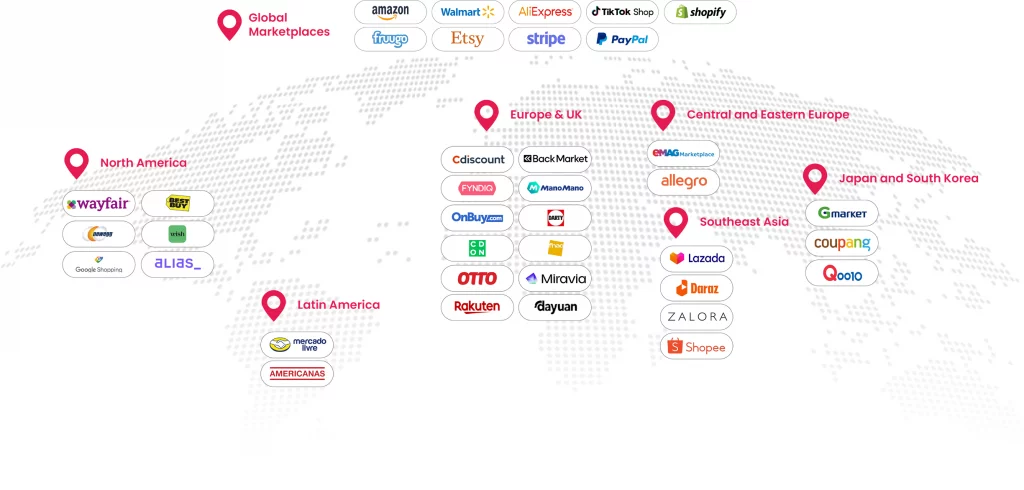
Listings, ads, pricing, reviews and stock grow sales; a payout account only changes how and when money is received and reinvested. Compare providers on settlement speed, published fees, conversion transparency, marketplace coverage, safeguarding arrangements, regulatory disclosure and local support rather than marketing claims. Current WorldFirst pricing sits on the South Asia pricing page, and reading search query performance weekly keeps the process measurable rather than guesswork.
Rates are indicative and subject to change. This article is general information and not legal or tax advice; speak to a qualified tax adviser about income tax on foreign earnings.
Run both, in that order. Amazon PPC buys immediate placement and search term data otherwise unavailable, while organic ranking lowers cost per order over time. Ad profits then fund the listing quality that lifts organic ranking.
Watch for promises of guaranteed rankings, payment demanded outside a traceable channel, refusal to name past clients, and any request for a Seller Central login. An offer to supply product reviews is the clearest signal of all, and walking away protects the account.
Ask for a named reference on a live ASIN that can be checked independently. Request raw Seller Central screenshots rather than the vendor’s own dashboard, agree a short paid trial with a defined ACoS target, and never share account credentials. The same checks apply when registering as a Temu seller.
Growth on Amazon rarely comes from one clever move. It comes from repeating a small number of measured changes, one variable at a time, then checking net margin per unit before scaling. Steady growth comes from tracking the least exciting numbers, not chasing the newest tactic.
Once the listing, ad and pricing work starts moving, the remaining question is how quickly payouts come back into the business. Open a World Account to receive and reinvest overseas marketplace payouts.
Sources:
This article is intended for informational purposes only and does not constitute legal advice or professional advice. This article should not be regarded as constituting an offer or a solicitation to buy or sell any regulated or financial products or services. WorldFirst makes no representations or warranties regarding the accuracy, completeness, or applicability of the content, and readers are encouraged to consult with legal professionals or other professionals for advice tailored to their specific situation. WorldFirst does not guarantee the accuracy and completeness of this article and expressly disclaims any and all liability to any person in respect of the consequences of anything done or omitted to be done wholly or partly in reliance on this article.
Linna is a Senior Content Strategy Manager specializing in fintech, cross-border payments, and global ecommerce. With extensive experience in international B2B growth content, and global market expansion, she leads content initiatives that help businesses navigate cross-border trade, international payments, and digital commerce at scale.
Linna
Author
Choose a product or service to find out more
Save money, time, and have peace of mind when expanding your global business.
© 2026, Ant International or its affiliates