

























Industry Solutions
Resources
We provide coverage in South Asia and Middle East: servicing 210+ countries and territories.
WorldFirst Home > Blog > Marketplaces & Platforms > Amazon China: Is It Still Available and How Does It Work Today?
Amazon China confuses a lot of sellers, and the confusion is fair. The answer is not a clean yes or a clean no. Part of what Amazon once ran locally has gone, while other parts of the business are still active, and some of them matter directly to anyone building a cross-border e-commerce operation. Here is what closed, what still runs on Amazon.cn, and what it changes for your payouts.
Key Takeaways
If you sell on Amazon and want a clearer way to collect and hold your payouts before converting them, opening a World Account is a practical starting point.
Amazon still operates there, but not in the way most people assume. The Amazon.cn domestic marketplace that sold to local shoppers shut in mid-2019.¹ Amazon kept its cross-border store, its overseas seller programme and its cloud business, so the company never fully withdrew from the market.
The closure covered a specific slice of the business: third-party domestic sellers and local retail shipping from Amazon’s own inventory. Reuters reported that Amazon would stop supplying products from local inventory and stop serving domestic third-party sellers, while keeping its cross-border store and cloud operations running.¹
Amazon bought local bookseller Joyo.com in 2004 and later rebranded it as Amazon.cn, which is why the domain still exists. Visit it today and you get a stripped-back site whose main job is routing shoppers to imported stock rather than a full local marketplace. The New York Times framed the retreat as a decision to stop fighting entrenched rivals on their own ground.²
Shoppers there buy on platforms built for that market:
Three things worked against Amazon: weaker localization of the shopping experience, rivals with deeper domestic logistics infrastructure, and payment habits built on wallets like Alipay and WeChat Pay rather than card checkout.² Sellers who remit money for stock from that market feel the same wallet-first pattern on the supplier side.
Four things continue. Shoppers can reach the Amazon Global Store through Amazon.cn for imported goods, exporters can join Amazon Global Selling, and Amazon runs cloud services through two separate local AWS regions.¹ ³ Digital content and app availability have shifted since 2019, so treat those as the moving parts.
AWS operates the Beijing Region through Beijing Sinnet Technology and the Ningxia Region through Ningxia Western Cloud Data Technology. Both sit apart from AWS globally because local partners hold the operating licences and run the infrastructure, which is why accounts and services differ from other regions.³
Reuters reported in 2019 that Kindle and the cross-border store would carry on.¹ The Kindle side has changed since then, so check Amazon’s own service pages rather than dated coverage before assuming a device, Amazon Prime benefits or the Amazon Appstore is available. Xiaomi founder Lei Jun is sometimes named alongside this story because Amazon’s early China retreat is often compared with the rise of homegrown competitors, though Amazon Global Store shoppers should still verify current availability directly.
| Amazon.cn today | Amazon Global Store | Amazon.com | |
|---|---|---|---|
| Who can buy | Local shoppers, limited catalogue | Local shoppers wanting imports | Buyers in the US and eligible export markets |
| What is listed | Access route to imported stock | Selected overseas inventory | Full US catalogue |
| Delivery | Cross-border shipping | Cross-border shipping, longer delivery time | Domestic US, plus export-eligible items |
| Payment methods | Local wallets | Local wallets | Cards and Amazon-supported methods |
| Seller relevance | Not a selling channel | Reached via Global Selling | Main marketplace for exporters |
Fees checked in August 2026. Pricing, eligibility, and product features may change over time. Always confirm the latest information directly with the provider.
A few practical points on shipping in and out:
Payout infrastructure, not the local storefront, is what sellers actually need to plan around, which is one of the reasons sellers trust this provider.
Sellers based in South Asia cannot have Amazon payouts deposited straight into a local bank account. The standard route is to collect the payout into a multi-currency account held in the payout currency, then pay those funds out locally to a bank account or wallet when you choose to convert.
Stock location sets your timing. Fulfillment by Amazon (FBA) keeps inventory in Amazon’s centres or overseas warehouses, while Fulfilled by Merchant (FBM) leaves shipping with you, and both settle on the same payout cycle.
Marketplace payouts count as export proceeds, so repatriation (bringing that foreign currency back into the country) follows State Bank of Pakistan rules; confirm the specific requirements for your account with your bank or a qualified adviser. Plan for the gap between Amazon’s settlement cycle and your supplier or logistics bills, because funds usually stay held at Amazon while an account sits under review.
All foreign exchange transactions are subject to State Bank of Pakistan (SBP) regulations under the Foreign Exchange Regulation Act (FERA). This article is general information and not tax advice; speak to a qualified tax adviser about your own position.
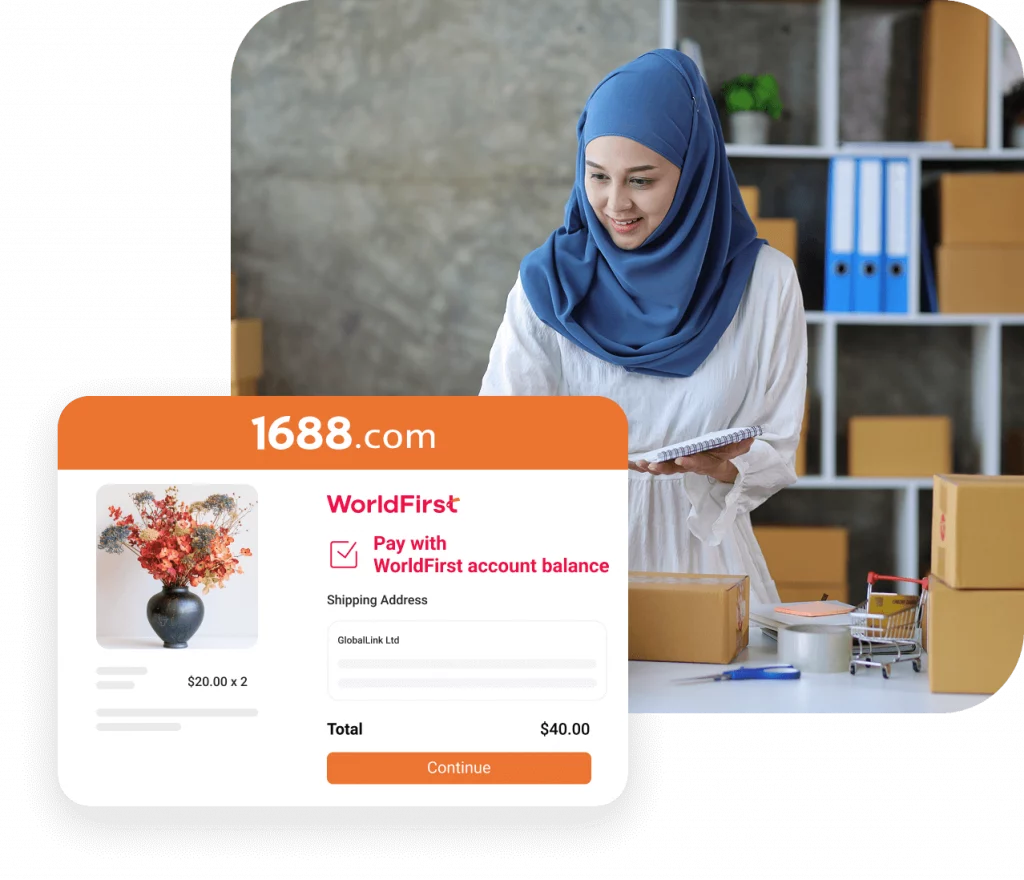
Genuine payout changes only happen inside Seller Central, never over email or messaging apps.⁴ Apply the same caution when sourcing products through 1688 and verify a supplier before you remit money for stock. Virtual cards suit platform-fee spend, and current fees are listed on the WorldFirst South Asia pricing details, or ask through getting support for your account.
Amazon.cn is now a limited site rather than a local marketplace. The Amazon Global Store lets shoppers there buy imported stock shipped in from overseas fulfilment centres. Amazon.com serves buyers in the US from domestic inventory, and it is the marketplace most exporters actually list on.
Check Amazon’s own service and help pages for the specific product, then cross-check its investor disclosures for anything material. For cloud services, the AWS China site names the local operating partners for each region. Both beat relying on news articles written years ago.
Yes, through cross-border channels. Global Store orders ship in from abroad, and a package forwarder covers items that are not export-eligible to your address. Expect customs clearance and duties on arrival, plus longer delivery windows than a domestic order would take.
Amazon China today means Global Store access for shoppers, Global Selling for exporters and two locally operated cloud regions. It does not mean a local marketplace you can list on, and no amount of older commentary changes that.
So the real question for a seller in South Asia is not whether Amazon runs a storefront there. It is whether your payouts, your supplier payments and your compliance paperwork are set up to handle cross-border e-commerce without surprises. That is the part you control.
If your Amazon Global Selling payouts are still routed through a path you are not confident in, opening a multi-currency account gives you somewhere to collect and hold those funds before you convert them.
This article is intended for informational purposes only and does not constitute legal advice or professional advice. This article should not be regarded as constituting an offer or a solicitation to buy or sell any regulated or financial products or services. WorldFirst makes no representations or warranties regarding the accuracy, completeness, or applicability of the content, and readers are encouraged to consult with legal professionals or other professionals for advice tailored to their specific situation. WorldFirst does not guarantee the accuracy and completeness of this article and expressly disclaims any and all liability to any person in respect of the consequences of anything done or omitted to be done wholly or partly in reliance on this article.
Linna is a Senior Content Strategy Manager specializing in fintech, cross-border payments, and global ecommerce. With extensive experience in international B2B growth content, and global market expansion, she leads content initiatives that help businesses navigate cross-border trade, international payments, and digital commerce at scale.
Linna
Author
Choose a product or service to find out more
Save money, time, and have peace of mind when expanding your global business.
© 2026, Ant International or its affiliates