

























Multi-currency accounts, competitive FX, and global transfers — Everything you need to pay and get paid internationally
Built for faster payments, smarter liquidity, and robust compliance—all powered by our next-gen API toolkit and AI-native architecture.
Named a Top Global Fintech Company by CNBC & Statista, we’ve supported 1.5M+ businesses since 2004.
About WorldFirst
Resources
More brands of Ant International
Europe
Asia
Oceania
Africa

We provide coverage in South Asia and Middle East: servicing 210+ countries and territories.

What Are Cross-Border Payments: What South Asian Businesses Need to Know

Contents

Cross-border payments move money between a payer in one country and a payee in another, and the journey rarely goes as smoothly as the invoice suggests. Your client says the transfer went out three days ago. Nothing has arrived, and when it does, the amount is smaller than expected.

This guide is for freelancers, remote workers and small exporters earning USD, GBP or EUR from overseas clients. Fees, banks and the exchange rate each take a share of international payments before the money reaches you. Here is how a payment actually travels from a client’s account to yours.

Key Takeaways

  • A cross-border payment (also called an international money transfer) is any transfer where the payer and payee sit in different countries, so the money crosses two or more banking systems before it settles.
  • Delays and deductions come mostly from correspondent and intermediary bank handoffs, not from the sender’s bank alone.
  • The biggest hidden cost is usually the FX (foreign exchange) markup added on top of the mid-market rate, not the visible transaction fee.
  • Bank wires typically settle in one to five business days; payment platforms and multi-currency accounts often settle faster because fewer intermediaries are involved.
  • Bangladesh Bank classifies freelance earnings as export income, which must be repatriated through approved banking channels within the timeframe the regulator sets.

Platforms convert at withdrawal, which is why withdrawing Fiverr earnings rarely matches the invoice figure exactly. Understanding how cross-border payments move, and where each fee sits along the way, is the first step to protecting more of what you earn.

How Does a Cross-Border Payment Actually Move?

A cross-border payment moves through several banks, not one. Your client’s bank debits the funds and sends a SWIFT instruction, a global messaging network banks use to instruct each other. One or more correspondent banks, which hold accounts in each other’s currencies, pass the value along the chain; currency conversion happens at one of those points, and the receiving bank credits your account at settlement. Money itself does not cross a border; only the instructions and the value held in bank accounts move.

The Route From Sender to Settlement

The journey generally runs in five steps:

  1. Your client instructs their bank to remit the invoice amount.
  2. The bank screens the payment for sanctions and anti-money-laundering (AML) checks.
  3. The instruction passes to a correspondent bank holding accounts in both currencies.¹
  4. Currency conversion happens at whichever bank handles the FX leg.
  5. The receiving bank credits your account and records the value date.

Each extra intermediary bank in the chain adds a deduction and usually another working day, which is why an identical sending amount can land in one day on one route and four days on another.

All foreign exchange transactions are subject to Bangladesh Bank (BB) regulations under the Foreign Exchange Regulation Act (FERA). Your bank applies these rules automatically once funds arrive, so it is routine rather than an extra step you manage.

Why Domestic and International Transfers Are Not the Same

A domestic transfer settles inside one banking system and one currency, using payment rails both banks already share, which is why it clears within hours. A cross-border payment crosses several banking systems, involves at least one currency conversion, and passes through compliance checks at every bank it touches.² That combination is the main reason international transfers take longer.

“Cross-border payment” and “international money transfer” describe the same movement of funds; the second is simply the consumer-facing label banks and platforms use. Remittances sent by a worker abroad travel the same basic route as a client settling your invoice, and both depend on accurate recipient bank details reaching the right correspondent bank on the first attempt.

Payment Methods, Fees and FX Markups: Where the Money Goes

Your realistic options are a SWIFT wire, a payment platform payout, or a multi-currency account. Total cost is never one number: it is the visible fee, plus deductions taken by intermediary banks along the way, plus the FX markup applied on top of the mid-market rate at the point your money is converted.

Method Comparison Table

Method Typical settlement time Where cost sits Best suited to Practical limitation
SWIFT wire transfer 1 to 5 business days Sending fee, intermediary deductions, bank FX markup Large one-off invoices Client needs your SWIFT details
International ACH (Automated Clearing House) 2 to 5 business days Lower fixed fee, cost at conversion Recurring client payments Limited corridor coverage
Payment platform payout Same day to 3 business days Withdrawal fee plus payout conversion Upwork, Fiverr, marketplace earnings Conversion happens on the platform’s terms
Multi-currency account Often within 1 business day Stated transfer fee plus FX margin Billing clients in USD, GBP or EUR Not every currency is supported
Digital wallet Minutes to hours Load, spend and conversion fees Small values, online spending Coverage in South Asia is uneven
Cryptocurrency rail Minutes Exchange spread on both sides No settled use for export income Volatility and regulatory limits

Fees checked in August 2026. Pricing, eligibility, and product features may change over time. Always confirm the latest information directly with the provider.

A wire and a platform payout can leave a client’s account the same day yet land days apart: the wire waits behind every bank in its chain, while the payout follows a shorter, more direct route.

Which Methods Actually Work for South Asian Earners?

PayPal and Wise Business have limited availability in Bangladesh, so the two methods overseas clients often suggest first are often not usable, leaving bank wires, payment platform payouts and multi-currency accounts as the realistic options. Cryptocurrency and stablecoin rails move value quickly, but volatility and regulatory limits mean they remain an unsettled route for export income rather than a genuine alternative for everyday invoicing.

The FX Markup Is Usually the Biggest Deduction

The FX markup is usually the largest single deduction in a cross-border payment, larger than any visible transfer fee. The mid-market rate is the midpoint between a currency’s buy and sell price, the figure most currency-converter searches show. The FX markup is the margin a provider adds on top of that rate before converting your money; it rarely appears as its own fee line, which is exactly why it gets overlooked.

Total cost typically sits in five places:

  • the sending fee charged by your client’s bank or provider
  • the receiving or lifting fee charged when funds land
  • correspondent deductions taken in transit³
  • the FX markup applied at the point of conversion
  • the platform conversion fee applied when you withdraw earnings

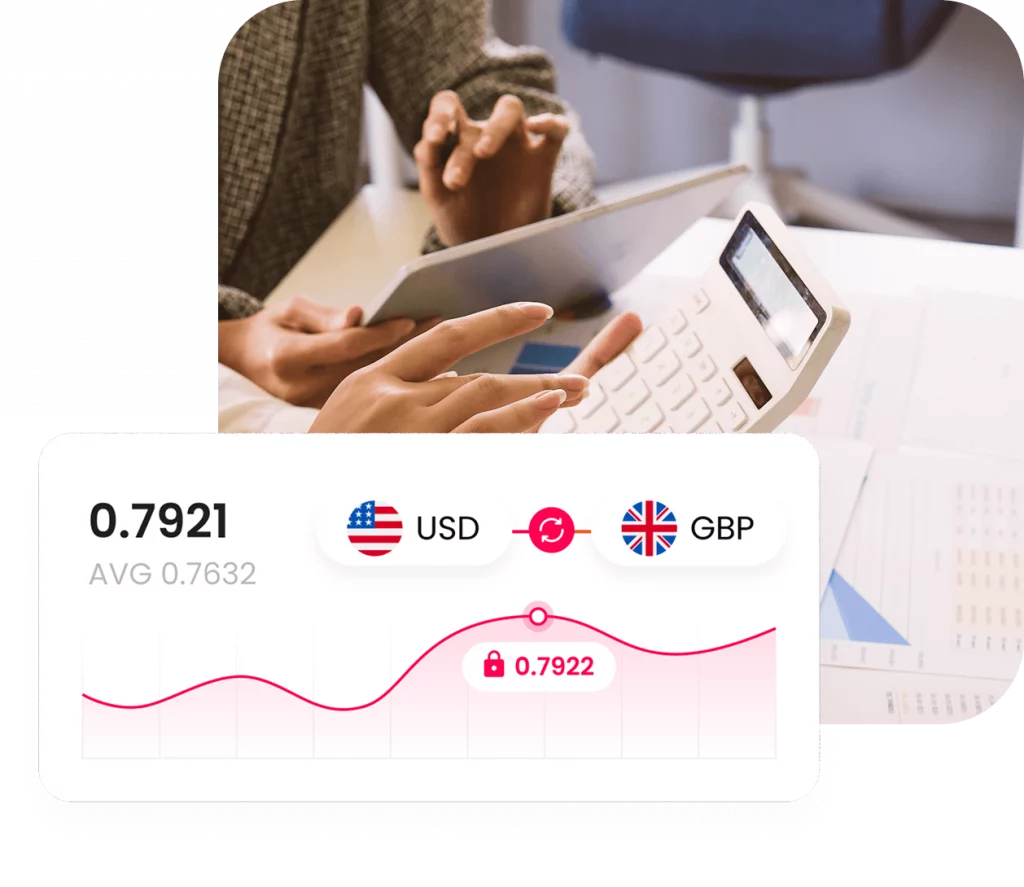
Currency risk is the other half of the cost equation: the rate can move between the day you invoice and the day the money settles, sometimes enough to noticeably change what lands. If you invoice and hold funds in USD, GBP or EUR rather than converting immediately, the timing of that conversion stays in your hands. Tracking USD to PKR rate trends across the region can help you spot patterns, and setting up a USD account in South Asia before your next invoice gives you that flexibility from the start.

Rates are indicative and subject to change.

Your First Overseas Payment: A Step-by-Step Checklist

Confirm your name matches your account exactly, send complete recipient bank details, agree the invoice currency and who absorbs the fees, state the purpose of payment, keep the contract and invoice on file, then track the transfer through to its value date. That sequence alone prevents most first-time failures.

Before You Send Your Client Any Details

  1. Confirm your legal name matches your account name exactly.
  2. Send full recipient bank details, including SWIFT code, account number and registered address.
  3. Agree the invoice currency and who absorbs the fees.
  4. State the purpose of payment on the invoice.
  5. Keep the signed contract and commercial invoice on file.
  6. Confirm your reference appears on the incoming payment.
  7. Track the payment and note the value date.

Check any provider before trusting it with your funds. Read its licensing and regulatory disclosures, confirm that client funds sit in safeguarded accounts with licensed banking partners, and look at the group behind the brand. WorldFirst is part of Ant International, with full regulatory detail available directly on its website. The same documents you already keep for your own records are needed when starting your account registration.

Scam Red Flags and What to Do When a Payment Goes Missing

Payments most often stall at compliance for routine, preventable reasons, including:

  • KYC (know your customer) or verification not completed
  • AML and sanctions screening still in progress
  • the recipient name not matching the account name
  • a missing purpose-of-payment code
  • no commercial invoice on file

A handful of patterns are worth treating as genuine red flags:

  • a client changing bank details by email partway through a project
  • an invoice you never actually issued
  • pressure to move the conversation off-platform
  • an overpayment followed by a refund request
  • an email from a lookalike domain, the usual route for business email compromise

When a payment goes missing, work through these steps in order:

  1. Contact your provider with the payment reference.
  2. Request a SWIFT trace from the sending bank.
  3. Ask the sender to raise a recall.
  4. Keep written records of every step you take.

Keeping Records and Repatriating Export Income

Match each foreign-currency receipt to its invoice and contract, and note any deductions separately so the credited amount reconciles cleanly at month end. Bangladesh Bank classifies freelance earnings as export income, which must be repatriated through approved banking channels within the retention timeframe the regulator sets.⁴ Cross-border e-commerce sellers face the same underlying logic, a point also covered in opening a foreign currency account in Pakistan.

This article is general information and not legal or tax advice.

Cross-Border Payment Questions Answered

What Is a Cross-Border Payment and How Is It Different From a Domestic Payment?

A cross-border payment is any transfer where the payer and payee sit in different countries, so funds pass through more than one banking system before settling. A domestic payment stays inside one system and one currency, which is why it typically clears within hours. Cross-border payments add currency conversion, correspondent banks and compliance screening at each stage, which is why they take longer and cost more.

How Long Do Cross-Border Payments Take, and What Makes Some Slower?

A bank wire usually settles in one to five business days, though exact timing depends on the route. Three things commonly stretch that settlement time: the number of intermediary banks on the route, cut-off times and weekends at each bank along the chain, and compliance screening whenever a detail looks incomplete. A payment sent late on a Thursday can sit unprocessed until the following Monday.

How Do I Check That a Payment Provider Is Licensed and Client Funds Are Safeguarded?

Read the provider’s published regulatory disclosures and check which authority licenses it for the services you need. Confirm that client funds sit in safeguarded accounts with licensed banking partners, rather than mixed with the company’s own money, then look at the parent group behind the brand, since a well-established parent is generally a sign of institutional staying power.

What Is Changing for Cross-Border Payments in the Near Term?

Bangladesh Bank has issued circulars covering inward remittance processing timelines and a bank-intermediated framework for cross-border digital payments, alongside a per-transaction cap on online payment gateway service providers.⁵ ⁶ Globally, the trend points the same way: real-time payment rails that link domestic systems directly, and ISO 20022 messaging, a global standard for exchanging financial data, that carries richer information so fewer payments stall on incomplete details.

Getting Paid From Overseas Without Losing the Margin

Everything here comes down to one practical decision: choosing the route with the fewest intermediaries and the clearest view of the FX margin. A shorter chain of banks means fewer deductions and a shorter wait for funds to land. A clearly stated margin means you can price your work knowing roughly what will actually reach your account.

Keeping foreign earnings in USD, GBP or EUR and converting when the exchange rate suits you protects more of the invoice value than converting automatically at every payout, and a multi-currency account exists for exactly that reason.

Documentation is part of the job rather than a hurdle to clear. Keeping contracts and invoices on file, and repatriating export income through approved banking channels, turns month-end reconciliation into a routine task rather than a scramble.

If cross-border payments are how your income arrives, opening a World Account gives you something concrete to compare against what your bank offers today.

Sources:

  1. https://www.investopedia.com/ask/answers/071715/what-role-does-correspondent-bank-play-international-transaction.asp
  2. https://www.investopedia.com/terms/c/cross-border-financing.asp
  3. https://www.investopedia.com/terms/c/correspondent-bank.asp
  4. https://www.bb.org.bd/mediaroom/circulars/fepd/aug132026fepd-130e.pdf
  5. https://www.bb.org.bd/en/index.php/mediaroom/circular/59
  6. https://www.bb.org.bd/en/index.php/financialactivity/paysystems

This article is intended for informational purposes only and does not constitute legal advice or professional advice. This article should not be regarded as constituting an offer or a solicitation to buy or sell any regulated or financial products or services. WorldFirst makes no representations or warranties regarding the accuracy, completeness, or applicability of the content, and readers are encouraged to consult with legal professionals or other professionals for advice tailored to their specific situation. WorldFirst does not guarantee the accuracy and completeness of this article and expressly disclaims any and all liability to any person in respect of the consequences of anything done or omitted to be done wholly or partly in reliance on this article.

Linna is a Senior Content Strategy Manager specializing in fintech, cross-border payments, and global ecommerce. With extensive experience in international B2B growth content, and global market expansion, she leads content initiatives that help businesses navigate cross-border trade, international payments, and digital commerce at scale.

Linna

Author

Senior Content Strategy Manager
WorldFirst South Asia

Continue reading

The simpler way to pay and get paid

Save money, time, and have peace of mind when expanding your global business.