
























We provide coverage in South Asia and Middle East: servicing 210+ countries and territories.
WorldFirst Home > Blog > Doing Business with China > China Sourcing: A Practical Guide to Finding and Paying Chinese Suppliers in South Asia [2026]
A step-by-step guide to sourcing products from China safely, from finding suppliers to paying them.
Key Takeaways
China sourcing means finding, checking and buying products from Chinese manufacturers or wholesalers to resell. This guide is for e-commerce sellers and small online businesses who source stock from China. It explains how to find suppliers, spot common scams, verify a supplier before you send money, and pay Chinese suppliers safely once your order is confirmed.
China sourcing is the process of finding products made in China, comparing suppliers, checking their reliability and buying stock to resell. It covers everything from your first product search to placing an order and paying the supplier. For online sellers, it is how you fill your store with inventory at a workable cost.
The typical sourcing journey follows a clear path:
Each stage reduces risk before the next. The point of sourcing well is not just a low price, it is a supplier you can rely on order after order. A cheap first order means little if the goods never arrive or the quality is poor.
You can source products from China through online marketplaces, trade platforms, sourcing agents or trade fairs. Most online sellers start with well-known platforms because they are easy to search and list thousands of suppliers in one place. Your choice depends on your budget, order size and how much support you need.
Common sourcing routes include:
For a deeper look at buying through these platforms, see our guides on how to import products from China and how Alibaba works for buyers. A seller in Karachi or Dhaka can compare these routes the same way a buyer anywhere else would, based on order size and risk.
“China 1 sourcing” is not a standard industry term, and searchers often mean one of two things: sourcing directly from primary suppliers (factories) rather than middlemen, or sourcing through a specific agency that uses the name. In practice, most sellers use it loosely to describe getting products straight from the source in China.
Buying closer to the factory can lower your unit cost, but it often comes with higher minimum order quantities (MOQs) and less hand-holding. Going direct saves money only when you can handle verification and quality checks yourself. If you are new, a trading company or agent may cost more per unit but reduce your risk.
You find reliable Chinese suppliers by searching trusted platforms, checking supplier profiles, reading order history and shortlisting several options before you commit. Never rely on a single supplier or the first quote you receive. A wider shortlist gives you leverage and a fallback if one supplier fails your checks.
Practical steps to build a shortlist:
Our guide on how to find suppliers on Alibaba walks through this search process in more detail. A supplier that answers questions clearly and provides documents is usually safer than one offering the lowest price with vague answers.
You check a Chinese supplier by verifying their business details, ordering samples, confirming product specifications and reviewing all paperwork before you pay. Verification is the single most important step in sourcing, because most losses happen when buyers send money to a supplier they have not properly checked.
A basic verification checklist:
For a fuller walkthrough, read our guide on how to verify Chinese suppliers. This is where careful buyers protect themselves, and where rushed buyers lose money.
The main risks when sourcing from China are supplier fraud, poor product quality, payment scams and unclear terms. None of these mean Chinese suppliers are untrustworthy as a whole. They simply reflect the reality of buying from a distance, where you cannot inspect the factory or the goods in person.
Common risks to watch for:
Treat any last-minute change to payment details as a warning sign, and confirm it directly with your supplier through a known contact before sending anything. Verifying details before you pay, rather than after, is your strongest defence.
You pay Chinese suppliers safely by confirming the payment details in advance, using a traceable payment method, and keeping clear records of every transaction. Cash-style or untraceable transfers offer no protection, so most sellers use a business payment platform or bank transfer that documents each payment.
Once you have found and verified your supplier, the sourcing problem becomes a payment problem. You need a way to send funds across borders, convert currency at a clear rate, and keep proof of what you paid. This is where a dedicated cross-border payment method matters.
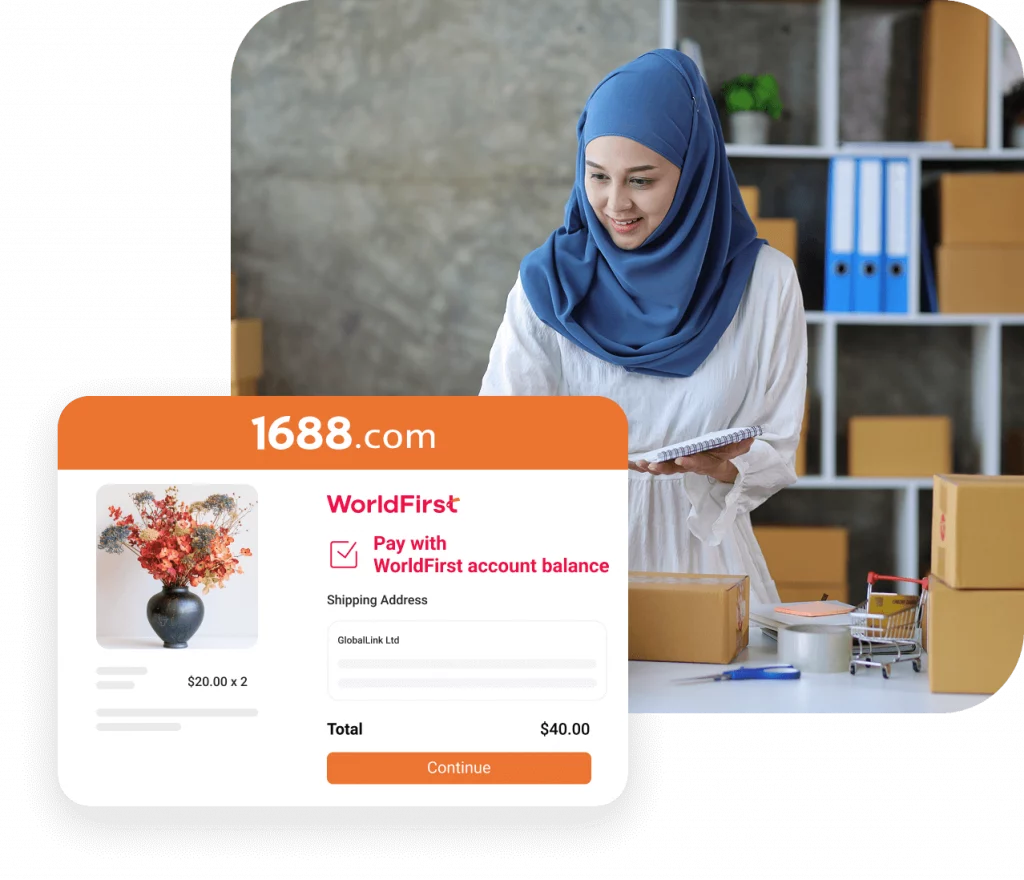
WorldFirst is a payments provider that helps online sellers pay suppliers in China through a business account built for paying into China. You can hold funds in major currencies such as USD, GBP and EUR, and send supplier payments across borders. WorldFirst is backed by Ant Group (Ant International), and holds over 20 currencies and sends to more than 100 currencies across 200+ countries and regions. Opening an account requires basic business and identity details during onboarding, so check the current requirements before you apply.
[CTA: Open a World Account]
Different providers charge and operate in different ways, so it helps to compare before you choose. The table below sets out publicly listed details for three cross-border options online sellers commonly consider.
| Provider | Supplier payment approach | Publicly listed cost | China coverage |
| WorldFirst | Business account to pay into China | Fees vary by currency and method [fees – confirm with editor] | Pay into China solution offered |
| Payoneer | Pay suppliers/contractors globally¹ | Card-funded fee 3.99% + fixed fee (e.g. USD 0.49); other fees vary by route² | Holds a licensed China payment provider³ |
| Wise | Send CNY or USD to businesses in China⁴ | Mid-market rate plus a variable transfer fee shown at checkout⁵ | B2B transfers to China supported⁴ |
Fees checked in June 2026. Pricing, eligibility, and product features may change over time. Always confirm the latest information directly with the provider.
Payoneer publicly lists a card-funded supplier payment fee of 3.99% plus a fixed amount depending on your currency, with other fees varying by route, and completed the acquisition of a licensed China-based payment provider.¹²³ Wise supports business transfers to China in CNY or USD and applies the mid-market exchange rate with a variable fee shown at checkout.⁴⁵ WorldFirst’s own fees vary by currency and payment method, so confirm current pricing before you send.
Before paying a supplier, you should confirm the invoice, the payment account name and the agreed terms in writing. A short checklist at this stage prevents most avoidable losses. Rushing the final payment is where careful buyers still get caught.
Run through these before you send funds:
Documented payments give you a record if a dispute arises, which informal transfers rarely do.
A business can make China sourcing easier by standardising supplier checks, keeping clear records and using a reliable payment method for repeat orders. Once you source regularly, small inefficiencies add up. A repeatable process saves time and reduces mistakes.
Ways to streamline sourcing:
A business account for paying into China can simplify repeat payments by keeping your supplier transactions in one place. For sellers ordering from China every month, that consistency is worth more than chasing the lowest one-off fee.
Start by choosing one product and researching demand before contacting suppliers. Search a B2B platform such as Alibaba, shortlist several suppliers, and order samples to test quality. Verify each supplier’s business details before you pay, and begin with a small first order. This keeps your risk low while you learn how sourcing works in practice.
Yes, most online sellers source from China entirely remotely. You can find suppliers on B2B platforms, communicate by message or video call, order samples by courier, and pay through a cross-border payment method. Visiting trade fairs or factories can help for large orders, but it is not required to begin sourcing or to place regular orders.
If a supplier sends wrong or faulty goods, your options depend on your agreement, records and the platform’s protections. Clear written specifications, an approved sample and documented payments strengthen your case. Many B2B platforms offer trade assurance or dispute processes for orders placed through them, which is why keeping full records of every order matters.
Yes, some providers let you pay suppliers in Chinese yuan (CNY) as well as in USD. Paying in the supplier’s currency can improve price transparency, since the supplier is not adding a conversion markup. Compare the exchange rate and transfer fee across providers, and always confirm the correct account details before sending any payment.
You can avoid payment scams by verifying supplier details before every payment and treating sudden account changes with caution. Confirm the payment account name matches the company, keep communication on record, and never rush a payment under pressure. Use a traceable payment method that documents each transaction, so you always have proof of what you sent and to whom.
China sourcing works best when you treat it as a full process, from finding and verifying suppliers to paying them safely. Get the checks right before you send money, keep clear records, and choose a payment method you can rely on for repeat orders. When you reach the payment stage, a business account built for paying into China can make sending supplier payments simpler and easier to track.
Sources
This article is intended for informational purposes only and does not constitute legal advice or professional advice. This article should not be regarded as constituting an offer or a solicitation to buy or sell any regulated or financial products or services. WorldFirst makes no representations or warranties regarding the accuracy, completeness, or applicability of the content, and readers are encouraged to consult with legal professionals or other professionals for advice tailored to their specific situation. WorldFirst does not guarantee the accuracy and completeness of this article and expressly disclaims any and all liability to any person in respect of the consequences of anything done or omitted to be done wholly or partly in reliance on this article.
Linna is a Senior Content Strategy Manager specializing in fintech, cross-border payments, and global ecommerce. With extensive experience in international B2B growth content, and global market expansion, she leads content initiatives that help businesses navigate cross-border trade, international payments, and digital commerce at scale.
Linna
Author
Choose a product or service to find out more
Save money, time, and have peace of mind when expanding your global business.
© 2026, Ant International or its affiliates