
























Home > International transactions > Do I have to pay tax if I receive money from abroad? Everything you need to know
Do I have to pay tax if I receive money from abroad? Everything you need to know


Cross-border payments almost always raise the same concern: “Do I have to pay tax if I receive money from abroad?”
Some view every foreign payment as taxable, while others consider it an untaxable transfer. However, in reality, liability depends on purpose, residency and local rules.
Earnings from work, royalties or investments are typically taxable, whereas loans, gifts or capital contributions are often not. The challenge comes when multiple countries claim taxing rights, making treaties and credits essential.
This guide explains common scenarios and shows how to manage them, ensuring that compliance doesn’t reduce the amount you actually retain.
Key takeaways:
- You’re not taxed just because money comes from abroad: Tax liability depends on the purpose of the funds, not the bank transfer itself. Income from business or investments is typically taxable, while gifts, inheritances and genuine loan repayments are often not
- Residency and source rules determine who pays tax on what: Most countries tax residents on their worldwide income. At the same time, the country where the money originates can impose a withholding tax
- Businesses face extra obligations with cross-border payments: Overseas sales, marketplace payouts and supplier rebates are generally taxable income. Companies also need to comply with indirect tax rules, such as VAT, GST or sales tax, which vary by jurisdiction and regulatory authority
- WorldFirst helps you keep more of your revenue: Tax rules are unavoidable for businesses, but losing margin to hidden FX fees is not. The World Account allows you to receive, hold and pay in multiple currencies, settle supplier invoices globally and consolidate payouts in one place
Do you have to pay tax if you receive money from abroad? The short answer
You’re not taxed simply because money comes from abroad. What matters is the source and purpose of the funds.
Salary, freelance fees and business income are usually taxable for residents. Genuine personal gifts are often not taxed for recipients, though gift or inheritance rules may apply to the giver or an estate. Foreign institutions usually withhold tax on investment income, but you still must declare it at home and use credits to avoid double taxation.
In general, most countries require residents to declare worldwide income, with treaties and local reliefs deciding the final tax outcome.
The most important principles of taxing money from abroad
Understanding how foreign payments are taxed starts with the basics. These principles set the framework for deciding if a transfer counts as taxable income or not:
1. Residency defines your tax scope
Your tax residence is the primary filter: most countries tax residents on global income, while non-residents are usually taxed only on income sourced within that country.
If you qualify as a tax resident somewhere, that place typically has the first claim on taxing your worldwide earnings (subject to treaties). The rules for determining residence often include criteria such as physical presence, permanent home, habit or “centre of vital interests.” (The OECD Model Convention is a common reference for these tests.)
In cases where two countries claim you as a resident or both claim rights, tax treaties typically provide tie-breaker rules (e.g., where you have a permanent home, habitual residence or centre of vital interests) to resolve dual residency.
2. Source determines jurisdictional claim
The country where the money originates (the “source country”) can tax certain income types before the funds leave, even when your resident country already taxes them.
For example, many countries impose withholding taxes on dividends, interest and royalties paid to non-residents.
Under tax treaties, the source country’s withholding rate is often capped depending on the type of income and the treaty provisions. The resident country then gives credit (or an exemption) to avoid full double taxation. The OECD Model Convention provides the framework for allocating these rights per income category.
It’s also worth noting that “source” isn’t always literal. Some treaties define “source” in terms of a juridical place, the place of effective management or a connection to a permanent establishment.
3. Character and purpose of the funds
A salary payment, a dividend and a loan repayment may all look the same when they land in your account, but tax law treats them very differently:
- Ordinary income (salary, payment for services or sales): This is usually fully taxed in your resident country, possibly with credits for foreign tax already paid.
- Investment income (dividends, interest, rent, capital gains): This often faces source withholding taxes, but must still be declared in the country of residence. Many systems provide foreign tax credits or exemptions to reduce or eliminate double taxation. Some countries also tax capital gains more favorably or exempt portions under certain conditions (e.g., principal residence, small business shares).
- Capital transfers, gifts, loans, inheritances: A genuine loan repayment isn’t income, so generally non-taxable to the recipient. Many jurisdictions don’t treat gifts or inheritances as income for the recipient, though separate gift/estate/inheritance tax regimes may apply to the giver or the estate.
Common scenarios for businesses receiving money from abroad
Cross-border receipts come in various forms, each carrying distinct tax and compliance implications:
1. Revenue from overseas customers
Suppose you’re a tax resident in a particular jurisdiction. In that case, customer revenue is generally taxable in that jurisdiction on a worldwide basis, with double taxation relief (in the form of a credit or exemption) preventing the same profits from being taxed twice.
The country where the customer resides may also assert source-country rights on certain payments, typically via withholding on items such as royalties or interest. Treaties cap or reallocate those rights and your residence country then provides relief.
Operationally, you also need to apply the proper indirect tax rules, as many economies tax cross-border B2C digital services and low-value goods based on the customer’s location and require simplified registration or one-stop schemes for remote sellers. In the EU, this runs through OSS/IOSS; similar rules exist in other OECD countries for VAT/GST on services and intangibles.
Why this matters now: Cross-border e-commerce continues to expand and with it, enforcement efforts are also increasing. According to a UNCTAD technical note published in 2024, businesses in 43 developed and developing economies generated nearly US$27 trillion in e-commerce sales in 2022, representing an approximately 10% increase from 2021.
What to do:
- Confirm residency and treaty coverage for the buyer’s country of residence
- Check if any withholding tax applies to your income type; collect certificates, then claim foreign tax credits at home
- Map place-of-supply rules and register for OSS/IOSS or local VAT/GST where required
2. Marketplace payouts and platform settlements
When your business receives payouts from platforms such as Amazon, Etsy, Shopify or Stripe, those transfers are simply the settlement of your underlying sales. They’re not a separate income category and remain part of your taxable trading income at home.
This video explains IRS guidelines for selling on Amazon, using examples such as non-US residents listing products on Amazon.com and receiving payouts into foreign account:
In some regions, indirect tax collection shifts to the platform, but that doesn’t remove your obligations entirely:
- EU/UK: Marketplaces act as deemed suppliers for certain cross-border sales, collect and remit VAT and in some cases share liability with sellers. You must still keep records and report any non-marketplace sales or taxes the platform did not collect.
- Australia: “Electronic distribution platform” operators may have to register and collect GST on low-value imports and digital supplies once they meet the thresholds. Sellers remain responsible for transactions outside the platform’s scope.
- United States: Nearly all states with sales tax laws have marketplace facilitator laws that shift collection duties to the platform for marketplace sales. Sellers may still need to register and file if they also sell off-marketplace or cross state-level economic nexus thresholds independently.
What to do:
- Treat marketplace payouts as revenue, net of platform fees and expenses
- Reconcile platform reports to your own books and confirm which party collected VAT/GST/sales tax on each transaction
- Maintain buyer-location evidence for audits and apply the correct indirect-tax scheme where the platform is not the deemed collector
3. Supplier refunds, rebates and incentives
These cash inflows usually reduce your cost of purchases under accounting rules, rather than being recognised as separate revenue.
Under IFRS, IAS 2 requires companies to deduct trade discounts and rebates when determining the cost of inventory. When suppliers make payments unrelated to the purchase itself (for example, promotional funding), companies must use judgment and may present those amounts as other income, depending on the arrangement.
Recent guidance links treatment to the principles in IFRS 15 on consideration payable to a customer, applied by analogy from the supplier’s perspective. Tax follows accounts in many systems, so reductions to cost of sales or classification as other income generally flow through to taxable profit. Keep contracts and settlement statements to support the chosen treatment.
4. Reporting and compliance traps to watch
Cross-border operations create reporting obligations that go well beyond a standard tax return. Businesses must stay up-to-date with these requirements or risk incurring steep penalties.
UK companies with foreign branches or subsidiaries must include overseas profits on the CT600 corporation tax return, with double taxation relief available when they have already paid foreign tax.
5. AML and "source of funds" obligations
Beyond taxes, regulated businesses globally face anti-money laundering requirements.
Cross-border transfers may trigger source-of-funds checks by banks or payment providers, particularly when large sums or transactions involving high-risk jurisdictions are involved. Companies should prepare documentation to evidence trade flows (e.g., invoices, contracts, shipping documents).
How WorldFirst supports businesses in cross-border payments
International payments don’t have to cost time, margin and sleep. Treat tax like a labelling exercise: identify the purpose of each inflow, apply your residency rules, use treaties/credits to prevent double taxation and keep your paperwork concise.
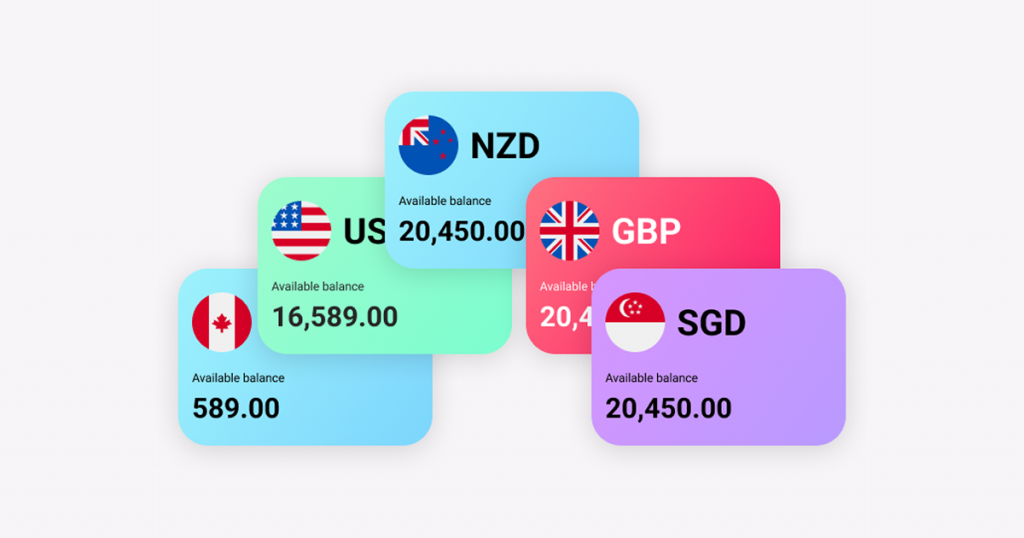
WorldFirst offers the multi-currency World Account, which enables businesses to receive, hold and pay in multiple currencies with greater control and transparency.
With WorldFirst, global operators, from small exporters to multinationals, can:
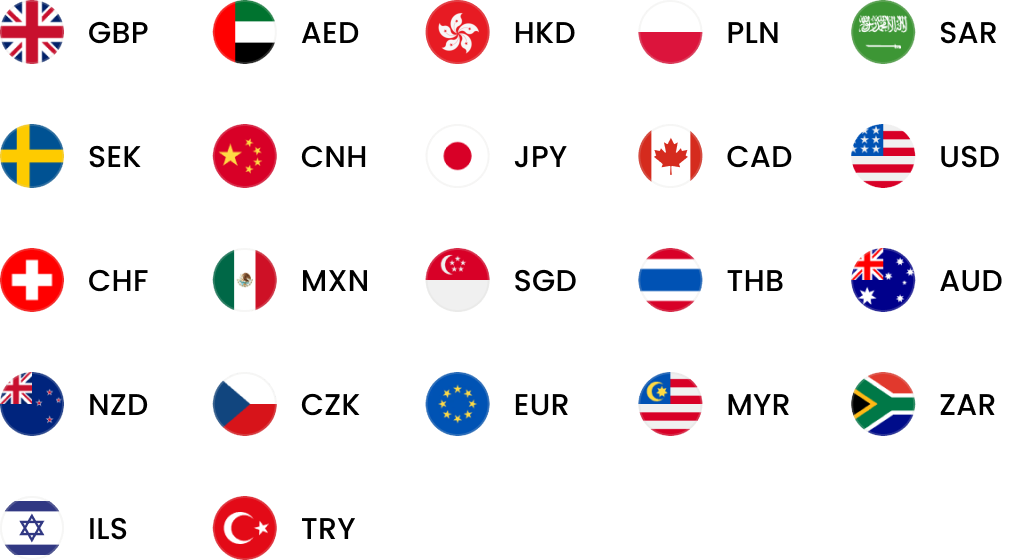
- Receive funds in 20+ currencies using local banking details, with zero collection fees and no minimum balance requirements
- Pay suppliers in over 100 currencies to more than 210 countries, using local payment rails and minimising forced conversions
- Hold and manage balances in 20+ currencies, converting only when rates suit your plan (or locking in rates) rather than being forced to convert immediately
- Consolidate marketplace payouts and supplier payments in one dashboard, smoothing cash flow, aiding reconciliation and giving visibility across all currencies
This infrastructure separates settlement currencies from your home-currency bookkeeping, allows you to optimise conversions in real time and eliminates the hidden FX markups and fees that many banks often bury.
Real-world examples:
- New Zealand Honey Co. expanded globally through Amazon marketplaces and used WorldFirst local currency accounts to collect international payments and pay suppliers efficiently. The founder credits WorldFirst with revolutionising their ability to scale internationally
- Bull Doza Fight Wear, a UK-based brand, used WorldFirst to obtain local bank details in multiple markets. This cut their international launch times by three to six months, accelerating growth
- Elk & Friends adopted the World Card to manage global ad spend and expenses, reducing FX fees
Open a World Account today and make global payments simpler and faster and more affordable.
Shawn Ma leads business development at WorldFirst UK, with a deep expertise in fintech, risk management and cross-border commerce.

Shawn Ma
Author
Continue reading


Subscribe
The Weekly Dispatch
Get the latest news and event invites. Signup for our weekly update from the worlds of fashion, design, and tech.
You might also like
Choose a product or service to find out more

E-commerce guides


Doing business with China

Exploring new markets

Business Tips

International transactions
E-commerce expansion guides
Doing business with China
The simpler way to pay and get paid
Save money, time, and have peace of mind when expanding your global business.